Races
100x100Half l’Estartit 2026: route, distances and schedule
The L’Estartit event combines swimming, cycling, and running in a very unique setting on the Costa Brava.

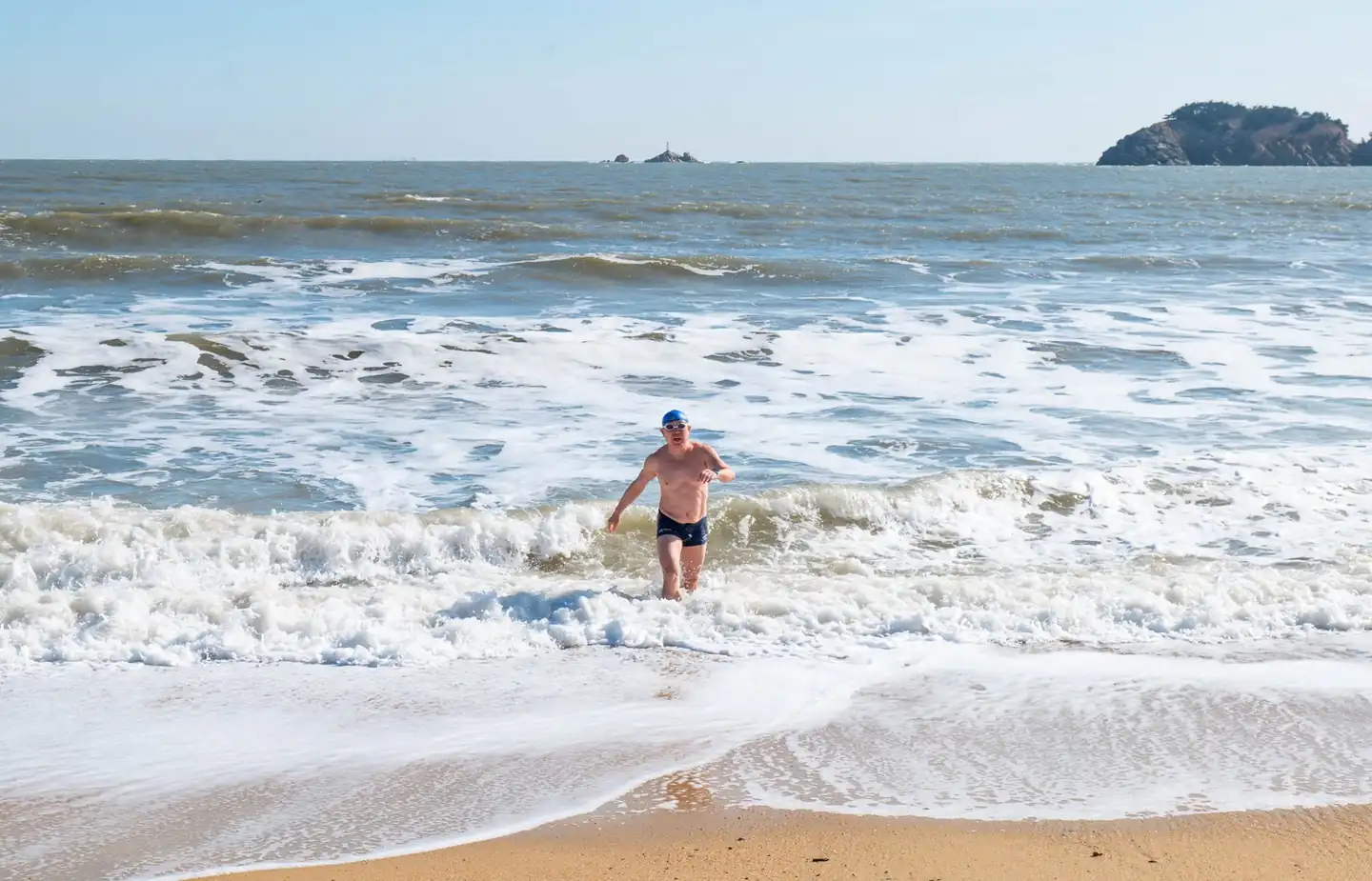
The 100x100Half L’Estartit once again packs the essence of coastal triathlon into a single Sunday: open water, fast asphalt, and a finish line with the scent of the Mediterranean. The event takes place in L’Estartit, in the province of Girona, set against one of the most recognizable landscapes of the Costa Brava, with the Medes Islands as a backdrop and the Parc Natural del Montgrí, les Illes Medes i el Baix Ter very close to the course.
The 2026 edition is set for Sunday, October 11 and offers two official formats, Olympic and sprint, both with staggered starts. The race has established itself as a very appealing season finale thanks to its combination of sea, seafront promenade, and coastal road, a mix that demands legs, focus, and careful effort management in every segment.
A triathlon with postcard scenery and real demands
L’Estartit is not a backdrop; it is part of the sporting story. The swim takes place off a very recognizable coastline, with a clean shoreline and the constant reference point of the Medes Islands, while the bike leg heads into an open setting where the wind can become a silent but decisive factor. The run, for its part, usually brings the race back into the urban rhythm, with the seafront promenade as the main stage.
That mix explains why the event has such appeal among those looking for a season-ending race with character. It is not just about covering distance, but about doing so in a place where the sea, the light, and the geometry of the course make each segment easy to remember. The Costa Brava, in October, still offers pleasant temperatures for racing, although the water and wind can still provide their share of difficulty.
The event’s distinctive value also lies in the feeling of racing inside a natural park, an image that matters as much as the stopwatch. The organizers usually make the most of that setting to give the race a very recognizable identity, less industrial than other events on the calendar and more closely tied to the idea of a season finale with scenery.
Two distances for different profiles
The Olympic distance is the most complete format in the program. It includes 1.5 kilometers of swimming, 40 kilometers of cycling, and 10 kilometers of running. It is the format that most tests effort distribution, because it punishes overexertion from the very first stroke in the water to the final step down the finishing straight.
The sprint reduces the scale without reducing the competitive interest: 750 meters of swimming, 20 kilometers by bike, and 5 kilometers of running. Intensity ramps up immediately and there is less room to correct mistakes. In races like this, where the setting invites you to push, the sprint often becomes a finely managed contest, almost a stopwatch battle.
The coexistence of both formats means the event brings together very different profiles. Some triathletes are looking for a longer, more measured finale, while others prefer a more explosive distance with less accumulated fatigue. In both cases, the setting is the same, but the way it is read changes completely: one needs patience; the other, nerve and precision.
Timetable, start, and race rhythm
The main race starts on Sunday, October 11, 2026 at 8:00 for the Olympic distance, while the sprint begins at 8:30. That short but sufficient gap makes it possible to organize the start and avoid both groups mixing at the most delicate moments of the course. In a triathlon race, that detail matters more than it seems, especially in the opening swim phase and in transition.
The day begins with the atmosphere of a competition morning on the coast: bike movement, final checks, bib numbers, bags, and that electric silence that appears before the starting signal. The coordination between the swim, transition area, and finish line shapes the participant experience, and in L’Estartit the schedule is designed precisely so the race flows without surprises.
On the calendar for this kind of event, October is usually a transition month between summer and full autumn. That shows in the overall pace of the day: less oppressive heat, more attention to wind and humidity, and a clearer sense of the season drawing to a close. The 100x100Half L’Estartit fits well into that time of year, when many triathletes are looking for one last race with a coastal feel.
Swimming in front of the Medes Islands
The water segment is the most photogenic and, for many, also the most symbolic. Swimming in front of the Medes Islands makes the start a very different experience from that of a sheltered bay or an urban beach. The visual reference helps with orientation, but open water always demands reading the swell, controlled breathing, and a clean start without unnecessary haste.
In coastal triathlon races, the sea can look calm from shore and feel very different a few minutes later. That is why swimming is not just about meters; you also have to interpret currents, pack density, and positioning on the start line. An open setting like L’Estartit rewards the ability to maintain technique under pressure, without wasting energy too early.
The presence of the coastline and the natural park adds value that goes beyond aesthetics. Racing there means crossing a space with its own identity, and that leaves a different mark on the memory of the race. For many participants, the first buoy and the return to shore are the moment when the race truly begins, when the water stops being scenery and becomes the task.
The bike as the balancing point
The cycling leg is usually the thermometer of the race. In the Olympic distance, the 40 kilometers leave room to build gaps or to blow up if you go out above your real ability. In the sprint, the 20 kilometers force you to quickly decide how much risk to take, because there is little room to recover and the final transition comes fast.
The L’Estartit area and its surroundings offer an open setting, with routes that link the sea and the inland landscape. That kind of course punishes as much as it rewards: it invites you to stay in the aerodynamic position, but also demands attention to corners, pace changes, and possible exposure to the wind. In triathlon, a beautiful straight is never just a beautiful straight.
The bike is also the point where the race separates those who manage their effort well from those who get carried away by the excitement of the swim. The 100x100Half L’Estartit is interesting precisely because of that: the coast can be deceptive, it looks friendly, but in reality it demands tactical patience. Anyone who arrives too hard at T2 usually pays for it in the run, where there are no screens or excuses.
The run and the pulse of the seafront promenade
The final kilometers usually decide the picture of the day. The run, with the seafront promenade as its backdrop, gives the race a sense of closeness to the public and to the town. After the swim and the bike, the final stride carries something like a statement of intent: at this point it is no longer about preserving, but about holding on to what is left.
The seafront promenade provides a recognizable backdrop and, at the same time, a deceptively simple one. Running by the coast feels light, but the body arrives heavy from the accumulated effort. In the Olympic distance, 10 kilometers still allow pace changes and small comebacks; in the sprint, 5 kilometers turn every acceleration into an almost decisive move.
The run finish is also the most visible part for spectators. It is where fatigue, already worn-down technique, and the emotion of the final straight all come together. In coastal events, that image often stays in the memory because of the light, the breeze, and the contrast between physical effort and the apparent calm of the landscape.
What it contributes to the triathlon season in Catalonia
The 100x100Half L’Estartit occupies a very specific place on the calendar: it works as a race at the end of the cycle, close to season’s end, when most of the year’s goals have already been decided. That explains why it attracts both those who want to test their fitness and those who want to finish with a competition that is more emotional than ranking-focused.
In Catalonia and on the Costa Brava, triathlon has a particular ecosystem, with coastal races, club circuits, and an audience used to living alongside endurance sport. L’Estartit adds a very powerful element to that map: natural scenery, tourist accessibility, and a race format that needs no gimmicks to be appealing.
The October date also works in its favor. By that point in the year, many people have already gone through weeks of training load, interrupted holidays, or accumulated heat. Arriving at an event like this means, for some, racing with relatively fresh legs; for others, saying goodbye to the season with a race that demands plenty without reaching the extremes of a long winter of training.
The tourist setting and the logic of a coastal race
L’Estartit is one of the most recognizable tourist hubs in the area, and that affects the overall experience of the event. The presence of accommodation, promenades, restaurants, and services makes logistics easier for those traveling to compete. That is no minor detail: in triathlon, context matters as much as the bib number, because good outside organization reduces the friction of race day.
That tourist component also helps explain why so many references to the event emphasize its closeness to the sea and the natural park. The race cannot be fully understood without the town around it. There is a clear relationship between sport and territory: triathlon makes use of the landscape, but at the same time projects it, puts it into circulation, and turns it into part of the race memory.
The Costa Brava has a special ability to blend rigor and postcard beauty. In L’Estartit, that mix is visible in the moments before the start, when the sea looks smooth and promising, and later in the harshness of the effort, which is always more demanding than the eye suggests. Here, beauty does not soften the race; it makes it more memorable.
What usually defines this race in practice
The key to a race like this is not just the distance, but how you read the environment. Open water requires a sensible start; the bike leg requires not mistaking group momentum for your own ability; the run requires accepting that the seafront promenade does not forgive what came before. It is a triathlon that rewards fine control more than overenthusiasm.
It also stands out for the sense of continuity between segments. There is no radical jump from one discipline to another, but rather a very coherent narrative: first the sea, then the road, and finally the coastal run. That continuity makes the whole event feel very complete and easy to follow for both competitors and outside observers.
That is why the 100x100Half L’Estartit has earned a stable place on the calendar. It does not need gimmicks or big displays to get attention: it only needs a course with identity, a well-placed date, and a geography unlike that of many other races. In the end, its appeal comes from something very simple: racing where the landscape is also running.
An event that captures coastal triathlon very well
The 2026 edition confirms the continuity of a race that blends sport and territory with a very recognizable formula. Two distances, an early start, a natural setting, and a seaside finish make up an event that quite accurately summarizes what many people look for when they think of a Mediterranean triathlon: moderate toughness, clear beauty, and a powerful visual memory.
In an increasingly crowded calendar, L’Estartit stands out for its balance of accessibility and character. It is not a mass event or a noisy race; it is more a meeting with its own personality, one of those that you remember for the light on the water, the wind on the bike, and the final stride with the horizon ahead. Those kinds of settings rarely go unnoticed.
On October 11, 2026, the Costa Brava will once again become a meeting point for triathletes of different profiles, all with the same idea in mind: testing themselves in a place where the Mediterranean is not just a backdrop, but an essential part of the challenge.
You may also like: 100×100 Half L’Escala 2027: route, distances and key details.



How to prevent thigh chafing: causes and real solutions

Women’s running windbreakers: seven jackets and how to choose

Do more workouts get rid of soreness? A guide for runners

Jaén Half Marathon 2026: Record 3,800 Runners Registered

Men’s short running tights: how to choose the right pair

World Triathlon confirms data breach involving medical data

Izan Edo targets podium at Miyazaki World Cup

María Pérez ranks ninth in World Athletics’ 2026 top ten

Dos Santos, Duplantis and Sawe: World Athlete of the Year finalists

San Silvestre Vallecana 2026: 42,000 places, prices and start times

 Races4 months ago
Valencia Half Marathon 2027: date and registration

 Races4 months ago
Valencia Marathon 2026: entry, ballot and course

 Reviews and Comparisons4 months ago
Asics Gel-Roadmiles 3 for men: review and current price

 Reviews and Comparisons4 months ago
Asics Gel Sonoma 8 Gore-Tex: complete analysis for trail and rain

 Sneakers3 months ago
Saucony Endorphin Pro 4: full review and verdict

 News5 months ago
Strava API 2026: what changes for clubs, challenges and runner apps?

 Reviews and Comparisons5 months ago
Nike Alphafly 3: opinions, sensations, and real key points

 Reviews and Comparisons4 months ago
Under Armour running shoes review 2025-2026: models and key features

 Sports Equipment4 months ago
Shoe sizes in cm: a clear guide to getting the right fit for your footwear

 Sneakers3 months ago
Skechers GO RUN Consistent 2.0 analysis: comfort and limits

 News5 months ago
Valencia Marathon 2026 route: key tips to train and run better

 Sneakers4 months ago
Adidas Adizero Boston 13 for men: review and verdict