Races
3 days Trail Ibiza: dates, stages, prices and route
Three trail days across Ibiza with night routes, coast, mountains, and prices that vary according to the distance.

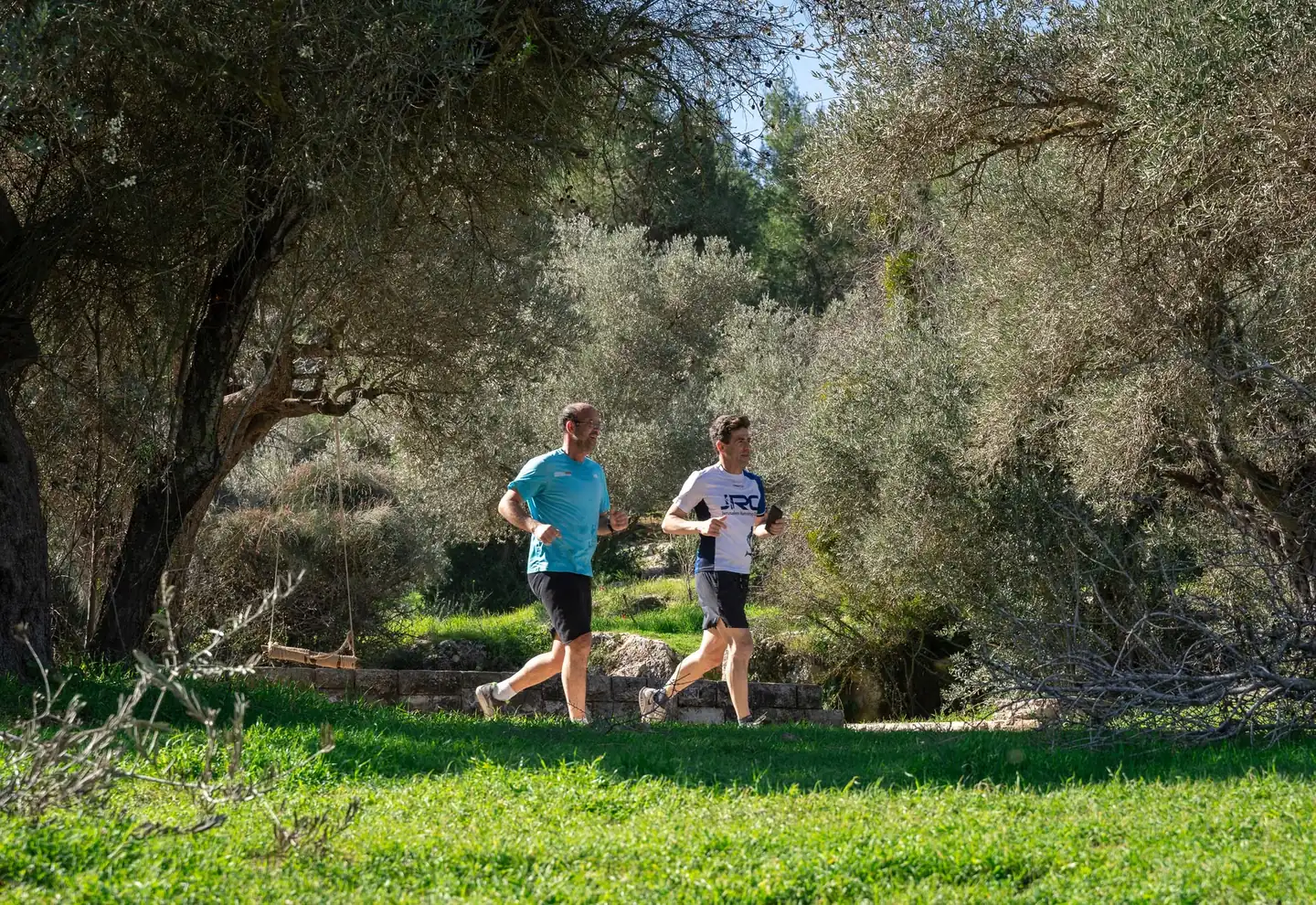
The 13th edition of 3 Días Trail Ibiza has reached 1,450 entries, an all-time participation record, with 15 days to go before a race that will take place from 27 to 29 November 2026. The elite line-up brings together Núria Picas, Chema Martínez and Antonio Martínez, all returning, with the additions of Alain Santamaría, Naiara Irigoyen, Cèlia Balcells and Yasmina Castro.
The race turns the island into a sporting stage for a whole weekend, with a formula that blends trail running, Mediterranean scenery, historic heritage and stage racing. It offers options for very different runners: from a 10 km night race to the main ultra trail, via a marathon, a half marathon, a daytime 10K, a Starter category for beginners and a team format called La Canon.
More than a single competition, the event is a sporting journey through different landscapes of Ibiza. The route runs from the old town of the city to the coastal paths, beaches, summits and trails of the north of the island, and finishes among cliffs and natural paths around Santa Eulària des Riu. Runners can take part in all three stages or only in the distances that best suit their experience, goals and preparation.
Besides 3 Días Trail Ibiza, the island’s calendar includes another benchmark event: the Ibiza Trail Marathon Festival, which was held on 24 October 2026 in Sant Antoni de Portmany. Although both events share the Ibiza setting, the trail format and a varied range of distances, they are different competitions, with their own dates, routes, rules, prices and organisers. This guide gathers the information on 3 Días Trail Ibiza and also adds a specific section on the Ibiza Trail Marathon so that runners can tell the two events apart.
An elite line-up with veterans and new faces
Among those returning are Núria Picas, a historic figure of mountain running, Gemma Arenas, Chema Martínez, Antonio Martínez, Julen Calvó, Iván Calvó and Bel Calero, who already know the Ibiza race. Alain Santamaría, Naiara Irigoyen, Cèlia Balcells and Yasmina Castro join the 2026 line-up, and Jesús Gil returns to the island. The organisers still have further announcements pending.
Jesús Gil, a runner from Ciudad Real, finished fifth in the Ultra in 2025 and arrives with four wins in 2026: Trail Ribeira Sacra, Desafío Somiedo, Trail Menorca Camí de Cavalls and Malagón Trail Quesos Don Apolonio. He has won the Gran Trail Peñalara three times, where he holds the race record, was Skyrunning world runner-up in the Ultra category in 2024 and became Spanish Ultra champion in 2022.
Bel Calero, a runner from Mallorca on the Joma team, was second in the Half Marathon in 2025, reached the podium on her debut and will race the same distance and format again. Antonio Martínez, of ASICS, won the Half Marathon and the Santa Eulària 10K in 2025, and this year has won The North Face Transgrancanaria Marathon and Kaçkar by UTMB, among other results.
What is 3 Días Trail Ibiza?
3 Días Trail Ibiza is a trail running stage race held over three consecutive days. The event is included in the RFEA calendar, which places it within the national circuit with a federation licence, and is organised by Trideporte.
The race keeps a clear aim of combining sport and tourism outside the high season, when Ibiza shows a quieter and more authentic side. In November, participants find a less crowded territory, usually milder temperatures for running and a more direct relationship with the landscape. Sport works here as a way of crossing the island: each stage has its own setting, demands and atmosphere.
The structure of the event gives each day its own identity, with starts spread across Ibiza city, Santa Eulària des Riu, Portinatx, Cala Sant Vicent and Es Canar. This layout means runners cover the island like a changing map and makes the race a many-sided sporting and visual experience.
The proposal moves away from the best-known summer image of Ibiza. The first day goes into the history of the city; the second extends the route towards beaches, summits and paths in the north; and the third offers a short but technically varied finale in the municipality of Santa Eulària des Riu. This variety explains why the race attracts both long-distance specialists and runners who prefer to complete a single stage.
Dates and programme of the three stages
The 2026 edition will take place between Friday 27 and Sunday 29 November. The programme combines a 10 km night race, a second day with several distances and a final daytime route of another 10 kilometres.
Friday 27 November: night 10K in Ibiza city
On Friday, the weekend opens with a 10-kilometre night race, starting and finishing in Plaza de la Constitución, in the centre of Ibiza city. The start is scheduled for 19:00, the prize ceremony is at 20:15 in the same square and there is a bag drop service.
The route includes some of the capital’s most recognisable spaces, among them Dalt Vila and the necropolis, before linking up with paths outside the city walls. The itinerary combines the old town, cobbled streets, urban areas and sections of natural terrain.
Darkness completely changes how the terrain reads. A cobbled street, a tight bend or a stretch of path needs different attention once natural light disappears. For this reason, a head torch or your own light is compulsory in this first stage. It is not a decorative accessory: it lets you make out the surface, anticipate obstacles and keep a safe distance from other runners.
The city lights appear and disappear between the historic walls, while the group stretches out as it leaves the urban areas. For those taking part on one day only, this race offers a complete experience over an accessible distance. For those taking on the three-day challenge, it is a first effort that must be managed intelligently, since Saturday’s long day and Sunday’s finale are still to come.
Saturday 28 November: five options and a central day
Saturday concentrates the sporting core of the event. The programme offers several related distances, although with different starts in some cases. The main options are:
- Ultra Ibiza: start at 06:30 from Paseo S’Alamera, in Santa Eulària des Riu.
- Marathon: start at 09:45 from Portinatx.
- Half marathon: start at 11:00 from Cala Sant Vicent.
- Starter: an 11.8-kilometre route, starting at 11:15 from Es Canar.
- Short 10K: a category built into the day, starting at 11:15 from Es Canar.
The general information for the stage also describes the programme as four main routes (Ultra Ibiza, marathon, half marathon and 10K), while the 2026 edition also adds the 11.8-kilometre Starter category. The shorter distances share part of the ultra’s route and let runners cover part of the same itinerary with a lower physical load.
The Ultra Ibiza starts in Santa Eulària des Riu and covers a good part of the north of the island, with sections of coast, beaches, paths, summits and natural areas. The marathon starts in Portinatx and finishes in Santa Eulària des Riu. The half marathon starts in Cala Sant Vicent and the 10K starts in Es Canar; both also finish in Santa Eulària des Riu. This layout makes the second day a race of meeting points, with starts spread across the north and a common finish that brings the participants together at the end of the day.
The prize ceremony for all of Saturday’s categories is at 14:30.
Sunday 29 November: daytime 10K in Santa Eulària des Riu
The third stage will take place on Sunday 29 November around Santa Eulària des Riu. It is a daytime 10-kilometre race, starting and finishing at Paseo S’Alamera, at 09:30. The prize ceremony is at 11:30 on Paseo de la Alameda and there is a bag drop.
The route approaches the cliffs and combines the town’s urban surroundings with natural areas and trails of varying profile. It is a livelier-paced finale, although the short duration does not remove the difficulty: the terrain still includes changes of surface, climbs and technically varied sections.
After the night race and Saturday’s long day, the body arrives with a fatigue that changes any forecast. A 10-kilometre stretch can feel especially intense when the legs have accumulated climbing and hours of activity. The final stage rewards the ability to run with control, save strength in the early sections and adapt to changes of surface without turning every climb into a sprint.
Starting and finishing around Santa Eulària lets the itinerary close in the same hub, after crossing very different landscapes of the island. For those who complete all three days, those last kilometres work as a summary of the weekend: less volume than Saturday, but enough to demand attention right up to the finish line.
Official distances and ways to take part
The 2026 programme offers a range of distances and combinations for different levels and goals. The difference between the categories is not limited to the number of kilometres: the climbing, type of terrain, expected time on the move, logistics and fuelling and hydration strategy also change.
| Category | Approximate distance | Elevation gain | Time limit |
|---|---|---|---|
| Ultra | Between 73.5 and 75.5 km | Approximately 2,100 m | 13 hours 30 minutes |
| Marathon | Approximately 42.195 km | Around 1,800 m | 9 hours |
| Half marathon | Between 21.1 and 23.5 km | Over 1,000 m | 6 hours |
| Starter | 11.8 km | As per the official route | 3 hours 15 minutes |
| Night 10K | 10 km | As per the official route | 1 hour 30 minutes |
| Daytime 10K | 10 km | As per the official route | 2 hours |
Ultra Ibiza
The ultra is Saturday’s flagship category and concentrates the greatest difficulty, the highest number of kilometres and a high mountain demand. The route planned for 2026 is between 73.5 and 75.5 kilometres, with approximately 2,100 metres of elevation gain and a time limit of 13 hours 30 minutes.
Information from a previous edition put the ultra at around 90 kilometres, with more than 3,600 metres of elevation gain and a limit of 17 hours 30 minutes. Those figures belong to the information published for 2025 and should not be confused with the 2026 specification until the rules for the new edition confirm their final numbers.
The race follows the coast and crosses some of the most representative summits of northern Ibiza, with beaches, paths and natural areas that show a less urban island. The route is designed for a long day, from the first hours of light until the afternoon, so managing pace, food and hydration is as important as physical ability.
Numerous short climbs, steep ramps, technical descents and wind-exposed stretches call for prudent running. Seeing the sea from a ridge does not mean the next section will be fast; a nearby beach may be separated by a technical descent and a short but intense climb. General preparation for a trail ultra usually includes time on varied surfaces, practising fuelling during effort and experience walking quickly on steep slopes.
Marathon
The marathon covers around 42.195 kilometres, with about 1,800 metres of elevation gain and a limit of 9 hours. It starts at 09:45 from Portinatx and finishes in Santa Eulària des Riu.
It remains highly demanding, although with a more manageable volume than the ultra. Runners should bear in mind that the nominal marathon distance is not the same as a road marathon: the climbing, uneven surfaces, coastal sections and slopes can noticeably increase race time and muscle wear.
Half marathon
The half marathon is a variable distance of between 21.1 and 23.5 kilometres, with more than 1,000 metres of elevation gain and a maximum of 6 hours to complete the route. The start is scheduled for 11:00 from Cala Sant Vicent and the finish is in Santa Eulària des Riu.
It lets runners cover a representative stretch of the island with a lower load than the marathon and the ultra, but it should not be considered an easy race. The accumulated climbing, the surface and the slopes can make the effort very different from that of an urban half marathon.
Starter
The Starter category is designed as an introduction to the event and covers a distance of 11.8 kilometres. The start is from Es Canar at 11:15 and the time limit to complete the route is 3 hours 15 minutes.
It is an alternative for runners who want to approach Ibiza trail running without taking on the mileage of the half marathon or the long distances. Even so, it is worth preparing for the uneven terrain, the slopes and the changes of surface, because a short distance does not remove the characteristics of a mountain race.
Night 10K and daytime 10K
Friday’s night 10K has a limit of 1 hour 30 minutes, while Sunday’s daytime 10K has a maximum of 2 hours. The first runs through Ibiza city, starting and finishing in Plaza de la Constitución. The second starts and finishes on Paseo S’Alamera in Santa Eulària des Riu.
There is also a short 10K built into Saturday’s programme, starting in Es Canar. This choice lets you concentrate the trail experience into a single stage or combine it with the night 10K and the final 10K to complete a three-day challenge.
La Canon: team category
The new category called La Canon adds a collective dimension to the 2026 programme. It is designed for four runners, with four distances and a shared finish. Each member takes on part of the challenge and the team reaches the final moment together.
It is a different formula from the individual classification. La Canon puts the emphasis on coordination, consistency and the shared experience over the weekend. Before registering, teams should check the specific conditions of this category, how the distances are split and any requirements set by the organisers.
Three-day combinations and total kilometres
The total for the three days depends on the combination chosen. The most demanding option is to complete Friday’s night 10K, Saturday’s Ultra Ibiza and Sunday’s daytime 10K. There are also combinations with the marathon, the half marathon or the 10K on the second stage.
- Ultra + night 10K + daytime 10K: between 93.5 and 95.5 kilometres, according to the figures planned for 2026.
- Marathon + night 10K + daytime 10K: approximately 62 kilometres.
- Half marathon + night 10K + daytime 10K: around 41 kilometres.
- Night 10K + Saturday 10K + daytime 10K: about 30 kilometres.
Completing three stages means looking beyond each day’s finish line. The result depends not only on running fast, but on arriving the next day able to move, eat and make sensible decisions. Every conservative descent, every well-managed pause and every aid station put to good use protects the performance still to come.
This approach appeals both to competitive runners and to those who value the experience, the journey and the strategic management of effort in a demanding, changing environment. Taking part on a single day is also possible and lets you adapt the challenge to your individual preparation.
Route: Ibiza city, north coast and Santa Eulària
The routes follow authentic trail paths, with compact earth, technical sections, coastal passages and stretches within protected areas, including the Natura 2000 network. The organisers keep some parts of the route under wraps until shortly before the race to protect the environment and ensure sustainable use of the territory.
Ibiza’s terrain should not be read as a series of easy paths simply because it is on a Mediterranean island. There is rock, dust, natural steps, tight bends and slopes that can become slippery after rain. A runner who arrives with a clear idea of the profile and the type of ground will be able to distribute the effort better than one who goes by the scenery alone.
Heritage and paths on the night stage
The first day links trail running with the history of Ibiza. The route approaches the old town, Dalt Vila and the necropolis, and then links up with path sections outside the walls.
The combination of urban heritage and natural terrain gives the stage a personality of its own. The light of the head torches casts shadows on the walls and changes the perception of distance, while the cobbled streets and tight bends demand attentive footing. The route is not merely an illuminated urban race: it includes trail elements and requires specific safety equipment.
Beaches, summits and coastal paths on Saturday
The central day shows the far north of Ibiza from a perspective that is hard to get as a visitor. Runners move along coastal sections, pass beside beaches and reach high ground from which the landscape opens out towards the Mediterranean.
The result is a visually varied route, though also demanding because of the succession of climbs, descents and uneven surfaces. The shorter distances share part of the ultra’s route, so the experience of the terrain can be intense even in the lower-mileage categories.
The ultra especially reflects the toughness of the event: numerous short climbs, steep ramps, technical descents and areas where prudence is key. The marathon and the half marathon also have significant climbing, which places the race in a demanding category within mountain trail running.
Cliffs and natural paths on Sunday
The last route approaches new cliffs and combines the urban surroundings of Santa Eulària des Riu with natural areas and trails of varying profile. The daytime itinerary lets you appreciate in a different way the landscape participants crossed during the first two days.
The short distance can lead you to underestimate the stage, but accumulated fatigue changes the difficulty. The legs arrive loaded with climbing and hours of activity, and every climb, bend or change of ground can demand more attention than expected.
A trail route through protected natural areas
One of the great attractions of 3 Días Trail Ibiza is the contrast between natural beauty and physical demand. The race is not limited to showing a postcard landscape, but presents Ibiza as a running territory, with rock, dust, slopes, coastal stretches and paths that require constant adaptation.
The presence of sections within the Natura 2000 network requires responsible conduct. The organisers may keep parts of the route under wraps until close to the race in order to protect the environment and manage sustainable use of the territory. Participants must respect the marked route, the checkpoints, the aid stations and the instructions of race staff.
The weather forecast also matters. In November the daylight lasts less than in summer and trail conditions can change quickly. On an island, the wind can alter the perceived temperature in exposed areas and a brief shower can change the grip of the rock. Prudence does not take away from the epic; it stops the landscape from dictating hasty decisions.
Schedule and logistics for the 2026 edition
| Day | Activity | Time | Place |
|---|---|---|---|
| Thursday 26 November | Bib collection | 10:00-19:00 | Trideporte, next to the airport |
| Friday 27 November | Night 10K | 19:00 | Plaza de la Constitución, Ibiza city |
| Saturday 28 November | Ultra | 06:30 | Paseo S’Alamera, Santa Eulària des Riu |
| Saturday 28 November | Marathon | 09:45 | Portinatx |
| Saturday 28 November | Half marathon | 11:00 | Cala Sant Vicent |
| Saturday 28 November | Starter, 11.8 km | 11:15 | Es Canar |
| Saturday 28 November | Short 10K | 11:15 | Es Canar |
| Sunday 29 November | Daytime 10K | 09:30 | Paseo S’Alamera, Santa Eulària des Riu |
Bib collection is scheduled for Thursday 26 November, from 10:00 to 19:00, at the Trideporte premises, next to the airport.
Spreading the starts across different municipalities aims to avoid mass crowding, reinforce the sense of a journey and let each stage show a different side of the island. However, this feature means travel needs to be organised in advance.
- On Friday the race is concentrated in Ibiza city.
- On Saturday the categories start from Santa Eulària des Riu, Portinatx, Cala Sant Vicent or Es Canar, depending on the distance.
- The finish for several of Saturday’s distances is in Santa Eulària des Riu.
- On Sunday the focus returns to Santa Eulària des Riu, where the start and finish of the daytime 10K are located.
Pre-race activities and talks
On Thursday 26, the presentation of 3 Días Trail Ibiza and the live Ingrávidos programme take place at 15:30 on calle Jaime I (Parque Infantil Sargantana), in Ibiza city. At 19:30 there is a Social Run with Chema Martínez, Núria Picas and elite athletes at the Can Misses Athletics Track (Sánchez Vivancos Municipal Stadium), with a Suunto watch test and a kit prize draw.
On Friday 27, from 11:00 to 13:30, Maria Petit, Pol Makuri, Núria Picas and Biel Rafols give talks at Can Ventosa. At 11:00 there is also a children’s race at the Portal de ses Taules with Alain Santamaría and Naiara Irigoyen.
Buses and bag drop
The bus service to Saturday’s and Sunday’s starts is only for those who booked it when registering. It is shown on the bib, which must be presented when boarding. Saturday’s times and the bag drop hand-in times are as follows:
| Saturday category | Start | Bus from Avd. Santa Eulalia | Bus from Hotel Pachá | Bag drop / drop bag hand-in |
|---|---|---|---|---|
| Ultra | 06:30 | 05:00 | 05:10 | 06:00 (drop bag) |
| Marathon | 09:45 | 07:15 | 07:25 | 09:15 |
| Half marathon | 11:00 | 08:40 | 08:50 | 10:30 |
| 10K Starter | 11:15 | 09:25 | 09:15 | 10:45 |
The Ultra drop bag is intended for use at kilometre 33.5 and is only accepted in the organisers’ bag. On Sunday, the buses to the start of the final 10K leave at 08:05 from Avd. Santa Eulalia and at 08:15 from Pachá.
To return to Ibiza, on Saturday there are buses at 14:00, 14:30, 15:00, 15:30, 16:00, 16:30, 17:00, 17:30, 18:00 and 18:30. Ultra and Marathon runners who finish later will be transferred by the organisers. On Sunday, the return bus leaves at 12:30.
Registration and prices for 3 Días Trail Ibiza 2026
Fees vary depending on the category, the package chosen and the registration date. The system uses tiered prices that reward early registration and rise as bibs run out or the deadline approaches.
Three-day packages
- Ultra: €90 for the first 50 bibs; €100 for bibs 51 to 150; €110 until 1 November 2026; and €135 until closing.
- Marathon: €55, €65, €75 and €100 in the same tiers.
- Half marathon: from €45, with similar steps depending on the registration tier.
- Starter: €35 in the first tier.
Bibs for taking part on Saturday only
- Ultra: from €65.
- Marathon: from €40.
- Half marathon: from €25.
- 10K: from €15.
There are also duo rates for some three-day packages, specifically for the ultra and marathon categories.
The prices shown correspond to the fees announced for the 2026 edition and may be subject to bib availability, tier changes and the organisers’ conditions. Before paying for registration, it is advisable to check the current amount, which services are included and whether any supplement applies for a licence or insurance.
Insurance, licence and conditions of participation
The organisers require all participants to have accident insurance in order to compete, except for those who hold a Spanish athletics licence with the trail running specialty.
FEDME or FBME licences are not valid for exemption from this requirement. Runners should check the rules that apply to their case, especially if they take part without a Spanish licence or arrive from another country.
The minimum age is as follows:
- 18 years: short distances, such as the night 10K, the Starter category and the daytime 10K.
- 20 years: ultra, marathon and half marathon.
The international reference for a previous edition indicated a compulsory supplement of €9 for the three-day race and €3 for a single-day race. As this figure was published for 2025, it should be confirmed for 2026 along with the rules on licences, insurance and international participation.
It is also advisable to distinguish between registering for all three stages and taking part on a single day. The name of the event may suggest a single fee or a joint classification, but the programme brings together different categories and starts in several municipalities. The distance chosen determines the logistics, the race time, the equipment requirements and, in some cases, the possibility of earning ITRA points.
Compulsory kit, safety and rules
The rules require runners to carry specific equipment to ensure safety on a demanding and variable route, especially in the ultra and the long distances. The time limits are generous, so that runners can complete the stages and enjoy the experience rather than chase extreme times.
The choice of equipment should reflect the terrain and the time of each start. In the night race, the head torch is compulsory. In the ultra and the marathon, a light may also be needed for low-light periods, especially on a day that starts in the early hours or may run into the afternoon.
- Lighting: head torch or own light compulsory in the night 10K; for the long distances, the exact requirement for low-light sections should be checked.
- Footwear: it should offer stability on uneven paths and enough grip on rock, earth, dust and potentially slippery surfaces.
- Clothing: it should allow you to adapt to temperature changes between the early hours, midday and the afternoon.
- Hydration: it should be planned according to the distance, the expected time on the move and the spacing between aid stations.
- Fuelling: in the ultra, marathon and half marathon, it is worth practising beforehand the strategy you will use during the race.
- Compulsory items: the rules should take precedence over any general recommendation, especially regarding containers, phone, emergency blanket, windproof jacket and other safety items.
Hydration and fuelling do not pose the same needs in a night 10K as in an ultra that can last all day. Even so, setting off without a basic strategy can leave a runner too dependent on the next aid station.
The organisers have indicated that there will be aid stations and assistance services during the race, although the exact number and the 2026 conditions should be checked in the official rules. In the long distances, the autonomy between support points and the possibility of crossing low-light sections can decisively change race strategy.
Discipline and attention to the rules are part of the challenge. In a stage race, managing effort, safety and strategy is key to reaching the finish successfully. The compulsory equipment may change before the race, so the final list should be checked in the official documentation.
How to prepare for each category
Preparing for the ultra
The ultra requires sustaining effort for many hours and coping with accumulated changes of terrain and elevation. Preparation should include time on varied surfaces, practising fuelling during effort and experience walking quickly on steep slopes.
It is also important to learn to save energy. Setting off too fast can compromise the second half of the route, especially when steep ramps, technical descents and wind-exposed stretches pile up. The strategy should take into account pace, hydration, food, lighting and the response to weather changes.
Preparing for the marathon and half marathon
The marathon and half marathon may look like intermediate options, but the climbing sets them apart from their road equivalents. Training should include climbs, descents, uneven terrain and sections where walking efficiently pays off more than trying to run continuously.
In the half marathon, the more than 1,000 metres of elevation gain can account for a large part of the difficulty. In the marathon, the roughly 1,800 metres of climbing and the almost nine hours of margin mean effort has to be managed from the first kilometres.
Preparing for the 10Ks and the Starter
The short distances let you enter the event with a lower volume, but they require familiarity with trail terrain. Rock, dust, natural steps, tight bends and slopes can alter the planned pace.
For the night 10K you should train with, or test, your head torch beforehand and check that the light lets you make out the surface. In the daytime 10K and the Starter, it is best not to be complacent about the distance: the changes of surface and the climbing can make the route slower than an urban 10 km race.
Preparing to complete all three days
Those taking on the full format must train not only the distance but also recovery between stages. Friday’s night race should be run with control to conserve resources; Saturday requires managing effort in the chosen category; and on Sunday you have to run on tired legs.
The strategy can resemble a long game: every conservative descent and every well-used aid station protects the performance still to come. Reaching the finish line depends on the ability to run, eat, rest and make sensible decisions throughout the weekend.
ITRA points and criteria for choosing a distance
The race counts towards Montblanc (UTMB) and is included in the ITRA League.
The reference information on ITRA points indicates that completing the 10K, ultra and 10K combination can earn four points. The combination with the marathon reaches three points, while the one made up of the 10K, half marathon and 10K adds one point.
- Night 10K + ultra + daytime 10K: reference of 4 ITRA points.
- Night 10K + marathon + daytime 10K: reference of 3 ITRA points.
- Night 10K + half marathon + daytime 10K: reference of 1 ITRA point.
These values correspond to the conditions announced for the event and should be verified for the 2026 edition, as homologations and points criteria may be updated. According to that reference, completing only the marathon or the half marathon does not earn ITRA points.
International points should not, on their own, be the reason for choosing a distance. Previous mountain experience, weekly training volume, accumulated climbing and tolerance for several hours of effort provide a much more useful basis for deciding. In trail running, a nominal distance can hide a race time far longer than that of an equivalent road race.
What to check before registering for 3 Días Trail Ibiza
The 2026 dates are set for 27, 28 and 29 November, but the programme is provisional and may change; the organisers will announce any important change in advance. Before registering, it is worth reviewing the following points:
- Current price and the registration tier that applies.
- Availability of places in each category.
- Difference between the three-day package and the bib for a single day.
- Exact start times and bib collection times.
- Final start and finish points.
- Transport between municipalities, bag transfers and included logistics services.
- Final time limits.
- Aid stations and assistance services.
- Compulsory equipment, especially head torch, phone, emergency blanket, windproof jacket and containers.
- Accident insurance, valid licence and possible supplements.
- Cancellation policy and conditions for changing category.
- Homologations and ITRA points for the 2026 edition.
The cancellation policy, the availability of places and the status of each category may also change. In the 2025 information the half marathon appeared as sold out, but that does not allow us to say the same will happen in 2026. The safest source for the status of registrations will always be the organisers, especially if the runner needs to coordinate travel, accommodation and transport between starts.
The 2025 information on distances, climbing, limits, licence supplements, aid stations or availability should not be carried over automatically to 2026. In particular, the data for the ultra of approximately 90 kilometres, more than 3,600 metres of climbing and 17 hours 30 minutes belong to the earlier reference, while the specification planned for 2026 indicates between 73.5 and 75.5 kilometres, about 2,100 metres of climbing and 13 hours 30 minutes.
Travel, accommodation and the Ibiza experience
Because the starts are spread out, it is advisable to plan your trip in advance. On Friday the activity is concentrated in Ibiza city; on Saturday participants must travel, depending on their category, to Santa Eulària des Riu, Portinatx, Cala Sant Vicent or Es Canar; and on Sunday the focus returns to Santa Eulària des Riu.
The event offers packages linked to accommodation, car hire and visiting the island, although the specific conditions should be checked on the organisers’ official channels. It is also advisable to confirm the parking areas and the procedure for handing in runners’ bags.
Holding the race outside the months of highest tourist occupancy lets you discover a less frenetic Ibiza. The November calendar does, however, add a particular factor: there are fewer hours of daylight and trail conditions can change quickly. The weather forecast should accompany the reading of the rules without replacing it.
A race tied to the territory
The singularity of the event lies in the relationship between sport and territory. Dalt Vila and the necropolis bring historical memory to the first stage; the beaches and the high points of the north introduce distance and isolation in the second; and the cliffs of Santa Eulària put the full stop on it with a more open, maritime image.
Each day tells a different part of the island without turning it into static scenery. The first stage combines heritage and darkness; the second takes the runner along the coast, beaches, summits and natural paths; and the third offers a short, technical daytime finish. The landscape is not just the backdrop to the race, but an element that shapes the surface, the pace, the navigation and the strategy.
The race is sponsored by Turismo de Ibiza and is co-financed through the Sustainable Tourism Tax fund of the Govern de les Illes Balears, according to the published information. That backing reflects the connection between the competition, destination promotion and economic activity outside the high season, but it does not change the sporting nature or the demands of the route.
Ibiza Trail Marathon Festival 2026: another major trail race on the island
The Ibiza Trail Marathon Festival is a different competition from 3 Días Trail Ibiza, in its date, its start municipality, its format and its distances. Its 18th edition was held on 24 October 2026, with the start and finish on the seafront promenade of Sant Antoni de Portmany, next to the beginning of s’Arenal.
Trail running in Ibiza is no longer understood only as a race: this Sant Antoni event has become a fixture with its own identity, a weekend in which sport shares space with music, food and the coastal scenery of the west of the island. The 2026 edition brings together three distances designed for very different runners: 11, 28 and 48 kilometres.
The proposal is broader than a simple mountain route. The organisers present it as a sports festival, with an approach that combines technical paths, runnable sections, climbing and a very recognisable location for anyone who knows the bay of Sant Antoni. At the same time, the rules make it clear that this is not an improvised race: there are participation quotas, cut-off times, equipment checks, medical assistance, insurance and specific rules that shape both the experience and the race strategy.
An event that blends scenery, sport and festival format
The singularity of the event lies in its immediate surroundings. The shared start and finish on the Sant Antoni seafront make it a highly visible, almost scenic race, with the sea in the background and compact logistics for runners and companions. That starting point is no minor detail: it eases access, concentrates services and gives the whole a feeling of an urban hub open to the mountains, something uncommon in island trail running.
The 2026 edition consolidates a formula that the organisers have been refining for years. Under the umbrella of the Ibiza Trail Marathon Festival, the main race coexists with activities and a full-weekend narrative, but the heart remains sporting. The three official distances (Starter, Half Marathon and Marathon) aim to cover everyone from runners making their debut in the discipline to experienced runners who need a long, demanding route with technical sections.
The event also has federation backing, as the race appears in the official calendar of the Balearic Athletics Federation. That helps explain why the rules are so thorough: there is more at stake than sports tourism. There are rankings, categories, judges, chips, intermediate checks and a safety system that is activated with the logic of a homologated competition.
Ibiza Trail Marathon distances and runner profile
11-kilometre Starter
The Starter distance, at 11 kilometres, is the gateway. The race is aimed at those looking for a short experience with the true flavour of trail running, without giving up climbing and varied terrain.
The race’s own presentation describes it as an option for beginner runners or for those who want to enjoy the route without the accumulated toughness of the long distances. Even so, it is no stroll: the organisers present it with a demanding first part and a second section with spectacular views over the Sant Antoni coast.
28-kilometre Half Marathon
The 28-kilometre Half Marathon sets the bar at an upper-intermediate level. The route climbs via Sa Talaia and reaches around 600 metres of accumulated climbing at kilometre 10.5.
From there, the route opens out towards the coast and leaves a return with wide views of coves and sea, a very Ibizan contrast between rock, forest and shoreline. It is the distance where the effort starts to resemble a prolonged conversation with the terrain.
48-kilometre Marathon
The 48-kilometre Marathon is the most ambitious face of the festival. It follows part of the half marathon route, then heads towards Santa Inés and Es Broll, and links up with a more technical area before returning to Sant Antoni.
The organisers speak of around 1,600 metres of elevation gain, a figure that clarifies the tone of the race: it is not a road marathon moved onto the hills, but a genuine trail race with changing terrain, sustained climbs and sections where the legs must negotiate rather than impose.
Prices, places and registration calendar for the Ibiza Trail Marathon
The registration calendar is limited by dates and by quota. The registration period opens on 1 April and closes on 12 October at 23:59. After that deadline no new registrations are accepted.
In addition, the organisers set a maximum of 500 participants per race, a figure that helps control pressure on the trails, logistical traffic and race services.
Prices vary according to the distance and the registration period. In the most recent reference information, the Starter appears with fees of €25 in the initial period, €30 in the intermediate tier and €35 in the final phase.
The Half Marathon is listed at €35, €40 and €45 respectively, while the Marathon stands at €55, €60 and €65.
The system does not just stagger prices; it also sends a clear message about demand. The event’s own communication has been stressing on its channels that places are going fast and that some distances are approaching sell-out well in advance. That behaviour reinforces its character as a limited-entry event, closer to a capped-capacity festival than a mass-participation race. For runners, that means the window for deciding is real, not rhetorical.
Start times and limits for the Ibiza Trail Marathon
Saturday 24 October was structured with precision. The long Marathon started at 7:30, the Half Marathon at 8:30 and the Starter at 10:00. All start from the Sant Antoni promenade, which reduces logistical friction and concentrates the activity in one setting. The finish, too, shares that same space, a detail that simplifies the experience for runners and spectators.
The time limits are strict:
- Marathon: maximum time of 7 hours 30 minutes.
- Half Marathon: maximum time of 6 hours 30 minutes.
- Starter: the finish line closes at 15:00, so the total margin is very tight.
Failing to arrive on time means automatic disqualification and withdrawal from the race, with the organisers progressively dismantling the safety arrangements.
Intermediate cut-offs
The intermediate cut-offs are especially relevant in the long distance. In the Marathon, the first critical checkpoint is at kilometre 20, with a cut-off time of 11:00, and the second at kilometre 38, closing at 13:45.
In the Half Marathon, the key point is at kilometre 17.5, with a cut-off time of 12:00. Anyone who does not arrive on time is disqualified, hands in their bib and is taken to the finish by the organisers. If they decide to continue on their own, they do so without the cover of the race arrangements and at their own responsibility.
Compulsory kit and aid stations without cups
At the Ibiza Trail Marathon, the list of compulsory kit is not decorative. In the Marathon, runners must carry:
- Visible bib.
- Head torch.
- Mobile phone with sufficient battery.
- Windproof or waterproof jacket depending on the weather.
- Own cup or container for the aid stations.
- Emergency thermal blanket.
In the Half Marathon the requirement is very similar, except that the head torch is not among the compulsory items. In the Starter no equipment is compulsory to carry, although it is essential to bring your own container if you want to take on fluids.
The approach to aid stations follows an environmental logic that is increasingly widespread in trail running. No cups are provided at the supply points, so each participant must bring their own container. Drinking directly from water drums or containers is also not allowed. The organisers also insist that waste must be deposited only in designated places, normally at the aid stations or in the finish area.
Aid stations
The aid stations are distributed differently depending on the distance:
- Marathon: kilometres 12.5, 20, 30.3, 38, 43.5 and finish at kilometre 48.
- Half Marathon: kilometres 12.5, 17.5 and 23.5, with the finish at kilometre 28.
- Starter: first aid station at kilometre 6.5 and finish at kilometre 11.
In the race, that distribution does not just feed runners; it also sets the runner’s mental rhythm, like small stations on a route of tides and stone.
Checks, safety and withdrawal from the race
The Ibiza Trail Marathon course includes passage checks and continuous supervision. Along the route, checkpoints are set up where judges or organisers’ staff verify the passage of runners, note down bibs and detect incidents.
The bib is not an ornament for the photo: it must be on the front of the shirt, not folded, cut or covering any advertising, and must remain visible throughout the race. Using a bib belt is permitted as long as it meets the same conditions.
Safety relies on specialist staff deployed at specific points along the route, together with an operation coordinated by the Sant Antoni de Portmany Local Police, the Guardia Civil, Civil Protection, the Port Police and the organisers themselves.
A sweeper for each distance is also indicated, responsible for accompanying the last participant still within the official cut-offs. That detail says a lot about the philosophy of the race: nobody is simply forgotten on the mountain, even though the race has very strict limits.
If a participant decides to drop out, they must report it as soon as possible and can only do so at the planned aid stations. Evacuation vehicles are provided from there.
Outside those points, withdrawal changes in nature: the runner must reach the next checkpoint under their own steam. The organisers provide for a single return trip per pick-up point, always subject to the closing of the checkpoint. In the mountains, how withdrawal is organised matters as much as the attacking strategy itself.
Rules, infringements and particulars that can change a result
The Ibiza Trail Marathon rules distinguish between minor and serious offences with specific penalties. Minor infringements include:
- Not wearing the bib visibly.
- Covering advertising.
- Crossing the finish line without a bib.
- Starting early.
- Not giving way when another runner asks for it.
These actions can lead to penalties of between 1 and 5 minutes. In an event with times this tight, that penalty can be decisive.
Serious infringements lead to disqualification or heavier penalties. Not carrying the compulsory equipment means 5 minutes for each missing item. Not completing the route, using another athlete’s bib, dropping litter outside permitted areas, tampering with the course marking, ignoring judges’ instructions or showing a disrespectful attitude are grounds for disqualification.
So is arriving at the finish outside the time limit or failing to meet the intermediate cut-offs.
There are other rules that should not be overlooked:
- Conventional headphones are banned, although bone-conduction ones are allowed.
- Poles are only permitted with rubber tips.
- The use of poles is banned in areas of special conservation.
- Waste must be deposited only in designated places.
The fact that the event stresses keeping the environment clean and protecting nature is not a cosmetic gesture: in Ibiza, the terrain is part of the appeal and also of the fragility of the event.
Categories, prizes and local ranking
The Ibiza Trail Marathon awards prizes overall and by age category. There are overall men’s and women’s rankings, plus veteran categories for men and women from the age of 30, with subdivisions of:
- 30 to 39 years.
- 40 to 49 years.
- 50 to 59 years.
- 60 years or over.
For a category to be valid it must have at least three registered athletes. Otherwise, the organisers may cancel it and reassign the participants.
Trophies are awarded to the top three overall and to the winner of each category in each distance, although they cannot be combined.
There is also a special local category for all distances, with a prize for the first man and the first woman resident in Ibiza in each of them. That gesture has something of a sporting postcard and of island roots: the race looks outwards, but it also recognises those who run from home.
Classification by sex follows what appears on the national identity document. It is one of those clauses that show how far the rules try to avoid interpretation, even on aspects that other events leave to the organisers’ discretion. In mountain races with several fronts open, administrative precision is often as important as timing.
Insurance, medical assistance and bib collection
At the Ibiza Trail Marathon, health cover and the accident policy are part of the registration package. All officially registered athletes are covered by insurance that protects against accidents directly arising from taking part in the race, but not against pre-existing illnesses, latent injuries, recklessness, negligence or incidents unrelated to the event.
It is a common distinction, although it is often overlooked until a problem arises. Those with physical, respiratory, allergic or other conditions that require special attention must report it before the race and write it on the back of the bib.
There will be a medical service with a doctor in charge and ambulances both in the start and finish area and at intermediate points designated by the organisers. If an accident or illness requires transfer, the protocol is to contact the organisers first to open the insurance claim and arrange care at the designated centre.
Bib collection
Bib collection for the Ibiza Trail Marathon took place on Friday 23 October, from 10:00 to 13:00 and from 16:00 to 20:00, at Hotel Blau Parc, in Sant Antoni de Portmany, on calle Velázquez, 9.
Identification with an ID card or passport is compulsory. For minors, an authorisation signed by a parent or guardian is required. Those who have declared a federation licence must show the corresponding athletics and trail licence or a valid identity document.
The bib is personal and non-transferable, so changes of runner are not accepted.
The more technical Ibiza, far from the most obvious postcard
The value of the Ibiza Trail Marathon is not only in the start-line photo. Its real appeal is the sum of route, demands, scenery and regulation. Some trail races seem designed to rack up kilometres; this one, by contrast, focuses on the whole experience, from bib collection to the last checkpoint.
That puts it in a category of its own within the Balearic calendar and has made it a benchmark for those who want to run close to the sea without giving up the mountains.
There is also a symbolic dimension that explains its growth. Ibiza is usually associated with nightlife, summer and the coast, but this event offers another reading of the island: trails, climbing, silence, forests and an October light kinder than that of high August.
The Ibiza Trail Festival works, at heart, as a sporting translation of the territory: a way of measuring the island in strides, with salty skin, sore legs and the feeling of having seen a less obvious, more authentic Ibiza.
In an ever more crowded racing calendar, this race keeps a valuable trait: it makes you read the small print properly. Those who come for the beauty of the landscape will find much more; those who take the cut-offs, the kit and the safety seriously will discover an organisation designed so that the adventure does not descend into disorder.
And that is where much of its appeal lies: the epic still needs rules, and the trail, to be memorable, must also be precise.
How to choose between 3 Días Trail Ibiza and the Ibiza Trail Marathon
The two races offer a different way of getting to know Ibiza on foot. The choice depends on the available date, mountain experience, the distance you want and the logistics the participant is willing to organise.
- 3 Días Trail Ibiza: the right option for those seeking a stage format, with a night race, a central day with several distances and a daytime finish. It allows you to accumulate up to 93.5 kilometres in the most demanding combination and requires managing recovery between days.
- Ibiza Trail Marathon Festival: it concentrated the whole experience on Saturday 24 October 2026, with the start and finish in Sant Antoni de Portmany and three distances of 11, 28 and 48 kilometres.
- For beginners: the Starter categories of 3 Días Trail Ibiza and the Ibiza Trail Marathon offer shorter routes, although both retain climbing, uneven terrain and the characteristics of trail running.
- For a long distance: the Ultra Ibiza reaches between 73.5 and 75.5 kilometres according to the 2026 forecast, while the Sant Antoni Marathon covers 48 kilometres with about 1,600 metres of elevation gain.
- For those who value compact logistics: the Ibiza Trail Marathon concentrates starts, finish and services on the Sant Antoni seafront. 3 Días Trail Ibiza, by contrast, spreads its starts across different municipalities and requires travel planning.
- For those seeking a stage-race experience: 3 Días Trail Ibiza offers individual and three-day combinations, as well as the La Canon team category.
3 Días Trail Ibiza 2026: a stage-race format
3 Días Trail Ibiza 2026 is a race that goes beyond the traditional event. Its stage format offers a balance between competition, scenery, heritage and sporting experience. Ibiza is presented here not only as a tourist destination, but as a trail running territory with demanding climbs, varied terrain and an organisation that looks after the environment and the runner’s experience.
The edition will be held from 27 to 29 November 2026, with a night 10K on Friday in Ibiza city, a central day on Saturday with ultra, marathon, half marathon, Starter and 10K, and a daytime 10K on Sunday in Santa Eulària des Riu. The three-day combinations can reach up to 93.5 kilometres, while the individual categories let you adapt the challenge to different levels of preparation.
The historic night race, Saturday’s flagship day and the finish among the cliffs form a narrative route that combines competition, nature and heritage. The appeal lies not in a single figure, but in the chance to run through three different Ibizas.
Ibiza Trail Marathon Festival 2026 in one day
The Ibiza Trail Marathon Festival held its 18th edition on 24 October 2026 in Sant Antoni de Portmany. The race offers three distances (an 11-kilometre Starter, a 28-kilometre Half Marathon and a 48-kilometre Marathon), all starting and finishing on the seafront promenade, next to the beginning of s’Arenal.
The Marathon starts at 7:30, the Half Marathon at 8:30 and the Starter at 10:00. The maximum times are 7 hours 30 minutes for the long distance, 6 hours 30 minutes for the half and a finish closing time of 15:00 for the Starter. The rules include passage checks, intermediate cut-offs, compulsory equipment, aid stations without cups, medical assistance, categories, prizes and a maximum quota of 500 participants per race.
It is a single-day event, with a festival character and logistics centralised in Sant Antoni, but with routes that take the runner via Sa Talaia, the coast, forests, Santa Inés, Es Broll and technical areas of western Ibiza.
Two ways to run Ibiza
Ibiza thus offers two main approaches to trail running in 2026. 3 Días Trail Ibiza offers a sporting journey in stages, with starts at different points of the island, historic heritage, the north coast, cliffs and the chance to combine several days. The Ibiza Trail Marathon concentrates the competition into a single day and the Sant Antoni area, with three distances, a festival atmosphere and especially detailed rules.
You may also be interested in: 3 Días Trail Ibiza 2026: stages, distances and route.
Where to stay in Ibiza
Hotels available 25–28 November 2026.
Affiliate links: if you book through this map we earn a commission, at no extra cost to you.



How to prevent thigh chafing: causes and real solutions

Women’s running windbreakers: seven jackets and how to choose

Do more workouts get rid of soreness? A guide for runners

Jaén Half Marathon 2026: Record 3,800 Runners Registered

Men’s short running tights: how to choose the right pair

World Triathlon confirms data breach involving medical data

Izan Edo targets podium at Miyazaki World Cup

María Pérez ranks ninth in World Athletics’ 2026 top ten

Dos Santos, Duplantis and Sawe: World Athlete of the Year finalists

San Silvestre Vallecana 2026: 42,000 places, prices and start times

 Races3 months ago
Valencia Half Marathon 2027: date and registration

 Races3 months ago
Valencia Marathon 2026: entry, ballot and course

 Reviews and Comparisons4 months ago
Asics Gel-Roadmiles 3 for men: review and current price

 Reviews and Comparisons4 months ago
Asics Gel Sonoma 8 Gore-Tex: complete analysis for trail and rain

 Sneakers3 months ago
Saucony Endorphin Pro 4: full review and verdict

 News5 months ago
Strava API 2026: what changes for clubs, challenges and runner apps?

 Reviews and Comparisons5 months ago
Nike Alphafly 3: opinions, sensations, and real key points

 Reviews and Comparisons4 months ago
Under Armour running shoes review 2025-2026: models and key features

 Sports Equipment4 months ago
Shoe sizes in cm: a clear guide to getting the right fit for your footwear

 Sneakers3 months ago
Skechers GO RUN Consistent 2.0 analysis: comfort and limits

 News5 months ago
Valencia Marathon 2026 route: key tips to train and run better

 Sneakers4 months ago
Adidas Adizero Boston 13 for men: review and verdict