Races
Albacete Night 10K 2026: date and registration
Limited capacity, bib-number lottery and tiered pricing mark a highly sought-after edition in Albacete.

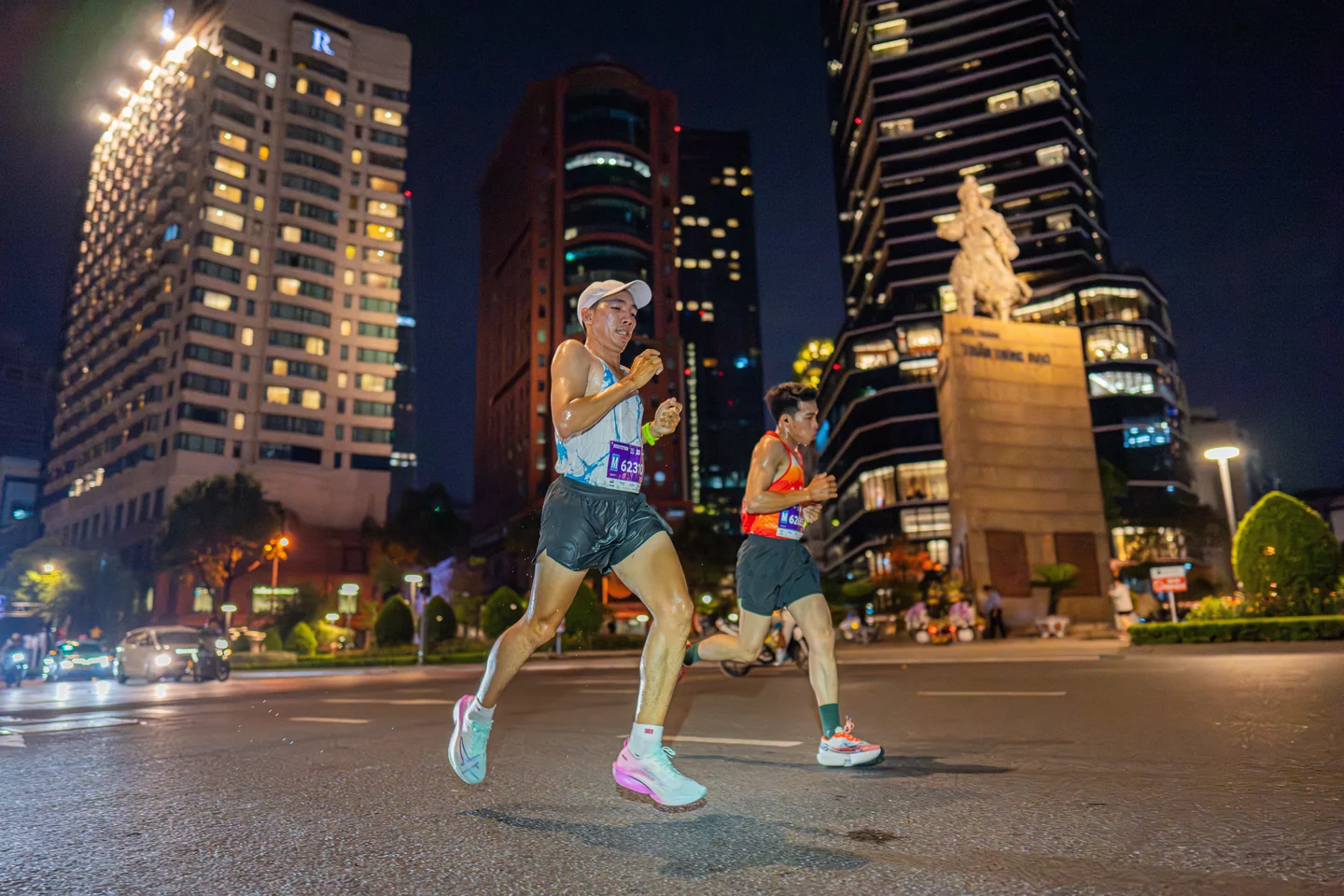
The Albacete Night 10K 2026 once again confirmed its appeal, with demand far above the available capacity: 7,450 pre-registrations for just 5,000 bibs. The lottery system determined access to an event that has already become one of the most sought-after dates on the popular running calendar, with a start scheduled for May 23 at 10:00 p.m. and a certified single-loop course through the city’s most recognizable streets.
The registration process was effectively closed for many hopeful entrants from the moment the participation limit was exceeded. From the number drawn in the lottery, 5,463, the next 4,999 pre-registered runners could buy their bib before Sunday, February 15 at 11:59 p.m., for a price of 18 euros. If places remained unclaimed, the rest of the numbers on the list entered a tiered phase that stayed open until May 1, with fees of 18 euros until March 1, 21 euros until April 1, and 24 euros until May 1.
A level of demand that already exceeds the quota
The massive response is not an isolated surprise, but a trend repeated edition after edition in Albacete. On the very first day of pre-registration, 5,669 people had already signed up, a figure that made it clear the lottery was not a mere administrative gesture, but a necessary tool to organize access to an event that blends sport, the city, and nighttime spectacle with a particular magnetism.
The race has established itself as one of those events where the bib becomes almost a limited-entry pass. It is not only a matter of popularity; the perception of organization, the certified course, and the atmosphere surrounding an event that, by design, admits a maximum of 5,000 athletes also weigh heavily. That ceiling is no technical footnote: it defines the entire experience, from the start in front of the Fairgrounds to the finish on a route designed to be fast, wide, and eye-catching.
According to the City Council, the pre-registration and lottery formula aims for a clearer and more transparent distribution than simple first-come, first-served registration. In a race with so much demand pressure, that nuance changes the story of sign-up: the winner is no longer the one who gets onto a page first, but the one who falls within the quota assigned by a public process. For recreational runners, that means a more predictable and, in practice, less chaotic framework.
How bib access works and what it costs
The participation fee was set at 18 euros for the first lottery winners, provided they completed their registration before the 11:59 p.m. deadline on February 15. After that, the price increased in stages, a common structure in high-demand races that rewards those who secure their place earlier and penalizes waiting with a slight price increase.
In addition, the organizers maintained a three-euro discount for people registered in the Provincial Popular Races Circuit of the Albacete Provincial Council. That modest but meaningful reduction reinforces the connection between the Night 10K and the province’s athletics ecosystem, where many competitions share runners, participation habits, and a deeply rooted running culture.
The important detail for those following the process closely is that the opportunity does not disappear all at once if someone fails to confirm their spot in the first window. Starting on February 16, any vacant places could be reassigned to the next numbers on the list, until the available quota was filled and with the tiered pricing system still active until May 1. In a race with such intense demand, every free bib becomes a relay piece, almost like a seat changing owners in the middle of a silent auction.
A certified course designed for fast running
The 10-kilometer course is certified and contested over a single lap, a condition that tends to appeal both to elite athletes and to runners seeking a clean experience, without repeated turns or the feeling of circling the same scenery. The start and finish were located on Arquitecto Julio Carrilero Street, in front of the Fairgrounds, a recognizable and convenient spot for handling the logistics of such a large event.
The route runs through some of the city’s most representative thoroughfares, passing along Avenida de España, Tesifonte Gallego, Marqués de Molins, Paseo de la Libertad, Alcalde Martínez de la Ossa, Paseo de la Cuba, Ramón y Cajal, Plaza Isabel II, Baños Street, Feria Street, and the final stretch of Paseo de la Feria. The course layout is not only designed for sporting efficiency; it also turns the night into an urban showcase, with wide avenues, lively areas, and points where the runner feels the city as an illuminated stage.
The organizers announced two aid stations, at kilometers 3.5 and 8, and up to 14 cheering points distributed along the route. Drum groups, brass bands, DJs, and live music turn the event into more than a timed race. That combination of rhythm and light helps explain why the race has earned the nickname of the night running festival: the effort is there, but it does not run alone; it is accompanied by a constant urban pulse.
The role of the lottery in an event that grows every year
The bib lottery is no minor gesture or bureaucratic oddity. In high-demand events, organizing registration is almost a matter of sporting fairness. When the response far exceeds the race’s capacity, access no longer depends solely on how fast you click, and instead moves into more balanced territory, where the system tries to distribute opportunity without forcing an endless increase in the quota.
Albacete increased the number by nearly 1,000 runners compared with the previous year and, even so, failed to absorb all of the demand. That growth has both a sporting and a social meaning. The first speaks of a race that is gaining prestige among national and international athletes; the second, of a city that has turned a calendar event into a kind of shared celebration, with streets, spectators, and organization aligned for a single night.
Sports councillor Francisco Villaescusa defended the lottery as a source of order and transparency. He also recalled that the race is designed for a maximum of 5,000 athletes and that exceeding that figure would affect the format itself. That is a key idea for understanding the event’s model: the goal is not to grow for the sake of growing, but to preserve a balance between safety, organizational quality, and runner experience.
Why interest in the race goes beyond sport alone
The Albacete Night 10K has ceased to be just a fast race for chasing a personal best. Its identity blends athletics, urban atmosphere, and international reach. In 2026 it once again appeared on the official World Athletics calendar, a seal that is not granted by inertia and that provides context for the level of organization and the appeal of the event for runners of different profiles.
That international status helps explain why the race brings together elite athletes and amateurs who simply want to enjoy a different experience. Running at night changes the perception of effort: the temperature is usually milder, artificial light cuts the city’s contours, and the sound of the crowd multiplies among avenues and façades. Everything seems to move with a more cinematic cadence, as if the asphalt were lighting up layer by layer.
Institutional and business support also reinforces that image. Eurocaja Rural appeared as the main sponsor in an edition in which the institution tied its backing to promoting sport and healthy habits. That support, together with the presence of the City Council and the local athletics community, shapes a race that does not live in isolation, but is connected to a network of sporting, social, and urban interests that gives it continuity year after year.
What runners should check before finalizing registration
In an event with such competition for bibs, the decisive factor is not only the price, but the actual deadline to complete registration. Those who were drawn in the lottery had until February 15 at 11:59 p.m. to confirm their place for 18 euros. Those who failed to do so on time were subject to reassignment and later pricing tiers, with a registration timeline that no longer depended only on luck, but on residual availability.
It is also worth paying attention to the participant cap, because it conditions everything else. The race does not allow unlimited expansion, and that affects both organizational planning and the way the race is experienced within the pack. A closed quota usually translates into better race control, a more orderly start, and a steadier flow in the first kilometers, where nerves and unnecessary surges tend to concentrate.
The course’s consistency, the wide start area, and the concentration of entertainment mean the bib is not just an administrative formality. In a Night 10K of this kind, registration opens the door to a very specific experience: running in a group, surrounded by music, with an entire city serving as a backdrop. That is, ultimately, why bibs sell out before the conversations about times do each year.
An event that is already part of the major popular running calendar
Albacete has achieved something not all cities manage: turning a 10-kilometer race into an event with its own personality. The mix of certified course, nighttime setting, mass participation, and institutional support has created a recognizable event even for those who do not follow every weekend of the popular racing calendar. Registration has become a small race before the race.
That sustained interest also reveals how the popular runner has changed. They no longer seek only an accessible distance or a medal at the finish; they want atmosphere, event identity, and an experience that leaves a memory. In that sense, the Albacete Night 10K offers a very clear sports product: flat course, dense atmosphere, manageable logistics, and a city brand that has grown stronger with each edition.
The result is a competition that has moved beyond novelty and now plays in the league of eagerly awaited events. When a race generates more than 7,000 pre-registrations for 5,000 bibs, the figure stops being just a number and becomes a thermometer. In Albacete, that thermometer points to solid demand, unwavering interest, and an event that has found its place in the night of popular athletics.
Registration as a thermometer of a city that runs at night
The pressure on bibs says much more than the success of a registration website. It speaks of a city that has incorporated running into its emotional calendar, of an organization that knows how to sustain a complex event, and of a runner who increasingly values races with character. The Albacete Night 10K 2026 had already sold out the conversation even before the starting gun sounded.
In that context, the pre-registration, lottery, and tiered payment system works like a modern filter for organizing demand. It does not prevent the frustration of those who miss out, but it does reduce noise and gives the process a comprehensible structure. For such a crowded race, that clarity is worth almost as much as the bib itself.
On the night of May 23, with the city lit up and 5,000 runners on the asphalt, the event will provide the visible confirmation of all the above. But the true pulse of the race was measured much earlier, in the pre-registration numbers, in the public lottery, and in how quickly access slots were exhausted. That is the clearest sign of a race that is already competing in a different category.



How to prevent thigh chafing: causes and real solutions

Women’s running windbreakers: seven jackets and how to choose

Do more workouts get rid of soreness? A guide for runners

Jaén Half Marathon 2026: Record 3,800 Runners Registered

Men’s short running tights: how to choose the right pair

World Triathlon confirms data breach involving medical data

Izan Edo targets podium at Miyazaki World Cup

María Pérez ranks ninth in World Athletics’ 2026 top ten

Dos Santos, Duplantis and Sawe: World Athlete of the Year finalists

San Silvestre Vallecana 2026: 42,000 places, prices and start times

 Races4 months ago
Valencia Half Marathon 2027: date and registration

 Races4 months ago
Valencia Marathon 2026: entry, ballot and course

 Reviews and Comparisons4 months ago
Asics Gel-Roadmiles 3 for men: review and current price

 Reviews and Comparisons4 months ago
Asics Gel Sonoma 8 Gore-Tex: complete analysis for trail and rain

 Sneakers3 months ago
Saucony Endorphin Pro 4: full review and verdict

 News5 months ago
Strava API 2026: what changes for clubs, challenges and runner apps?

 Reviews and Comparisons5 months ago
Nike Alphafly 3: opinions, sensations, and real key points

 Reviews and Comparisons4 months ago
Under Armour running shoes review 2025-2026: models and key features

 Sports Equipment4 months ago
Shoe sizes in cm: a clear guide to getting the right fit for your footwear

 Sneakers3 months ago
Skechers GO RUN Consistent 2.0 analysis: comfort and limits

 News5 months ago
Valencia Marathon 2026 route: key tips to train and run better

 Sneakers4 months ago
Adidas Adizero Boston 13 for men: review and verdict