Races
Alicante Castles Race 2026: date and route
Two distances, historic climbs and a track finish: that is how the most unique Alicante event of the winter presents itself.

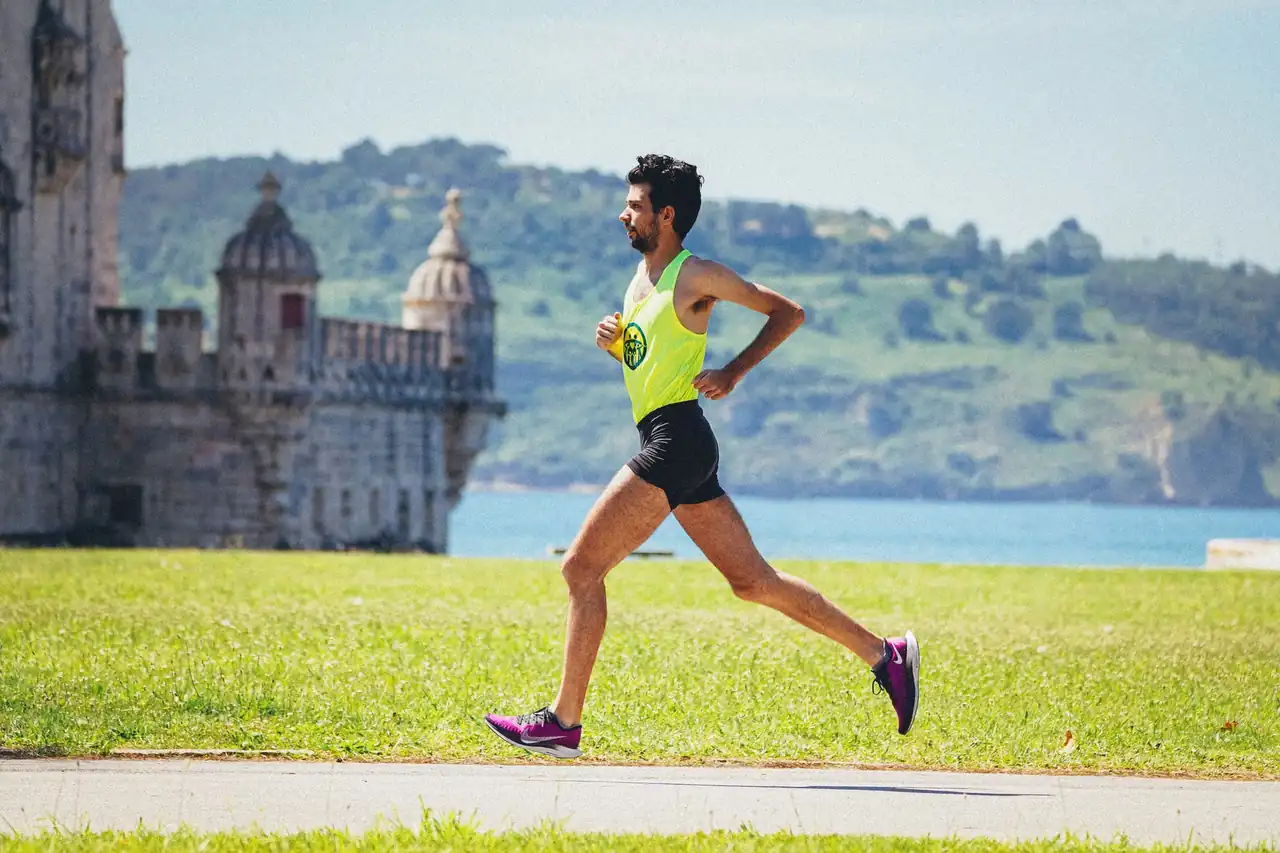
The Alicante Castle Race retains all of its appeal: an urban winter race in which the profile of the course matters as much as the clock. The combination of ramps, fast stretches, and the passage by two emblematic fortresses turns this event into something more than a simple popular race. It is a race with its own identity, where the landscape weighs on the legs and also on the runner’s memory.
In the 2026 edition, the reference circulating in the calendar places the race on October 4, with 5K and 10K distances. That date puts it among the events marked by many runners looking for a short but intense effort, with a very recognizable script: start, climbs, a city open to the Mediterranean, and a finish in a stadium that adds a clean, competitive ending.
A race marked by two castles and a profile that gives nothing away
What sets this race apart is not only the name, but the urban route with a historical flavor. Alicante offers here one of those races in which the city does not act as a backdrop, but as the main character. The presence of San Fernando Castle and Santa Bárbara Castle turns each stride into a small negotiation with the incline, and that gives it a very different character from other flatter, more predictable road races.
The most widely cited reference among organizers and local media places the start in the area of Foguerer José Romeu Zarandieta Street, next to the Monte Tossal pools and the Joaquín Villar athletics stadium. The finish, also in the stadium, allows the race to end on tartan, a detail that completely changes the final sensation: the runner moves from asphalt and uphill climbs to the steadiness of a track, as if the race were breathing at the end after climbing hard for kilometers.
In that mix of toughness and scenery lies much of its appeal. It is not an event designed to chase an easy personal best, but to sustain the effort when the course narrows, breaks up, and forces pace control. That balance between demand and beauty has made it one of the most recognizable races on Alicante’s calendar.
The official distances and what each one demands
The organization has worked with two clearly defined distances: 5 kilometers and 10 kilometers. The first trims part of the challenge, but keeps the essence of the event, because the climb to San Fernando Castle is already enough to change how the effort is read. The second adds extra toughness and ambition by including the ascent to Santa Bárbara, one of the city’s most emblematic points.
In the shorter version, the runner enters the logic of explosive racing earlier. The margin for error shrinks, the legs must respond from the first stretch, and the incline punishes any false start. It is an ideal distance for those who want to test themselves on a hilly course without yet entering the wear and tear of a more complete 10K. The longer distance, by contrast, demands brains as well as engine power: pace must be managed on the climbs, split times should not become an obsession, and one must accept that some kilometers are run with a very different feeling from that of flat terrain.
The label of challenging urban race is not decorative. Here the hills are part of the sporting story, and that is why the race attracts both those seeking experience and those wanting a specific challenge in a city that knows how to present its popular races well. The change in gradient in the castle section adds tension that is felt in the calves, in the breathing, and in the way each turn is approached.
Start, finish, and schedule: the data that matters most in planning
The most reliable reference data place the day with staggered starts in the morning. For the edition observed among competitors, the 5K started at 9:00 and the 10K at 9:30, a logical separation to organize the flow of runners and avoid congestion on a course with narrow and demanding sections. Although the 2026 edition may adjust details, the timetable pattern follows the same principle: allowing room for a race in which logistics matter almost as much as endurance.
The start next to Monte Tossal and the finish at Joaquín Villar Stadium create a very functional structure. The runner lines up in a familiar setting, with capacity to concentrate services, and finishes in a more controlled space, where the tartan offers a kinder end for legs that arrive heavily loaded. The finish on the track is no minor detail: it improves the visibility of the final effort and provides a very recognizable image for spectators and athletes alike.
It is also worth emphasizing that the course passes through very representative areas of Alicante. This is not an anonymous loop: Rambla de Méndez Núñez, Alfonso El Sabio Avenue, Luceros, and other well-known arteries are part of the race’s story. That helps turn the competition into a kind of moving postcard, where the runners’ passage mixes with the city’s daily rhythm.
The course: a lesson in pacing, legs, and reading the terrain
In the 10K, the route forces a clear sequence of efforts. First comes the climb to San Fernando Castle, then the runner links up with faster urban stretches, and later tackles the ascent to Santa Bárbara, the most recognizable and also the toughest point. From there, the return toward the lower part of the city offers a more favorable transition, though not without accumulated fatigue.
The 5K keeps the same philosophy, but compresses the experience into fewer meters. It climbs to San Fernando, descends toward Alfonso El Sabio, loops around Luceros, and connects through several avenues to the finish. It is a short layout, yes, but by no means easy. The sense of continuity between uphill and downhill sections demands careful running, because the terrain changes and the muscles feel it quickly. Here, technique matters as much as strength.
In races of this type, the perception of effort often deceives. The final average pace may seem modest compared with other urban 5Ks or 10Ks, but the real value lies in how the race is sustained when the profile tilts. Climbs are paid for afterward, and descents, while easing things, also require control to avoid draining the legs too early. That double tension explains why the race is won and lost in very small details.
Prices, registrations, and the interest it generates among runners from outside
In the information consulted, the reference prices were 8 euros for the 5K and 10 euros for the 10K, modest fees for a race with a strong urban component and a very recognizable presentation. That reasonable cost helps explain its appeal, especially among runners looking for a different race without a high financial barrier.
The data published in 2025 also pointed to growing interest from runners from outside the province and even from outside Spain, which fits well with a race that combines tourism, history, and sport. Alicante has a natural pull thanks to its climate, accessibility, and scenery, but in this case it adds an extra element: running alongside its castles gives it a highly visual argument, easy to understand and remember.
Registration, in any case, is usually more a matter of timing than improvisation. Races with moderate capacity and a distinctive course tend to fill up fairly quickly as the date approaches, especially if they coincide with a period when runners have already started the season and are looking for an early serious assessment of form. The low price and distinctive route explain much of the interest.
What it brings to Alicante’s calendar and why it keeps so much personality
Within Alicante’s calendar, this event occupies a special place because it does not just compete with other races; it competes with its own image. The race has an easily recognizable narrative: two castles, visible effort, a city open to the runner, and a finish that rewards on the track. That structure gives it a stamp that does not need great embellishment to work.
In addition, the race connects very well with the local sporting identity. In recent years, Alicante has developed a solid offering of popular races, but few condense so well the link between urban landscape and athletic demand. Santa Bárbara Castle is not just any reference: it dominates the city, marks the horizon, and acts as a visual beacon that, in the race, becomes a physical target. Climbing toward it has something of a negotiation with the air, the incline, and one’s own stride.
There is also a continuity factor. When a race manages, year after year, to sustain a recognizable course and a date awaited by the running community, it stops being just an event and becomes a habit. At that point, the runner comes not only to compete, but to reconnect with a setting that is already part of their personal map. The race gains depth when it becomes tradition.
How a race like this is experienced from the road and from the stands
From the inside, the race feels like a sequence of micro-goals. Reach the first castle, maintain the rhythm in the more open area, avoid blowing up on the key climb, take advantage of the downhill, find breathing space in the favorable sections, and face the finish with the feeling of having solved a race longer than its kilometers suggest. That is the kind of experience that stays in memory long after crossing the finish line.
From the outside, the spectacle also works. The streets fill with runners going up and down amid very familiar landmarks, and that gives the public an immediate reading of the effort. You do not need to be an expert to understand that an incline takes its toll, that a curve changes breathing, or that a finish on tartan has a different texture. The city watches and accompanies, and that relationship between atmosphere and effort is one of the race’s great strengths.
In practice, the runner gets something here that is less common than it seems: a race that does not just measure speed, but forces you to interpret the terrain. That brings it closer to a more complete experience. The clock matters, but it does not rule alone. The circuit reading, effort management, and ability to adapt to a profile that offers few gifts also matter.
An urban challenge that is worth more for its character than for the final time
The Alicante Castle Race is not easy to understand if you look only at the standings. Its real value lies in the mix of history, city, elevation, and atmosphere. It is one of those events where the runner finishes with heavy legs, an alert mind, and a very specific feeling: that of having run within a setting with personality, not on just any course.
In an increasingly broad and homogeneous calendar, races like this keep their strength because they offer a recognizable and different experience. Alicante brings its geography, heritage, and urban profile into play to build a race that leaves a mark. And in that sense, the name is not a pretty label, but a fairly precise description of what happens when the starting gun turns the city into a circuit of climbs, descents, and sporting memory.
Whoever reaches the finish at Joaquín Villar does not just take away a time. They take away an image of Alicante seen from below and above, the weight of its hills, and the feeling of having passed by two of its most visible symbols with each stride. That is, in the end, why this race continues to draw attention year after year.



How to prevent thigh chafing: causes and real solutions

Women’s running windbreakers: seven jackets and how to choose

Do more workouts get rid of soreness? A guide for runners

Jaén Half Marathon 2026: Record 3,800 Runners Registered

Men’s short running tights: how to choose the right pair

World Triathlon confirms data breach involving medical data

Izan Edo targets podium at Miyazaki World Cup

María Pérez ranks ninth in World Athletics’ 2026 top ten

Dos Santos, Duplantis and Sawe: World Athlete of the Year finalists

San Silvestre Vallecana 2026: 42,000 places, prices and start times

 Races3 months ago
Valencia Half Marathon 2027: date and registration

 Races3 months ago
Valencia Marathon 2026: entry, ballot and course

 Reviews and Comparisons4 months ago
Asics Gel-Roadmiles 3 for men: review and current price

 Reviews and Comparisons4 months ago
Asics Gel Sonoma 8 Gore-Tex: complete analysis for trail and rain

 Sneakers3 months ago
Saucony Endorphin Pro 4: full review and verdict

 News5 months ago
Strava API 2026: what changes for clubs, challenges and runner apps?

 Reviews and Comparisons5 months ago
Nike Alphafly 3: opinions, sensations, and real key points

 Reviews and Comparisons4 months ago
Under Armour running shoes review 2025-2026: models and key features

 Sports Equipment4 months ago
Shoe sizes in cm: a clear guide to getting the right fit for your footwear

 Sneakers3 months ago
Skechers GO RUN Consistent 2.0 analysis: comfort and limits

 News5 months ago
Valencia Marathon 2026 route: key tips to train and run better

 Sneakers4 months ago
Adidas Adizero Boston 13 for men: review and verdict