Races
Almería Half Marathon 2025: route, impact, and key facts
Thousands of runners, more than 3 million in impact, and a city fully committed to sports and tourism.

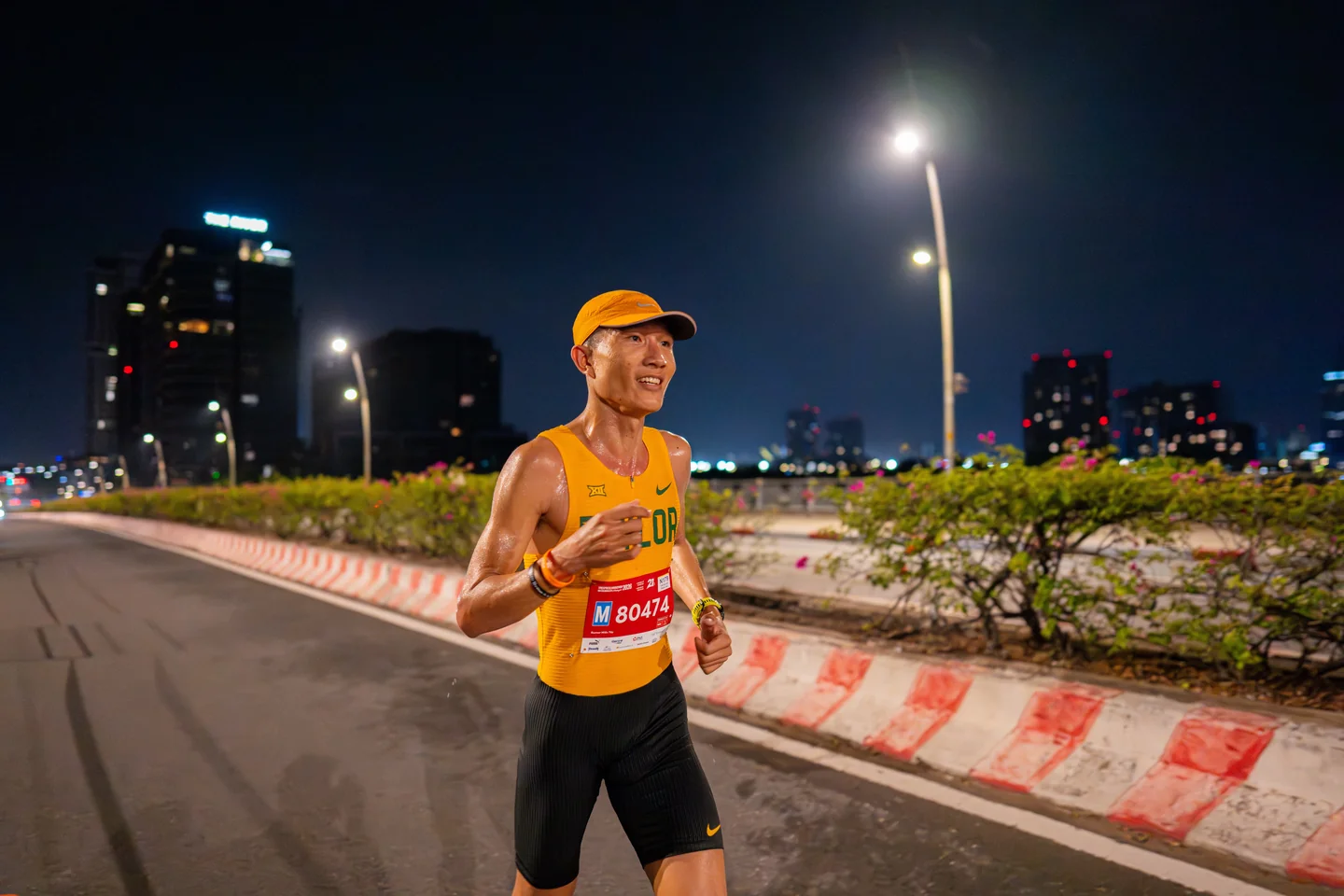
The Almería City Half Marathon 2025 left a very clear picture of what well-organized popular sport has become: a race capable of filling streets, moving thousands of people, and leaving money in hotels, bars, and shops. Held on April 6, 2025, the event brought together 4,272 runners and turned the capital of Almería into a showcase for sports tourism during a day of intense urban activity.
The most striking figure came later, when a study commissioned by the organizers estimated the event’s total economic impact at more than 3 million euros. That figure is explained not only by registrations or the participants’ direct spending: the race’s momentum extended to restaurants, accommodation, shopping, and leisure, with a notable presence of visitors from outside the city and an average stay of nearly two nights among those who spent the night there.
A race that now carries weight in the city’s economy
The study presented by Cooperación 2005, with the collaboration of professors from the University of Almería and the Tourism, Culture and Sport Economics Research Group of the University of Córdoba, places the direct impact at just over 2 million euros. Added to that is the spillover effect on the destination as a whole, pushing the total beyond the 3 million mark. This is no accounting footnote: in an urban economy, an event like this works like a small high season compressed into a single morning.
The spending breakdown helps explain why. According to the published results, 32.49% of consumption went to bars and restaurants, 20.12% to purchases in shops and supermarkets, 18.85% to accommodation, 17.24% to leisure, and 11.29% to other unforeseen expenses. The race does more than draw bib numbers; it draws city routines along with it. A breakfast before the start, a meal after crossing the finish line, an extra night to avoid rushing home, a last-minute purchase downtown. It all adds up.
That behavior explains the interest these kinds of events generate in cities seeking to establish themselves as sports tourism destinations. The councillor for Active City, Urban Mobility and Sport, Antonio Casimiro, stressed that Almería is working to strengthen that position and recalled that the capital received more than 50,000 visitors for this reason during the previous year. The half marathon fits into that picture as a high-value piece: it attracts, concentrates, and redistributes spending with an efficiency that is difficult to match by other one-day leisure events.
More runners from outside, more nights in the city
One of the most interesting features of the report lies in the participants’ origin. Of those registered, 73% came from outside the capital of Almería. That changes the event’s effect completely, because a local runner usually spends less, while a visitor needs transport, food, accommodation and, in many cases, company. The race stops being just a sporting event and becomes a logistical excuse to move people and consumption.
Among those out-of-town runners, almost 48% stayed overnight at least one night, which the research classifies as sports tourism, and around 52% traveled only on race day, as sports excursionism. The distinction matters because overnight stays multiply the economic effect: not only do people sleep in the city, they also dine, have breakfast, shop, and extend their stay. In fact, the study calculates 3,423 hotel overnight stays and an average stay of 1.98 nights.
Average spending also reveals two very different profiles. In the case of sports tourists, including companions, the average rose to 1,203.61 euros per stay; for sports excursionists, to 126.47 euros. The gap between those figures reveals something often repeated in the tourism sector: staying one more night is worth almost as much as adding many small, scattered purchases. For a coastal city like Almería, that margin can mean the difference between an anecdotal activity and a notably profitable week.
The route and staging of the event
The Almería Half Marathon has established itself as an urban circuit of 21.097 kilometers certified by the RFEA. The start was set on Alcalde Santiago Martínez Cabrejas Street, next to the Mediterranean Games Palace, and the starting gun went off at 9:30 a.m. on Sunday, April 6. The course once again passed through main streets and emblematic places in the capital, with that blend of effort and postcard view that so appeals to those who run in Mediterranean cities.
The event also celebrated its twenty-sixth edition, a detail that matters because it speaks of continuity. Races with history often become city brands, almost a civic ritual. The runner is not just looking for a time or sensations; they also want a recognizable experience, a well-located start, a logical course, and the kind of organization that avoids surprises. In Almería, the route repeated for the fifth consecutive year offers exactly that: continuity, easy reading, and an identity that is already becoming familiar.
Runedia classified it as an road race and certified half marathon, while other calendar references place it as a well-established event within the province’s popular race circuit. In practical terms, that means the race does not rely on the surprise of being new, but on the confidence of the format. For many runners, that stability matters almost as much as the course profile: knowing where the race starts, what kind of surface is underfoot, and which city you will run through can influence registration far more than any flashy appeal.
What runners were looking for when they arrived in Almería
Beyond the stopwatch, the report captures a dimension that is often overlooked: the real motivation of those who travel to run. In this edition, 45% highlighted local gastronomy as an important part of their experience. More than 30% combined the race with a beach visit, and more than 25% took the opportunity to see friends or family. The race thus functioned as a gateway to the city rather than a mere sporting formality.
That pattern fits Almería’s personality as a destination. The coastal landscape, the tapas scene, the cuisine linked to produce from the market gardens, and the value of places such as the Cabo de Gata-Níjar area create a very recognizable context for visitors. Running and eating, running and seeing the sea, running and extending the visit: the event fits into a city that knows how to present itself without fanfare and that finds in sport a way to show its best features.
The research itself points out that this combination strengthens the event’s cultural value. A half marathon is not just a strip of asphalt marked every kilometer; it is also a way of entering a city at a different pace. The runner looks at facades, avenues, the coastline, and in many cases leaves with a more complete impression than that of a conventional visitor. That is why the race becomes such an effective promotional tool: in a few hours, it condenses the city’s identity, hospitality, and ability to handle large flows without losing its everyday rhythm.
High satisfaction and loyalty to a well-established experience
The report also points to very high satisfaction levels. Nine out of ten respondents positively rated the treatment received from the organizers, volunteers, and the public’s attitude. That carries particular weight in an urban race, where runners measure not only aid stations or signage, but also the atmosphere around them. A city that gets involved is noticeable. You hear it in the applause, see it in the controlled intersections, and feel it in the sense that the course belongs not only to the athlete, but also to the people watching them pass.
The intention to return and recommend the event was also strongly reinforced. Most participants said they would visit Almería again and recommend it to family and friends as a destination. In essence, that is the great success of an event like this: turning a race into a favorable memory. Cities compete to attract visitors, but also to remain on the emotional radar of those who know them on a specific day. If that memory is associated with order, good service, and a pleasant setting, the likelihood of returning rises significantly.
For runners, too, the experience is measured with very concrete parameters. The start, scheduled precisely for 9:30 a.m., the certified course, the scale of the event, and the presence of spectators make the half marathon a serious appointment, without gimmicks. It needs nothing more. In a calendar crowded with races, organizational reliability has become a competitive asset. And in Almería, that value is supported by years of continuity and by a city that understands sport as part of its urban showcase.
A benchmark for sports tourism in the southeast
The 2025 edition confirms something that was already becoming clear: the Almería City Half Marathon has ceased to be just a popular race and has become an asset for the city. The economic impact, the influx of visitors, hotel occupancy, and spending associated with travel place it in a very visible position on the national map of urban races. It competes not only with other half marathons in terms of entries, but in its ability to activate the immediate surroundings.
That is, probably, the great lesson this edition leaves behind. In an era when sporting events are also measured by their ability to generate returns, a well-established half marathon can function as a small engine of local activity. It doesn’t replace other sectors, of course, but it does push them. It moves people around, fills tables, brings visitors into the city center, and reinforces the image of a city in motion. Almería used that April morning to show exactly that: that popular sport, when it takes root, leaves a mark far beyond the finish line.
And in that mark, figures, streets, and sensations blend together. More than 3 million euros, 4,272 bib numbers, 3,423 overnight stays, and a city looking out to the sea while running. The 2025 half marathon was not just another race on the calendar: it was a test of maturity for a destination that has understood that every stride can also count as economy, promotion, and urban life.



How to prevent thigh chafing: causes and real solutions

Women’s running windbreakers: seven jackets and how to choose

Do more workouts get rid of soreness? A guide for runners

Jaén Half Marathon 2026: Record 3,800 Runners Registered

Men’s short running tights: how to choose the right pair

World Triathlon confirms data breach involving medical data

Izan Edo targets podium at Miyazaki World Cup

María Pérez ranks ninth in World Athletics’ 2026 top ten

Dos Santos, Duplantis and Sawe: World Athlete of the Year finalists

San Silvestre Vallecana 2026: 42,000 places, prices and start times

 Races3 months ago
Valencia Half Marathon 2027: date and registration

 Races3 months ago
Valencia Marathon 2026: entry, ballot and course

 Reviews and Comparisons4 months ago
Asics Gel-Roadmiles 3 for men: review and current price

 Reviews and Comparisons4 months ago
Asics Gel Sonoma 8 Gore-Tex: complete analysis for trail and rain

 Sneakers3 months ago
Saucony Endorphin Pro 4: full review and verdict

 News5 months ago
Strava API 2026: what changes for clubs, challenges and runner apps?

 Reviews and Comparisons5 months ago
Nike Alphafly 3: opinions, sensations, and real key points

 Reviews and Comparisons4 months ago
Under Armour running shoes review 2025-2026: models and key features

 Sports Equipment4 months ago
Shoe sizes in cm: a clear guide to getting the right fit for your footwear

 Sneakers3 months ago
Skechers GO RUN Consistent 2.0 analysis: comfort and limits

 News5 months ago
Valencia Marathon 2026 route: key tips to train and run better

 Sneakers4 months ago
Adidas Adizero Boston 13 for men: review and verdict