Races
Arcos de la Frontera Half Marathon 2026: date, route and details
Date, start, route, price and services of the 21.1 km Arcense race, with key information for runners and travelers.

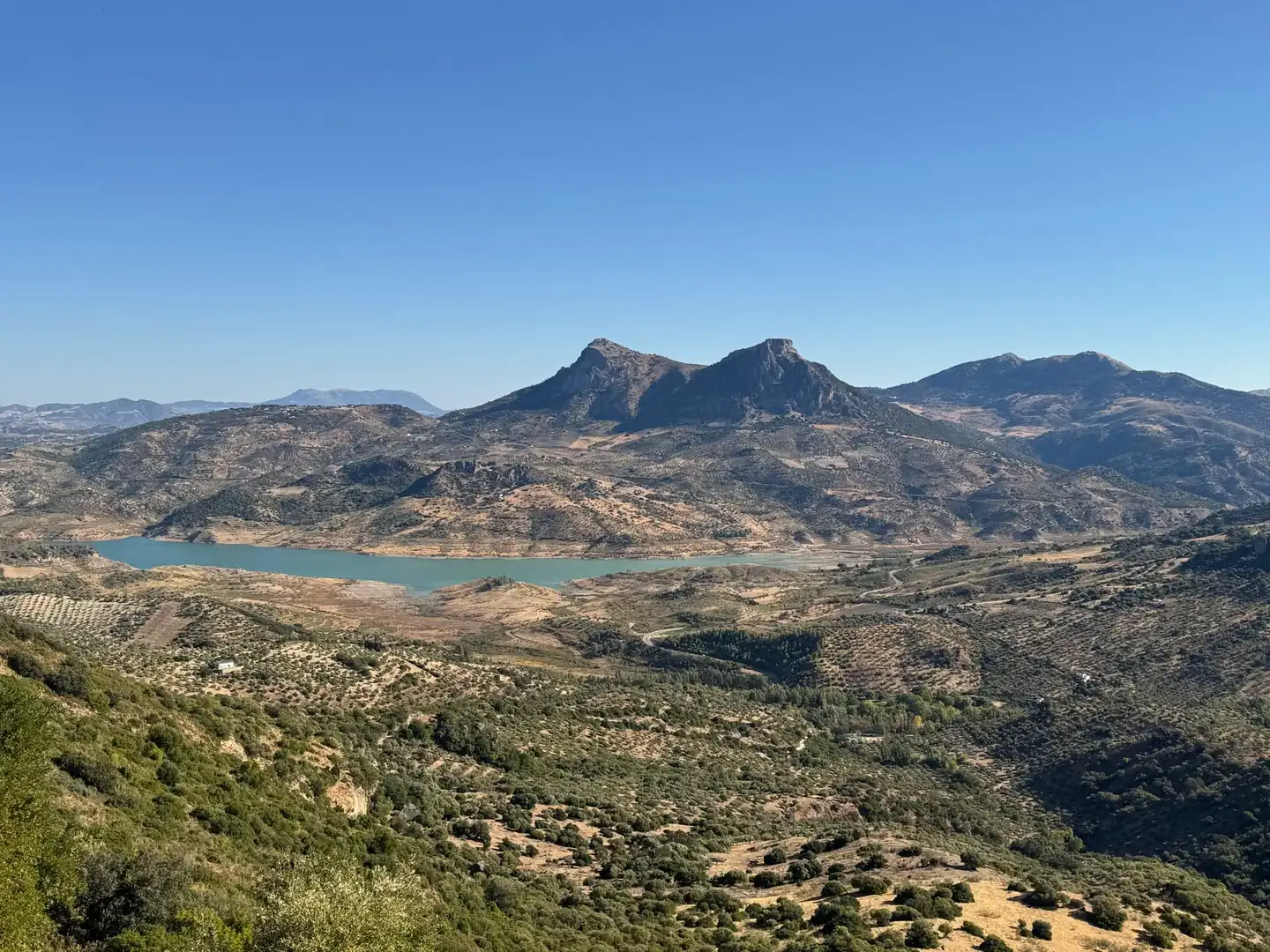
The Ciudad de Arcos Half Marathon will once again fill the hills and viewpoints of one of Cádiz’s most distinctive historic centers with runners. The fourth edition is set for Saturday, January 31, 2026, with the start at 10:00 from the Jédula sports center and a 21.097-kilometer course supervised by the Andalusian Athletics Federation. The race has established itself as a winter event with its own identity: demanding, striking, and with that small-town race feel that blends local atmosphere, competitive depth, and Andalusian scenery.
The most useful detail for anyone planning the trip is clear: registration costs 18 euros and closes on January 29, 2026. At the finish there will be a finisher medal, baggage storage, medical service, showers, and aid stations at kilometers 5, 10, 15, and post-finish. Pacers have also been announced for 1h25, 1h30, 1h35, 1h40, 1h45, and 1h50, a detail that confirms the careful nature of a race designed both for chasing a time and for enjoying the route.
A half marathon with a local accent and a competitive edge
Arcos de la Frontera does not offer a flat circuit or a neutral postcard. What it offers is something else: a popular race with real sporting depth and a setting that gives each kilometer its own character. The town, perched on a hill and opening onto the Guadalete valley, turns the start and finish into more than two points on a map. Running there forces you to look, to pace yourself, and to accept that the terrain profile is part of the story.
The 2026 edition will be the fourth Ciudad de Arcos Half Marathon, a continuity that already says a lot about its place on the Andalusian calendar. It is not a big city or a mass-participation race; precisely for that reason, it keeps that close-up competitive feel in which the runner notices the organization’s hand, the support of the crowd, and the human scale of the event. The reference to federation officials, timing, and category trophies reinforces the impression of a serious race, with a complete sporting structure.
The surroundings of Arcos help explain why this half marathon is gaining interest beyond the province. The municipality is one of the great names on the white villages route, with narrow streets, steep viewpoints, and a heritage that dominates the scene. For the runner, that means a different experience: it is not just about covering 21.1 kilometers, but about moving through a place with relief, history, and perspective. That combination usually leaves a stronger memory than a straight line beside the asphalt.
Date, start, and schedule of a race strongly shaped by winter
The event takes place on January 31, 2026 and starts at 10:00. That schedule, besides being convenient for travel, fits a winter day in the Cádiz countryside, where the weather is usually milder than in other parts of Spain at that time of year. In the references consulted, the forecasted actual temperature for race day is 12.5 degrees, with a historical average close to 11.9 degrees, a very favorable range for running well and avoiding heat as an enemy.
The start and finish are located at the Jédula sports center, an important detail for those organizing logistics, because it shifts the focus away from the old town to a more functional facility for gathering runners, bibs, and services. Bib pickup will take place on race day itself, at the start area, between 8:00 and 9:15. That window means an early wake-up, yes, but it also makes access easier for those arriving from other towns and wanting to avoid extra travel the day before.
The event is organized by the Arcos de la Frontera Town Hall, with a registration fee of 18 euros. That is not a high amount for a federated half marathon with a finisher medal, planned aid stations, and additional services such as baggage storage and sports massage. In the current context of popular races, that cost places it among the accessible options for those looking to compete without taking on the higher fees associated with larger events.
A 21.097-kilometer course designed to test the legs
The official route totals 21,097 meters, the certified half marathon distance. The available information also mentions an elevation profile of +150 meters, a figure enough to anticipate that this is not a purely flat race. It is not a constant climb or a mountain race, but it is a course with enough elevation gain to punish anyone who goes out above their threshold. Tactical restraint usually pays off more than early exuberance.
The race communication also highlights the presence of pacers and aid stations at kilometers 5, 10, 15, and post-finish. That layout suggests a course designed to offer fairly clear reference points. For a recreational runner, the presence of marked paces is usually a guarantee of order in the race; for someone chasing a time, it is also a sign that the event wants to help sustain a steady effort rather than forcing improvisation at every stretch.
The Arcos half marathon is run on asphalt, but with a reading very closely tied to the urban and peri-urban landscape. The surroundings of Arcos, with their transitions between more open areas and sections of historic layout, give the race a different rhythm. There are races where the scenery passes by unnoticed; here, by contrast, the scenery accompanies, presses in, and sometimes distracts. That mix is part of the appeal and also part of the difficulty.
Race services and details that shape the experience
The race does not just offer a distance and a bib. It includes timing, baggage storage, medical assistance, a finisher medal, restroom facilities, and a sports massage therapist. These are elements that, although often taken for granted, make a difference when the race is experienced from the inside. A runner finishing a half marathon in January, after more than an hour of effort, appreciates both a well-organized finish and a well-handled race pack.
The aid stations at kilometers 5, 10, and 15 make sense in a half marathon with moderate elevation and the potential for sustained effort. From kilometer 10 onward, hydration and heart-rate management stop being a generic recommendation and become part of the strategy. In races like this, losing a bit of pace because of poor pacing usually costs more than easing off by five seconds per kilometer at the start and arriving strong for the final stretch.
The trophy system also stands out, reserved for the top three finishers in each category, for both men and women. That setup underlines the competitive side of the event and the attention given to categories, something important in popular races with strong local roots. It is not just a race for elites or for those looking for a finish-line photo; it also works as a showcase for clubs, veteran runners, and participants chasing a specific benchmark within their age group.
Arcos de la Frontera as a race and travel setting
The added value of this half marathon does not end at the finish line. Arcos de la Frontera is one of those places that justify a getaway on their own. Its old town, declared a historic-artistic site, rises on a cliff with views over the Guadalete and the landscape of the Sierra de Grazalema. Running there is only part of the experience; the other part is walking afterward through cobbled streets, looking out from viewpoints, and understanding why the town appears again and again in Andalusian tourist routes.
The race can serve as an excuse to extend the stay, something many participants do when the calendar allows it. Cádiz is relatively close for those who want to combine sport and coast; Jerez de la Frontera offers wine, heritage, and a different urban scale; and the white villages around it, with Zahara de la Sierra as one of the most recognizable names, complete a very appealing weekend map of excursions. In that sense, the race competes not only with other half marathons; it also competes with the urge to stay a little longer.
The course itself adds layers to the experience. It is not the same to run in a sprawling city as in a town where the terrain forces you to go up, down, and look around. The narrow streets, the views from the cliff, and the white architecture create a very recognizable atmosphere. For the runner, that feeling can be both a boost and a reminder that the half marathon does not happen in a vacuum: it is run inside a living city, with history and with incline.
What previous editions suggest
The race’s continuity is easier to understand by looking back. Previous references mention editions held in 2015, 2024, and 2025, showing a trajectory that has gradually consolidated until reaching this fourth official edition under the current name. The 2026 edition is presented with the stamp of a race that is already known, but still in the process of securing its place within the Andalusian winter calendar.
The evolution matters because it allows the race to be read as more than the snapshot of a single year. A half marathon that maintains organization, services, and continuity gives confidence to outside runners, who usually value punctuality and clear information just as much. It also gives context to the presence of pacers, the prize structure, and the decision to place the start in Jédula, a point that makes logistics easier.
In 2025, moreover, the race had already been described as a very well-regarded event by participants who traveled from other Andalusian cities to try it as a test. That nuance matters because it places the race in a category that goes beyond the local calendar: it can serve as a reference for those preparing other half marathons or even spring marathons. Not every race allows that; many are just a formality. Here, by contrast, there is a technical component that really shows.
The half marathon that blends times, scenery, and a winter calendar
The Ciudad de Arcos Half Marathon brings together several uncommon attributes in a single race. It has an early-year date, a contained price, municipal organization, enough services for the recreational runner, and a moderately hilly route in a very recognizable setting. That combination makes it an event of interest to different profiles: those who want to compete, those who want to cover the distance, those looking for a winter outing with sporting purpose, and those who simply want to run in a place with character.
There is also one detail that places it well against other half marathons in January and February: the weather context. Running at around 12 degrees in an inland Andalusian town is usually a favorable combination for holding pace without overheating. When the course is not completely flat, that weather helps the race be decided by pacing, not by suffocation. In the end, that is what makes a half marathon more interesting: it forces you to measure your ambition.
Arcos de la Frontera does not offer a long endless avenue or a sea of tens of thousands of runners. It offers something else, quieter and more recognizable: a classic distance, a town with a heritage footprint, and a race that wants to grow without losing its scale. In the Andalusian running calendar, that combination carries weight. And in a runner’s memory, even more.
In the end, the easiest image to keep is this: a group of runners crossing Jédula in the cold January light, with the silhouette of Arcos in the background and the asphalt waiting for a half marathon that is not limited to counting kilometers. It also counts climbs, paces, glances, and a way of understanding running in which the place matters just as much as the clock.
Arcos in January and an event gaining weight in the south
The Arcos race has earned its own space for a simple reason: it offers a complete experience. There is a clear date, a reasonable price, enough services, a course with personality, and a setting that invites you to stay. In a calendar crowded with similar races, that balance between the sporting and the local is no small detail. It is, in fact, what makes some half marathons endure and others fade quickly from memory.
The Ciudad de Arcos Half Marathon moves along that border between the useful and the memorable. Useful for those who want to compete in January under reasonable conditions. Memorable for those who enjoy running in places with history, relief, and presence. And for that very reason, its appeal does not depend only on race day, but on the sum of everything around it: the town, the schedule, the distance, the organization, and that landscape which, from start to finish, seems to remind you that in Andalusia you also run while looking around.



How to prevent thigh chafing: causes and real solutions

Women’s running windbreakers: seven jackets and how to choose

Do more workouts get rid of soreness? A guide for runners

Jaén Half Marathon 2026: Record 3,800 Runners Registered

Men’s short running tights: how to choose the right pair

World Triathlon confirms data breach involving medical data

Izan Edo targets podium at Miyazaki World Cup

María Pérez ranks ninth in World Athletics’ 2026 top ten

Dos Santos, Duplantis and Sawe: World Athlete of the Year finalists

San Silvestre Vallecana 2026: 42,000 places, prices and start times

 Races3 months ago
Valencia Half Marathon 2027: date and registration

 Races3 months ago
Valencia Marathon 2026: entry, ballot and course

 Reviews and Comparisons4 months ago
Asics Gel-Roadmiles 3 for men: review and current price

 Reviews and Comparisons4 months ago
Asics Gel Sonoma 8 Gore-Tex: complete analysis for trail and rain

 Sneakers3 months ago
Saucony Endorphin Pro 4: full review and verdict

 News5 months ago
Strava API 2026: what changes for clubs, challenges and runner apps?

 Reviews and Comparisons5 months ago
Nike Alphafly 3: opinions, sensations, and real key points

 Reviews and Comparisons4 months ago
Under Armour running shoes review 2025-2026: models and key features

 Sports Equipment4 months ago
Shoe sizes in cm: a clear guide to getting the right fit for your footwear

 Sneakers3 months ago
Skechers GO RUN Consistent 2.0 analysis: comfort and limits

 News5 months ago
Valencia Marathon 2026 route: key tips to train and run better

 Sneakers4 months ago
Adidas Adizero Boston 13 for men: review and verdict