Races
Aspen Valley Marathon 2026: date, distances, and key features of the course
The Aspen race combines a marathon, half marathon, and 5K in an alpine setting, with schedules, fees, and practical details.

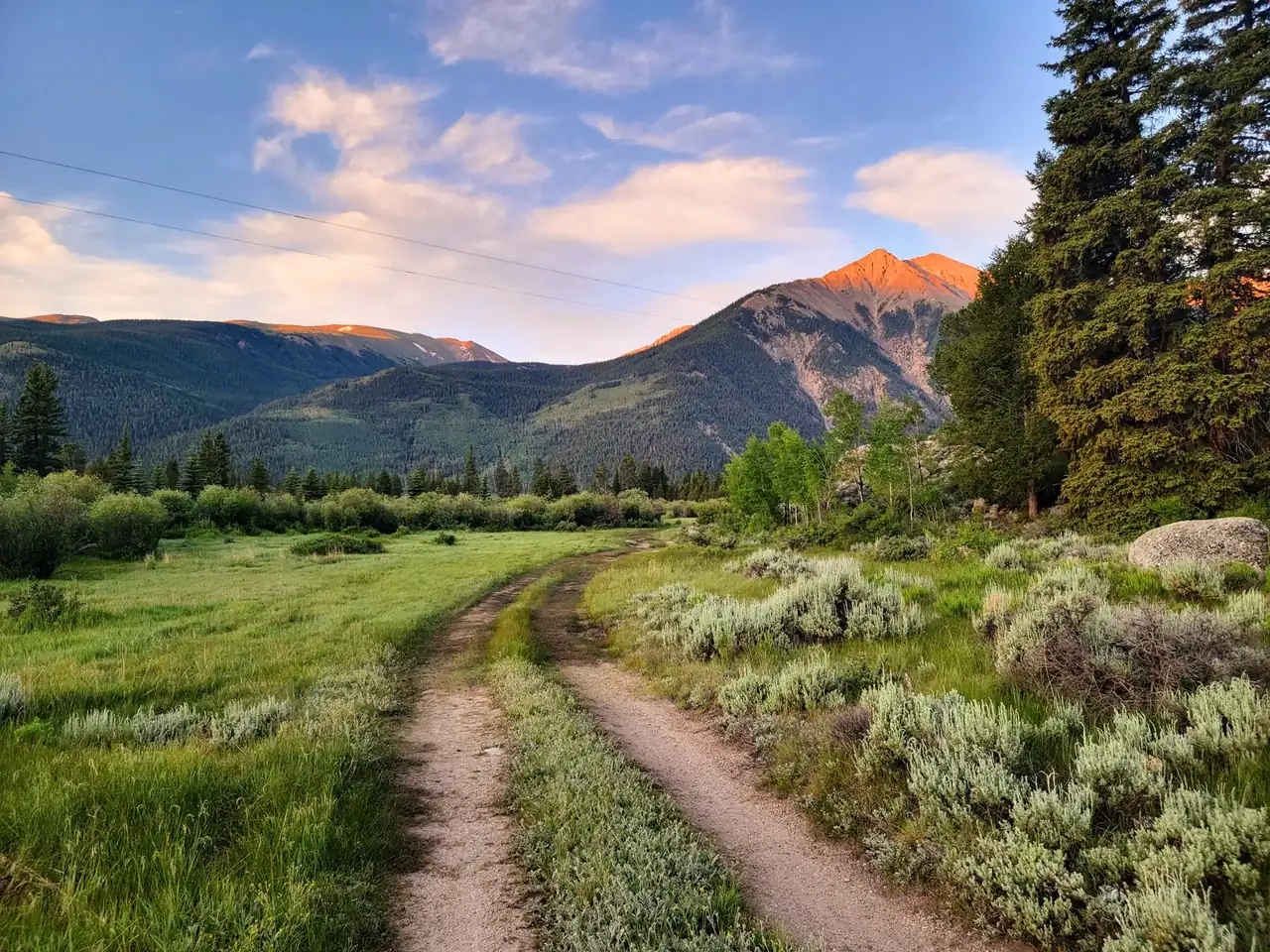
The Aspen Valley Marathon 2026 will once again bring runners together in a mountain setting unusual for a road race: Aspen, Colorado, with the start in Wagner Park and the finish in Lions Park, in Basalt. The event will take place on Saturday, July 25, 2026 and will offer three official distances, marathon, half marathon and 5K, in a format that blends high-impact scenery, simple logistics and a clearly competitive profile.
The race has established itself as one of those events that combine sports tourism and genuine performance. Its main appeal is not only the Alpine postcard view, but also a course with net downhill and altitude effect, two variables that force runners to pace themselves much more carefully than in a city race at sea level. Added to that is a fact that attracts many experienced runners: the marathon is a Boston qualifier, a detail that puts it on the radar of those looking for a fast time on a summer calendar that is not overly crowded.
A summer race with its own identity
In Aspen, the marathon is not limited to covering 42.195 kilometers. The race has a personality marked by the mountains, the elevation and the July light, when the season offers cool mornings and afternoons that can warm up quickly. The result is a very different experience from a flat city course: here the runner enters a landscape that changes its tone at every stretch, with dry air, open horizons and an environment that commands respect from the very first kilometer.
The appeal of the event also lies in its scale. The organization works with a rather limited field, something that usually translates into cleaner starts, fewer crowds and a clearer sense of one’s own pace. In races like this, the conversation changes: the focus is no longer on large masses or media records, but on the combination of travel, strategy and physiological adaptation. Aspen is not a neutral setting; the altitude matters, and it shows both in breathing and in the way the legs respond to changes in terrain.
The date in 2026 also arrives right in the heart of the mountain summer, an attractive window for those who fit their racing calendar around longer getaways. In that context, the Aspen Valley Marathon sits between two worlds: that of a demanding race with sporting value and that of a destination experience, where prior planning matters almost as much as training. Sleeping well, arriving early and managing hydration are not luxuries; in a race like this, they are part of performance.
Course, start and finish: what really affects your time
The available information places the start at Wagner Park, in Aspen, and the finish at Lions Park, in Basalt. Between those two points, the route follows a road and paved section with a very particular profile: it starts high, descends for much of the course and then regains some softness before the end. This is not a continuous and trivial downhill, but a sequence that demands pace control and muscles prepared to absorb impact.
That detail matters more than it may seem. A course with an early drop can create a false sense of ease, but the price usually comes later, when the body has already accumulated eccentric tension in the quadriceps and calves. In Aspen, the runner is not only racing the clock; they are racing against the cumulative effect of altitude and gradients. So even if the profile may seem friendly at first glance, it should not be read as an invitation to go out too fast.
The starting altitude, close to 8,000 feet, adds another layer of difficulty that changes the script of the effort. The blood transports oxygen less efficiently than at sea level, breathing rate rises sooner and the margin for pacing mistakes becomes smaller. In practice, that means effort management has to begin from the start, even in a race that is sold for its beauty. The scenery may be distracting, yes, but physiology is in charge.
There is also a useful nuance for those comparing Aspen with other summer races in the United States: here the goal is not only to endure the distance, but to do so in an environment where the body takes longer to settle. That is why the marathon is presented as a particularly interesting race for those who value adapting to the terrain and dry air, not just pure time.
Official distances and participant profile
The 2026 program includes marathon, half marathon and 5K, a combination that broadens the participant profile. The marathon is the main distance and the one that carries the greatest sporting load, but the half marathon and 5K allow the weekend to be accessible to runners of different levels. That mix helps the event appeal not only to long-distance marathoners, but also as a full event for clubs, groups of friends and companions.
The 5K is usually the entry point for those who want to enjoy the atmosphere without taking on the strain of a long race. The half marathon, meanwhile, occupies a very logical middle ground in a mountain setting: it is demanding enough to feel the altitude, but less taxing than the marathon for those traveling with a recreational or tune-up goal. In the same weekend, Aspen thus offers three ways to read the same sporting landscape.
From the runner’s point of view, this structure makes it possible to see the event as a distance festival with different intensities. Some athletes travel for a fast time, others for the challenge of running at altitude, and others for the experience of crossing a Colorado valley with a bib. The variety of distances reduces the rigidity of the event and strengthens its appeal as a calendar fixture, not just as an isolated marathon.
Published schedules, registration and prices
The organization’s information and the race listings consulted place the marathon start at 6:00, the half marathon at 7:30 and the 5K at 10:00. These times confirm a classic early-morning setup, logical in a summer race and even more so in a mountain environment, where starting early helps avoid some of the heat and take advantage of the thermal stability of the first hours.
Also published are indicative registration prices for 2026. The marathon is listed at $274.25, including a $14.25 fee; the half marathon is listed at $255.65, with a $15.65 charge, and the 5K is set at $107.25, with a $7.25 fee. These are high figures compared with conventional city races, but they fit the context of a destination race in a high-cost logistical setting.
Registration is described as open in the reference information, with a specific cutoff the day before the race for each distance. That paints a fairly clear picture: this is not a last-minute race, but rather one that requires advance planning. In events like this, demand depends not only on the bib, but also on flights, accommodation and transportation, three variables that usually move quickly when the race coincides with the peak summer season in Aspen.
The official website indicated in the information is www.aspenvalleymarathon.com, where the operational side of the event is concentrated. For a runner organizing their calendar, that detail matters as much as the date: the race’s logistics, fees and schedules are defined well in advance to allow an informed decision.
What role does altitude play in the race?
Altitude is not a decorative detail in Aspen. It is the factor that changes how you compete, eat, hydrate and interpret effort. A runner arriving from sea level feels the impact in simple tasks: holding a pace that feels comfortable at home, talking while running, or recovering heart rate between changes in gradient. The body works with less margin, and that limitation multiplies if the route also descends, climbs or alternates irregular surfaces.
That is why the technical discussion around the Aspen Valley Marathon often centers on acclimatization. Several specialized guides recommend arriving at least 48 hours in advance to begin adapting to the environment, a reasonable window for breathing and perceived exertion not to be affected as much at the start. It is not a guarantee of success, but it is a sensible way to reduce the initial impact of altitude.
The other major factor is hydration. Mountain air and July sun speed up fluid loss, and in that kind of setting dehydration does not always feel immediate. It shows up as heart-rate drift, mental heaviness or a loss of freshness in the final stretch. In a marathon with a downhill section and later recovery, that wear can make the difference between a controlled finish and a difficult final third in terms of sensations.
Altitude also affects pace choice. What would be a conservative strategy in a sea-level marathon may already be an ambitious bet in Aspen. Prudence does not come from fear, but from evidence: at altitude, starting a little slower is usually an investment, not a surrender. That is especially true when the course punishes the legs in the sustained downhill phase.
Boston qualifier and why that label matters so much
One of the marathon’s big selling points is its status as a Boston qualifier. That label remains a magnet in the distance-running world because it turns a beautiful race into one with measurable value within the high-performance amateur circuit. It does not automatically guarantee qualification, of course, but it does provide a competitive context that raises the race’s appeal.
The combination of altitude and downhill profile creates an attractive paradox. On the one hand, the elevation drop can help you run fast in certain sections; on the other, altitude adds invisible resistance. A runner who arrives thinking only about the downhill may be mistaken, and one who focuses only on the difficulty of the air may miss the opportunity of a favorable course in the opening part. That tension between aid and punishment is part of the event’s identity.
In terms of perception, the Boston qualifier also broadens the kind of runner who looks at Aspen. It is no longer just a scenic getaway, but a race with verifiable sporting value. That dual nature explains why it is often mentioned in summer marathon guides: it has enough tourism appeal to stand out, but also a concrete competitive reason to be on serious runners’ radar.
A race weekend beyond the bib
The competitors’ references make it clear that Aspen offers more than a start line. They talk about the course, the setting, the afterparty and the race weekend, an idea that helps frame the event as a complete product. In practice, that means the runner is not just booking a registration; they are booking an experience that includes travel, atmosphere and a city with a very distinct identity.
Aspen also adds a contrast that few races can offer. The geographic setting is Alpine, but the event is held in July, when the valley is green and the temperatures still allow for a pleasant morning of racing. That mix creates an unusual image: mountains, summer light and asphalt or paved path in the same postcard. For the spectator, it is a postcard; for the runner, it is a demanding test with a beautiful backdrop.
There is also a practical side that should not be overlooked. Destination races require a more disciplined schedule than local races. Airport transfers, hotel bookings, pre-race rest and post-race recovery matter more than in a nearby event. In Aspen, that planning environment is part of the race itself. Those who arrive late to the context often arrive late to the good feelings as well.
The fact that the event combines several distances with a high-profile tourist setting explains its presence in search results and running guides. It is not a mass race, but it is a race with a story. And in today’s calendar, that story matters: a mountain marathon with Boston qualifier status, an accessible half marathon and a 5K in one of Colorado’s most recognizable towns.
What Aspen leaves behind when you cross the finish line
The memory of a race like this is rarely measured in minutes alone. What remains is the feeling of the cold air at the start, the sight of the peaks above the valley and the texture of a course that makes you think about every stride. In that sense, the Aspen Valley Marathon 2026 presents itself as a race where the time matters, but so does the way you get there. The final time will be one data point; the experience will be a much broader record.
For runners looking for a marathon with identity, the proposition is clear: fixed date, defined distances, published price and a course with personality. For those who value races with context, Aspen offers a complete script, with mountains, summer and a challenge that is not easily tamed. And that, in a calendar full of predictable events, still has journalistic and sporting value.
The 2026 edition already sketches a recognizable scene: early start, altitude, open scenery and a finish in Basalt that brings an end to a mountain route with athletic ambition. In races like this, the finish line does not just mark the end of the effort; it also seals the memory of a morning that, by design, was made to last.



How to prevent thigh chafing: causes and real solutions

Women’s running windbreakers: seven jackets and how to choose

Do more workouts get rid of soreness? A guide for runners

Jaén Half Marathon 2026: Record 3,800 Runners Registered

Men’s short running tights: how to choose the right pair

World Triathlon confirms data breach involving medical data

Izan Edo targets podium at Miyazaki World Cup

María Pérez ranks ninth in World Athletics’ 2026 top ten

Dos Santos, Duplantis and Sawe: World Athlete of the Year finalists

San Silvestre Vallecana 2026: 42,000 places, prices and start times

 Races3 months ago
Valencia Half Marathon 2027: date and registration

 Races3 months ago
Valencia Marathon 2026: entry, ballot and course

 Reviews and Comparisons4 months ago
Asics Gel-Roadmiles 3 for men: review and current price

 Reviews and Comparisons4 months ago
Asics Gel Sonoma 8 Gore-Tex: complete analysis for trail and rain

 Sneakers3 months ago
Saucony Endorphin Pro 4: full review and verdict

 News5 months ago
Strava API 2026: what changes for clubs, challenges and runner apps?

 Reviews and Comparisons5 months ago
Nike Alphafly 3: opinions, sensations, and real key points

 Reviews and Comparisons4 months ago
Under Armour running shoes review 2025-2026: models and key features

 Sports Equipment4 months ago
Shoe sizes in cm: a clear guide to getting the right fit for your footwear

 Sneakers3 months ago
Skechers GO RUN Consistent 2.0 analysis: comfort and limits

 News5 months ago
Valencia Marathon 2026 route: key tips to train and run better

 Sneakers4 months ago
Adidas Adizero Boston 13 for men: review and verdict