Races
Bee Backyard Trail 2026: date, location and laps
A trail race built around repeated laps turns every hour into a test of pace, climbing and recovery.

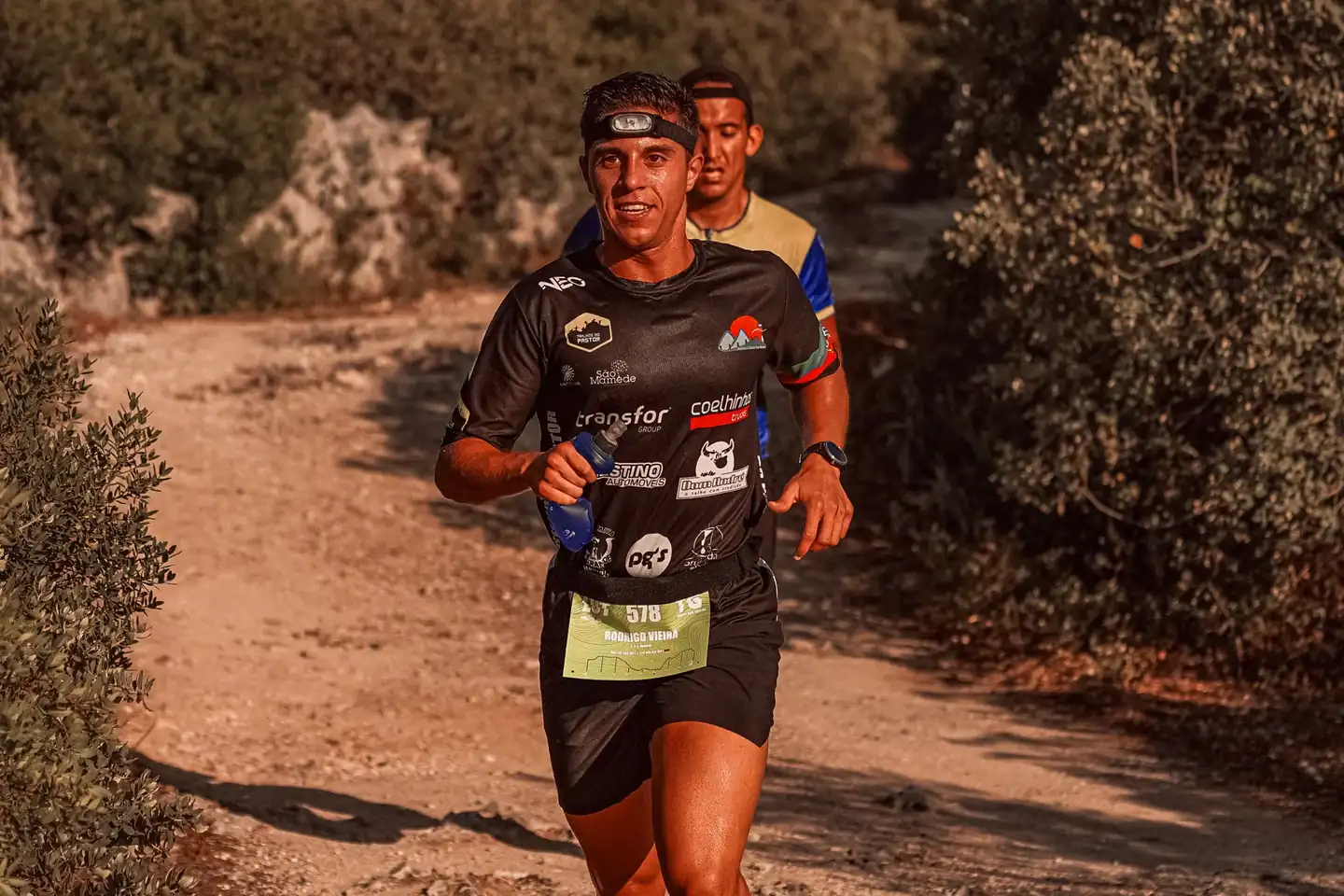
Imagen: RUN 4 FFWPU / Pexels
The Bee Backyard Trail in Los Berrocales will hold its third edition on November 7, 2026, in Paracuellos de Jarama, Madrid. The event combines ultradistance running and trail terrain on a 6.7-kilometer loop, with 240 meters of elevation gain per lap and a maximum of 15 circuits. Each lap must be completed in less than 60 minutes; anyone who fails to do so is eliminated.
The format turns a conventional race into a sequence of starts, exertion and short breaks. Completing all 15 laps would mean 100.5 kilometers and 3,600 meters of elevation gain, calculated from the published figures for each circuit. The start and finish are scheduled at the junction of Calle del Arroyo del Calderillo and Paseo Quintana, in the Los Berrocales del Jarama residential area.
An ultradistance race built around repeated laps
The event’s distinctive feature is not just its total potential distance, but how the effort is structured. Instead of covering one long course in a single run, participants tackle a circuit that is repeated up to 15 times. The 60-minute limit for each lap adds a test of consistency: it is not enough to keep moving; runners must finish within the set time.
Anyone who completes a lap before the cutoff has the remaining time to recover until the next start, according to the available description. That pause may be used to drink, eat something or change a layer, but it is not an extended rest. As the hours pass, the gap between finishing and starting again can become short, especially if the terrain and elevation have slowed the pace.
The system also changes how runners measure progress. In a race with a fixed finish line, runners often manage their pace according to the kilometers remaining; here, each lap ends with a new countdown. Continuing depends on passing a series of hourly cutoffs, so consistency and the ability to restart matter as much as endurance.
Date, location and confirmed details
The 2026 edition is scheduled for Saturday, November 7, in Paracuellos de Jarama, in the province of Madrid. The specific start and finish location provided is the junction of Calle del Arroyo del Calderillo and Paseo Quintana, within Los Berrocales del Jarama. This is more precise than the general reference to the municipality, though runners should check the organizer’s logistics information before travelling.
The available event description says the course includes single-track trails and forest tracks, with short, steep climbs and descents. The route is therefore defined by more than its 6.7-kilometer length: 240 meters of positive elevation per lap represent a substantial climbing load over a relatively short distance. Repeating the circuit accumulates that elevation and can make the second half of the day feel very different from the first.
The reference information does not specify a start time, entry fee or official website address. It also provides no details about services, mandatory equipment or aid-station arrangements for 2026. Those points should not be treated as confirmed based on previous editions or third-party listings: the current edition’s race rules should clarify the operating details.
What 6.7 kilometers and 240 meters of gain mean
A 6.7-kilometer lap may look manageable on its own, but that figure needs to be considered alongside the elevation and time limit. The 240 meters of accumulated climbing per circuit work out to an arithmetic average of 36 meters of gain per kilometer. That ratio does not show how the climbs are distributed, but it helps explain why the course may demand more than a similarly sized flat route.
The described terrain includes narrow trails and forest tracks, as well as short, steep rises and descents. On single-track sections, foot placement may require more attention than on a wide track; on descents, the legs still take a load even when runners are no longer climbing. The combination of slope, surface and repetition shapes the effort, particularly when fatigue affects footwork.
The maximum total elevation also helps put the event in perspective: 15 laps multiplied by 240 meters of gain equal 3,600 meters of climbing. Likewise, 15 circuits of 6.7 kilometers add up to 100.5 kilometers. These are calculations based on the announced format, not a guarantee that every participant must complete that distance: the final total depends on how many laps each runner manages to finish.
The clock is part of the course
In a lap-based race, the clock functions almost like a second course. The 60-minute limit requires runners to finish each circuit within that window; anyone arriving late is out of the competition. Unlike an event where runners only need to reach the finish before an overall closing time, this format sets a recurring time check on every lap.
The difference between finishing with time to spare and reaching the cutoff has practical consequences. A runner who finishes early may have more minutes to eat, drink or deal with a blister before heading out again. Someone finishing close to the 60-minute mark has less time to recover and may find it harder to start the next lap comfortably. The useful pace is not necessarily the fastest one, but the pace that maintains the schedule without exhausting the ability to recover.
That balance is different for everyone. An overly aggressive first lap can create fatigue that is difficult to overcome; starting too cautiously can also reduce the margin on a hilly course. Conditions, temperature and terrain may change during an event that lasts many hours. The available description confirms the one-hour cutoff but does not provide details about start signals, timing or the elimination procedure, which are matters for the race rules.
A strategy built on consistency
The format encourages runners to think in short blocks, even though the overall challenge is an ultradistance event. The immediate goal is to finish the lap within the time limit; after that, runners recover enough to return to the start. This pattern can make the race feel less like one continuous long run and more like a day of repeated efforts, with breaks that offer some relief but do not erase accumulated fatigue.
Energy management needs to account for both climbs and descents. Short hills can tempt runners to speed up, but doing so repeatedly increases the cost of every circuit. On descents, a longer stride or an insecure footfall can strain the legs and increase the risk of a stumble when attention is already fading. Maintaining steady technique and saving energy for later laps may matter more than gaining a few minutes early on.
Breaks also call for judgment. When the time between laps is limited, runners need to distinguish between immediate needs and tasks that can wait: drinking, eating something tolerable or changing a wet layer do not take the same time or matter equally to everyone. There is no universal plan that can be set without knowing the rules, weather and individual needs. The format’s one certainty is that recovery takes place under the pressure of another start.
Minimum age and preparation for the terrain
The race is open only to participants who are at least 18 years old on race day. This requirement appears in the available information and should be distinguished from other participation conditions, which are not detailed in the references. The age limit alone does not mean the course is suitable for every adult: the potential duration, accumulated elevation and technical terrain raise the demands.
The preparation required depends on previous mountain-running experience and the distance each runner intends to sustain. Completing one lap and racing through several circuits are different challenges; reaching 15 means tackling more than 100 kilometers and 3,600 meters of elevation, as well as a day of repeated timed starts. The ability to run on trails and manage many hours of activity is more relevant than looking only at a runner’s usual road pace.
Footwear should suit the terrain and conditions on the day, but the supplied information does not require a particular model or publish a mandatory-equipment list. A course with narrow trails, tracks and changes in gradient generally calls for secure footing and a good fit, although the specific choice depends on the actual surface and organizer’s rules. It is also sensible to confirm in advance what equipment may be left at the start area, what assistance is allowed and what services will be available.
What still needs to be confirmed before race day
The date and municipality are identified, as are the lap distance, elevation, maximum number of circuits and time limit. However, the collected listings do not answer every practical question runners may have. They do not state the entry fee, schedule, registration process or whether there are categories, prizes or entry limits. The absence of those details from the references does not justify assuming any particular arrangement.
Runners should also verify the exact route and service locations, since a general description of trails and tracks is no substitute for a course map and race rules. In a repetitive event, knowing where the route passes the start area, what assistance is allowed and how an elimination is communicated can affect logistics throughout the day. Those details should be checked in the official information for the edition once it is published.
The status of registration is also not established by the event date. The reference data provides neither an entry fee nor confirmation of available places, so registration cannot confidently be described as open, sold out or closed. Participation details may change; a calendar listing helps locate the race, while the organizer’s published terms are the binding source.
A day decided one lap at a time
The Los Berrocales event offers a different challenge from a mountain race with a fixed distance. Its 6.7-kilometer circuit may be repeated up to 15 times, with 240 meters of elevation gain each lap and a maximum of one hour to complete the course. This structure makes punctuality a condition of continuing: each completed lap opens the possibility of starting the next, but it does not guarantee that accumulated fatigue will allow a runner to keep going.
The most striking figure is the potential distance of 100.5 kilometers, although the experience is about more than adding up kilometers. Runners must cover the same trails again, face the climbs at different levels of fatigue and reorganize between starts. The format tests endurance, but also the ability to stay clear-headed when tiredness changes the pace and each break is measured in minutes.
Scheduled for November 7, 2026, the third edition brings ultradistance trail running into a format that is easy to describe and difficult to sustain: a seemingly short circuit repeated until the clock or the body sets the limit. Final details on schedules, registration and services will complete the picture; in the meantime, the elevation and 60-minute rule capture the race’s defining challenge.



How to prevent thigh chafing: causes and real solutions

Women’s running windbreakers: seven jackets and how to choose

Do more workouts get rid of soreness? A guide for runners

Jaén Half Marathon 2026: Record 3,800 Runners Registered

Men’s short running tights: how to choose the right pair

World Triathlon confirms data breach involving medical data

Izan Edo targets podium at Miyazaki World Cup

María Pérez ranks ninth in World Athletics’ 2026 top ten

Dos Santos, Duplantis and Sawe: World Athlete of the Year finalists

San Silvestre Vallecana 2026: 42,000 places, prices and start times

 Races3 months ago
Valencia Half Marathon 2027: date and registration

 Races3 months ago
Valencia Marathon 2026: entry, ballot and course

 Reviews and Comparisons4 months ago
Asics Gel-Roadmiles 3 for men: review and current price

 Reviews and Comparisons4 months ago
Asics Gel Sonoma 8 Gore-Tex: complete analysis for trail and rain

 Sneakers3 months ago
Saucony Endorphin Pro 4: full review and verdict

 News5 months ago
Strava API 2026: what changes for clubs, challenges and runner apps?

 Reviews and Comparisons5 months ago
Nike Alphafly 3: opinions, sensations, and real key points

 Reviews and Comparisons4 months ago
Under Armour running shoes review 2025-2026: models and key features

 Sports Equipment4 months ago
Shoe sizes in cm: a clear guide to getting the right fit for your footwear

 Sneakers3 months ago
Skechers GO RUN Consistent 2.0 analysis: comfort and limits

 News5 months ago
Valencia Marathon 2026 route: key tips to train and run better

 Sneakers4 months ago
Adidas Adizero Boston 13 for men: review and verdict