Races
Benemérita Trail 2026: dates, routes, and prices
The Alfacar race returns with several distances, full services, and a strong charitable component.

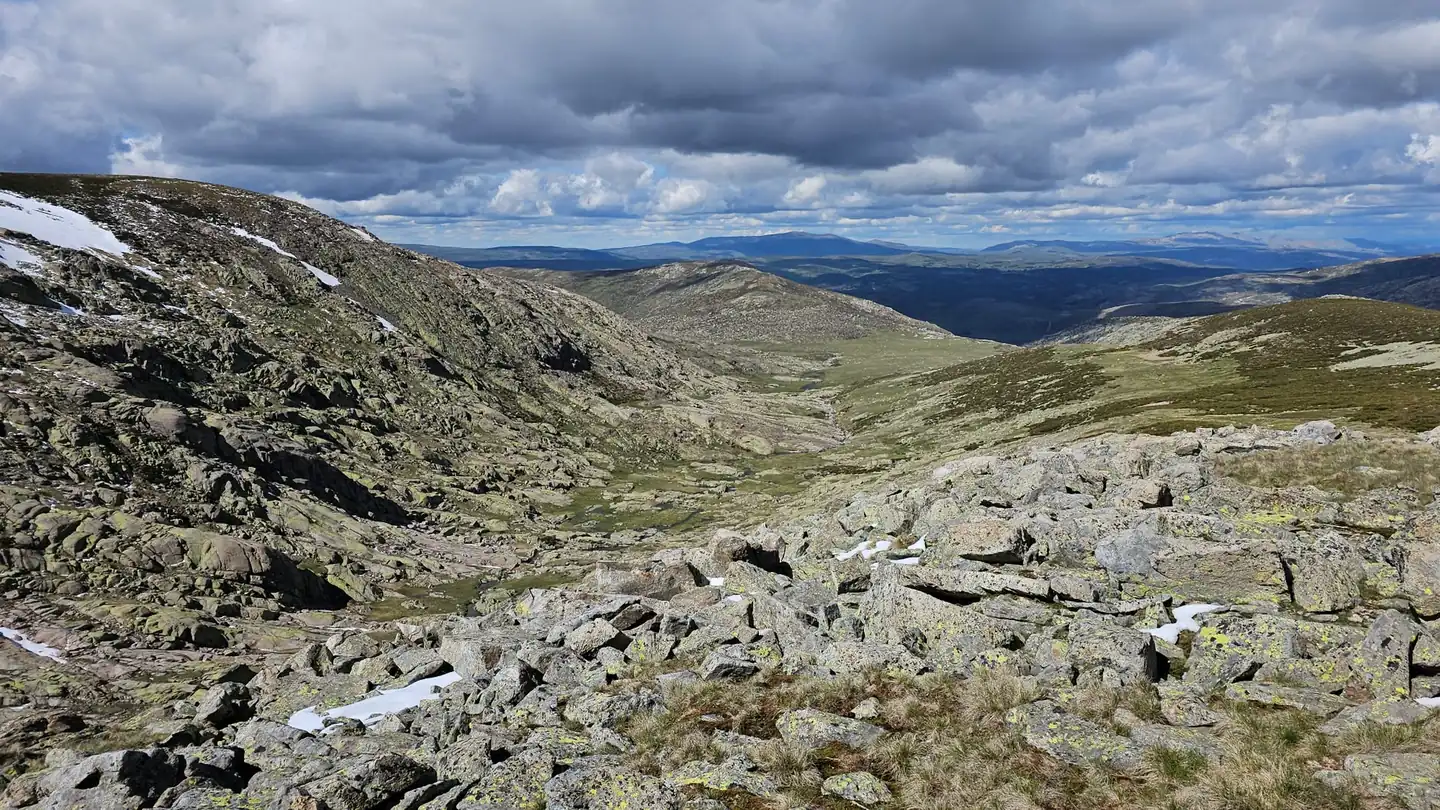
Benemérita Trail once again places the Sierra de la Alfaguara, in Alfacar, as the setting for one of the most distinctive mountain races on the Andalusian calendar. The eleventh edition will take place on Saturday, October 3, 2026, and will bring together marathon, trail, open and hiking in a route that combines physical challenge, Mediterranean forest and a marked charitable spirit.
The event is not limited to competition. The race was born linked to the festival of the Virgin of the Pillar, is organized by the Alfamérita Sports Association and the Alfacar City Council, and has institutional support from the Granada Civil Guard Command. That mix of sport, local identity and social commitment explains much of the appeal of a race that has been gaining momentum edition after edition.
A mountain race with its own identity in the Sierra de la Alfaguara
The surroundings define the character of the event. The Sierra de la Alfaguara, within Sierra de Huétor Natural Park, offers trails with varied terrain, sustained climbs, forest tracks and stretches of great visual beauty. This is not a course that simply adds up kilometers; it forces runners to read the terrain, pace themselves and deal with elevation gain that punishes the legs from the first serious sections.
The marathon is the most demanding distance and, at the same time, the one that best explains the event’s personality. With 42.3 kilometers and 2,072 meters of positive elevation gain, it is presented as a race for experienced runners looking for more than just finishing a long distance. Here, the wear and tear comes not only from the clock; the type of ground, the accumulation of climbs and the feeling of entering a landscape that changes at every bend of the trail all matter too.
At the same time, the organizers maintain a smart balance between toughness and accessibility. The 25-kilometer trail preserves the mountain spirit with 1,150 meters of positive elevation gain, while the 12-kilometer open and the hiking route share a 12-kilometer course designed for those who prefer a shorter but equally immersive experience. This variety broadens the participant profile and prevents the event from being reserved only for specialists.
The distances and what each one offers the runner
The 42K marathon is the flagship event. Its more than 2,000 meters of positive ascent place it in a high-difficulty range, with a format that requires endurance, focus and some mountain experience. It is not a distance to improvise with or to gauge your day by the momentum of a comfortable pace. On a route like this, every long climb and every technical descent can completely alter the planned script.
The 25K trail has become the most attractive middle option for many runners. It preserves the real effort component, but reduces the overall duration and makes the day’s logistics more manageable. Its 1,150 meters of positive elevation gain are still serious, though less intimidating than the marathon’s. In practice, it combines toughness and enjoyment in a fairly balanced way, something that often attracts those who want to compete without taking on a long-distance effort.
Below that is the 12K open, with 650 meters of positive elevation gain. Despite its friendlier name, it is still a mountain race and not a flat run. It is a distance that lets participants experience the event atmosphere without taking on the fatigue of the longer route. Hiking, meanwhile, shares the same course and turns the day into a more relaxed experience, with a different pace for reading the surroundings and a clearly different audience from the chip-timed runner.
Timetables, start, finish and the logic of a very concentrated day
The event is condensed into a single day, and that requires meticulous organization. The start and finish are located at the Campamento de la Alfaguara, in Alfacar, on a circular route that simplifies access, runner logistics and participant support. That decision also strengthens the connection between the race and its immediate surroundings, without spreading the event across several points in the municipality.
According to the information provided by the organizers, the hiking category starts at 10:00 and the 25K trail starts at 9:00. Bib collection is available until the previous Friday at the physical ALSSPORT store in Granada and also on the same Saturday, one hour before the start of each race. That window makes it possible to handle unforeseen issues without overly complicating the experience for runners arriving from outside.
Time management at the finish is another relevant detail. In the previous edition, the organizers announced that timing closes at 3:00 p.m., so finishes after that are not included in the rankings. That fact helps explain the event’s profile: although there are different distances and a hiking option, it remains a sporting day with a fixed schedule and a control system typical of mountain races.
Registration, prices and the impact of demand
Registration for 2026 was set for Tuesday, June 2 at 8:00 p.m., after an initial technical issue forced the process to be postponed. The organizers explained that the dedicated registration server collapsed due to excess traffic, making it impossible to guarantee a stable purchase. The reopening was arranged in order of connection and with a 72-hour deadline to complete payment, a margin designed to prevent bib losses due to mere administrative delay.
The announced prices for this edition are 52 euros for the marathon, 42 euros for the 25K trail, 30 euros for the 12K open and 28 euros for hiking. These fees reflect both the organizational scale and the services included, such as individual accident insurance, breakfast, post-race meal, runner’s bag and a commemorative or finisher garment depending on the category.
Another point is worth noting: the organizers make it clear that no refunds or clothing exchanges are allowed, and that the size and gender of the gear must be checked before completing registration. They also stated that there is no discount for licensed runners, so the price is the same for everyone. In a race with so much demand, these administrative details are not minor; they make the difference between a smooth experience and an avoidable last-minute problem.
What the runner receives beyond the bib
The runner’s bag carries significant weight within the event. It includes a commemorative T-shirt, food and drink vouchers, a bib with chip timing where applicable, local tasting products and merchandising gifts. Added to that is the garment associated with the finisher, which changes depending on the category and reinforces the sense of belonging to the event once the finish line is crossed.
For the marathon and the 25K trail, the organizers include an exclusive Adidas Terrex garment with the race’s design and colors. For the 12K open and hiking, a short-sleeved technical T-shirt linked to the same brand is specified. Beyond its material value, this kind of item works as a visible reminder of the day and as a piece that many runners eventually incorporate into regular use.
Alongside that are services that matter a great deal in a mountain race. There are race aid stations, breakfast and a post-race meal, as well as a cloakroom and showers. These are details that are not always highlighted in smaller races, but on a long day with real elevation gain they are appreciated more than any catalog-style flourish. After several hours of effort, access to these services changes the tone of the experience.
Solidarity, surroundings and an organization that aims to leave a meaningful mark
The charitable side is not decorative. The race was created with the idea of allocating funds raised through donations to research projects and non-profit associations, with a specific link to the Research Chair in Cancer Stem Cells at the University of Granada. This approach places the event in a different category from a simple sporting race with a festive atmosphere; here there is a clear social purpose from the outset.
There is also a visible concern for the relationship with the environment. The event’s own communication emphasizes eco-responsibility and respect for Sierra de Huétor Natural Park. In a context where many mountain races take place in fragile ecosystems, this emphasis is especially relevant. The mountain is not a backdrop, but the real foundation of the experience, and its preservation determines the future of any event of this kind.
The day also includes activities designed for families, such as inflatable castles and face painting, without turning the race into a fair or diluting its sporting identity. This combination of athletic challenge, togetherness and family presence offers a fairly accurate picture of what Benemérita Trail represents: a race that aims to be demanding without becoming closed off, and welcoming without losing character.
How the route feels in the Alfaguara
The circular route in Alfacar concentrates much of the sporting interest. Starting and finishing at the same point allows attention to focus on effort rather than travel logistics. For the runner, that translates into less friction before and after the race, even though the course difficulty remains intact. In a mountain marathon, every small energy saving beforehand counts.
The landscape does the rest. Trails, forests, shaded areas and more open sections create a sequence that helps explain why this race has built such a loyal following. The runner is not only tracking heart rate and elevation gain; they are also moving through a succession of scenes that change the mental rhythm. There are stretches where the terrain dictates everything and others where the surroundings invite you onward, almost by visual inertia, as if the landscape were pushing you forward.
In that sense, the event has something of a runner’s emotional map. Anyone taking on the marathon knows they will battle elevation; anyone choosing the 25K accepts a serious but more manageable challenge; anyone entering the 12K or hiking is looking for another way to experience the mountains. The race distributes effort across several layers, and that is why it attracts different profiles without losing coherence.
The practical details that often decide whether the experience is a good one
Useful information matters almost as much as training. Knowing that the bib can be collected at ALSSport in Granada or on the same Saturday before the start avoids poorly planned trips. Knowing that there is a cloakroom and showers makes it easier to plan the return. And keeping in mind that timing may close at 3:00 p.m. helps adjust race strategy so as not to be excluded from the official record.
It is also worth remembering that category changes are very limited and that, according to the organizers’ messages in previous editions, they are only considered in cases of health issues or injury and always before the start of the corresponding race. This is an important detail because it shows that the event structure is fairly fixed once registration is complete. Here, planning matters more than improvisation.
The communication around entries also confirms the high demand for some categories. In 2025 it was reported that spots were sold out on several occasions, which suggests that Benemérita Trail is no ordinary date on the autumn calendar. For the runner, that means it is not enough to know about the race; they must follow the deadlines carefully if they want to be on the start line.
A race that blends sport, landscape and community
Benemérita Trail is not understood only by its mileage. Its strength lies in the mix of serious competition, a highly recognizable natural setting, institutional support and a charitable background that gives it depth. The Sierra de la Alfaguara provides the mountains; Alfacar provides the local setting; and the organization provides a structure that tries to care for every detail without losing the event’s popular spirit.
That combination explains why the event has grown so steadily. It does not offer just a demanding marathon or an attractive short trail; it offers a complete day, with multiple entry points, in which the runner chooses how hard to push. The key is that each category retains its own identity and yet all of them point to the same central experience: running in the mountains with an organization that understands the value of every detail.
In a calendar saturated with similar races, that nuance matters. Benemérita Trail has managed to turn a start and finish at Campamento de la Alfaguara into more than a practical location. It has built a recognizable reference point for mountain runners seeking toughness, scenery and a race with meaning. And that, ultimately, is what explains why it continues to generate interest year after year.
You may also like: Heroes Against Duchenne 2025: charity trail in Almería.



How to prevent thigh chafing: causes and real solutions

Women’s running windbreakers: seven jackets and how to choose

Do more workouts get rid of soreness? A guide for runners

Jaén Half Marathon 2026: Record 3,800 Runners Registered

Men’s short running tights: how to choose the right pair

World Triathlon confirms data breach involving medical data

Izan Edo targets podium at Miyazaki World Cup

María Pérez ranks ninth in World Athletics’ 2026 top ten

Dos Santos, Duplantis and Sawe: World Athlete of the Year finalists

San Silvestre Vallecana 2026: 42,000 places, prices and start times

 Races3 months ago
Valencia Half Marathon 2027: date and registration

 Races3 months ago
Valencia Marathon 2026: entry, ballot and course

 Reviews and Comparisons4 months ago
Asics Gel-Roadmiles 3 for men: review and current price

 Reviews and Comparisons4 months ago
Asics Gel Sonoma 8 Gore-Tex: complete analysis for trail and rain

 Sneakers3 months ago
Saucony Endorphin Pro 4: full review and verdict

 News5 months ago
Strava API 2026: what changes for clubs, challenges and runner apps?

 Reviews and Comparisons5 months ago
Nike Alphafly 3: opinions, sensations, and real key points

 Reviews and Comparisons4 months ago
Under Armour running shoes review 2025-2026: models and key features

 Sports Equipment4 months ago
Shoe sizes in cm: a clear guide to getting the right fit for your footwear

 Sneakers3 months ago
Skechers GO RUN Consistent 2.0 analysis: comfort and limits

 News5 months ago
Valencia Marathon 2026 route: key tips to train and run better

 Sneakers4 months ago
Adidas Adizero Boston 13 for men: review and verdict