Races
Berlin Half Marathon 2026: times, bibs and start
The race takes place on March 29 with a wave start, bib pickup at Tempelhof, and a fast course through central Berlin.

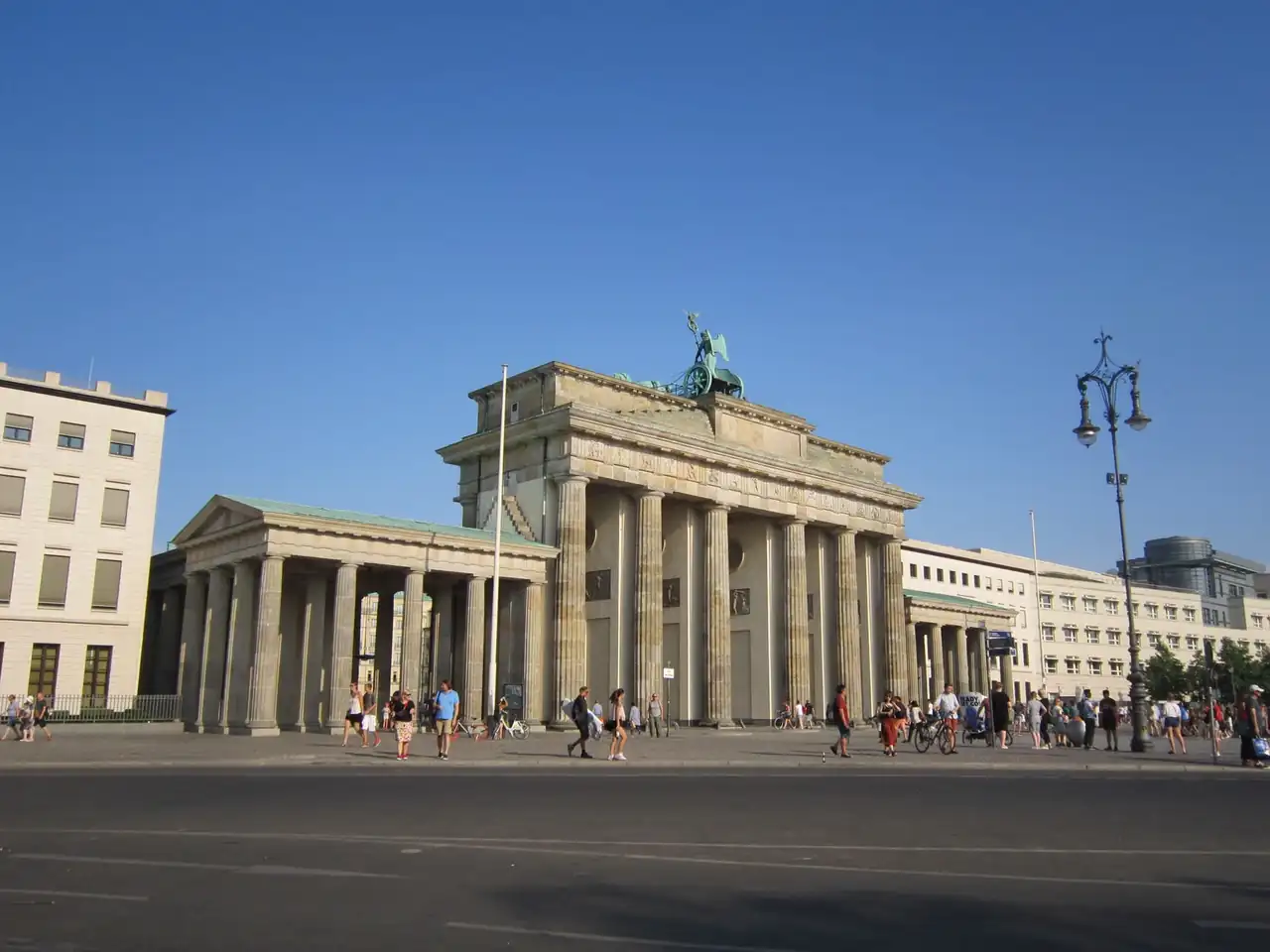
The Berlin Half Marathon 2026 will take place on Sunday, March 29, with the hallmark that has made it a global benchmark: a flat course, a huge atmosphere, and a city fully devoted to the runner from start to finish. It is not just a fast race; it is one of those mornings when Berlin seems to breathe at the same pace as the 21.0975 kilometers of the course.
The event brings together more than 40,000 participants and once again ranks among the largest half marathons in Europe, with a staggered start from Straße des 17. Juni, between the Brandenburg Gate and the Victory Column. The logistics are designed to absorb an enormous flow of athletes without losing fluidity, and that combination of scale and order explains much of its international prestige.
A race that blends speed, history, and a city made for running
Berlin has a special relationship with big performances. Its wide pavement, the near-total absence of elevation gain, and highly polished organization turn the race into a kind of laboratory for personal bests. Unlike other urban half marathons with tight turns or demanding profiles, this course invites you to hold your pace with unusual ease.
The route passes through some of the most recognizable spots in the German capital and offers that hard-to-get mix of performance and urban scenery. The Brandenburg Gate, the Victory Column, and emblematic areas of the historic center accompany a race that never seems to stay purely sporting. There is a powerful visual narrative, but without taking away from what matters most: running fast, steadily, and with enough in reserve to enjoy it.
That balance explains why the event is part of SuperHalfs and why so many runners include it among their goals for the year. Its reputation does not come from a single brilliant edition, but from a string of well-resolved details: an orderly start, a large crowd, a clean route, and an experience that does not punish more than necessary. In a half marathon, that is priceless.
Date, start, and official times
The race takes place on Sunday, March 29, 2026, and the program starts very early to spread out the field of participants and give each category a sufficient margin for its start. Skaters begin at 09:15 a.m., wheelchair and handbike athletes start at 09:55 a.m., and runners set off from 10:05 a.m. in successive waves. That wave format is not a whim: it prevents bottlenecks in the first meters and improves safety in such a massive event.
The start location on Straße des 17. Juni places the heart of the event in an iconic spot, with a scene that combines flags, nerves, concentration, and the typical murmur of major races. Not all runners cross the mat at the same moment; access by corrals and waves means each participant experiences a gradual entry onto the course. For many, that wait is part of the ritual and helps settle the nerves before the long effort.
The official time limit is 3 hours and 15 minutes, a figure that fits the open nature of the race while still allowing for safety control and course dismantling. Translated into pace, it requires an approximate average of 9:15 min/km as the slowest reference, although the real scenario depends on the starting wave and the exact moment each runner crosses the line. It is not a barrier meant to exclude, but a way to keep the race within the operational limits of a major urban event.
Course & elevation Edition 2026
Per-kilometre table
| Km | Elevation | Grade |
|---|---|---|
| 1 | 39 m | 0.0 % |
| 2 | 40 m | 0.1 % |
| 3 | 40 m | 0.0 % |
| 4 | 40 m | 0.0 % |
| 5 | 40 m | 0.1 % |
| 6 | 42 m | 0.2 % |
| 7 | 45 m | 0.3 % |
| 8 | 45 m | 0.0 % |
| 9 | 41 m | -0.4 % |
| 10 | 41 m | 0.0 % |
| 11 | 40 m | -0.1 % |
| 12 | 38 m | -0.1 % |
| 13 | 39 m | 0.1 % |
| 14 | 44 m | 0.5 % |
| 15 | 39 m | -0.6 % |
| 16 | 42 m | 0.3 % |
| 17 | 42 m | 0.0 % |
| 18 | 44 m | 0.2 % |
| 19 | 42 m | -0.2 % |
| 20 | 42 m | -0.1 % |
| 21 | 40 m | -0.1 % |
| 22 | 40 m | -0.5 % |
Plan your pace on this course →
Route source: Google My Maps
Race bib pickup and expo at Tempelhof
The bib must be collected in person at the Half Marathon Expo, held at Tempelhof Airport, one of the most distinctive venues on Berlin’s calendar. The choice is no accident: spacious, well connected, and ready to absorb a large influx of runners, companions, and brands. It concentrates all the pre-race activity, from collecting race materials to visiting exhibitors and product areas.
The expo opens on Friday, March 27, 2026, from 11:00 a.m. to 8:00 p.m., and on Saturday, March 28, from 9:00 a.m. to 6:30 p.m. The organizers make it clear that the bib must be picked up before race day and that, as a rule, it cannot be collected by someone else. An ID document is also required. These are simple requirements, but it is worth keeping them in mind because, at an event of this size, there is little room for improvisation.
Tempelhof acts as a preview and a barometer. Runners from dozens of countries cross paths there, gear gets tested, race bags are collected, and that pleasant tension appears when everything starts to fall into place. For those arriving from abroad, the expo also offers a very clear picture of what the Berlin Half Marathon is: a global race, perfectly tuned, with a very distinctive pulse.
What makes this course so fast
The profile is completely flat, and that is the first major explanation. There are no climbs to break the rhythm or changes in elevation that force you to readjust your stride every few minutes. The route seems drawn with a ruler, allowing you to find a steady cadence from the start and hold it without surprises. For runners chasing a time, that consistency is almost as valuable as lightweight shoes.
The width of several avenues also helps. The first kilometers can feel crowded because of the number of participants, but once the pack settles, the race offers enough space to run with a sense of freedom that is uncommon in big urban half marathons. Traffic is tightly controlled, and the surroundings favor an economical stride, the kind that does not fight the course.
The result is a course in which the effort is centered on the runner, not on the terrain. That does not mean it is easy; on the contrary, maintaining a high pace for 21 kilometers remains a demanding task. But the race removes many external obstacles and leaves the athlete facing what matters most: managing effort, respecting kilometer splits, and not letting early excitement swallow the second half.
Monuments, atmosphere, and a city that supports you
Passing by the Brandenburg Gate is one of the most recognizable moments of the race. The monument commands attention without making a sound, like a presence that orders the landscape and gives meaning to the accumulated effort. The Victory Column also provides a powerful image, especially in a context where hundreds of runners pass at once with sharpened strides and focused expressions.
The route also approaches areas such as Potsdamer Platz and the Checkpoint Charlie surroundings, adding historical and urban texture to the race. This is not an improvised sightseeing tour, but a route designed to showcase a capital city that blends memory, modernity, and enormous logistical capacity. For the runner, it feels like moving through a city that does not merely endure the race, but incorporates it into its own landscape.
The crowd also matters. Bands, cheer groups, and spectators spread along the course create an irregular but lively soundtrack, with stretches of relative silence and others of dense, almost electric noise. That alternation has something like a tide to it: it pushes, relaxes, pushes again. In races of this size, support is not always heard evenly, but when it arrives suddenly, it can carry an invisible climb of the spirit.
What to expect on race day
Strategy begins before the gun. Arriving early, locating the correct corral, and understanding the wave system prevents mental fatigue and helps conserve energy for what matters. In Berlin, the start is not experienced as a compact block, but as a succession of small openings that organize the field of runners. That reduces chaos, although it also means accepting that your personal clock does not exactly match the official time of the first gun.
Average temperatures usually hover around 5 to 10 degrees Celsius at this time of year, a range that many distance runners find ideal. It is not too cold, but it is not hot either. That cool weather often favors fast paces and lets you run with the feeling that your body is responding without fighting the environment too much. Even so, a Berlin morning can be tricky if the wind picks up or if a runner stands still too long before starting.
In such a massive race, the first kilometers demand a cool head. The more ambitious runners tend to start with some adrenaline, but the fast course can be deceptive: it feels like you are flying, and yet the cost of an overcooked start comes later. The Berlin Half Marathon rewards patience just as much as fast legs. Those who overdo it in the first half pay the price in the second, when the crowd no longer gives you freshness and the pavement starts speaking in a less friendly language.
SuperHalfs, prestige, and the appeal that does not depend on the bib number
Being part of SuperHalfs has further reinforced the race’s identity on the European map. It is not just about belonging to a series attractive to medal collectors; it also means sharing high standards of organization, course quality, and international reach. Berlin fits naturally there, like a piece that had long been destined for a top-tier showcase.
The race’s popularity does not depend on flashy marketing or an artificial storyline. It rests on very concrete data: more than 40,000 registered runners, participants from over 130 countries, a fast course, and a finish line in a setting rich in symbolism. When a half marathon delivers that year after year, its reputation stops being a label and becomes a logical consequence.
There is also an emotional component that explains its magnetism. Many runners do not choose it just to chase a time; they choose it because they know that a 21K in Berlin has a recognizable atmosphere, almost like a major international event, but without the extreme difficulty that can intimidate people in other races. It is a top-level race that remains accessible, and that combination is rare.
How a race designed for many profiles is experienced
The diversity of participants is an essential part of the event. Skaters, wheelchair users, handbikers, and runners share the space in a very organized setup that makes visible a basic idea of distance sport: competition can also be coexistence of different paces, formats, and bodies. That plurality does not reduce competitiveness; it broadens it.
The race is appealing both to those making their half marathon debut and to those coming to defend a time goal. The flat pavement reduces fear of the terrain, while the grandeur of the event adds stimulation without needing artifice. Those looking to finish calmly find a friendly structure; those chasing a result get a first-class setting. Not many races manage to speak both languages at once.
The finisher medal, the finish-line atmosphere, and the feeling of having crossed a European capital at a steady pace complete an experience that usually leaves a mark. Not because of exaggerated heroics, but because of the sum of many small successes: good signage, an orderly start, a clean course, and a finish with symbolic weight. In the end, that is what builds a race’s memory.
What to keep in mind before traveling to Berlin
Logistical planning matters almost as much as training. Picking up the bib on Friday or Saturday avoids last-minute surprises, especially in a big city where travel can take longer than expected. The start area is very exposed to access controls and road closures, so arriving early makes everything easier: from finding your corral to settling into the pre-race atmosphere without rushing.
It is also useful to remember that the race is not experienced at exactly the same pace as the official start time. Wave starts turn the experience into a kind of stepped current, and that affects personal timing and the concentration margin before the gun. For the runner, understanding this mechanism avoids unnecessary frustration and helps interpret splits more accurately.
Berlin is not just a fast race. It is a finely tuned piece of the international calendar, with an identity that combines sport, urban history, and an organization capable of mobilizing tens of thousands of people without the machine losing elegance. That is why each edition attracts runners of very different levels and why it continues to occupy a privileged place among Europe’s most coveted half marathons.
A March morning in which the asphalt leads and the city accompanies
On March 29, 2026, Berlin will once again become a straight line of effort, contained noise, and ambition spread across waves. Few races offer such a clean setting for measuring a performance without giving up the excitement of a great city. The course does not deceive, the logistics are well defined, and the atmosphere promises that blend of order and scale that has made the race famous.
Those who cross the finish line on Straße des 17. Juni will not have completed just 21.0975 kilometers. They will have run one of the world’s most recognizable half marathons, in an environment that turns every step into part of a larger scene. Berlin, with its wide pavement and architectural backdrop, continues to show that a well-designed race can seem simple from the outside and memorable from within.
You may also like: Volksbank Münster Marathon 2026: complete event guide and Berlin Marathon 2027: race date, ballot and new title sponsor.



How to prevent thigh chafing: causes and real solutions

Women’s running windbreakers: seven jackets and how to choose

Do more workouts get rid of soreness? A guide for runners

Jaén Half Marathon 2026: Record 3,800 Runners Registered

Men’s short running tights: how to choose the right pair

World Triathlon confirms data breach involving medical data

Izan Edo targets podium at Miyazaki World Cup

María Pérez ranks ninth in World Athletics’ 2026 top ten

Dos Santos, Duplantis and Sawe: World Athlete of the Year finalists

San Silvestre Vallecana 2026: 42,000 places, prices and start times

 Races3 months ago
Valencia Half Marathon 2027: date and registration

 Races3 months ago
Valencia Marathon 2026: entry, ballot and course

 Reviews and Comparisons4 months ago
Asics Gel-Roadmiles 3 for men: review and current price

 Reviews and Comparisons4 months ago
Asics Gel Sonoma 8 Gore-Tex: complete analysis for trail and rain

 Sneakers3 months ago
Saucony Endorphin Pro 4: full review and verdict

 News5 months ago
Strava API 2026: what changes for clubs, challenges and runner apps?

 Reviews and Comparisons5 months ago
Nike Alphafly 3: opinions, sensations, and real key points

 Reviews and Comparisons4 months ago
Under Armour running shoes review 2025-2026: models and key features

 Sports Equipment4 months ago
Shoe sizes in cm: a clear guide to getting the right fit for your footwear

 Sneakers3 months ago
Skechers GO RUN Consistent 2.0 analysis: comfort and limits

 News5 months ago
Valencia Marathon 2026 route: key tips to train and run better

 Sneakers4 months ago
Adidas Adizero Boston 13 for men: review and verdict