Races
Bilbao Bizkaia Marathon 2027: route, schedules and key details
Bilbao brings together a fast, urban and very striking marathon, with 42 km and 10 km among its great icons.

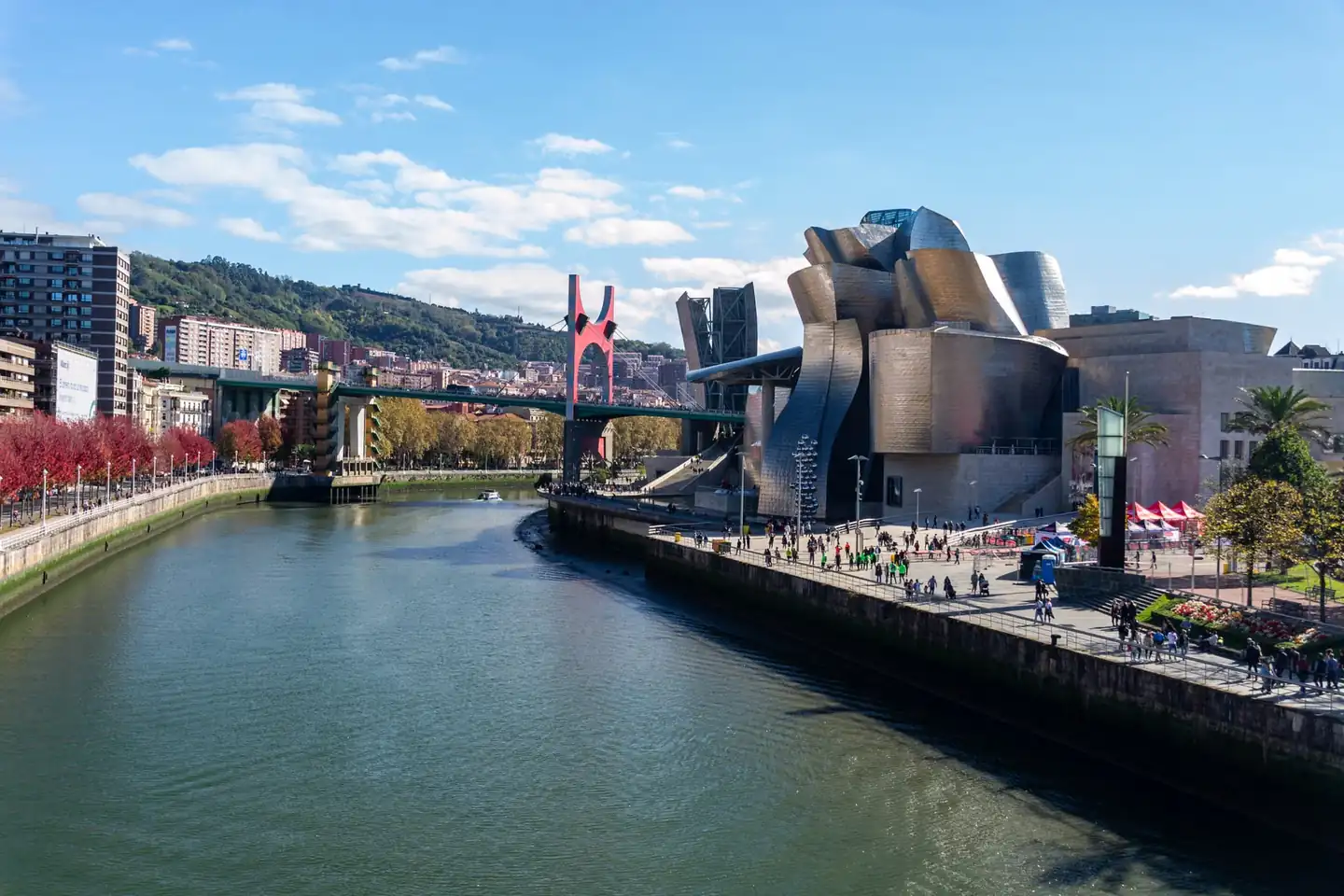
Bilbao Bizkaia Marathon has established itself as one of the most striking events on the northern calendar of Spain thanks to its mix of city, coast, and a route designed for fast running. The race links some of the most recognizable symbols of Bilbao and its metropolitan area with a start at La Salve and a finish next to the Guggenheim, a finale that is already part of its visual identity.
The edition scheduled for early March 2027 keeps that idea of an urban, broad, and very runnable marathon, with two official distances: 42 kilometers and 10 kilometers. The appeal is not only in the scenery, but in the logic of the course: long straight stretches, few sharp turns, and an almost completely flat profile at sea level, a combination that usually feels very tempting for anyone looking for a fast time or for anyone who prefers a race without big changes of pace due to elevation.
A marathon with a Bilbao seal and a showcase vocation
The race is born with an ambition that goes beyond mere competition. Its approach aims to unite sport with the city’s tourist, social, and economic boost, a formula that fits well in Bilbao, where urban space, the estuary, and contemporary architecture coexist with a strong local identity. The route also works as a calling card: it runs through the center, crosses emblematic areas, and projects a recognizable image even for those who do not know the city in depth.
The start in the La Salve area and the finish next to the Guggenheim museum sum up that aspiration to turn every kilometer into a postcard sequence. Passing by places like the Arriaga Theatre, City Hall, or the Bizkaia Bridge gives the runner a sense of narrative journey, as if the city were unfolding on both sides of the road. This is not a race trapped in a dull circuit: it is a route that wants to show Bilbao with pride and with rhythm.
There is also a strategic reading. A marathon of this kind competes in a very demanding market, where runners compare course, weather, logistics, and the ability to produce a good time. In that context, Bilbao offers a clear message: urban route, flat profile, and recognizable surroundings. That combination usually attracts both experienced runners and participants looking to make their debut in a friendlier setting than other marathons with more elevation or greater technical complexity.
A fast, clean route with room to really run
The course is one of the event’s great arguments. The organization presents it as a 100% urban circuit, with a very flat structure, at sea level and with barely around 30 right-angle turns, a relatively limited number for a city marathon. That race architecture is no small detail: it reduces braking, softens abrupt changes in stride, and allows a steadier effort to be maintained for longer.
For the runner, that translates into something very specific. There is no mountain to chew through or technical descents to manage; there is asphalt, horizon, and a succession of avenues and wide stretches where the clock can become an uncomfortable presence or, depending on the day, an ally. In races like this, wind, temperature, and the ability to pace yourself usually matter more than elevation. That is why Bilbao’s course has earned a reputation for being favorable to solid times.
The passage through Bilbao and its metropolitan area, with the finish reaching Getxo, also adds a scenic dimension that is unusual in purely central marathons. The proximity of the sea and the light of the Cantabrian coast provide a very particular backdrop, with that mix of gray and brightness that characterizes the Basque coastline. It is a setting that does not overwhelm, but it does accompany; a sober, elegant, and very recognizable backdrop.
From a sporting perspective, the key is that this is a race designed to sustain constant paces. The long straight sections favor concentration and reduce the feeling of confinement that sometimes punishes runners in more winding urban marathons. That design, added to the passage through emblematic points, explains much of the interest it generates among those looking to combine experience and performance.
Two distances for different audiences, one same race identity
The presence of 42 kilometers and 10 kilometers means the race is not reserved only for advanced marathoners. The format shortens and broadens access to the experience, something important in a calendar where more and more urban races are built as broad-participation events, not just elite or high-commitment competitions.
The long distance is the one that concentrates the main sporting story. That is where race strategy, effort control, and reading the course come into play. Bilbao offers a proposal that moves away from mountain epic and gets closer to the precision of fast asphalt, where every aid station, every turn, and every steady kilometer has real value. The marathon rewards patience; it does not demand visual heroics, but consistency.
The 10K, on the other hand, opens the door to a different type of participant. It is a more direct option, less demanding in total time and more compatible with those who want to experience the atmosphere of the big event without taking on the full distance. In many cities, this kind of parallel format helps widen the audience and fill the streets with runners with different goals but the same urban reference. Bilbao fits that logic well because its course and image support both paces.
That coexistence of distances also improves the reading of the event as a popular race. Some arrive looking for a bib for the marathon and others are content with a competitive 10K or simply a participatory one. In both cases, the race relies on the same scenery, so the symbolic value of running in Bilbao does not depend only on the number of kilometers.
Bilbao, Getxo, and the weight of a geography favorable to the runner
The city offers an advantage that is not always highlighted clearly enough: its relationship with the terrain and sea level. Running in a flat environment, with wide stretches and no prolonged climbs, completely changes the nature of the effort. It does not make the race easy, because a marathon never is, but it does make it more predictable from a biomechanical and tactical point of view.
Bilbao’s urban atmosphere also has something that works very well in large-format races. It is not a city that overwhelms by scale or a disordered metropolis. Its layout helps build a legible experience, with clear landmarks and reference points that the runner can recognize almost like stations on a map. The Guggenheim, the Arriaga, City Hall, and the Bizkaia Bridge act as visual markers that organize the memory of the race.
Getxo completes that narrative with a transition toward the coastline and the metropolitan area. That extension of the route gives depth to the race and avoids everything being resolved in a closed circuit turned in on itself. The runner feels they are moving through a city and its surroundings, not just around a rectangle of streets. In well-designed marathons, that sense of progress matters almost as much as the clock.
There is also an emotional component. Races that pass through recognizable places tend to stay in memory more easily, because they are remembered not only for the final time, but for the sequence of images they leave behind. Bilbao plays that card with a very characteristic sobriety, without excess ornament, but with a powerful and well-distributed iconography.
The date, the times, and what can be stated with certainty
The available information places the next edition in early March 2027, but it does not provide a final confirmed date in the reference documentation consulted. A start time of 9:30 in the morning is listed in a previous edition reference, along with an estimated celebration window until 14:00. Pending specific official confirmation for 2027, that schedule should be treated as indicative and not as an unchangeable fact.
That time margin makes sense in a race of this scale. Major urban marathons usually adjust start details, traffic closures, logistics, and services depending on the edition and registration response. In races like this, schedules are not a mere formality: they affect the starting temperature, the flow of the crowd on the streets, and coexistence with urban traffic. An earlier or later hour can change the thermal sensation more than it seems.
What is confirmed is the event’s vocation and its general structure: Bilbao as the setting, two distances, an urban course, and a fast profile. The rest, in an event that is still consolidating itself, depends on the official communication of each edition. For the informed runner, that difference between what is stable and what is provisional is important; it avoids confusing a specific edition with the race’s general trend.
Registration, bib, and the logic of a race with growing demand
The public information observed does not detail closed official prices for 2027, something common when a race is still in the update phase or when the organization releases data in batches. It is also noted that demand may be high, because the course profile and the city’s image make it especially attractive to local, national, and international runners.
In this type of marathon, registration does not just buy a bib. It also secures access to an experience that combines course, services, and visibility. That is why, beyond the fact that no specific fee appears in the reference information, the race is positioned as an event of sustained interest. The reputation of a fast course and the aesthetics of the route usually drive registration more strongly than a simple promotional campaign.
The bib here works as an entry into a fairly complete sporting narrative: running in a recognizable city, on asphalt designed for speed, and with a very marked urban identity. In races like this, value is not measured only in euros, but in the set of sensations the event leaves behind. That intangible component explains why some marathons stay alive year after year even when the calendar is saturated.
The organization has also shown an ambitious aspiration: to grow into a top-level reference and, in the medium term, aim for internationally prestigious standards. That ambition does not guarantee results, but it does indicate a clear line of work: turning the race into a sporting and urban benchmark, not just another date on the calendar.
Race services and details that shape the experience
The Runedia reference mentions several usual services in this race, including chip timing, baggage storage, showers, massage, and medical assistance. These are elements that, in a city marathon, matter more than they may seem in a rushed description. The runner is not only competing; they are also managing clothing, hydration, recovery, and safety for several hours of effort.
Refreshment points and on-course entertainment complete the experience. The race is presented with several specific and independent support sections, which helps sustain the emotional rhythm of the event. In a long marathon, outside encouragement may not run for you, but it can prevent the emotional drop from gaining too much ground. That support, added to a clear route, helps the day flow better.
The course certification that appears in the information consulted also adds a relevant detail. It means the race aligns with formal measurement and comparability criteria, something especially valuable for anyone looking for valid times and serious references. In an urban marathon with aspirations for good performances, that point is not secondary; it is part of the sporting contract the race offers.
All of this paints a picture of an event with different layers. There is the runner who wants to finish, the one who wants to improve a personal best, the one looking for an attractive outing in a major city, and the one who values the combination of sport and landscape. Bilbao Bizkaia Marathon seems to speak to them all, while keeping its essence as a fast, urban race well placed on the map of popular athletics in the north.
Why this race is gaining weight in the northern calendar
The rise of urban races in Spain has a lot to do with the search for more accessible courses and better-organized experiences. In that setting, Bilbao stands out for offering a clear identity. It does not compete to be the biggest or the most media-driven, but to build a coherent proposal: a recognizable city, a fast circuit, and a very direct relationship between the runner and the landscape.
The sporting value of that approach is obvious. In a flat marathon, rhythm regularity can become the main argument for those chasing a time. But there is also a cultural and tourist value that should not be underestimated. Running in Bilbao means crossing a city with personality, where the modernity of the Guggenheim coexists with the sobriety of its bridges and the constant presence of the estuary.
The 2027 edition therefore moves between consolidation and ambition. Consolidating a race like this takes time, consistency, and a clear offer for the runner. Ambition means expanding its reach without losing what makes it unique. That balance is delicate, but Bilbao has framed it from the beginning as part of its identity: a race with the vocation to grow without ceasing to be urban, fast, and very much its own.
On the Spanish running map, that combination has room to grow. You do not need to raise mountains to leave a mark. Sometimes a clean route, a well-chosen city, and a marathon that understands that beauty can also be measured in long straight stretches, in the sound of shoes on asphalt, and in the finish line set against one of the most recognizable buildings in the country are enough.
A finish next to the Guggenheim that is already part of the story
There are race finishes remembered for the effort and others for the setting. In Bilbao, the two tend to blend together. The arrival next to the Guggenheim museum is not just a photogenic ending; it is a way of closing the route with a powerful, modern, and perfectly identifiable city image. For many runners, that moment is worth as much as the time shown on the clock.
The great virtue of the Bilbao Bizkaia Marathon is having understood that a marathon no longer competes only to be long, but to be memorable. And memory, in running, is built with details: a start over a bridge, a straight stretch where the legs seem to fly, a nearby coast, a crowd that cheers without excess, and a finish that fits the city like a well-placed piece.
That is why the race has been gaining space in the conversations of those who look at the calendar with a practical eye and also with sporting sensitivity. It is not just another race in spring. It is one of those events that turn asphalt into narrative and the city into an active stage, with Bilbao and Bizkaia as both backdrop and protagonist at the same time.
You may also like: Mamut March in Bilbao route: key points, routes, and elevation gain.
Where to stay in Bilbao
Hotels available 27 February – 2 March 2027.
Affiliate links: if you book through this map we earn a commission, at no extra cost to you.



How to prevent thigh chafing: causes and real solutions

Women’s running windbreakers: seven jackets and how to choose

Do more workouts get rid of soreness? A guide for runners

Jaén Half Marathon 2026: Record 3,800 Runners Registered

Men’s short running tights: how to choose the right pair

World Triathlon confirms data breach involving medical data

Izan Edo targets podium at Miyazaki World Cup

María Pérez ranks ninth in World Athletics’ 2026 top ten

Dos Santos, Duplantis and Sawe: World Athlete of the Year finalists

San Silvestre Vallecana 2026: 42,000 places, prices and start times

 Races4 months ago
Valencia Half Marathon 2027: date and registration

 Races4 months ago
Valencia Marathon 2026: entry, ballot and course

 Reviews and Comparisons4 months ago
Asics Gel-Roadmiles 3 for men: review and current price

 Reviews and Comparisons4 months ago
Asics Gel Sonoma 8 Gore-Tex: complete analysis for trail and rain

 Sneakers3 months ago
Saucony Endorphin Pro 4: full review and verdict

 News5 months ago
Strava API 2026: what changes for clubs, challenges and runner apps?

 Reviews and Comparisons5 months ago
Nike Alphafly 3: opinions, sensations, and real key points

 Reviews and Comparisons4 months ago
Under Armour running shoes review 2025-2026: models and key features

 Sports Equipment4 months ago
Shoe sizes in cm: a clear guide to getting the right fit for your footwear

 Sneakers3 months ago
Skechers GO RUN Consistent 2.0 analysis: comfort and limits

 News5 months ago
Valencia Marathon 2026 route: key tips to train and run better

 Sneakers4 months ago
Adidas Adizero Boston 13 for men: review and verdict