Races
Buts Gasteiz Iruñea 2026: keys to the great journey
The journey between Vitoria-Gasteiz and Iruñea combines mountains, distance, and landscapes in a very demanding challenge.

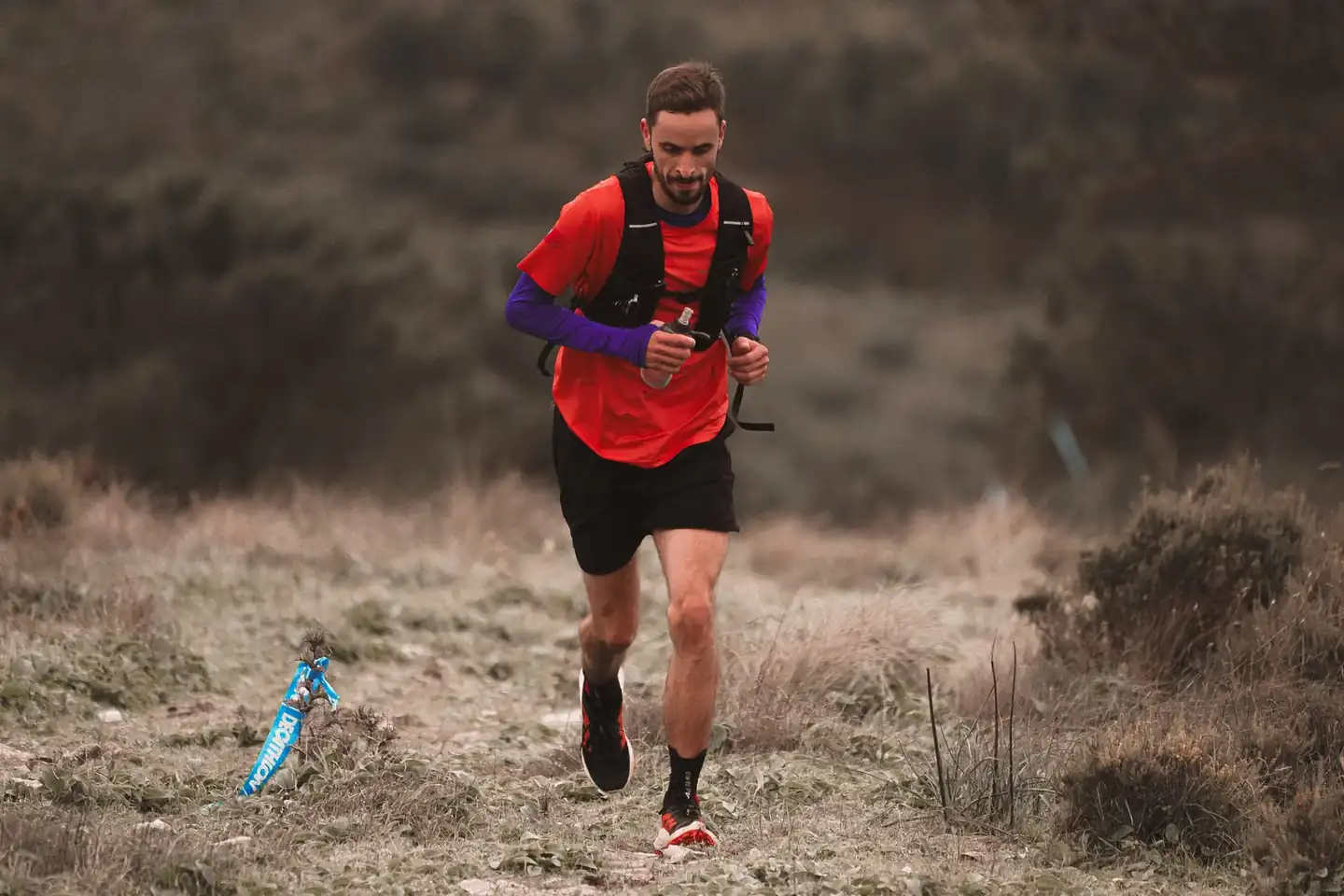
The Gasteiz-Iruñea traverse puts Basque trail running back at the center of the map: a long-distance race, with a high-mountain profile and a course that links two historic capitals in northern Spain. In its 2026 edition, the event once again appears as an endurance test designed for experienced runners, with a flagship distance of 131.9 kilometers and a cumulative elevation gain of around 6,260 meters. This is not an event to improvise for or to gauge fitness lightly; it is a matter of hours of effort, careful reading of the terrain, and constant management of the body.
The appeal of this race lies not only in its toughness. Its symbolic value also carries weight, as the route connects Vitoria-Gasteiz with Pamplona through the inland geography of the Basque Country and Navarre. The organizers present it as a mountain experience, with a format that has included in different editions a long 75-kilometer distance and another ultradistance course of more than 130 kilometers. The name sums up the idea better than any brochure: capitals, ridgelines, passes, and a thread of trails that turns the race into a sporting expedition.
A race measured in endurance and landscape
Length is the first thing that commands respect, but it would be a mistake to reduce BUTS Gasteiz Iruñea to a mere number. In events like this, the runner is not competing only against the clock or other participants; they are competing against accumulated fatigue, the night if they end up running through it, the descents that shred the legs, and the climbs that empty the pulse. The mountain is patient in its punishment, and this traverse demands the opposite: patience, steadiness, and a cool head.
The main distance of 131.9 kilometers fits squarely into the ultratrail category. That means a long day, with aid stations, changes of pace, and stretches in which strategy matters almost as much as physical condition. The positive elevation gain, close to 6,260 meters, adds a layer of complexity that separates this event from a simple endurance race. In practice, the course forces runners to climb and descend again and again, with a muscular cost that multiplies with every step.
The race has also been associated with the UTMB Index label on its long distance, a relevant detail for those who follow the international trail circuit. That stamp places it in a broader conversation, that of races that serve as benchmarks of performance and as tests on technical terrain. This is not just a local adventure: it also works as an entry point into a type of competition where the mountain sets the script with far more authority than the pavement.
The route and its sporting interpretation
The route between Vitoria-Gasteiz and Iruñea follows a traverse logic, not an out-and-back one. That difference changes how it is run and how it is prepared. In a point-to-point race, mental stamina is built alongside the map reference: there is no return to the same spot, no easy repetition, and every kilometer moves toward a different outcome. That sense of journey weighs heavily in trail running and explains part of the magnetism these races exert.
The reference to Gasteiz and Iruñea is not decorative. It is a way of highlighting the link between two cities and the territory that connects them, a transitional space where the road quickly disappears and paths, forests, tracks, and mountain passes take center stage. The race has been described in various sources as a mountain race starting in Vitoria-Gasteiz, and in some reports the Florida Park is mentioned as one of the starting points. That urban, almost ceremonial start contrasts with the harshness of the terrain that comes afterward.
The cumulative elevation gain and varied profiles make the average pace misleading. In a mountain ultradistance race, running fast on the flat means nothing if the legs fall apart on the climbs or if the descents are handled without economy of movement. The smart runner learns to save energy where the terrain devours it, to walk efficiently when the gradient demands it, and to run without artifice when the slope allows. The race rewards that intelligence almost as much as raw strength.
The distances that usually draw the most attention
The best-known edition revolves around two major options: the 131.9-kilometer distance and a 75-kilometer variant, both tied to the event’s mountain spirit. That dual structure makes the race’s design easy to understand. On one hand, there is an ultra-endurance format for those seeking a long, all-out challenge. On the other, there is a still very serious but somewhat shorter route, aimed at an equally demanding though not quite as extreme profile.
The shorter distance, if it can be called that on this scale, has also appeared in some summaries as Buts Txiki, starting in Andoin and finishing in Antsoain. That reference reinforces the idea that the organizers have sought to build a program that does not revolve around a single epic undertaking, but instead offers different levels of difficulty within the same sporting identity. In trail running, that kind of structure allows the race to preserve its character without closing itself off to just one type of participant.
The long route deserves special mention. Its 6,260 meters of positive elevation place it in a league where every climb seems to add the bill from the previous one. That changes even how runners eat. In this terrain, regular intake of fluids and carbohydrates is not a technical detail, but a central piece of competitive survival. A bad night, poor heat management, or an aid-station mistake can sink the entire race long before the finish line.
A race with Basque identity and mountain memory
Behind this traverse lies more than a sports calendar. The Basque Ultra Trail Series recovers a way of moving through the territory that connects with the mountain culture of the region. Its historical references include the name of Shebe Peña, a figure associated with a march carried out in 1953 between Basque capitals and used as inspiration for this kind of project. That memory does not turn the race into a literal reenactment, but it does make it a sporting continuation of that idea of crossing the country on foot.
In trail running, that cultural component matters more than it may sometimes seem. The runner is not only accumulating elevation; they are also reading the names of towns, watching the vegetation change, feeling the weight of the relief, and crossing a geography that is not neutral. Point-to-point races between cities offer precisely that: a spatial narrative. You start in one setting, move through another, and arrive in a third, as if the body were writing a chronicle across the map.
The Basque mountains, moreover, usually impose a very recognizable kind of toughness. The terrain can alternate compact trails, wet sections, broken climbs, and passages where fog or heat alters the perception of effort. This is not the harshness of the desert or of extreme high peaks; it is a more nearby, more human harshness, and for that very reason often more treacherous. It is easy to underestimate because it does not always present itself with dramatic flair, but it punishes with remarkable consistency.
What kind of runner is suited to a challenge like this
BUTS Gasteiz Iruñea is not aimed at the occasional runner. Its natural profile is that of someone who already knows long-distance trail running and understands that a mountain race is not solved with enthusiasm, but with method. It helps to have gone through shorter events before and to have learned the basics: eat before you are hungry, drink before you are thirsty, and accept that walking can be a top-level tactical decision.
It also suits those looking for a benchmark ultradistance in northern Spain without having to go to the major Alpine centers. The event’s appeal lies in offering real challenge while maintaining its own identity, more closely tied to the Basque geography than to the big international circuit of famous peaks. That gives it a particular flavor, almost like a route between two worlds: the sporting and the territorial.
The participant profile is usually associated more with consistency than with explosiveness. In a race like this, excess ambition comes at a high price. Starting too fast can turn an epic day into a series of small crises. By contrast, moving economically, controlling heart rate, and managing each section well usually produces better results than any early burst. Long trail racing rewards competitive maturity, and that is one of the reasons it commands so much respect.
Organization, logistics, and race atmosphere
Races at this level depend as much on organization as on legs. Well-placed aid stations, clear marking, timekeeping, and safety on technical sections are decisive elements when the course stretches over so many hours. In a mountain ultradistance, one poorly handled detail can become a wall. A badly marked passage, an excessive wait, or a confusing stretch alters the experience and the sporting result as well.
Available information places TRAIL 52 SPORT as the organizer in some recent references. That detail matters because it helps explain the framework of the race and the continuity of its proposal. The event is not limited to competition; it also builds a community atmosphere, with volunteers, runners of different profiles, and a very trail-specific kind of coexistence, where the start and finish usually feel more human than in other endurance sports.
The atmosphere in this kind of race is usually a mix of silence and work. Silence on the hard stretches, where each runner turns inward toward their effort, and work at the aid stations, where the quick gesture of taking a cup, replenishing salts, or adjusting a pack shapes the day’s course. That choreography repeated over hours is an essential part of trail running and explains why these events create such loyalty among those who have experienced them.
What to watch in the information for each edition
The 2026 edition appears in different databases with a date set for mid-July, although the information may vary depending on the platform consulted, and it is advisable to check the final details on the official channel when the full announcement is published. In races of this kind, changes in distance, schedules, or starting points are not uncommon from one year to the next. For that reason, the useful reference is not only the name, but also the specific edition version.
Among the details that usually matter most are the exact distance, elevation gain, type of terrain, and starting location. In this race, the flagship 131.9-kilometer distance and the 75-kilometer alternative already paint a fairly clear picture, while the surroundings of Vitoria-Gasteiz provide a recognizable start and an urban dimension that contrasts with the later mountain course. Information about entry slots, rules, mandatory gear, and cut-off times is usually decisive for runners considering registration.
The fact that some editions have recorded more than 200 finishers on the long route helps gauge the level of participation: it is not a mass event, but neither is it a marginal adventure. That balance is often attractive for mountain races that want to preserve a serious, almost handcrafted spirit without slipping into anonymity. The number of finishers also suggests a natural filter: anyone who completes a distance like this has already passed a real test.
Why this traverse still draws attention
The answer lies in the combination of three very concrete factors: a demanding distance, a recognizable geography, and a clearly defined sporting identity. It does not need any more embellishment. BUTS Gasteiz Iruñea operates in that corner of trail running where effort is visible, the landscape matters, and the experience weighs almost as much as the standings. It is a race that leaves a mark because it forces runners to inhabit the mountain for hours, not just cross it quickly.
Its ability to connect the present with a tradition of long traverses between Basque cities also matters. In an increasingly crowded calendar of events, this kind of race maintains a singular value: it does not merely offer kilometers, but a story of movement, limits, and territory. For the endurance runner, that changes the tone of the experience. A marathon measures speed; an ultra-traverse like this measures something else, rougher and deeper.
In the end, the best image to sum it up is that of an invisible road made of trails. It leaves one capital, enters the mountains, changes skin with every pass, and ends in another city, with empty legs and a head still full of landscape. That is the kind of race that needs no exaggeration to justify its prestige: it is enough to look at the map, read its figures, and understand that within it lies a genuine test of endurance.
You may also like: Hiru Haundiak: the great Basque mountain traverse.



How to prevent thigh chafing: causes and real solutions

Women’s running windbreakers: seven jackets and how to choose

Do more workouts get rid of soreness? A guide for runners

Jaén Half Marathon 2026: Record 3,800 Runners Registered

Men’s short running tights: how to choose the right pair

World Triathlon confirms data breach involving medical data

Izan Edo targets podium at Miyazaki World Cup

María Pérez ranks ninth in World Athletics’ 2026 top ten

Dos Santos, Duplantis and Sawe: World Athlete of the Year finalists

San Silvestre Vallecana 2026: 42,000 places, prices and start times

 Races3 months ago
Valencia Half Marathon 2027: date and registration

 Races3 months ago
Valencia Marathon 2026: entry, ballot and course

 Reviews and Comparisons4 months ago
Asics Gel-Roadmiles 3 for men: review and current price

 Reviews and Comparisons4 months ago
Asics Gel Sonoma 8 Gore-Tex: complete analysis for trail and rain

 Sneakers3 months ago
Saucony Endorphin Pro 4: full review and verdict

 News5 months ago
Strava API 2026: what changes for clubs, challenges and runner apps?

 Reviews and Comparisons5 months ago
Nike Alphafly 3: opinions, sensations, and real key points

 Reviews and Comparisons4 months ago
Under Armour running shoes review 2025-2026: models and key features

 Sports Equipment4 months ago
Shoe sizes in cm: a clear guide to getting the right fit for your footwear

 Sneakers3 months ago
Skechers GO RUN Consistent 2.0 analysis: comfort and limits

 News5 months ago
Valencia Marathon 2026 route: key tips to train and run better

 Sneakers4 months ago
Adidas Adizero Boston 13 for men: review and verdict