Races
Cádiz Bay Half Marathon 2027: route, start and details
The Cádiz race stood out for its flat course, its coastal atmosphere, and its logistics between San Fernando and Cádiz.

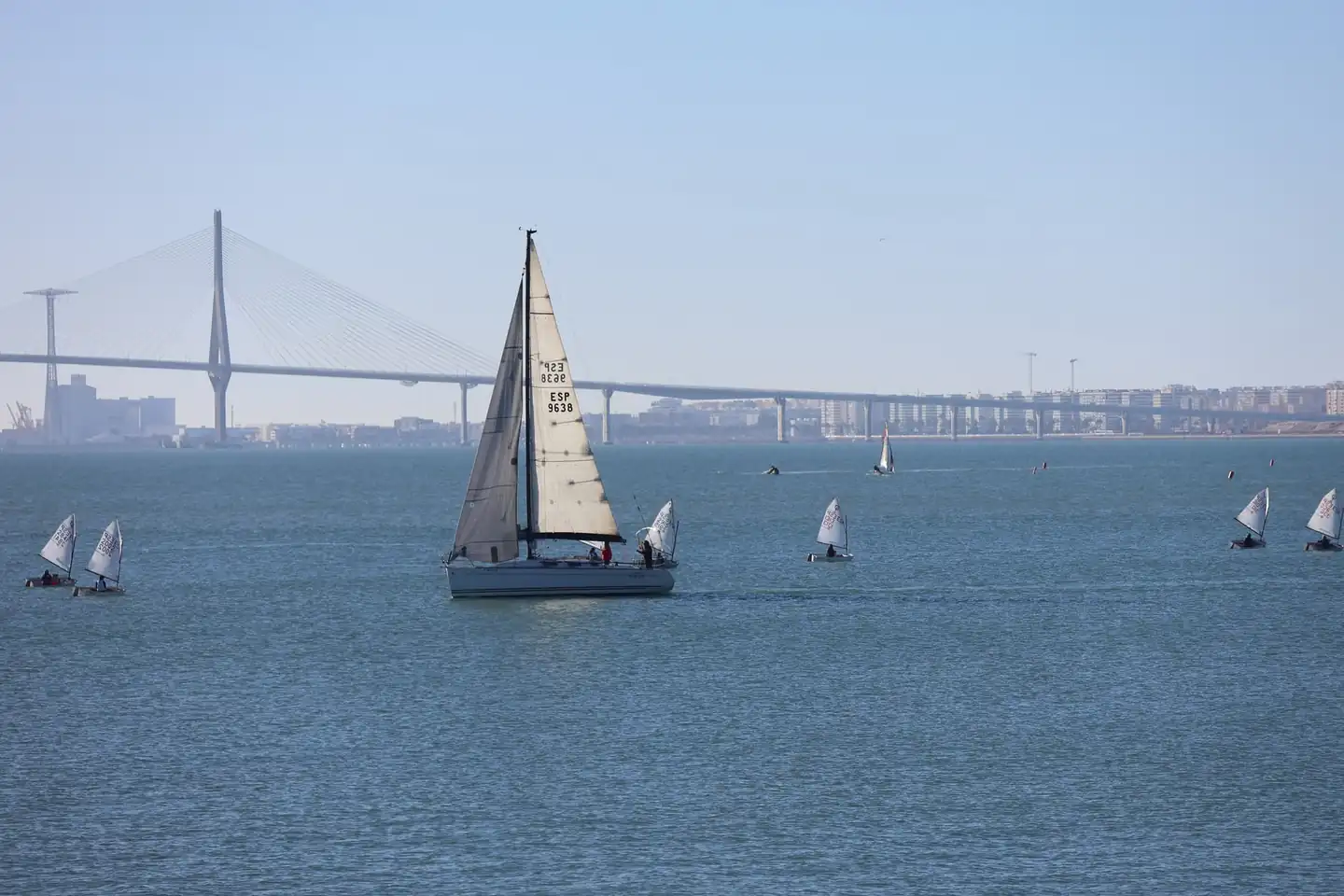
The Bahía de Cádiz Half Marathon was for decades one of the most recognizable events on the Andalusian calendar for a simple reason: it linked two cities, breathed sea air, and offered a fast course, almost without surprises. Between San Fernando and Cádiz, the race mixed asphalt, coastal wind, and a municipal organization that made it a benchmark for those looking for a 21K with local flavor and a favorable profile.
Its 2024 edition, the thirty-sixth, also marked a turning point. The event brought together around 800 participants and left modest times for the leading places, but it also confirmed something that had already been felt in previous editions: the charm of the route was not always enough to sustain the race’s pull. In 2025 it was announced that the race would not continue in its traditional format, a decision that closed a chapter closely tied to popular athletics in the bay.
A race between two cities and a strip of sea
San Fernando and Cádiz shared for years the heartbeat of this half marathon, with the start in the area of the Iberoamericano Bahía Sur stadium and the finish in the Cádiz capital, next to the Ciudad de Cádiz complex or Avenida Periodista Beatriz Cienfuegos, depending on the edition. That linear route gave runners a very particular feeling: that of crossing a living map, as if the city unfolded with every stride.
The route was not just a transfer between urban points. The race crossed a geography of open light, with stretches marked by the Atlantic breeze, wide avenues, and sections where the landscape reminded you that you were running in a bay rather than on a closed circuit. That is why its appeal went beyond the final time: many chose it for the experience of running in a coastal setting with its own identity.
The organization, in the hands of the city councils of San Fernando and Cádiz, provided for years the hallmark of a well-established popular race. Federative certification of the course guaranteed exact measurements and reliable timing, two elements that gave the event a competitive seriousness that coexisted with a very street-level atmosphere, very much a sports Sunday, very much a city open to runners.
The profile that favored fast times
The course was practically flat, and that detail alone was enough to place it among the most appealing options for anyone looking to run fast without paying the price of hills. In a half marathon, the terrain matters almost as much as preparation: a succession of short climbs can break your rhythm like a crosswind on a long straight. In Bahía de Cádiz, by contrast, the ground lent itself to a steady, comfortable pace, with a clean stride.
The race took place mostly on asphalt, with a structure designed to sustain pace and avoid sudden changes. That does not mean it was easy, because 21.0975 kilometers always demand respect, but it did offer a friendly setting for mid-level runners and for those looking to improve personal bests. In 2024, for example, the winner prevailed in 1:16:47, a time that reflected more the popular character of the event than the presence of national elite runners.
The aid stations also helped, placed at points such as kilometers 5, 10, 15 and 17, as well as at the finish. In a coastal race, where salty air and wind can dry you out more than it seems, those stations were a small insurance policy for continuity. Water, isotonic drink, and logistical support were part of a structure that allowed the race to maintain its rhythm without losing fluidity.
What it said about Cádiz and its fans
The half marathon worked as a sporting and urban showcase. It did not just put hundreds of athletes on the road; it also displayed a specific way of understanding the city. Cádiz, with its density of history and its permanent relationship with the sea, found in this event a moving postcard. San Fernando, for its part, took on the role of starting gate, ceremonial launch point, the place from which you gather momentum to head toward the capital.
The connection between both towns had a clear symbolic value. It was not a repeated-loop race, nor a whimsical lap around the same space, but a route that forced you to read the territory. That made it different from other more enclosed urban half marathons. The runner was not only adding kilometers; they were also moving through a story of bay, bridges, avenues, and areas open to the maritime air.
That story was reinforced by the participation of local clubs, volunteers, and sponsors who contributed trophies, services, and prizes. In previous editions, more than 6,000 euros in prizes were even mentioned, a figure that, without turning the event into a professional race, did show the effort to maintain a worthy competitive level and an additional incentive for the top finishers.
Registrations, bibs, and time limit
Registrations usually hovered around 20 euros in recent editions, although the price could vary depending on the registration date and the specific policy of each call. That figure placed the race in a reasonable range for the popular runner, especially considering that the organization included bib, chip, technical shirt, and, in some years, sponsor gifts. It was not a luxury entry fee, but it was a complete one.
The registration period closed a few days before the race or once the expected quota was reached. In 2024, for example, an imminent closing was announced with around 800 runners distributed by categories. That combination of limited places and tradition partly explained the feeling of a compact race, without extreme overcrowding, where the atmosphere remained recognizable and the runner did not get lost in too large a crowd.
There was also a maximum race time of 2 hours and 45 minutes, a useful reference for gauging the level of demand. That margin left room for popular runners at relaxed paces, without turning the event into a harsh filter. At the same time, it maintained a control structure that ensured the logistics at the finish, medical assistance, and course closure were manageable.
The start and the finish, two very different scenes
The start at Bahía Sur had something of a big morning about it: runners gathering, last bib adjustments, shoes tied in a hurry, and that soft murmur of nerves that always comes before a 21K. The stadium offered services, space, and a certain comfort while waiting, something especially valuable when the race started early. In several editions, the start was set for 9:30 a.m.; in others, it was pushed back to 10:00, but always with the same purpose: to take advantage of the light and minimize the heat.
The finish, on the other hand, had a more emotional feel. The line in Cádiz capital turned the final meters into a small landing, with fatigue already visible in the legs and the clock becoming a magnet. Crossing the line on an urban avenue, after having advanced from San Fernando, gave the effort a very clear narrative feeling: you started in a stadium and finished by entering the city.
Between both points, the organization even provided free shuttle buses from Cádiz to the start, a very practical measure to avoid parking and pre-race travel complications. That detail, discreet but important, made the difference between an improvised race and one planned with care. In a half marathon, logistics weigh almost as much as training, and the Cádiz bay understood that well for years.
Why it was a favorite among popular runners
The combination of a flat course, urban atmosphere, and coastal setting placed this half marathon among the favorites of many popular runners. It was not a race to tame mountains or battle a leg-breaking profile, but a distance that rewarded consistency. That made it especially attractive for those wanting to debut in the half marathon or test a steady time under reasonable conditions.
In this kind of race, the value is not only in the stopwatch. It also lies in the sense of control, the reading of effort, and the possibility of completing a 21K without the route becoming an enemy. Bahía de Cádiz offered exactly that: an achievable course, a certified circuit, and an atmosphere that mixed competition with an athletic stroll. It was one of those races remembered for how they are lived, not just for the final time.
That is why many clubs used it as a spring target. March is usually a favorable month for this kind of distance, still with manageable temperatures and enough time to move from winter to a good fitness point. The bay, moreover, adds that wind factor that forces you to run intelligently: it is not always about pushing harder, but about spending better.
What race day demanded
A flat 21K does not mean an easy 21K. The Cádiz half marathon imposed its own language: steady pace, measured hydration, and attention to the wind. Runners who went out too fast could pay for it at kilometer 16 or 17, when the body starts asking for answers and the mind needs simple instructions. The race demanded a cool head and warm legs.
The weather in the bay could play a decisive role. The westerly or easterly wind, depending on the day, affected both the perception of effort and race strategy. A stretch with headwind is felt immediately in your breathing, as if the air were heavier than normal. That is why it was key to start at a conservative pace, protect yourself from unnecessary wear, and take advantage of favorable stretches to stabilize the stride.
Recovery was also part of the script. After the finish, the body appreciates walking for a few minutes, hydrating, and replenishing energy calmly. In a race like this, where many runners move between an hour and twenty and just over two hours, the race does not end at the finish tape; it continues in the way you bring your heart rate down, cool your legs, and avoid turning the effort into an unnecessary strain.
A legacy that goes beyond any single edition
The disappearance of the traditional format does not erase the race’s sporting weight. The Bahía de Cádiz Half Marathon left a shared memory among local runners, provincial clubs, and fans who found in it an event with its own identity. It also left a very clear idea of how a distance race can engage with the city without needing grandiose settings.
Its history neatly sums up the cycle of many popular races: they are born from municipal effort, grow with the support of clubs and volunteers, consolidate a base of participants, and over time are affected by organizational changes, permits, resources, or simply the evolution of the calendar. In this case, the decision not to continue opened a gap on the Andalusian map of urban half marathons with a flat profile and maritime scenery.
Even so, its memory remains useful. Not only as a historical reference, but as a model of what many runners still look for: a well-measured race, without exaggerated elevation changes, with reasonable services and a finish that makes you feel the last meters matter. In the Cádiz bay, for years, that happened naturally. And that is why its name still comes up whenever people talk about half marathons with personality in southern Spain.
The memory of a half marathon that left its mark on the bay
Races disappear, but they do not always vanish. Sometimes they remain as a technical trace, other times as a repeated conversation among fans, and sometimes as a reference for comparing how popular athletics has changed. The Bahía de Cádiz Half Marathon belongs to that last category: the one of races that taught many runners that a 21K can be demanding and friendly at the same time, urban and coastal, popular and well organized.
Its memory is still tied to very specific images: the starting stadium, the open asphalt, the smell of salt in some stretches, and the feeling of entering Cádiz with empty legs but a satisfied mind. That is no small thing for a race. In a calendar saturated with events, only a few manage to settle so firmly into collective memory. Bahía de Cádiz was one of them, and its disappearance confirms precisely its value: what is missed was rarely minor.
For the runner who analyzes routes, atmosphere, and race type, the Cádiz half marathon left a very clear lesson: there are races that are worth it for the result and others that are worth it for the journey. This one belonged to both categories for years. And although its future was cut short, its story still helps explain why a half marathon can become something more than a simple record of 21.0975 kilometers.



How to prevent thigh chafing: causes and real solutions

Women’s running windbreakers: seven jackets and how to choose

Do more workouts get rid of soreness? A guide for runners

Jaén Half Marathon 2026: Record 3,800 Runners Registered

Men’s short running tights: how to choose the right pair

World Triathlon confirms data breach involving medical data

Izan Edo targets podium at Miyazaki World Cup

María Pérez ranks ninth in World Athletics’ 2026 top ten

Dos Santos, Duplantis and Sawe: World Athlete of the Year finalists

San Silvestre Vallecana 2026: 42,000 places, prices and start times

 Races3 months ago
Valencia Half Marathon 2027: date and registration

 Races3 months ago
Valencia Marathon 2026: entry, ballot and course

 Reviews and Comparisons4 months ago
Asics Gel-Roadmiles 3 for men: review and current price

 Reviews and Comparisons4 months ago
Asics Gel Sonoma 8 Gore-Tex: complete analysis for trail and rain

 Sneakers3 months ago
Saucony Endorphin Pro 4: full review and verdict

 News5 months ago
Strava API 2026: what changes for clubs, challenges and runner apps?

 Reviews and Comparisons5 months ago
Nike Alphafly 3: opinions, sensations, and real key points

 Reviews and Comparisons4 months ago
Under Armour running shoes review 2025-2026: models and key features

 Sports Equipment4 months ago
Shoe sizes in cm: a clear guide to getting the right fit for your footwear

 Sneakers3 months ago
Skechers GO RUN Consistent 2.0 analysis: comfort and limits

 News5 months ago
Valencia Marathon 2026 route: key tips to train and run better

 Sneakers4 months ago
Adidas Adizero Boston 13 for men: review and verdict