Races
Carreira Pedestre Popular de Santiago 2023: history and route
The Compostela race combines history, city life, and a 12-kilometer urban route ending at the Obradoiro.

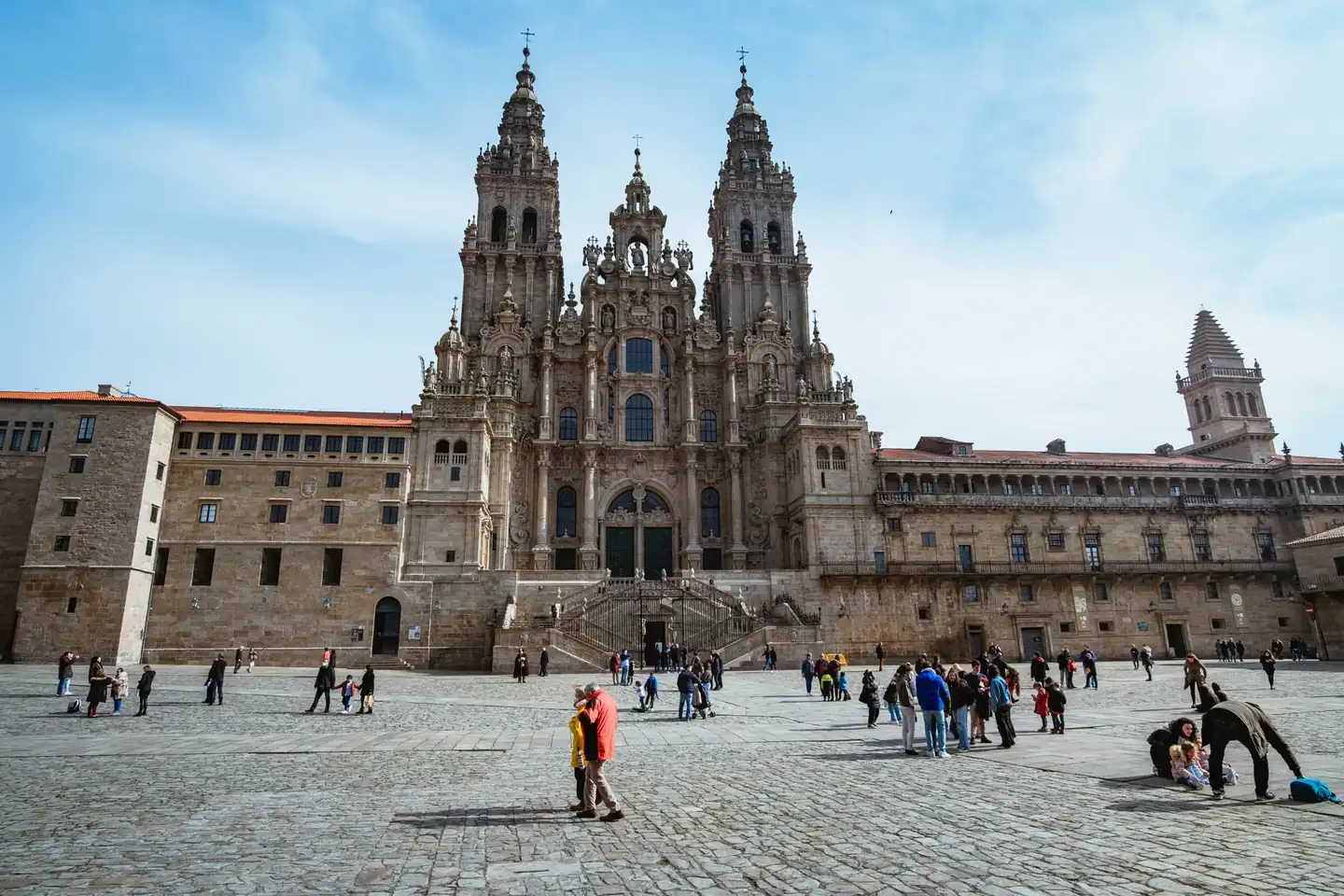
The Santiago Popular Pedestrian Race occupies a unique place in the Galician running calendar: it is not just an urban race, but an event that turns Compostela into an open circuit, with the start on Xoán XXIII Avenue and the finish in Obradoiro Square. Since 1978, this race has grown to become one of the most recognizable popular benchmarks in Galicia, with an unusual mix of mass sport, lively streets, and historical heritage.
Its identity is explained by one number and one image. The first is the approximately 12 kilometers of the open category, a demanding but manageable distance for recreational and competitive runners. The second is the finish in front of the Cathedral, in an environment that adds a symbolic weight difficult to replicate in other events. In recent years, the organization has also maintained a structure with school participation, which broadens its reach and gives it more the feel of a city festival than of a simple competition.
A race born in the heart of Compostela
The event began in 1978 to mark the centenary of El Correo Gallego and started with more than 2,500 participants in Obradoiro Square. That starting point neatly sums up what its evolution would be: a race conceived as an urban celebration, with the city as the main stage rather than a mere backdrop. Over time, the event moved from Obradoiro Square to other starting points for safety and flow reasons, until it settled on Xoán XXIII Avenue, where it gains space to organize the pack and avoid the bottlenecks of the early years.
The history of the Pedestre is also the history of Compostela itself running at its own pace. The race has gone through decades of changes in popular athletics, from a more local and less massive era to another with bib numbers, timekeeping, and participation that reached very high figures. In 1983 it reached its all-time registration record, with 7,325 bibs, a figure that remains the race’s great reference mark. The following year, 7,124 athletes were close to being reached, and since then the numbers have fluctuated significantly, although in some recent editions a notable boost has again been seen.
Its endurance for nearly half a century has made it more than just an autumn competition. For many Galician runners, the Pedestre is a kind of emotional barometer for the end of the season. For the city, it is a morning in which the asphalt changes function: it stops being a transit route and becomes a story. The usual noise of traffic gives way to the sharp sound of sneakers and the murmur of thousands of people moving through very recognizable streets of the historic center.
The course and its urban weight
The open route follows a very recognizable map of Santiago de Compostela. It starts from Xoán XXIII and passes through neighborhoods and urban arteries such as San Caetano, Fontiñas, Concheiros, San Pedro, Virxe da Cerca, Doutor Teixeiro, Rosalía de Castro, Coruña Avenue, Ciencias Avenue, Castelao, Santa Clara, Basquiños, Cervantes, Mazarelos, Orfas, O Toural, O Vilar, Praterías, and Fonseca before entering Obradoiro Square. It is not a flat or neutral route: Compostela’s own layout, with its alternation of avenues and hills, turns the race into an exercise in pacing and energy management.
The route, of about 12 kilometers for the open category, requires more than basic endurance. The succession of turns, small climbs, and surface changes demands running with judgment, without being carried away by the enthusiasm of the first meters. That is part of its appeal: having stamina is not enough; you also need to read the city, understand its transitions, and not confuse the energy of the atmosphere with a walk in the park. Those who arrive strong in the historic center still have to tackle the final stretch, where the weight of the effort mixes with the excitement of entering the monumental area.
The school category, for its part, is around seven kilometers and maintains the logic of broad participation, with a more accessible format adapted to younger ages. This double structure reinforces the event’s popular vocation and allows the athletic morning to be more than a single start, spreading out in several waves. The result is a city that activates in layers: first the adults, then the younger runners, and in between a choreography of volunteers, spectators, and runners that gives Compostela an energy difficult to confuse with that of any other date on the calendar.
The finish at Obradoiro is not just an iconic detail. It carries a very powerful visual and emotional weight because it places the runner in one of the most recognizable spaces in Galicia, with the cathedral façade as a backdrop. The scene has something of a civic ceremony: you are not only finishing a race, you are also crossing a place loaded with history with your body still hot from the effort. That combination explains why the Pedestre is remembered as much for the stopwatch as for the atmosphere.
Participation, atmosphere, and popular dimension
The Santiago Popular Pedestrian Race has maintained a very close relationship with mass participation. Throughout its history it has attracted runners of very different profiles: licensed athletes, weekend enthusiasts, club groups, schoolchildren, and also a striking number of foreign participants, especially Portuguese and African runners. This mix has given the race real competitiveness at the front, but also a broad social base, with runners who simply want to be part of an event so closely tied to the city.
The atmosphere is one of the most frequently mentioned features by those who know it. The city comes alongside, the crowd gathers at very visible passing points, and the runner perceives that they are moving through a stage that does not fully belong to them, but which opens up to their effort for a few hours. The race is, in part, a parade of endurance and, in part, a reading of urban space. The applause as you pass through the center, the density of people on the avenues, and the final stretch toward the historic district give it an almost cinematic texture.
It has also played an important role as a showcase for Galician athletes and internationally accomplished figures. Among the most notable local names are Javier Fernández Feijóo, Esther Pedrosa, Alejandro Gómez, Lolo Penas, and Adrián Ben, all linked to different eras of the event. In the women’s section, Joselyn Brea‘s dominance in the last decade has been one of the great competitive stories of the Pedestre, while in the men’s category Lolo Penas’ reign between 2012 and 2015 left a very marked impression. These winning cycles help show that the race does not live only off its atmosphere, but also off a sporting history with continuity and its own names.
The start has also been associated with political and sporting personalities, which reinforces its public dimension. In different editions, figures such as Xerardo Fernández Albor or Xerardo Estévez, as well as former participants in the race, have handled the starter’s pistol. That detail, now almost ritual, shows how the race has served for years as a meeting point between the city, institutions, and popular athletics.
The marks that explain its prestige
The list of winners tells a story of continuity, but also of changes in the race’s competitive profile. In the early years there were Galician winners and names closely tied to Spanish athletics, and over time there followed a period of enormous international presence. Rosa Mota, for example, is among the great historical dominators in the women’s category, with three victories, while Carlos Monteiro and Delfín Moreira left a notable mark in the men’s section. Later, runners such as Peter Kamais, Silas Kipruto, or Goitom Kifle would arrive, reflecting the race’s level in certain editions.
In the men’s field, Lolo Penas became the great modern benchmark with four consecutive victories between 2012 and 2015. That kind of sequence gives the race a very recognizable narrative: it is not an event where the same type of runner always wins, but rather a stage where runners able to read the course, withstand pressure, and finish strongly can build a small dynasty. In the women’s field, Joselyn Brea has defined the recent era with six wins, a hegemony that speaks both to talent and to adaptation to a route that punishes any excess.
The winners’ list also offers a valuable clue to understanding the event’s prestige: the Pedestre has managed to attract athletes of varying levels without losing its popular nature. In other words, it is neither an elitist race nor a simple recreational event. It lives in a very fertile middle ground, where real demands coexist with an open atmosphere and the possibility for thousands of people to feel part of something bigger than their personal best.
That balance is delicate. When an urban race becomes too crowded, it risks losing flow; when it becomes too closed, it loses the energy that makes it memorable. The Pedestre has managed to stay on that edge for years, supported by an organization capable of staggering starts, organizing categories, and preserving the feeling of a collective event. That is where much of its staying power lies.
Registration, dates, and rhythms of an autumn event
The race is held every last Sunday in October, a date that is already part of Compostela’s sporting liturgy. In the 2025 edition, the race was scheduled for October 26, with the adult start at 10:00 and the school start at 11:30. Registration opened weeks earlier, with online slots and in-person options, and differentiated prices were set for adults and minors, something common in an event that seeks to maintain broad participation.
The most recent figures show a race that is still very much alive in terms of turnout. In the 2025 edition, thousands of athletes were mentioned and a renewed interest in taking to the streets again in a race with strong local roots. The published prices were 10 euros for adults and 5 euros for children, later rising to 15 and 8 euros, respectively, in the final stretch of the registration period. Beyond the numbers, the important fact is that the Pedestre continues to function as an event capable of mobilizing the city and attracting runners looking for an autumn race with its own identity.
The calendar also helps give the race a very specific sporting meaning. It arrives at a time when many runners have already left their big autumn goals behind or are finishing them, so the race can serve as a season finale, a form test, or a main target for those who prefer middle-distance urban events. Its distance, neither too short nor excessively long, places it in that middle ground that usually rewards aerobic preparation and pace control.
That is why the Pedestre cannot be understood only through the day-of-race epic. It also matters that it has managed to keep its place, survive difficult years, and regain volume when the calendar has reopened. In 2020 and 2021 it was not held because of the pandemic, an interruption that affected many popular races across the country. Its return reinforced the idea that it was not just any event, but a deeply established part of Galicia’s sporting landscape.
An event that blends city, memory, and competition
The strength of the Santiago Popular Pedestrian Race lies not only in its route or its record book. It lies in the way it connects sport and city with a rare naturalness. Santiago does not host it as an outside event, but as a temporary extension of its own urban life. The streets of the historic center, the access avenues, the intermediate neighborhoods, and Obradoiro Square form a continuous fabric that changes meaning for a few hours and then returns to routine, as if nothing had happened, even though something is still vibrating there.
Its ability to bring together different generations also matters. On the same morning, schoolchildren, popular runners, high-level athletes, and spectators watching the race with a mix of curiosity and habit all coexist. This combination gives the race a very Galician, very Compostela texture: sober, numerous when needed, but with an emotional undercurrent that cannot be manufactured with posters. The Pedestre does not depend on artifice; it depends on a city that recognizes it as part of its emotional calendar.
That is why it remains one of the most talked-about races as the end of October approaches. Its route is hard enough not to feel decorative, its history accumulates decades of names and marks, and its finish in Obradoiro adds a dimension that goes beyond the stopwatch. In an era of increasingly segmented races, the Pedestre preserves something valuable: the feeling that running can still be a collective, urban, and memorable act at the same time.
That is, at heart, the secret of its permanence. The race has managed to sustain its own identity without giving up evolution, and it has made Santiago de Compostela the absolute protagonist of its own sporting event. It does not need grand artifice to justify itself. It is enough for it to have an orderly start, a course that forces you to think, and a finish that, every autumn, places human effort right in front of the ancient stone of Obradoiro.



How to prevent thigh chafing: causes and real solutions

Women’s running windbreakers: seven jackets and how to choose

Do more workouts get rid of soreness? A guide for runners

Jaén Half Marathon 2026: Record 3,800 Runners Registered

Men’s short running tights: how to choose the right pair

World Triathlon confirms data breach involving medical data

Izan Edo targets podium at Miyazaki World Cup

María Pérez ranks ninth in World Athletics’ 2026 top ten

Dos Santos, Duplantis and Sawe: World Athlete of the Year finalists

San Silvestre Vallecana 2026: 42,000 places, prices and start times

 Races4 months ago
Valencia Half Marathon 2027: date and registration

 Races4 months ago
Valencia Marathon 2026: entry, ballot and course

 Reviews and Comparisons4 months ago
Asics Gel-Roadmiles 3 for men: review and current price

 Reviews and Comparisons4 months ago
Asics Gel Sonoma 8 Gore-Tex: complete analysis for trail and rain

 Sneakers4 months ago
Saucony Endorphin Pro 4: full review and verdict

 News5 months ago
Strava API 2026: what changes for clubs, challenges and runner apps?

 Reviews and Comparisons5 months ago
Nike Alphafly 3: opinions, sensations, and real key points

 Reviews and Comparisons4 months ago
Under Armour running shoes review 2025-2026: models and key features

 Sports Equipment4 months ago
Shoe sizes in cm: a clear guide to getting the right fit for your footwear

 Sneakers3 months ago
Skechers GO RUN Consistent 2.0 analysis: comfort and limits

 News5 months ago
Valencia Marathon 2026 route: key tips to train and run better

 Sneakers4 months ago
Adidas Adizero Boston 13 for men: review and verdict