Races
Carrera Cofrade Cuatro Millas 2026: date and location
A city road race crosses Holy Week landmarks and includes events for different ages.

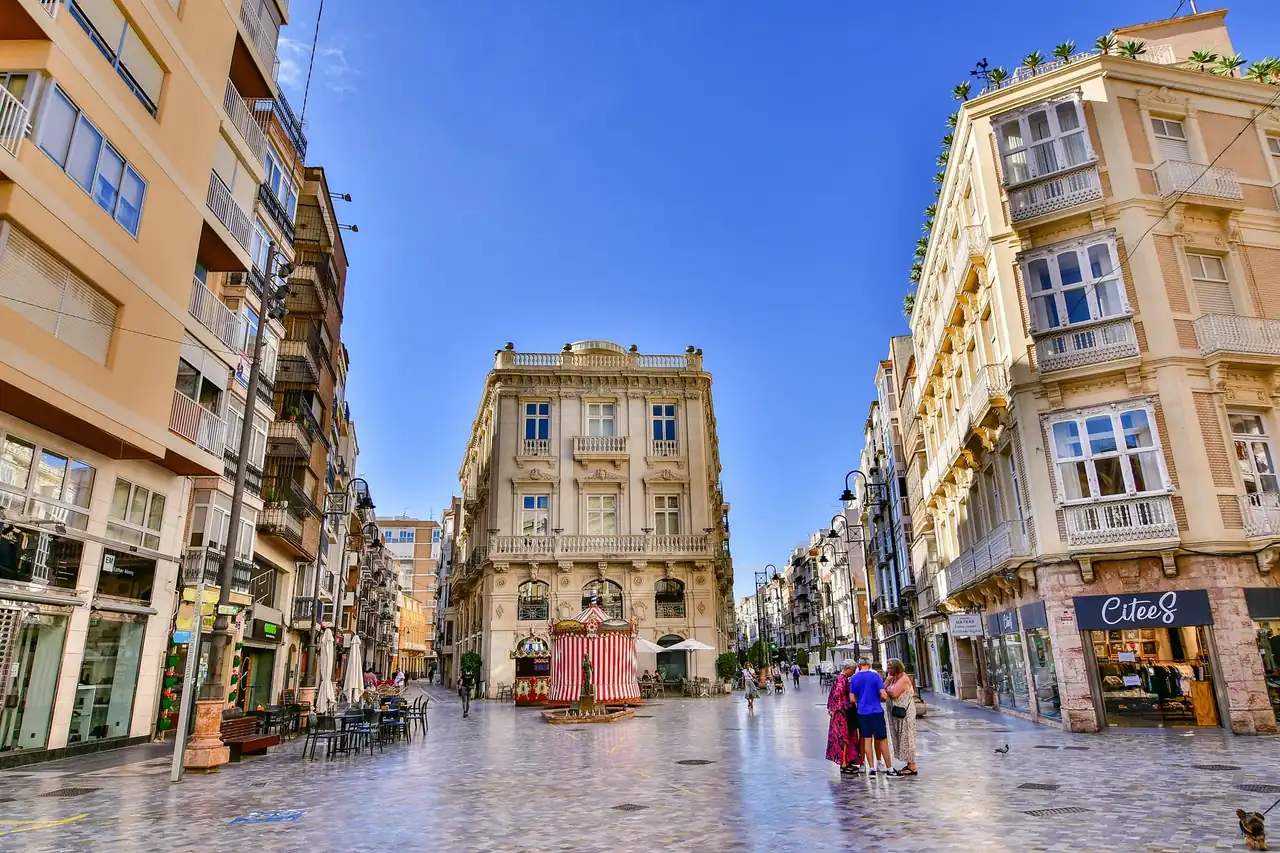
Cartagena will host the fourth edition of its Cofrade Race on Sunday, Nov. 1, 2026, an urban event bringing together sport, local tradition and charity. The main course covers about four miles — roughly 6.4 kilometers — along streets linked to Cartagena’s Holy Week processions. The start is scheduled for 10:45 a.m., with a walking event and children’s races also planned.
The event is set to be limited to 400 runners and 200 walkers, as well as a maximum of 150 participants in the children’s races. Entry for the race and walking event is listed at 12 euros; the children’s races cost 5 euros, while a nonparticipating charity bib is listed at 8 euros. Proceeds will go to charitable associations selected by the Junta de Cofradías de la Semana Santa de Cartagena.
An urban race with a Cartagena identity
The event stands apart from a conventional road race because of its connection to the city and its route. Rather than following only a functional circuit, it passes through places associated with the processional routes used during Cartagena’s 10-day Holy Week. Sport becomes a way to cross a recognizable part of the city’s shared history.
The event is organized by the Junta de Cofradías de la Semana Santa de Cartagena together with the city council’s sports department. That partnership helps explain the race’s distinctive character: it is presented not simply as a competition but as an event involving heritage, public participation and charitable support. For visiting runners, the route offers another way to experience central Cartagena, though its cultural appeal does not replace practical information about distance and start times.
The 2026 edition will be the fourth in the series. That makes it a relatively young event, with a strong identity rooted in local tradition and a format accessible to people looking for a shorter distance than a typical 10K. Its appeal lies both in the route and in the atmosphere created by runners, walkers, families and local spectators sharing the morning.
Distance, surface and planned route
The main race is about four miles, equivalent to roughly 6.4 kilometers. Another event listing gives the distance as 6,450 meters; since the available information rounds it differently, the safest interpretation is a course close to 6.4 kilometers. The organizer’s documentation should be checked for any final measurement.
The route is described as urban and fully paved. It crosses the city center and connects several places related to Holy Week before returning to the start and finish area beside Iglesia de Santa María de Gracia. The reference information does not include a detailed map showing streets, turns or elevation, so it would be premature to claim more precise route details than those confirmed.
For this distance, pavement is familiar terrain for people who train in cities, although central streets can require attention at turns and in crowded sections. The organizer is responsible for course markings; the official map and pre-race instructions remain the best way to confirm the exact route and any changes.
Start times, event options and schedule
The four-mile race will start at 10:45 a.m. on Nov. 1. The walking event is scheduled five minutes later, at 10:50 a.m. The children’s races are assigned a 10 a.m. start, so activities will begin before the main event and continue through the morning.
The walking event lets participants cover the route on foot rather than run. It shares the event’s cultural focus but is a separate option, with its own start time and a stated limit of 200 participants. The available information does not say whether its pace, rules or distance will be identical to those of the main race, so those details should be checked in the official terms.
The children’s races are limited to 150 participants, divided into three groups of 50 places, according to the published details. The age ranges and distances for each group are not specified here. That matters to families: eligible ages, course length, guardian permission and bib collection can differ by category and should be checked before registering.
Registration, prices and participant limits
The listed price for the main race is 12 euros, the same amount charged for the walking event. The children’s races cost 5 euros, while a nonparticipating charity bib is listed at 8 euros. That option allows people to contribute to the charitable element without taking a place at the starting line.
The announced limits are 400 runners, 200 walkers and 150 children. The registration table also displays figures linked to different event options, but those numbers alone do not establish how many places remain available at the time of checking. Therefore, the overall capacity should not be mistaken for the number of open places: availability changes as people register and must be checked in the current registration system.
The system distinguishes between people registering with an account and those entering as guests. Published information says account holders can retry a payment, pay for multiple entries in one transaction, amend certain details and view previous results. Guest registration, by contrast, is described as individual payments, with a limit of three entries every 24 hours.
There are also differences in how registrations can be managed: guests are told that refunds, transfers to another person and access to event history are unavailable. Bib transfers are listed as an option subject to the organizer’s rules for registered users, not as a guaranteed right. Before paying, review the terms for changes, refunds and transfers, as they can affect the ability to correct an error or withdraw.
A charitable purpose rooted in the city
The charitable element is part of the event’s central purpose, rather than a separate addition. Organizers have said proceeds will go to charitable associations selected by the Junta de Cofradías de la Semana Santa de Cartagena. The reference information does not identify the recipient organizations or specify how the funds will be divided.
The charity bib extends participation to people who want to contribute without running, walking or taking part in the children’s races. Listed at 8 euros and nonparticipating, it should not be confused with a sports entry or a bib granting access to the course as a participant. Its purpose is to support the cause selected by the organizer, although details about the final allocation and accounting are not available in the information provided.
This charitable dimension connects the race with local associations and a tradition that brings thousands of people together during Holy Week. The result is a morning in which exercise shares space with a local cultural expression. For participants, that mix can give the course a meaning beyond covering miles: it passes through streets with a recognizable role in Cartagena’s collective life.
What the Holy Week route adds
Processional routes are more than lines on a map. During Holy Week, the streets become the setting for processions that move through the city over 10 days. The race carries part of that map into an autumn morning, in a sporting format that does not reproduce the religious purpose of the processions. Its value comes from connecting runners’ movement with Cartagena’s cultural geography.
The available description says the route passes several representative places connected to this tradition and crosses the city center. It does not give a complete list of landmarks or confirm every street, so a detailed sightseeing route would be premature. The start and finish beside Iglesia de Santa María de Gracia are mentioned in one event listing, though the final course should be checked against the official map.
For visitors, the race can provide a first impression of the center, but it is not a guided tour. Pace, crowds and event restrictions may limit the chance to take in the surroundings. Anyone hoping to explore the heritage at leisure will need to separate that experience from the competition and consult dedicated cultural or visitor information.
Practical preparation for a short distance
About 6.4 kilometers may seem short beside a half marathon, but the effort depends on pace and experience. For a regular runner, it may be a brief event; for someone returning after a break or just starting to run, it still deserves gradual preparation. A shorter distance does not remove the importance of arriving rested and familiar with the effort.
The paved course is similar to many urban training routes. If a normal routine includes dirt paths, it is worth considering that repeated contact with pavement feels different, especially in unfamiliar shoes or after a recent increase in training. General guidance is to avoid wearing brand-new shoes on race day and making sudden increases in workload in the preceding weeks, adjusting effort to personal fitness.
On race morning, the start time and central location call for some planning. Checking bib pickup, traffic restrictions and any instructions about bag storage or access ahead of time prevents reliance on details not included in the initial event listing. Services such as water stations, timing and awards have not been confirmed here; check the rules and official updates for the edition.
A morning for runners, walkers and families
The staggered schedule means the event is not limited to people competing in the main race. Children’s events open the morning, the walking option offers an alternative to running and the four-mile race takes the central slot. That mix gives the day a broader profile than a strictly timed competition.
The participant limits also suggest a contained event: 400 places for runners, 200 for walkers and up to 150 for children. Altogether, the event allows a maximum of 750 participants in active events, not counting the nonparticipating charity bib. That figure describes the announced capacity, not the number registered or a confirmed attendance forecast.
For families, the main missing detail is the full information about the children’s events. Ages, distances, category start times and supervision arrangements should be known before choosing an option. At an urban race, the start area can also bring spectators and participants together in a small space; following the organizer’s instructions helps keep things orderly for children, runners and walkers.
The November event on Cartagena’s calendar
Nov. 1, 2026, falls on a Sunday, placing the race on a weekend morning and making it more accessible to people traveling from elsewhere. The event takes place in Cartagena, in Spain’s Region of Murcia, and its urban route sets it apart from trail or cross-country events. The combination of pavement, the city center and its cofrade theme is its most distinctive feature.
The 2026 edition has published details on date, start times, prices and participation limits, but not every operational detail is included in the information reviewed. The final map, children’s age categories, full rules and current bib availability may change. The date is confirmed for Nov. 1; other conditions should be checked against the organizer’s announcements as the event approaches.
Rather than a long-distance race, this event offers a particular way to experience a city: its processional streets become, for one morning, a place to run and walk. For Cartagena, the event’s continued place on the calendar depends on maintaining that blend of sport, local identity and charity. For those taking the start, the 6.4 kilometers will also be a way to cross an urban history usually experienced at a different pace.



How to prevent thigh chafing: causes and real solutions

Women’s running windbreakers: seven jackets and how to choose

Do more workouts get rid of soreness? A guide for runners

Jaén Half Marathon 2026: Record 3,800 Runners Registered

Men’s short running tights: how to choose the right pair

World Triathlon confirms data breach involving medical data

Izan Edo targets podium at Miyazaki World Cup

María Pérez ranks ninth in World Athletics’ 2026 top ten

Dos Santos, Duplantis and Sawe: World Athlete of the Year finalists

San Silvestre Vallecana 2026: 42,000 places, prices and start times

 Races3 months ago
Valencia Half Marathon 2027: date and registration

 Races3 months ago
Valencia Marathon 2026: entry, ballot and course

 Reviews and Comparisons4 months ago
Asics Gel-Roadmiles 3 for men: review and current price

 Reviews and Comparisons4 months ago
Asics Gel Sonoma 8 Gore-Tex: complete analysis for trail and rain

 Sneakers3 months ago
Saucony Endorphin Pro 4: full review and verdict

 News5 months ago
Strava API 2026: what changes for clubs, challenges and runner apps?

 Reviews and Comparisons5 months ago
Nike Alphafly 3: opinions, sensations, and real key points

 Reviews and Comparisons4 months ago
Under Armour running shoes review 2025-2026: models and key features

 Sports Equipment4 months ago
Shoe sizes in cm: a clear guide to getting the right fit for your footwear

 Sneakers3 months ago
Skechers GO RUN Consistent 2.0 analysis: comfort and limits

 News5 months ago
Valencia Marathon 2026 route: key tips to train and run better

 Sneakers4 months ago
Adidas Adizero Boston 13 for men: review and verdict