Races
Carrera de las Migas 2026: date and route
Numancia de la Sagra celebrates its 10th edition with popular sports, distances for everyone, and a festive atmosphere.

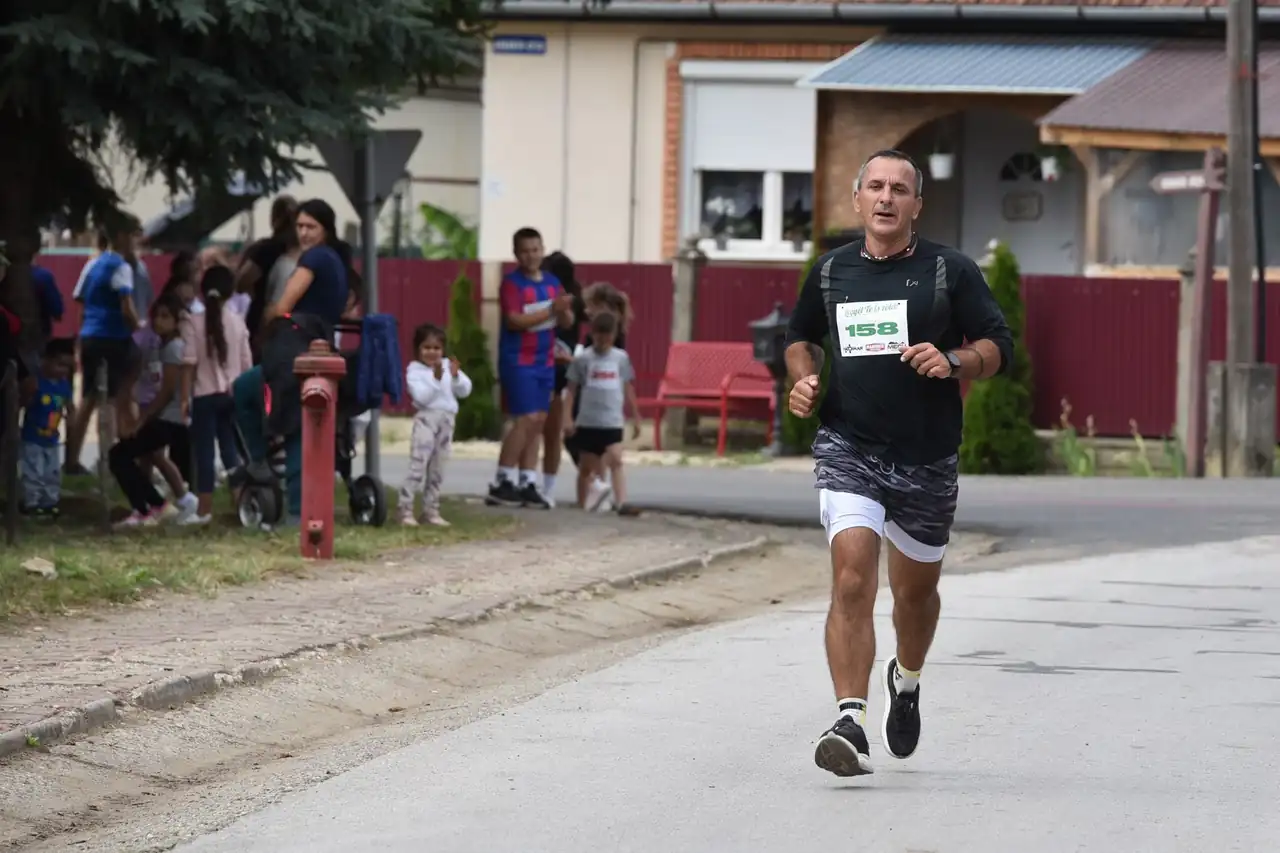
Imagen: Zsolt Bodnár / Pexels
Numancia de la Sagra will once again turn the morning of March 1, 2026 into a mix of effort, community, and tradition with the 10th edition of the Carrera de las Migas, an event that is now part of the local calendar and combines competition, popular participation, and a very recognizable final celebration. The start is set for 10:00 a.m., and the event maintains that unusual balance between sporting competition and festive day that has given it its own identity.
The race comes with three distances designed for different profiles: 10 kilometers and 5 kilometers, both competitive, and a 3-kilometer route that is more popular and family-oriented, open to participants of all ages. In addition, there are free children’s races, refreshment stations, medical assistance, race control, and a tasting of migas at the end of the day, a closing that has become as eagerly awaited as crossing the finish line itself.
A race that already carries weight in the local calendar
The Carrera de las Migas is not an improvised date or a debut event. Its tenth edition speaks of continuity, of a community that has made a sporting format with a participatory vocation its own. In the language of popular races, few things age better than a race that preserves its simple character and its ability to bring together regular runners, families, and neighbors around the same route.
That mix explains much of its appeal. On the same Sunday, those looking to set a pace in the 10 kilometers share the day with those who prefer a shorter distance and those who come to walk, run, or accompany others. It is not just about adding kilometers; the atmosphere matters too, as does the feeling of a town in motion and the gastronomic component that gives the event its name. The result is a race with the feel of a local festival, but organized with clear sporting criteria.
The Town Hall of Numancia de la Sagra keeps the event moving with the support of volunteers, sponsors, and the sports company Evedeport, which is in charge of registrations. This division of responsibilities helps explain why the race has managed to endure over time: behind the bib number there is logistics, signage, safety, and a structure that makes it accessible without losing organizational seriousness.
Timings, distances, and the pace of the morning
The day will begin on Sunday, March 1, 2026, starting at 10:00 a.m., a convenient time for runners and companions alike. The morning has been designed so that the event does not end with the start and finish lines, but instead develops continuously, with space for the different categories and for the children’s races that give the whole event a more family-friendly tone.
The sporting offer is clearly segmented. The 10 kilometers represent the most demanding competitive distance; the 5 kilometers offer a timed but shorter alternative; and the 3 kilometers open the door to broader participation, with a popular focus. This combination usually works well in local races because it lowers barriers to entry and allows the event to adapt to different physical abilities without losing continuity or common organizational sense.
In this type of race, the schedule and course design matter as much as the distance. The routes will be signposted and, as far as possible, closed to traffic to ensure safety. It is a technical detail, yes, but also a sign of maturity: when a popular race takes circulation, control, and medical support seriously, runners perceive a more orderly and less improvised experience.
Safety, refreshments, and logistics: what supports the experience
The structure of a popular race is often measured by what cannot be seen. Refreshments, for example, may seem secondary until the body calls for them. In an event like this, having hydration points and an operational medical service makes the difference between an enjoyable morning and a day filled with uncertainty. Safety is not decoration; it is a central part of the event’s quality.
Race control is just as important. Timing, organizing starts, monitoring crossings, and resolving incidents require coordination that is rarely appreciated from the outside. The Carrera de las Migas includes that layer of organization so that participation does not depend solely on the runner’s goodwill, but on an environment designed to minimize risks. In municipal races, that kind of care is often the factor that separates a decent event from one that is truly established.
The presence of a popular route and complementary activities such as children’s races is no afterthought. It extends the life of the event beyond the competitive core and connects it with the neighborhood, with families, and with the idea of a shared celebration. When a municipality manages to make a race more than just a results list, it gains social continuity. And that continuity is, at bottom, the raw material of races that endure.
A finish with its own flavor
If anything sets the Carrera de las Migas apart from other local events, it is the final tasting of migas. That gesture turns the finish line into a meeting point, not just an arrival line. After the effort, the smell of a traditional dish serves almost as a symbolic reward, a way to end the Sunday with a language runners understand immediately: first you compete, then you share.
The tasting is not a decorative add-on. It is part of the race’s identity and explains why it attracts different profiles, not only those looking for a time. The culinary tradition adds a sense of rootedness that fits well with the spirit of towns that turn their races into seasonal celebrations. Popular sport works better when it speaks with the territory, and here that dialogue is obvious.
In terms of experience, the value of that combination is high. One race can offer times, bibs, and stopwatches; another can also leave a more lasting image, that of a Sunday in which the street fills with movement and physical activity blends with familiar traditions. That layering is what explains why the event has its own personality and does not get lost among so many races on the calendar.
Solidarity and civic participation
The 2026 edition also maintains a solidarity dimension linked to UDANA, Education A Development Nepal. This type of collaboration adds a civic reading to the race, because it turns registration and participation into something broader than mere sporting achievement. In local races, the solidarity component often strengthens the emotional bond with the event and broadens the sense of belonging.
Civic participation is also reflected in the involvement of volunteers, sponsoring entities, and the municipal organization. It is not just about launching a course; it is about sustaining an event through the sum of small tasks that together make everything flow. From marking the route to medical attention, as well as receiving participants and coordinating the children’s races, the event rests on a network of support that rarely appears in the final photo.
That community dimension helps explain why popular races still draw interest even in an overcrowded event calendar. Faced with more impersonal races, here there is a recognizable context, a human scale, and a collective goal. Running can also be a social act, and Numancia de la Sagra shows it naturally.
Which distance best suits this edition
The 10 kilometers usually attract those looking for a complete effort and a clear pace reference. In a short but competitive race, the margin for error is small: going out too fast is quickly punished, while holding back too much can leave the feeling of having saved too much. That is why this distance, within a local race, retains a very distinct appeal for regular runners.
The 5 kilometers, on the other hand, are usually the choice of those who prefer a more agile experience, a race that does not require prolonged preparation and allows them to compete without major logistical complications. It is a very useful distance in events of this kind because it acts as a bridge between occasional enthusiasts and more regular runners. The variety of distances broadens the race’s true reach.
The 3-kilometer route has another role, perhaps more important than it seems. It gives space to those who want to participate without stopwatch pressure and makes the event more inclusive. In municipal races, that section often best expresses the idea of community: whole families, different paces, varied ages, and one shared finish line. The race gains breadth and does not close itself off to a single athletic profile.
The children’s races and the atmosphere they create
Free children’s races are often one of the most appreciated elements of this type of day. They do not compete with the main race; they complete it. They bring movement to the start and finish areas, spark the interest of families, and give the event a richer, less rigid, and more approachable texture. Popular athletics are also inherited, and these small childhood experiences are often the first contact with the atmosphere of a race.
In addition, children’s races help turn Sunday into an extended celebration. While some finish, others are starting; while some catch their breath, others line up at the start. That continuous succession of moments keeps the event’s energy alive and gives it its own rhythm, almost as if the town were breathing to the beat of the footsteps.
In journalistic terms, details like these are often revealing. A race that cares about its base, thinks about the youngest participants, and reserves space for all levels of participation usually receives a better response from the local public. A solid event does not always require great scale; sometimes a clear idea, a loyal setting, and an organization that does not neglect the essentials are enough.
What it brings to Numancia de la Sagra
The Carrera de las Migas also works as a snapshot of the municipality. For a few hours, the urban space adapts to the runner, conversation revolves around the race, and sporting activity intertwines with local identity. That effect, which may seem small, has notable cultural value: a well-established race does not only measure times, it also organizes a town’s emotional calendar.
In places like Numancia de la Sagra, this type of event strengthens coexistence and projects a dynamic image of the municipality. The presence of participants, companions, and neighbors creates a scene of market, stroll, and sport that livens up streets and squares. The impact goes beyond the bib number: it leaves an impression of shared activity and civic continuity.
The tenth edition also adds a symbolic component. Reaching a round number is not just a matter of marketing or statistics; it is a sign that the proposal has stood the test of time. When a race moves beyond its debut and reaches a decade, it has already built its own memory. And that memory is often the best guarantee for continuing to grow without losing its character.
A date that blends sporting pulse and popular memory
The 2026 edition of the Carrera de las Migas arrives with a formula that explains its continued relevance well: accessible sport, careful organization, and a strongly marked local identity. There is no artifice in that combination, and precisely for that reason it works. The race offers different distances, an orderly morning, and a finish with a traditional flavor that sets it apart from many similar events.
In an increasingly crowded calendar, the events that survive are not always the biggest, but the ones that best understand their people. This race has managed to do that naturally: open itself to competitive runners, make room for families, and add a gastronomic closing that turns the finish line into a celebration. The result is a race that is simple in appearance, but well woven underneath, with the texture of events that are remembered because they belong to the place where they are born.
The Carrera de las Migas 2026 does not need grandiloquence to justify its interest. It only needs a specific date, a municipality that supports it, and a proposal that brings together effort, coexistence, and tradition. In times when many races seek to stand out with noise, this one preserves something rarer: a recognizable identity and a social usefulness that remains intact.



How to prevent thigh chafing: causes and real solutions

Women’s running windbreakers: seven jackets and how to choose

Do more workouts get rid of soreness? A guide for runners

Jaén Half Marathon 2026: Record 3,800 Runners Registered

Men’s short running tights: how to choose the right pair

World Triathlon confirms data breach involving medical data

Izan Edo targets podium at Miyazaki World Cup

María Pérez ranks ninth in World Athletics’ 2026 top ten

Dos Santos, Duplantis and Sawe: World Athlete of the Year finalists

San Silvestre Vallecana 2026: 42,000 places, prices and start times

 Races3 months ago
Valencia Half Marathon 2027: date and registration

 Races3 months ago
Valencia Marathon 2026: entry, ballot and course

 Reviews and Comparisons4 months ago
Asics Gel-Roadmiles 3 for men: review and current price

 Reviews and Comparisons4 months ago
Asics Gel Sonoma 8 Gore-Tex: complete analysis for trail and rain

 Sneakers3 months ago
Saucony Endorphin Pro 4: full review and verdict

 News5 months ago
Strava API 2026: what changes for clubs, challenges and runner apps?

 Reviews and Comparisons5 months ago
Nike Alphafly 3: opinions, sensations, and real key points

 Reviews and Comparisons4 months ago
Under Armour running shoes review 2025-2026: models and key features

 Sports Equipment4 months ago
Shoe sizes in cm: a clear guide to getting the right fit for your footwear

 Sneakers3 months ago
Skechers GO RUN Consistent 2.0 analysis: comfort and limits

 News5 months ago
Valencia Marathon 2026 route: key tips to train and run better

 Sneakers4 months ago
Adidas Adizero Boston 13 for men: review and verdict