Races
Challenge Islas Cíes Triathlon 2026: courses, data, and key points
The Vigo race returns with middle distance, sea, and asphalt in a setting as beautiful as it is tough.

The Challenge Islas Cíes Triathlon puts Vigo back on the map for middle-distance racing with a formula that blends Atlantic scenery, sustained effort, and a finish that usually leaves its mark. The event takes place around Praia do Vao and combines 1.9 kilometers of swimming, 90 kilometers of cycling, and 21.1 kilometers of running, a classic half Ironman format that demands a cool head from the first stroke to the final step.
The next edition is scheduled for mid-September 2026 and keeps the hallmark of an event that brings together sea, coast, and city on a single course. This is not a race for improvisation: wind, humidity, and changes of pace in the final segment turn this triathlon into a complete test, the kind that punishes any excess and rewards intelligent effort management.
A middle-distance race with Atlantic DNA
Middle distance is the label that best defines this event. In practice, that means swimming 1,900 meters, cycling 90 kilometers, and running a half marathon, a format that has already established its own story within the national calendar. In Vigo, moreover, the course is not limited to adding meters: it builds a sporting experience in a highly recognizable setting, where the sea and the estuary accompany athletes for almost the entire day.
On the Challenge circuit, this kind of event usually attracts both specialists and well-prepared first-timers looking for an endurance challenge without the extreme strain of a full Ironman. The balance between distance and difficulty means the margin for error is small. A poor swim can leave you chasing; an overly ambitious bike leg can take its toll in the final half marathon. That is the logic that defines the day.
The well-known 2023 edition already provided a useful reference for understanding the event’s character. Diego Martín and Andrea Iglesias took the wins on a day marked by rain and wind, with more than 200 participants and a start at Praia do Vao. The benchmark times showed a clear pattern: a tough race, with controlled pacing and plenty of tactical value, rather than a simple display of raw power.
The course and the three disciplines
Swimming usually opens the day with an initial selection filter. The 1.9 kilometers are swum in waters linked to Vigo’s coastline and a setting where orientation, swell, and temperature can have more influence than it may seem on paper. In a race like this, the water start shapes much of the first half-hour of the full triathlon, because it places each athlete in their true racing group.
The cycling segment adds 90 kilometers of road and is, as almost always in middle-distance racing, the part that splits the race the most. Long straight sections invite a steady cadence, but the wind usually enters the picture with a certain Atlantic rudeness. When the weather tightens its grip, watts stop being an abstract number and become a tactical decision: spend today or save for tomorrow, even if tomorrow begins with the half marathon.
The run, over 21.1 kilometers, is where each athlete’s true level shows. The stretch between O Vao and Samil offers a very recognizable image of the event: runners already under strain, heavy breathing, and a coastal landscape that seems to accompany them while at the same time reminding them that nothing is given away. In a finish like this, smooth pacing matters as much as pure endurance.
That is why the race is not won on the bike alone, even if it is often decided there. Swimming sorts the field, the bike separates, and the run settles it. That sequence, as simple as it is cruel, explains why Challenge Islas Cíes has earned a place among the middle-distance races that command the most respect in the northwest of the Iberian Peninsula.
A setting that matters as much as the elevation profile
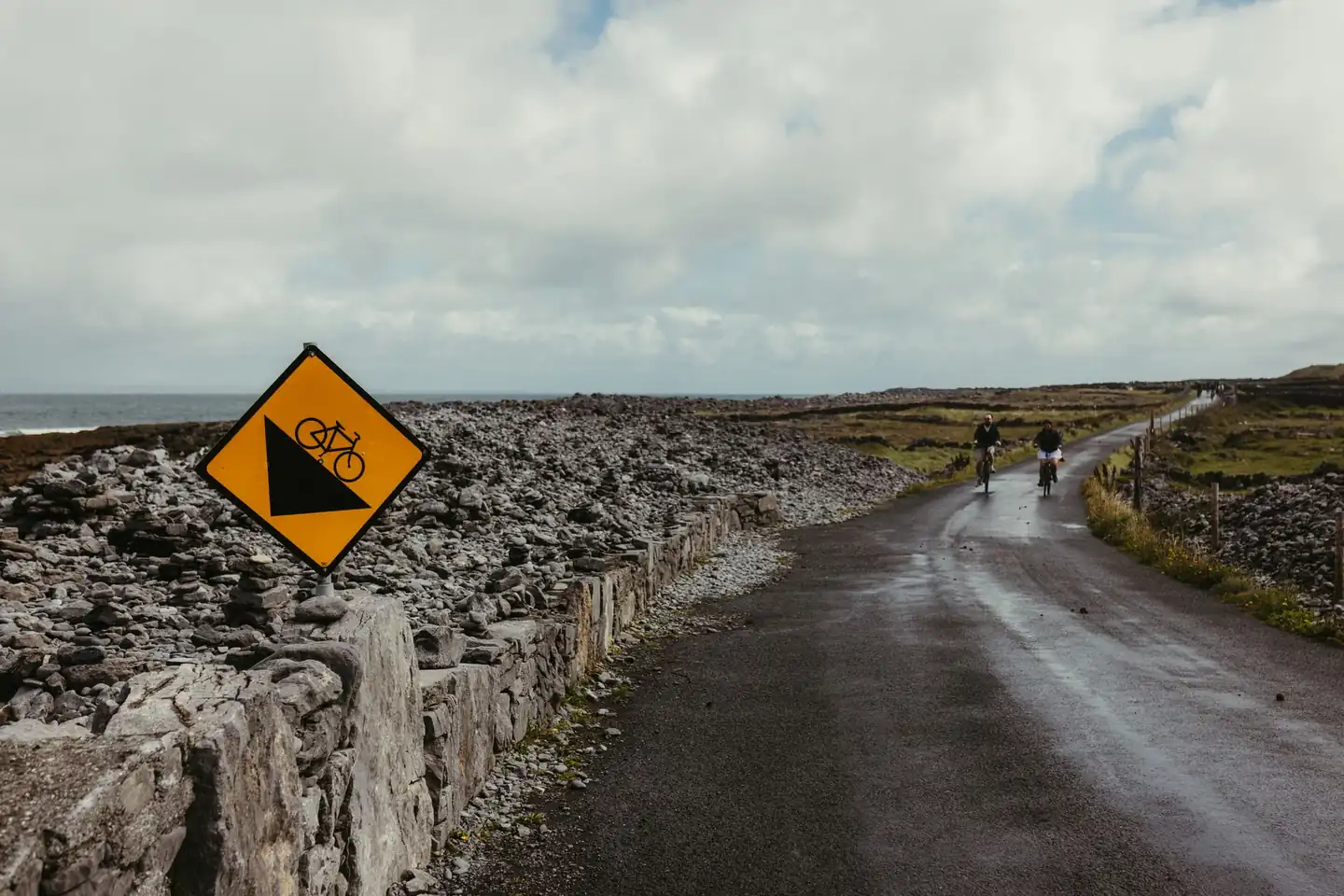
Vigo brings something that cannot be fully measured in profiles or elevation charts: atmosphere. The triathlon moves between an urban coastline, wide beaches, and a geography that changes with the light of day. When the sky clouded over in previous editions, the race took on an almost cinematic texture, with wet asphalt, gray surfaces, and the sound of the wind as a constant backdrop.
September weather in Galicia can be mild or harsh within hours. That uncertainty is part of the race’s sporting value. There is no need to romanticize it: a good day can make it flow, but a day of rain and crosswinds turns it into a test of mental endurance. And over middle distance, the mind often decides more than the stopwatch admits.
The proximity to the Cíes Islands adds a powerful symbolic layer. Although the race does not take place within the archipelago, its name evokes an image of open coast, clean horizon, and moving sea. It is a geographic brand that works because it describes the event’s spirit well: a triathlon with broad scenery, ocean air, and a distinctly Atlantic identity.
What the times and the competition reveal
The marks recorded in recent editions help explain the course’s demands. In 2023, Diego Martín won in 3:51:52, followed by Luis Fernández in 3:57:48 and Damián Martínez in 3:58:47. In the women’s category, Andrea Iglesias clocked 4:40:50, ahead of Isabel González and Paula Blanco. Those margins show that effort gets compressed and that every transition, every slowdown, and every energy decision matters.
There was also notable Galician representation in 2024, when Álex Rodríguez Rilo earned bronze in the regional middle-distance championship held at the Islas Cíes Challenge, with a debut that ended in 3:52:17. His later assessment was revealing: he felt it was a very different experience from sprint racing, almost another sport. That perception is common among those who move from short distances to longer blocks.
That detail matters because it outlines the true nature of the race: being fast is not enough. You need to hold pace, manage effort, and decide patiently. A triathlon of this kind works like a long-form novel, where the first page may seem calm, but the ending is usually written in the second half of the bike leg or the final kilometers of the half marathon.
Entries, participation, and the weight of the calendar
Challenge Family has turned middle- and long-distance races into a kind of international circuit with its own identity, and Vigo fits that logic. Although the number of spots changes from edition to edition, the event usually attracts enough participants to create a lively competition without losing the sense of a manageable race. That scale, in the end, is part of its appeal.
References consulted show figures of more than 200 athletes in the 2023 edition, a modest turnout compared with other mass-participation triathlons, but very well suited to a race where the setting and strategy carry so much weight. The experience feels sharper, less anonymous, and the course usually leaves room for each segment to have its own identity.
The mid-September timing also matters. In the triathlon calendar, that period comes after the summer peak and offers an ideal window for those who have built their season around this event. The weather may still cooperate, but there is no longer the same pressure from the high temperatures that punish other July or August races.
Prizes, age groups, and the sporting value of the event
Beyond the overall podium, the prize structure in Challenge races usually adds value for age groups and teams, because it recognizes broader participation and extends the competitive narrative. In the Challenge ecosystem, access to slots for The Championship is one of the incentives that best explains why so many triathletes remain loyal to the circuit. The reward is not always financial; often it is sporting and symbolic.
In this kind of competition, times do not only count toward the day’s classification. They also serve as personal benchmarks, as calling cards, and as measures of progress in a discipline where the gap between finishing satisfied and breaking down in the attempt can be minimal. A well-managed middle distance leaves a mark of precision; a poorly managed one leaves a long bill.
The appeal of Challenge Islas Cíes is better understood when viewed as a test of balance. It does not chase easy spectacle or pure speed; it offers a mix of endurance, tactics, and controlled survival. That is why each edition leaves a sporting story, not just results. The race tells what happens in the water, on the bike, and on the asphalt, but also what the weather and geography add without asking permission.
The logistics surrounding an event like this
Praia do Vao has served as the event’s epicenter in recent editions, and that choice is no coincidence. It makes it possible to organize the start, facilitate the transition, and give the public a clear reference point. In triathlon, logistics matter almost as much as the course, because every well-designed transition saves confusion and every clear access point reduces the day’s invisible strain.
The organization also usually relies on complementary services that help build the full sporting trip, from destination guides to information on bib numbers, results, and nearby accommodation. In events of this profile, the experience does not end at the finish line. It starts before, when the trip is planned, and ends after, when the body takes hours to regain normal feeling in the legs.
Vigo also has an underappreciated advantage: it combines an active city with nearby beaches, reasonable transport, and enough amenities to accommodate athletes and companions alike. That mix means the event feels less like an isolated outing and more like a sporting weekend with both urban and coastal context. And for many participants, that adds as much as a good course.
Why this race keeps gaining recognition in the Atlantic north
The name Challenge Islas Cíes has been steadily building because it offers something that flatter races do not always provide: personality. It is not just a string of kilometers, but an experience with its own character, shaped by the sea, the weather, and a start that commands respect. In an increasingly homogeneous calendar, that identity matters.
The appeal of the middle-distance format also helps. It is a distance that allows ambition without demanding the physical and logistical radicalism of long-distance racing. For many triathletes, it is the exact point between challenge and viability. And in Vigo, the setting makes that challenge feel unusually clear: each section has its own voice, each transition its tension, and each final straight its silent countdown.
For all these reasons, the race is interesting not only for its classification or route. It is interesting because it reflects modern triathlon well: competitive, scenic, and increasingly attentive to the athlete’s experience. In Islas Cíes, sport is not limited to competition; it also converses with the landscape, the wind, and the memory of those who cross the finish line after 1.9 kilometers of water, 90 of road, and 21.1 of running.
A finish that always leaves more than just a result
Vigo’s middle distance leaves a clear impression: there are no shortcuts when the sea, asphalt, and wind share the spotlight. The race demands calm and energy management with almost artisanal precision, because any imbalance shows immediately in the decisive stretch. That is, in the end, why so many triathletes remember it.
Challenge Islas Cíes brings together what explains the endurance of triathlon in Spain: a recognizable format, a powerful location, and a toughness that does not need exaggeration. Just look at the map, the weather, and the course sequence to understand that effort here is not improvised. It is built meter by meter, stroke by stroke, pedal stroke by pedal stroke.
And when the finish line arrives, what remains is not just a time. What remains is the feeling of having crossed a moving landscape, with the city on one side and the ocean on the other, in a race that has managed to turn Vigo into its own stage within middle-distance triathlon.



How to prevent thigh chafing: causes and real solutions

Women’s running windbreakers: seven jackets and how to choose

Do more workouts get rid of soreness? A guide for runners

Jaén Half Marathon 2026: Record 3,800 Runners Registered

Men’s short running tights: how to choose the right pair

World Triathlon confirms data breach involving medical data

Izan Edo targets podium at Miyazaki World Cup

María Pérez ranks ninth in World Athletics’ 2026 top ten

Dos Santos, Duplantis and Sawe: World Athlete of the Year finalists

San Silvestre Vallecana 2026: 42,000 places, prices and start times

 Races3 months ago
Valencia Half Marathon 2027: date and registration

 Races3 months ago
Valencia Marathon 2026: entry, ballot and course

 Reviews and Comparisons4 months ago
Asics Gel-Roadmiles 3 for men: review and current price

 Reviews and Comparisons4 months ago
Asics Gel Sonoma 8 Gore-Tex: complete analysis for trail and rain

 Sneakers3 months ago
Saucony Endorphin Pro 4: full review and verdict

 News5 months ago
Strava API 2026: what changes for clubs, challenges and runner apps?

 Reviews and Comparisons5 months ago
Nike Alphafly 3: opinions, sensations, and real key points

 Reviews and Comparisons4 months ago
Under Armour running shoes review 2025-2026: models and key features

 Sports Equipment4 months ago
Shoe sizes in cm: a clear guide to getting the right fit for your footwear

 Sneakers3 months ago
Skechers GO RUN Consistent 2.0 analysis: comfort and limits

 News5 months ago
Valencia Marathon 2026 route: key tips to train and run better

 Sneakers4 months ago
Adidas Adizero Boston 13 for men: review and verdict