Races
Ciudad Rodrigo Half Marathon 2025: date, start, and price
The Salamanca race already has a date, starting point, price, and bib pickup deadlines. This is what the 2025 edition will look like.

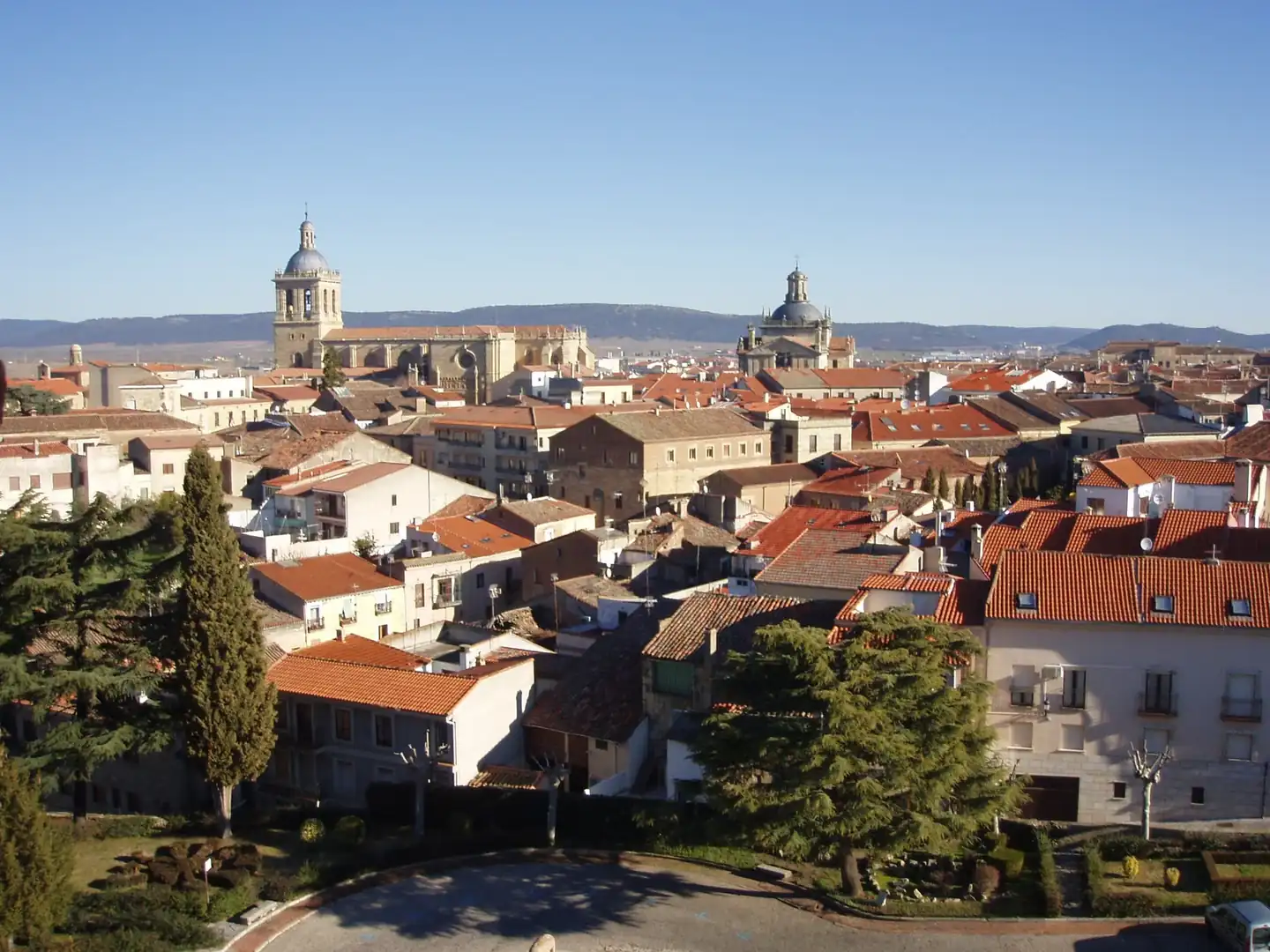
Ciudad Rodrigo once again set a date for the effort measured in 21.097 kilometers with the 18th Half Marathon, an event held on Sunday, April 27, 2025 at 10:30 a.m. The start was located in Sancti Spíritus, next to Ciudad Rodrigo, a starting point that concentrates the day’s logistics and sets the pace for a race that blends asphalt, sustained rhythm, and a popular atmosphere in Salamanca.
The official information also left two pieces of data that are immediately relevant to any runner: registration cost 15 euros within the promotional period and rose to 18 euros in the final period, between March 15 and April 14, 2025. Registration closed on Monday, April 14 at 11:59 p.m., so the event was configured well in advance to organize bib numbers, starts, and packet pickup without last-minute improvisation.
A half marathon with its own identity in Salamanca
The Ciudad Rodrigo Half Marathon is not an anonymous event within the provincial calendar. Its continuity, now in its eighteenth edition, gives it a specific weight that goes beyond the mere sporting statistic. Every year, this race brings together those looking for an accessible yet demanding endurance course, with the added appeal of a historic setting that turns the morning into something more than a sum of split times.
Ciudad Rodrigo gives the event a very recognizable character. It is not just about completing 21 kilometers; it is also about the feeling of running in a town with its own identity, with streets, access roads, and spaces that force runners to manage their energy wisely. In this kind of race, planning matters almost as much as legs: starting too fast usually takes its toll before kilometer 15, while a restrained start leaves room to push harder in the final stretch.
The format also helps explain why this event remains on the map. A half marathon demands respect, but it is still an achievable goal for recreational runners with some base fitness. That balance between toughness and accessibility explains its appeal: it is neither a short distance disguised as a challenge nor a compressed marathon, but an intermediate terrain where pace rules and reading effort becomes decisive.
Date, time, and starting location for the 2025 edition
The race was held on April 27, 2025, starting at 10:30 a.m., a morning schedule that encourages participation and leaves a reasonable window for recovery afterward. The start was set at Sancti Spíritus – Ciudad Rodrigo, and that detail is important because it affects both runners’ arrival and bib pickup as well as the journey beforehand.
On race day, every minute counts. In events like this, arriving early is not just a textbook recommendation; it is part of the practical experience. The runner who enters the access circuit late, with the warm-up unfinished and the bib still pending, usually starts at a disadvantage. That is why the organizers also detailed bib pickup windows on the days before and on Sunday morning itself, a formula designed to spread out attendance and reduce queues.
Packet pickup was distributed across several locations and times: Thursday, April 24, from 10:00 a.m. to 1:00 p.m., and Friday, April 25, from 10:00 a.m. to 2:30 p.m. and from 3:00 p.m. to 8:00 p.m., on the sixth floor of El Corte Inglés in Salamanca; additionally, on Saturday, April 26, between 5:00 p.m. and 7:00 p.m., at the Conde Foxá Sports Hall in Ciudad Rodrigo; and on Sunday, April 27, from 8:15 a.m. to 10:00 a.m., at the Old Church of Sancti Spíritus, already at the start venue. That distribution reflects an organization geared toward making life easier for both traveling runners and locals alike.
Price, registration deadline, and practical reading of the calendar
The registration fee for the 18th Ciudad Rodrigo Half Marathon was easy to understand: 15 euros at the most favorable rate and 18 euros from March 15 to April 14. That is not a high fee for a half marathon with timing and dedicated organization, and it fits the model of a popular race that seeks participation volume without driving up entry costs.
Registration closing on April 14 at 11:59 p.m. left room for the final planning of bib numbers, aid stations, and results. That kind of schedule matters more than it seems: when a race closes early, participants must decide in advance; when it is left open too long, logistics become more uncertain. Here, the deadline was clear and unambiguous, which helps both the organizers and the runner fitting this event into their season.
The event’s timeline also shows its place in the spring calendar. By late April, many legs are already coming off weeks of training load, earlier races, or higher-volume workouts. The half marathon then serves as a real test: neither too far away nor too short, ideal for gauging fitness, checking paces, and calibrating sensations over a distance that does not forgive mistakes.
Course, distance, and the kind of effort it demands
The official distance was 21.097 kilometers, the standard half marathon measurement, and the event took place on asphalt. That places the race in a very specific category within recreational running: a pace race, with constant heart-rate reading and step control, closer to running economy than to explosiveness.
On this kind of course, the runner faces an uncomfortable truth: the body is not negotiated kilometer by kilometer, it is managed from the start. Asphalt favors consistency, but it also punishes any excess. Repeated impact, fading freshness in the second half, and accumulated tension in the calves, hamstrings, and hips require a cautious strategy. That is why the real challenge is not just to cover the distance, but to do so without breaking the effort sequence.
The event was not presented as a certified race in the information reviewed, so the essential data for participants is the distance and the surface. In practical terms, that means runners should think less about heroics and more about pace management. A half marathon on asphalt is won or lost in pace changes, in the ability to sustain rather than in the initial burst.
Bib pickup and race-day logistics
The organizers offered several windows for collecting the bib, a decision that reduces bottlenecks and better distributes participant flow. Thursday and Friday in Salamanca, Saturday afternoon in Ciudad Rodrigo, and Sunday morning at the start venue itself created a flexible setup for those traveling from other towns or arriving on a tight schedule.
That kind of logistics says a lot about a race. When the bib can be picked up with time to spare, runners gain peace of mind and race day begins with less operational stress. A half marathon should not turn into an exercise in managing queues, documents, and rushing, and that is why staggered schedules are more than a courtesy: they are part of the sporting experience.
The Sunday morning appointment at the Old Church of Sancti Spíritus, just minutes before the start gun, closed the logistical loop. There the final stage of preparation was concentrated: adjusting the bib, checking clothing, taking that last sip of water, and walking to the starting line with that familiar mix of focus and anticipation. It is the moment when the race stops being a registration and becomes real.
What it means to run a half marathon in Ciudad Rodrigo
This event has a value that does not always show up in the results list. Running in Ciudad Rodrigo means entering an environment where history and sport coexist without getting in each other’s way. The town, the Sancti Spíritus access point, and the organization of the surroundings turn the morning into a small collective choreography: runners, volunteers, companions, and timing all make the event breathe like a complete piece.
In a race like this, the appeal does not depend solely on the bib. The experience of competing in a town with personality also matters, on a spring date that usually offers reasonable conditions for running, and over a distance that makes performance easy to read. For those who run by feel, the half marathon works like a mirror. For those who run for a time, it is a consistency test.
The 2025 edition also maintained the idea of an event open to recreational runners, with a moderate fee and a straightforward structure. That combination is key in the Spanish calendar: the races that survive are not always the most media-driven, but the ones that know how to offer a clean experience, without unnecessary noise and with a recognizable identity. Ciudad Rodrigo belongs to that group of events sustained by continuity, organization, and local character.
The recreational runner’s perspective on an event like this
In practice, a half marathon like this is not measured only by official time. What it leaves behind also matters: the feeling of having managed the start well, the lesson about race pace, and the comparison between what was planned and what was executed. Every runner arrives with their own story, but all face the same basic logic: the distance does not forgive improvisation.
That is why this race attracts a wide range of profiles. Some use it as their main spring goal, while others take it as a rehearsal for longer distances. There are also those who simply want a well-organized experience, with no pressure for a fast time. In all cases, the Ciudad Rodrigo Half Marathon offers a clear framework: a set date, a known price, a specific start, and a distance that speaks for itself.
The fact that registration closed on April 14 and the race was held on the 27th of the same month reinforces the sense of a well-defined event. There is no room for confusion about the calendar. Everything was clearly bounded, and that order is an advantage for runners who approach the season with planning, not impulse. When the information is clean, the race begins earlier, even before the starting gun.
An event that leaves its mark on the spring calendar
The 18th Ciudad Rodrigo Half Marathon confirmed its place in Salamanca’s popular races in 2025 with a straightforward proposal: 21.097 kilometers, a morning start, asphalt, and a contained price. There was no need for gimmicks to explain its value. The data and the context were enough to understand why it continues to bring together runners of different profiles.
The race brought together the kind of ingredients that sustain recreational running in Spain: a well-chosen date, an organization that staggers bib pickup, a recognizable distance, and a town with its own personality. All of this builds an experience that goes beyond the standings. The Ciudad Rodrigo Half Marathon is not only run; it is also remembered for the way it organizes an April morning around effort and consistency.
In an increasingly crowded race calendar, the events that retain their own voice become reference points. This one does so without fanfare, with clear data and an identity that does not need embellishment. Ciudad Rodrigo 2025 was, above all, a precise half marathon: date, price, start, and distance serving the runner.



How to prevent thigh chafing: causes and real solutions

Women’s running windbreakers: seven jackets and how to choose

Do more workouts get rid of soreness? A guide for runners

Jaén Half Marathon 2026: Record 3,800 Runners Registered

Men’s short running tights: how to choose the right pair

World Triathlon confirms data breach involving medical data

Izan Edo targets podium at Miyazaki World Cup

María Pérez ranks ninth in World Athletics’ 2026 top ten

Dos Santos, Duplantis and Sawe: World Athlete of the Year finalists

San Silvestre Vallecana 2026: 42,000 places, prices and start times

 Races3 months ago
Valencia Half Marathon 2027: date and registration

 Races3 months ago
Valencia Marathon 2026: entry, ballot and course

 Reviews and Comparisons4 months ago
Asics Gel-Roadmiles 3 for men: review and current price

 Reviews and Comparisons4 months ago
Asics Gel Sonoma 8 Gore-Tex: complete analysis for trail and rain

 Sneakers3 months ago
Saucony Endorphin Pro 4: full review and verdict

 News5 months ago
Strava API 2026: what changes for clubs, challenges and runner apps?

 Reviews and Comparisons5 months ago
Nike Alphafly 3: opinions, sensations, and real key points

 Reviews and Comparisons4 months ago
Under Armour running shoes review 2025-2026: models and key features

 Sports Equipment4 months ago
Shoe sizes in cm: a clear guide to getting the right fit for your footwear

 Sneakers3 months ago
Skechers GO RUN Consistent 2.0 analysis: comfort and limits

 News5 months ago
Valencia Marathon 2026 route: key tips to train and run better

 Sneakers4 months ago
Adidas Adizero Boston 13 for men: review and verdict