Races
Costa Blanca Trail 2026: complete guide to the Gran Trail
Dates, distances, elevation gain and the mountainous profile of one of the toughest events in Finestrat.

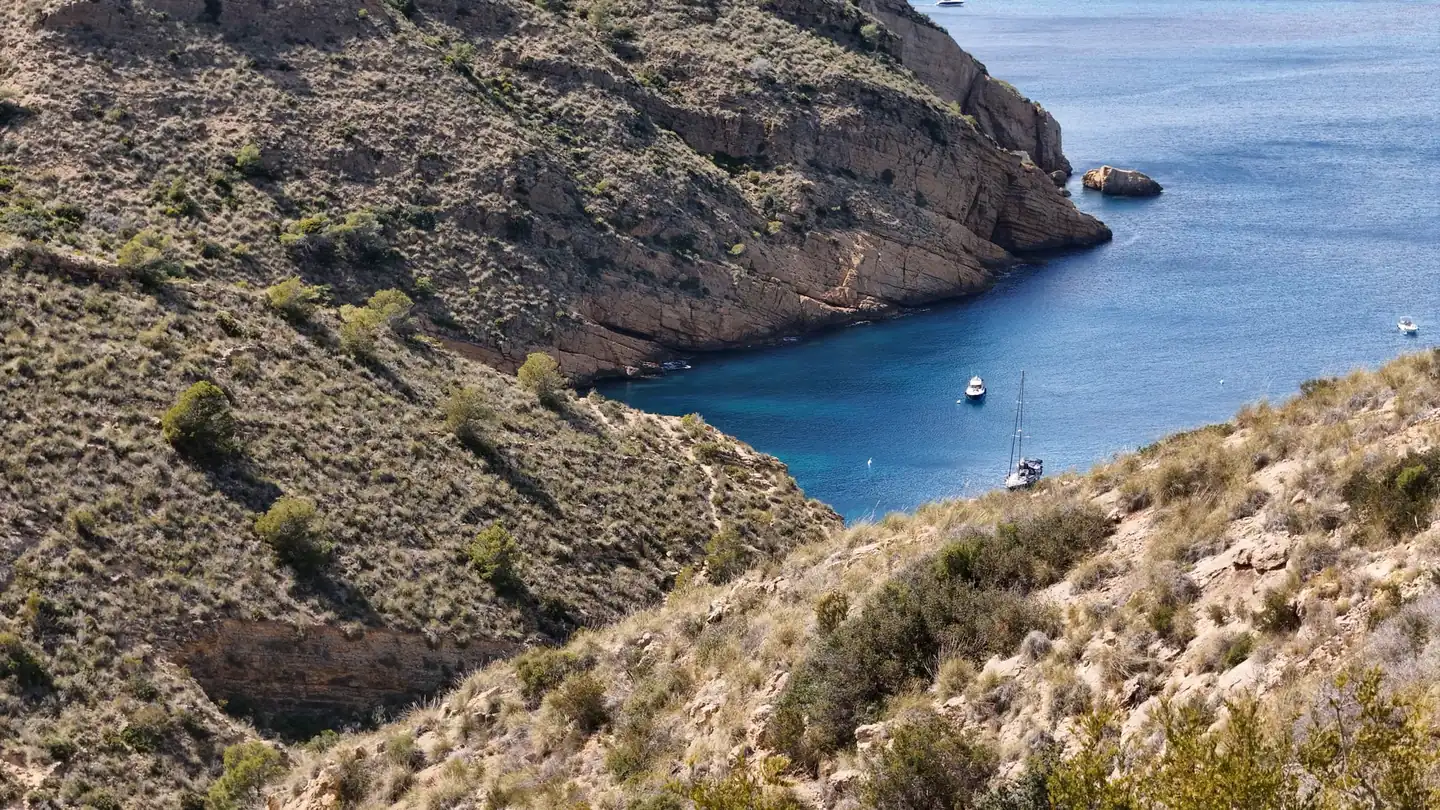
The Gran Trail Costa Blanca once again turns Finestrat into a reference point for European trail running with an edition marked by elevation gain, a variety of distances, and a route that gives no respite. The main race reaches 102 kilometers and exceeds 6,200 meters of positive elevation gain, a figure that places the challenge firmly in serious ultradistance territory, true mountain running and not just a scenic route.
The 2026 calendar concentrates the competition between November 14 and 15, with starts spread out according to distance and a proposal that combines technical sections, long climbs, demanding descents and passages through some of the most recognizable names in the Alicante landscape. Puig Campana, Aitana and Serrella are the heart of the itinerary, three landmarks that explain better than any slogan why this race has earned its own place among the toughest and most attractive mountain events in Spain.
A race born to measure real endurance
Gran Trail Costa Blanca is not a postcard race, even if its views may seem like it. Its sporting value lies in the sum of elevation gain, loose rock, changes of pace and weather that in November can swing between the cold of dawn and the clear Mediterranean sun. That contrast punishes the legs and also mental management, because the runner is not just moving forward: they are managing effort, patience and fuel on terrain that demands decisions almost every kilometer.
The appeal of the event lies precisely in that balance between beauty and toughness. Finestrat appears as the base of operations, but the spotlight goes to the ridgelines, the stony paths and the mountain walls that shape a race with an alpine profile in the middle of the Mediterranean coast. This is not a race for hiding kilometers; here every climb weighs and every descent is paid for, with the added fact that altitude accumulates fatigue even in runners used to long distances.
The 2026 edition arrives with several official distances that allow the race to be read from different competitive angles, although they all share the same logic: mountain, demand and an environment that forces you to run smart. The big race, the 102K, is the most visible reference; behind it, the 66K, 41K, 20K and 17K routes broaden the range without losing the technical character that defines the event.
The distances and what they really mean in the race
The main event, GTCB 102K, takes place on November 14, 2026 and concentrates the most extreme part of the program. The key figure is not only the length, but the sum of elevation gain, altitude and time exposed to effort. The numbers seen in specialized references point to more than 6,000 meters of accumulated climbing, a barrier that turns every flat section into a small relief before another long, punishing ascent.
The following day brings the medium and short ultradistance races, among them UTCB 66K and MCB 41K, as well as the 20K and 17K routes. In trail language, those distances are not just a commercial adaptation: they represent different entry points into the same landscape, with clear differences in race time, muscle wear and gear needs. A 17K here can still be a hard race; a 20K does not always feel like an urban 20K.
The event’s own topography forces each distance to be understood as a different experience. Those tackling the long route enter a logic of total management, with partial nights or very long days if the start is moved earlier; those choosing the intermediate or shorter courses find a more concentrated intensity, but not necessarily a kinder one. The mountain adapts to the number of kilometers, not the other way around, and that is one of the traits that has most firmly shaped the race’s personality.
Puig Campana, Aitana and Serrella: the emotional map of the route
The name of the race would not make sense without those three mountains. Puig Campana provides the first great image of toughness: a massive peak visible from much of the coast, with an almost theatrical presence when seen from Finestrat or Benidorm. Aitana, with the highest point in the province, adds altitude, colder air and the feeling of running over an architecture of stone and forest that changes the rhythm of the competition. Serrella, for its part, completes the story with rugged terrain, ridges and transitions that punish concentration.
Altogether, the course draws a race that alternates technical trails, tracks, firebreaks and high-mountain passages. There is no monotony. Even the linking sections, which in other races might serve as a rest, here become part of the wear and tear, because they rarely offer an easy rhythm for long. The runner moves from loose stride to short traction, from ridge running to rock steps, and that oscillation demands very fine effort economy.
The beauty of the route, moreover, does not soften the challenge: it makes it more visible. From certain points, panoramic views over the Costa Blanca open up and seem to strip the effort of its drama, but the body does not let itself be fooled. The landscape rewards the eye and punishes the muscles. That contrast explains why so many runners remember the race not only for its numbers, but for the way it turns each summit into a narrative episode.
What changed over time and why it keeps growing
The available references show that the event has been consolidating a stable structure, with recent editions in November and an organization that bets on several modalities under the same identity. In the Spanish trail ecosystem, that matters: races that combine a hard course, territorial identity and clear logistics tend to sustain the interest of both local and foreign runners better.
Growth is also understood through the value of the setting. Finestrat and its mountain area offer a very recognizable backdrop, with reasonable access, competitive autumn weather and an orography that needs no artifice. There is no need to invent epic where there is already a mountain that imposes it on its own. The race sells sporting authenticity, and today that weighs as much as the start list or the difficulty label.
Another decisive factor is the coexistence of long distances and more accessible formats. The existence of 17K, 20K or 41K races allows the event not to be trapped in pure ultradistance, without lowering the bar. The result is a mountain festival in which very different runner profiles coexist, from those looking for a first serious trail experience to those chasing a long day with an almost epic feel.
What the data say: elevation gain, toughness and real times
The numbers help bring order to perception. In the reference information, 103 kilometers and 5,900 meters of positive elevation gain are cited for a previous edition of the main race, while other specialized sources place the 2026 course at 102 kilometers and 6,217 meters of accumulated climbing. That range reflects something common in mountain events: routes can be slightly adjusted from one edition to another without changing the underlying identity.
In practice, a race with those figures fully enters serious ultradistance territory. It is not just that the clock takes a long time to stop; it is that muscle wear, energy consumption and aid-station management become decisive. A runner may reach the middle of the course feeling fresh and suddenly discover that a new climb breaks the margin for error. Fatigue here builds in layers, like a crust that gradually closes off the mobility of legs and mind.
The results data also help calibrate the race. In a previous edition, participation far exceeded a hundred finishers in the queen distance, a sign that we are not talking about a marginal adventure, but about a race with real traction within the mountain calendar. When an event of this kind maintains continuity and attracts a notable number of finishers, it gains competitive weight and reputation among those who follow long-distance trail running.
Finestrat, November and the role of the Mediterranean setting
Finestrat is not just a starting point. It is an essential part of the story. The town acts as a threshold between coast and mountain, with narrow streets, quick access to rough terrain and a geography that serves as a hinge between the blue of the shoreline and the stone of the range. For the runner, that means moving from a compact urban setting to a mountain that opens up all at once, almost without warning.
The November date also matters. At that time, the summer heat is no longer pressing, but the day is still short and the mountain keeps its traps: humidity, temperature changes, shade on the ridges and descents where the body suddenly cools down. The Mediterranean autumn is a relative advantage; it helps make the effort more bearable, although it also forces you to think in layers, use a headlamp in certain formats and keep fueling continuously.
This seasonal context gives the race a very particular profile compared with other winter or summer events. Neither stifling heat nor snow is usually the main reference; the challenge lies in the transition between seasons, in that feeling of running between two climates. It may seem like a minor detail, but in the mountains every detail ends up affecting performance.
What makes the race so recognizable among trail events
The event’s identity rests on an uncommon combination of altitude, technical toughness and an inland-coast aesthetic. There are spectacular mountains that are too far removed from the average runner, and there are more accessible races that dilute their character. This one, instead, keeps the tension between both things: it presents itself as a hard challenge, but within a setting that still feels readable for the trail fan looking for clear references.
The internal variety also helps. Under the same banner, distances designed for very different profiles coexist, and that broadens the circle of interest without turning the event into a messy conglomerate. The existence of multiple starts and routes does not weaken identity; it strengthens it. Everything leads to the same mountain language, even if each runner reads it in their own way.
In journalistic terms, the race very well represents what much of current trail running in Spain is looking for: a demanding sporting experience, a powerful landscape, specialized organization and a certain international ambition. There is no need to exaggerate to understand its appeal. Just look at the map, read the elevation gain and know the geography of Finestrat to understand that here you run with your muscles, but also with your head.
A race that sums up the most demanding trail on the Costa Blanca
The Gran Trail Costa Blanca condenses into two days a very precise snapshot of Alicante trail running: hard mountains, technical routes, serious elevation gain and an urban base that does not compete with nature, but is absorbed by it. The main race of 102 kilometers sets the competitive ceiling, but the value of the event lies in the whole package, from the intermediate races to the shorter formats.
That is why its significance goes beyond registration or the calendar. It speaks of a type of runner looking for route, not just distance; of an environment that needs no embellishment to command respect; and of an organization that has managed to place the event at a time of year that is ideal for endurance, though not necessarily for relaxation. On the Costa Blanca, trail running stops being a geographic label and becomes a way of measuring character.
The 2026 edition will once again put Finestrat in the spotlight for those following European ultratrail. And it will do so with its old weapons: altitude, beauty, wear and tear, and a mountain that offers no shortcuts. In that balance between effort and landscape lies much of its magnetism.



How to prevent thigh chafing: causes and real solutions

Women’s running windbreakers: seven jackets and how to choose

Do more workouts get rid of soreness? A guide for runners

Jaén Half Marathon 2026: Record 3,800 Runners Registered

Men’s short running tights: how to choose the right pair

World Triathlon confirms data breach involving medical data

Izan Edo targets podium at Miyazaki World Cup

María Pérez ranks ninth in World Athletics’ 2026 top ten

Dos Santos, Duplantis and Sawe: World Athlete of the Year finalists

San Silvestre Vallecana 2026: 42,000 places, prices and start times

 Races3 months ago
Valencia Half Marathon 2027: date and registration

 Races3 months ago
Valencia Marathon 2026: entry, ballot and course

 Reviews and Comparisons4 months ago
Asics Gel-Roadmiles 3 for men: review and current price

 Reviews and Comparisons4 months ago
Asics Gel Sonoma 8 Gore-Tex: complete analysis for trail and rain

 Sneakers3 months ago
Saucony Endorphin Pro 4: full review and verdict

 News5 months ago
Strava API 2026: what changes for clubs, challenges and runner apps?

 Reviews and Comparisons5 months ago
Nike Alphafly 3: opinions, sensations, and real key points

 Reviews and Comparisons4 months ago
Under Armour running shoes review 2025-2026: models and key features

 Sports Equipment4 months ago
Shoe sizes in cm: a clear guide to getting the right fit for your footwear

 Sneakers3 months ago
Skechers GO RUN Consistent 2.0 analysis: comfort and limits

 News5 months ago
Valencia Marathon 2026 route: key tips to train and run better

 Sneakers4 months ago
Adidas Adizero Boston 13 for men: review and verdict