Races
Cross Popular Pins i Mar 2026: date, time and course
The Alicante race returns in September with 8 kilometers, a family atmosphere and a course through streets and pine woodland.

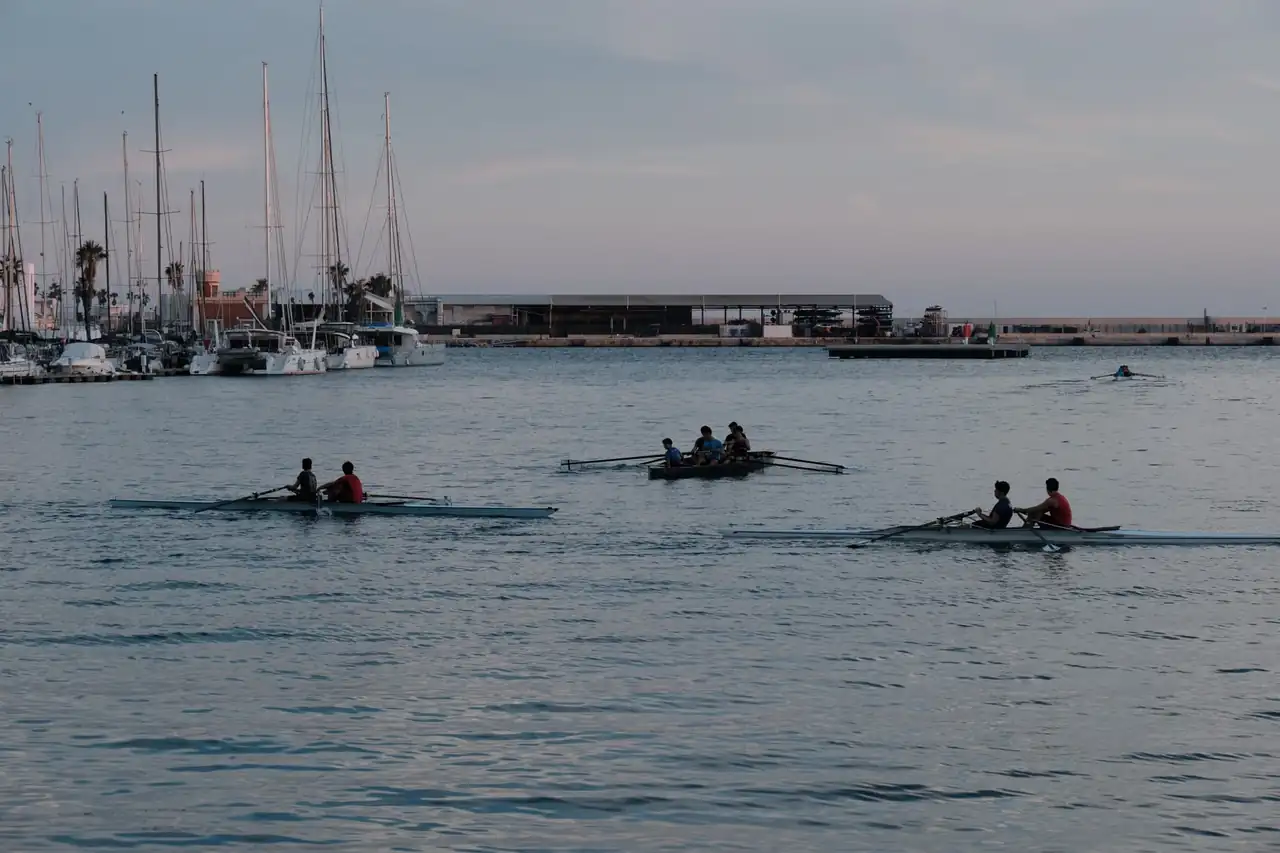
The Elche coastal district of La Marina will once again bring together hundreds of runners on Sunday, September 20, 2026, for a new edition of the Cross Popular Pins i Mar. The main race will start at 9:30 a.m. and cover approximately 8 kilometers between the town center and the pine woodland near the coast, a route that combines the atmosphere of a popular race with the Mediterranean landscape of Elche.
The event is organized by the Pinomar Neighborhood Association and is listed as a cross-country race, with children’s races also included. Available information places the start in La Marina, although it does not yet specify an exact address, entry fee, detailed course or bib collection system for the 2026 edition. Updates should be checked through the organizer’s official information before traveling to the event.
The popular race calendar places this event within the season of races in the Valencian Community. The race map can also be used to locate La Marina and compare it with other events in Alicante and Valencia.
A race between the district and the Mediterranean
The identity of this event comes from its setting. La Marina is not a fully closed urban circuit separated from its surroundings, but a coastal district where streets, residential areas and Mediterranean vegetation follow one another just minutes from the sea. In this setting, 8 kilometers offer an accessible distance for recreational runners while remaining long enough to demand steady effort management, especially if dirt, sand or uneven paths appear.
Descriptions from previous editions mention a mixed route, mostly asphalt with short sections of path, incline and sand. This should not be taken as the final 2026 course map, but it helps explain the nature of the event: it is neither a conventional urban 10K nor a mountain trail race. It is a popular coastal route where changes in surface can alter stride and pace perception.
The surroundings also shape the experience. In mid-September, the sun can become strong from early morning and maritime humidity may be noticeable, meaning the perceived heat does not always match the forecast temperature. The pine woodland provides shade in some sections, although it does not guarantee continuous protection. The race takes place in an open landscape, with pine scent and salty air forming part of the day.
Confirmed date, time and details for the 2026 edition
The 2026 edition is scheduled for Sunday, September 20, in La Marina, a locality associated with the municipality of Elche in Alicante province. The main race start is set for 9:30 a.m. The published distance is 8,000 meters, although the race listing rounds it to 8 kilometers, a length that could change slightly when the final course is approved.
The event also includes a children’s race. Available information does not state the distances for the younger categories, their exact times or the age criteria. An exact start and finish address has not been published either, so it would be unwise to assign them to a particular square, avenue or facility. These details are normally announced in the regulations, registration form or organizer’s channels.
The Pinomar Neighborhood Association is identified as the organizing body. This connects the competition to La Marina’s local community, a common feature of popular races in Spanish districts and villages: the event works simultaneously as a sporting activity, a local gathering and a showcase for the area. That community dimension helps explain its continuity and the return of participants year after year.
What to expect from an 8-kilometer course
The distance places the race between a fast 5K and a traditional 10K. For an experienced runner, eight kilometers allow a strong effort without extending exposure to heat for too long. For a beginner, however, the course can be approached conservatively, with short running and walking breaks if the surface or weather conditions make that advisable.
The historical course description points to a majority of asphalt, combined with paths, one incline and a small sandy section. Each surface requires a different response. Asphalt supports a more even stride and makes it easier to maintain pace; dirt may reduce speed slightly while softening impact; sand demands more work from the ankles and calves. These changes do not make the race technical, but they do break up the monotony of a completely urban straight road.
The exact profile, turns, aid stations and affected streets still need to be confirmed by the organizers. Until an official map exists, any estimate of elevation or split times would be speculative. For now, the best description is an 8-kilometer coastal cross-country race, mostly fast, with changes in terrain that may reward adaptability more than pure speed.
Reasonable preparation for heat and mixed surfaces
A race of this length does not require long-distance-specific preparation, but some familiarity with continuous efforts lasting 30 to 60 minutes is useful. The most practical adaptation is to combine easy runs with sessions that include moderate pace changes. The aim is not to turn every workout into a race, but to learn how to sustain effort when the ground is no longer completely uniform.
The weeks before the event also provide an opportunity to test footwear. A road shoe may be enough if the course remains firm, but the outsole should provide security on compact paths and sandy areas. Highly aggressive trail shoes, on the other hand, may be unnecessary over long asphalt sections. The sensible choice depends on the final course, not on the product label.
Hydration deserves attention because of the date and location. Starting well hydrated does not mean drinking large amounts immediately before the gun, but arriving with normal fluid intake and avoiding unfamiliar products. In an 8-kilometer race, most participants do not need a complicated gel strategy; the priorities are usually even pacing, protection from heat and using aid stations according to the day’s conditions.
A day designed for families too
The presence of children’s races broadens the nature of the event. The main race may attract most adult runners, but the younger categories turn the morning into a shared activity for families and residents. The distances, ages and times for children have not yet been published for 2026, so those details will need to be set out in the edition’s regulations.
In previous events, the children’s program played a prominent role and was integrated into the wider atmosphere of the day. This participation should not be measured only by results. For many children, running with classmates, receiving a medal or completing a short course is their first organized contact with popular athletics, away from the pressure of overall rankings.
The interaction between participants of different ages is one of the most recognizable features of district races. Some runners seek a personal best, while others run out of tradition, accompany a relative or enjoy a course they know as pedestrians and residents. This mixture explains why the Cross Popular Pins i Mar retains a less strictly competitive tone than larger events.
The link with the Lliga de Curses del Camp d’Elx
The 2025 edition formed part of the I Lliga de Curses del Camp d’Elx as the second scoring race in the circuit. That event connected the La Marina cross with races in other Elche districts and allowed participants to collect points toward an overall ranking without registering separately for the league. Available information for 2026 does not yet confirm whether that connection will continue.
The regional circuit gives the race a different meaning. It stops being an isolated event and becomes part of a season that visits different communities in the Camp d’Elx area. For regular runners, that calendar makes it possible to compare courses, paces and results in varied settings. For organizers, it creates a sporting network that brings visibility to districts that rarely occupy the center of major athletics calendars.
La Marina has a distinctive position on that map because of its relationship with the coastline and pine woodland. Unlike strictly urban routes, this race adds a landscape dimension that influences both preparation and the perception of effort. Its appeal is not only in the accumulated kilometers, but in running through an everyday setting that takes on the energy of a popular competition for one morning.
Registration and details still awaiting confirmation
The 2026 listing identifies the race, date, start time, location, organizer, distance and format. It does not yet provide the entry fee, official registration link, participant limit, registration deadline or bib collection procedure. It is important to distinguish confirmed information from details published for earlier editions, because conditions may change from one year to the next.
In 2025, the league organization reported a fee of 12 euros for the main race and 2 euros for children’s events, with registration handled through Chip Levante. Those amounts belong to that edition and should not be considered valid for 2026 until they are announced again. The same caution applies to expected participation, gifts, category prizes and runner bags.
Before attending, runners should review the regulations published by the organizers and check four basic points: the exact start location, the time of the children’s races, the bib distribution system and possible traffic restrictions. It will also be useful to know whether designated parking is available and whether early arrival is recommended because of the district’s limited street capacity.
The value of a small race in the Valencian calendar
Major half marathons attract sponsors, mass timing systems and thousands of participants, but the Valencian calendar also depends on local-scale events. These races often rely on associations, volunteers and municipal services that know every corner of the route. That closeness creates a different experience: less anonymous, more connected to the neighborhood and more directly tied to the place hosting the event.
The Cross Popular Pins i Mar captures that tradition in an 8-kilometer format beside the Mediterranean. Its route does not try to imitate a mountain race or compete with major urban 10Ks. Its interest lies elsewhere: a manageable distance, a familiar setting, children’s participation and a morning in which athletics also serves to bring the La Marina community together.
Several operational details for the next edition still need to be confirmed, but the foundation of the event is already established. On September 20, 2026, the district will once again welcome runners to a race that blends asphalt, paths and coastal scenery. That balance between competition and neighborhood celebration is why Pins i Mar continues to hold its own place among Alicante’s popular races.



How to prevent thigh chafing: causes and real solutions

Women’s running windbreakers: seven jackets and how to choose

Do more workouts get rid of soreness? A guide for runners

Jaén Half Marathon 2026: Record 3,800 Runners Registered

Men’s short running tights: how to choose the right pair

World Triathlon confirms data breach involving medical data

Izan Edo targets podium at Miyazaki World Cup

María Pérez ranks ninth in World Athletics’ 2026 top ten

Dos Santos, Duplantis and Sawe: World Athlete of the Year finalists

San Silvestre Vallecana 2026: 42,000 places, prices and start times

 Races4 months ago
Valencia Half Marathon 2027: date and registration

 Reviews and Comparisons4 months ago
Asics Gel-Roadmiles 3 for men: review and current price

 Races4 months ago
Valencia Marathon 2026: entry, ballot and course

 Reviews and Comparisons4 months ago
Asics Gel Sonoma 8 Gore-Tex: complete analysis for trail and rain

 Sneakers4 months ago
Saucony Endorphin Pro 4: full review and verdict

 News5 months ago
Strava API 2026: what changes for clubs, challenges and runner apps?

 Reviews and Comparisons5 months ago
Nike Alphafly 3: opinions, sensations, and real key points

 Reviews and Comparisons4 months ago
Under Armour running shoes review 2025-2026: models and key features

 Sports Equipment4 months ago
Shoe sizes in cm: a clear guide to getting the right fit for your footwear

 Sneakers3 months ago
Skechers GO RUN Consistent 2.0 analysis: comfort and limits

 News5 months ago
Valencia Marathon 2026 route: key tips to train and run better

 Sneakers4 months ago
Adidas Adizero Boston 13 for men: review and verdict