Races
CxM Toleta 2026: date, distances and entry fee
Puerto Serrano hosts a mountain race with two distances, a morning start and trails through the Cádiz countryside.

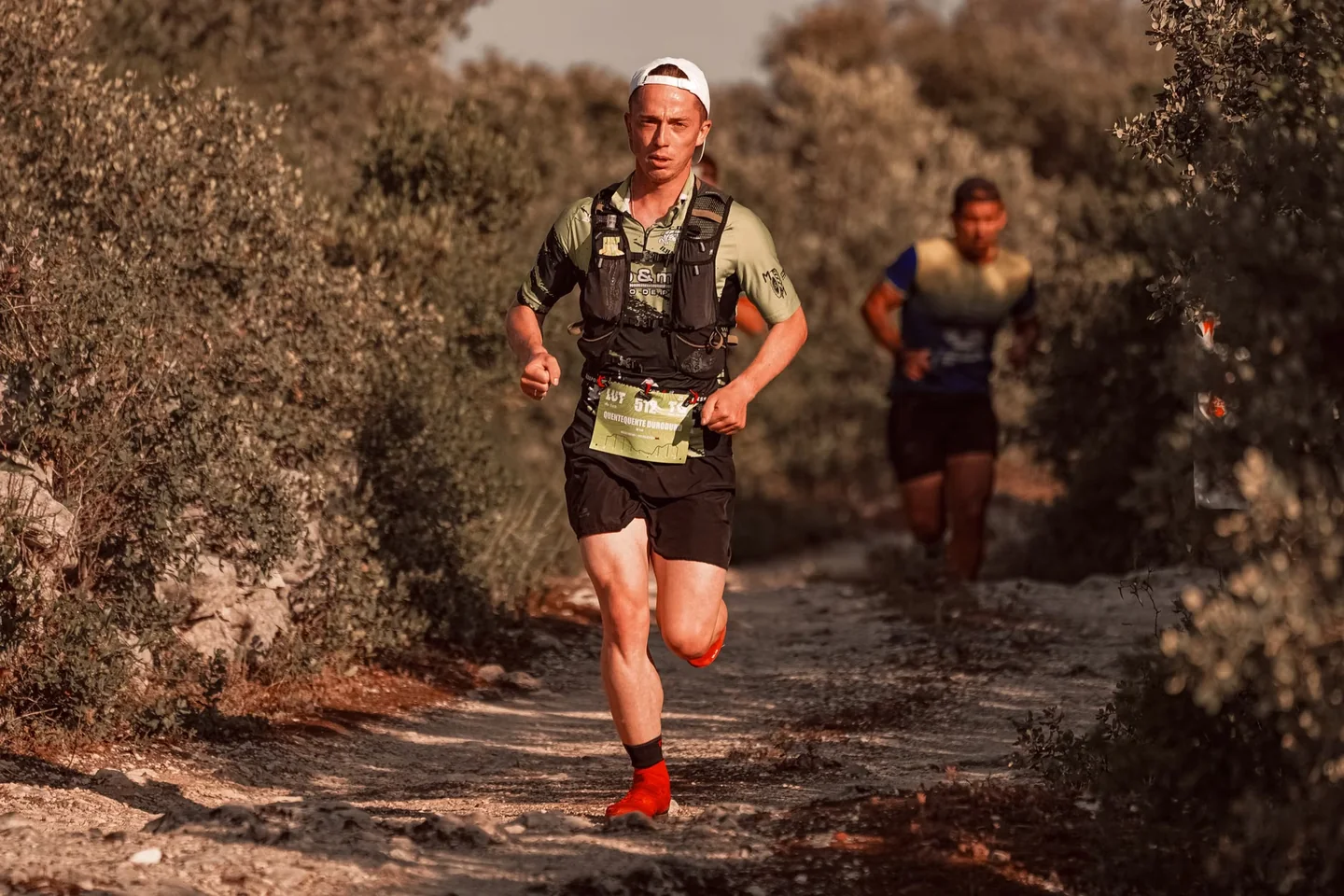
Imagen: RUN 4 FFWPU / Pexels
The sixth CxM Toleta will take place on Sunday, Nov. 22, 2026, in Puerto Serrano, Cádiz. The start is scheduled for 9 a.m., and the adult program offers two mountain routes of about 18 and 29 kilometers. The published entry fee is 26 euros for both distances, with a stated maximum of 400 participants.
Organized by Puerto Serrano Town Council, the race is part of Andalusia’s autumn trail calendar. For this edition, the available information sets the registration deadline at 11:59 p.m. on Nov. 7, although registration may close sooner if the field fills. Entries are handled through Tecnocrono; details about the course profile and other logistics should be checked against the organizer’s current information.
Confirmed date, start and race details
The event is scheduled for Nov. 22, 2026, in Puerto Serrano, a town in Cádiz province. The listed start time is 9 a.m., placing the race in the early hours of the day, when temperatures and trail conditions may differ from those later in the afternoon. The calendar identifies this as the race’s sixth edition.
The 9 a.m. start is associated with this year’s event information and is the most specific published time available. No start location can be confirmed unequivocally here: different race listings cite different addresses in Puerto Serrano. Because of that discrepancy, it would be unwise to treat any one street as definitive; the address and access instructions need confirmation from the organizers.
The event is designed as a mountain race, not an urban road competition. Its appeal lies in linking Puerto Serrano’s natural surroundings with routes of different difficulty, allowing runners to choose between a long course and a more approachable distance. The town and date are consistently reported, while exact figures for the longer route vary among sources, an important distinction for anyone comparing profiles or estimating pace.
Two adult distances and a discrepancy worth noting
The adult program includes two competitive options: an 18-kilometer course and a longer route advertised as 29 kilometers. One listing describes the latter as 28.5 kilometers, a small difference that explains why some calendars round the figure. Until the organizers publish or confirm the final measured distance, the most accurate description is a course of approximately 29 kilometers.
The routes are also reported to have about 1,000 meters of elevation gain for the 18-kilometer distance and 1,650 meters for the 28.5-kilometer course. Those figures come from information about the race, but no updated 2026 profile is available here to verify every climb, the distribution of steep sections or the most technical parts. Elevation gain should therefore be treated as an indicative measure of difficulty, not as a substitute for an official course track.
A previous edition was also described as having a 10-kilometer distance for cadet and youth categories. That information relates to another event and is not listed among the adult options announced for 2026. It should not be confused with this year’s two main routes: the presence of a cadet category in the program does not by itself confirm that the same distance will return. Youth options should be checked separately in the current regulations.
In broad terms, 18 kilometers is close to a mountain half marathon, while 28.5 or 29 kilometers approaches marathon distance without reaching the 42.195 kilometers of a conventional marathon. The comparison helps put potential duration in context, but elevation and terrain mean that trail kilometers do not translate directly into the same effort as road kilometers.
A mountain course beside the Guadalete
Descriptions of previous editions present the race as dominated by trails and paths, including off-track sections and stretches near the Guadalete River, the Sierra Greenway and the area known as La Toleta. The route has been described as winding, with sections that may follow narrow trails or cross-country terrain. This gives a useful sense of the event’s character, although it does not guarantee that every section will be unchanged in 2026.
The landscape is part of the race’s identity: runners leave the urban setting and enter terrain where footing and gradient can change within minutes. An easy dirt track may give way to an uneven path, while a fast descent can demand more focus than strength. In this kind of event, distance alone does not explain the course; surface, elevation gain and the frequency of pace changes matter too.
The available information does not detail the official 2026 profile, the location of aid stations or the exact distribution of technical sections. It also does not confirm which sections, if any, will be shared by both distances. Without those details, assigning a specific sequence of climbs or checkpoints would be speculative. What is established is that this is a mountain race with two adult distances, with previous descriptions pointing to trails and paths in the surrounding area.
To interpret the advertised elevation gain, it helps to picture a succession of climbs, descents and surface changes rather than a uniform line. Mud, loose stones or vegetation can affect speed on a trail even when the gradient appears moderate. Earlier descriptions of winding paths and off-track sections suggest an event where adapting to the terrain matters as much as endurance, subject to confirmation of this year’s route.
Puerto Serrano as the race setting
Puerto Serrano, in Cádiz province, is the reference point for an event that uses the surrounding landscape. Earlier descriptions mention the nearby Guadalete and the Sierra Greenway as part of the route’s geographical setting. Those names need not be treated as a guarantee of a particular itinerary to recognize that the rural, mountainous character sets this race apart from events held entirely on urban circuits.
In a trail race, town logistics matter as much as the profile. The start time, access to the event area and the finish location all shape the day, especially for people travelling from elsewhere in Cádiz or from another province. Because the listings do not agree on the precise address, it is better to wait for the organizers to specify the exact location than to assume that an address on an event calendar is final.
The race date falls in late November, when conditions can change quickly. Rain can affect grip on dirt paths and slow descents; a dry morning, by contrast, may leave some sections firm and dusty. No useful weather forecast is available this far in advance, so conditions should be assessed closer to race day, alongside any specific instructions from the organizers.
For spectators, the setting also differs from a road race: not every point on the course will necessarily be reachable by car or suitable for following runners. Without an official map and published checkpoints, specific viewing locations cannot be recommended. Any announced schedules, road restrictions or access zones will help organize the day and avoid unnecessary travel along rural tracks.
Registration, entry fee and participant limit
The published general fee for both adult distances is 26 euros. Registration is handled through Tecnocrono, and the stated deadline is 11:59 p.m. on Nov. 7, 2026. That deadline does not guarantee that places will remain available until then: the organizers have announced a limit of 400 registrations, and the field could fill sooner.
The 400-runner cap gives a sense of the event’s size, but it does not show how many places remain or how they are divided between distances. No information is provided here about service charges, refunds or changing distance after registration. Those details usually depend on the race regulations and the platform’s terms, so the final amount and applicable rules should be checked before payment.
Participants register through the platform specified for the event. Before completing an entry, it is worth checking that the selected category matches the runner’s age and intended distance, as well as reviewing any medical requirements, mandatory equipment or participation conditions in the regulations. Those requirements are not included in the reference information, so it is not possible to claim that any particular item is compulsory for 2026.
The cadet category deserves separate attention because it appears in the general description of the event, but available information distinguishes it from the adult 18- and 29-kilometer options. Youth distances and conditions may differ, and the adult fee or schedule should not automatically be applied to them. The registration page and current regulations are the documents that can clarify which categories are open and which route applies to each one.
How to interpret the route before race day
Distance provides an initial guide, but it does not say how long a mountain race may take. An 18-kilometer route with 1,000 meters of elevation gain requires runners to manage climbs and stay stable on descents; a course of nearly 29 kilometers and 1,650 meters adds more time under effort and calls for careful energy management. These are broad reference points, not finish-time predictions: the terrain and final profile can have a major effect on pace.
The difference between 28.5 and 29 kilometers does not change the course’s character, but it is a reason to avoid overly precise calculations based on a rounded figure. In a hilly race, knowing the profile, water points and surface is often more useful than setting an average pace per kilometer. Once the map is published, those details can show whether the race is relatively continuous or alternates faster stretches with long climbs and technical sections.
Previous descriptions mention narrow trails and off-track sections. In that setting, trail shoes and stable footing may be appropriate, but general advice should not be mistaken for an official requirement. The choice depends on the confirmed surface, weather and each runner’s experience. If the organizers require specific equipment, that obligation should appear explicitly in the regulations, not be inferred from an old description.
Hydration and fueling also deserve attention, especially on the longer course. Without knowing the distance between aid stations or which services will be available, it is not possible to calculate reliably how much liquid or food to carry. The most sensible approach is to match those decisions to official information when available and to products already tested in training. In the mountains, improvising a strategy on race day is usually less effective than adjusting it to the actual conditions of the route.
What the event brings to the autumn calendar
The race brings together two adult distances and a mountain setting in Cádiz, a combination that can appeal to different types of runners without making the day exclusively for long-distance specialists. The 18-kilometer option is shorter than the main course, while the longer route has the greatest advertised elevation gain. In both cases, the essence is running on natural terrain and handling changes in gradient.
The November date places the event toward the end of the autumn calendar, when many runners combine road goals with trail races. Its location in Puerto Serrano also broadens the offer beyond major urban centers and highlights local paths and trails. That regional dimension does not replace the sporting details, but it helps explain why the setting can matter as much as distance to people choosing a race.
Different figures for the longer route and conflicting addresses in third-party listings illustrate a common problem with sports calendars: information is copied, rounded or left attached to earlier editions. To avoid confusion, distinguish between details that appear consistently — date, town, start time and adult fee — and those that need confirmation, such as exact distance, start street and final profile. The organizer’s information should take precedence over event aggregators.
The same care applies to photographs, maps and course descriptions. An image from an earlier edition may show the atmosphere or landscape, but it does not prove that the 2026 route will pass through that exact spot. The same caution applies to elevation figures: they help convey difficulty, but their interpretation depends on the measurement and track for the specific edition. In races that evolve over time, historical information provides context, not a guarantee of repetition.
A race shaped by its terrain and setting
The sixth CxM Toleta combines a confirmed date, a scheduled 9 a.m. start, two adult distances and a general entry fee of 26 euros. The longer course is described with slight variations, between 28.5 and 29 kilometers, while the shorter option is 18 kilometers. The event has announced a maximum of 400 participants and a Nov. 7 registration deadline, unless the field fills first. These are the key facts for understanding the event.
The rest of the sporting picture is built around paths, trails and elevation in the Puerto Serrano area, with previous references to the Guadalete, the Sierra Greenway and La Toleta. The official 2026 profile, exact start address, aid stations and youth categories need specific confirmation. Separating announced details from points still to be clarified gives runners a clear sense of the event’s scale without confusing memories of earlier editions with the final route this November.
Where to stay in Puerto Serrano
Hotels available 20–23 November 2026.
Affiliate links: if you book through this map we earn a commission, at no extra cost to you.



How to prevent thigh chafing: causes and real solutions

Women’s running windbreakers: seven jackets and how to choose

Do more workouts get rid of soreness? A guide for runners

Jaén Half Marathon 2026: Record 3,800 Runners Registered

Men’s short running tights: how to choose the right pair

World Triathlon confirms data breach involving medical data

Izan Edo targets podium at Miyazaki World Cup

María Pérez ranks ninth in World Athletics’ 2026 top ten

Dos Santos, Duplantis and Sawe: World Athlete of the Year finalists

San Silvestre Vallecana 2026: 42,000 places, prices and start times

 Races3 months ago
Valencia Half Marathon 2027: date and registration

 Races3 months ago
Valencia Marathon 2026: entry, ballot and course

 Reviews and Comparisons4 months ago
Asics Gel-Roadmiles 3 for men: review and current price

 Reviews and Comparisons4 months ago
Asics Gel Sonoma 8 Gore-Tex: complete analysis for trail and rain

 Sneakers3 months ago
Saucony Endorphin Pro 4: full review and verdict

 News5 months ago
Strava API 2026: what changes for clubs, challenges and runner apps?

 Reviews and Comparisons5 months ago
Nike Alphafly 3: opinions, sensations, and real key points

 Reviews and Comparisons4 months ago
Under Armour running shoes review 2025-2026: models and key features

 Sports Equipment4 months ago
Shoe sizes in cm: a clear guide to getting the right fit for your footwear

 Sneakers3 months ago
Skechers GO RUN Consistent 2.0 analysis: comfort and limits

 News5 months ago
Valencia Marathon 2026 route: key tips to train and run better

 Sneakers4 months ago
Adidas Adizero Boston 13 for men: review and verdict