Races
Deka Barcelona Spring 2027: dates, events and venue
Barcelona once again hosts the hybrid Spartan DEKA format, with 10 stations, several tests, and two days of activity.

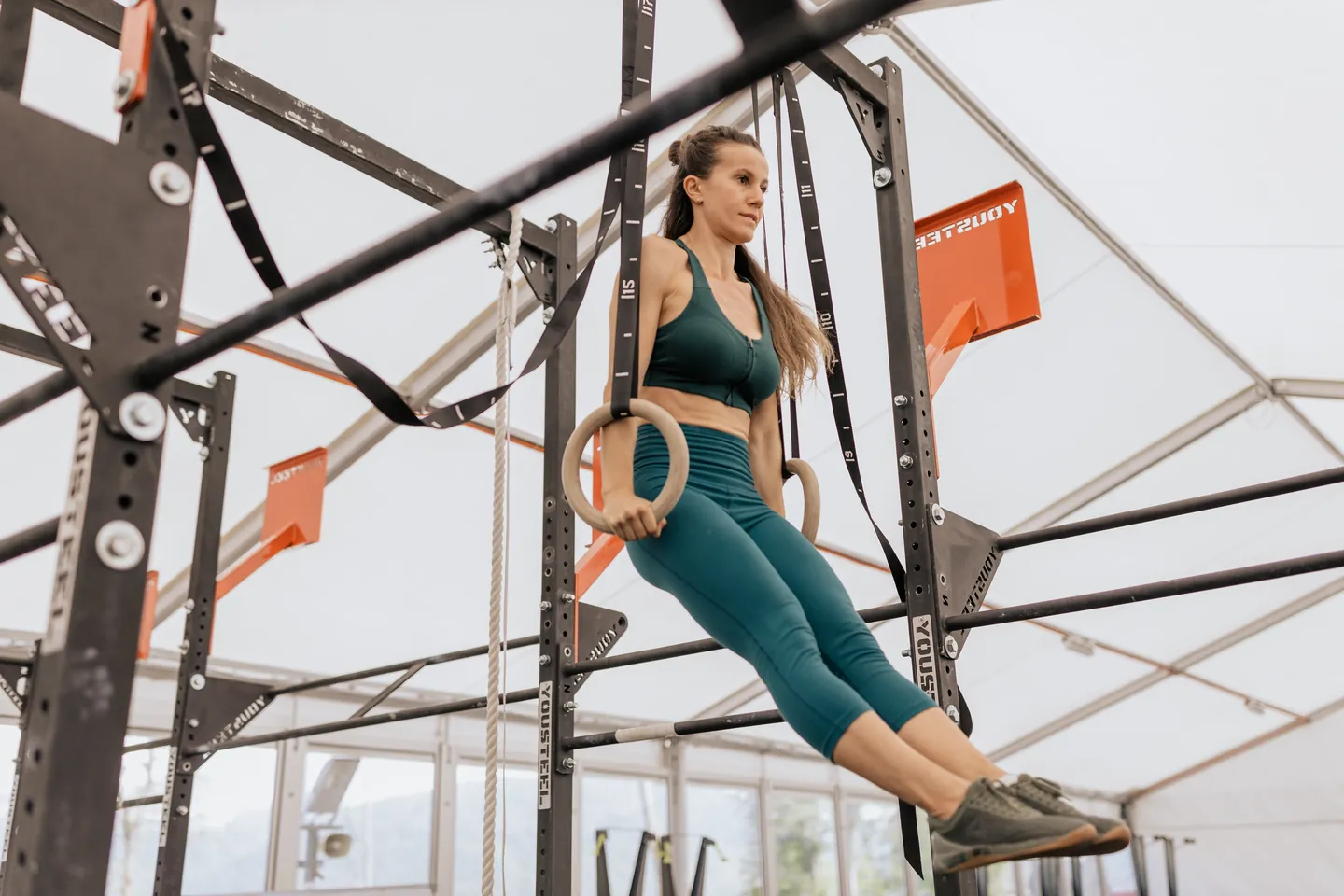
Imagen: Anastasia Shuraeva / Pexels
Barcelona will once again bring together in the spring of 2027 one of the most recognizable events on Spartan’s hybrid circuit: DEKA, a format that combines running and functional stations in the same measurable effort. The venue will be the Mar Bella Municipal Sports Complex, in Sant Martí, a setting already linked to this kind of competition for its ability to host staggered starts, technical areas, and the constant flow of athletes throughout the day.
The edition is scheduled for March 20 and 21, 2027 and brings together several events around a very specific model: 10 fitness zones interspersed with running segments, a schedule with separate blocks by category, and an organization designed so that each modality has its own space. In sporting terms, this is not just a strength event; it is a test of pace, transition, and mental endurance, with a mechanism that forces you to hold intensity when the body is no longer fresh.
A hybrid format that measures more than speed
DEKA has established itself as a reference competition within the Spartan universe because it does not reward only running fast or lifting a lot of weight. The key is to link both worlds: move at a good pace between stations and perform functional exercises with precision, without letting the heart rate get out of control or the technique fall apart. The result is a very complete test, closer to a snapshot of physical condition than to a conventional race.
In Barcelona, the program is split between Saturday and Sunday with specific blocks for DEKA FIT Teams, DEKA MILE, DEKA STRONG and DEKA FIT. That separation allows each participant to find a format suited to their profile, from those looking for a shared team experience to those pursuing the most demanding and standardized version of the event. The structure is part of the appeal: this is not a single course, but a family of events that share DNA and differ in decisive nuances.
The usual runner can understand it as a test that offers no shelter. Each running segment acts as a short breath between stations, and each station sends fatigue surging again. The repetition of effort is the true hallmark of the event. That is why it usually attracts very diverse profiles: obstacle athletes, functional fitness enthusiasts, runners looking for something different, and competitors who enjoy formats where the clock does not lie.
The Mar Bella venue and the weight of the urban setting
The Mar Bella Municipal Sports Complex is no minor detail. Located at Av. del Litoral, 86-96, in Barcelona, it offers a wide, open, and well-connected environment, a useful combination for events that bring together participants, judges, companions, and warm-up areas. In a sport as scenic as this one, location matters as much as the rules: the event’s image, the flow of access, and the internal layout all influence the overall experience.
Barcelona also provides a context that favors this kind of event. The city blends coastline, sports facilities, and an event ecosystem already used to hosting major athletic gatherings. Mar Bella works as an urban showcase where the competition is seen, heard, and felt from the very first minute. The sound of instructions, the thud of weights, and the athletes moving between stations create a scene very different from that of a traditional road race.
That urban character also helps explain why this format has such staying power. It does not require mountains or mud, but it does demand a venue capable of sustaining a constant technical setup. Athletes enter and leave clearly defined areas, with official timing and scheduled blocks, so the day becomes a succession of small physical battles within a controlled framework.
What events it includes and how the days are arranged
The published schedule places Saturday, March 20 as the day with the greatest variety, with bib pickup from 7:00 to 20:10. That Saturday features DEKA FIT Teams from 8:00 to 16:30, with the awards ceremony from 17:20 to 17:30, followed by DEKA MILE from 17:35 to 18:50 and DEKA STRONG from 19:20 to 20:35. The distribution reveals a long event, highly staggered and designed to absorb different competitive intensities without mixing the rhythms too much.
Sunday, March 21 is reserved for the individual categories of DEKA FIT Age Group, from 8:00 to 12:20, and DEKA FIT Elite, from 13:00 to 13:30. After that, the awards ceremonies are held, first from 13:00 to 13:30 and later from 14:10 to 14:30, depending on the block. This organization makes it clear that the event sharply distinguishes between team format, more specific events, and the elite or age-group time slots.
In practice, each format has its own language. DEKA FIT is the most recognizable version, with 5 kilometers and 10 zones. DEKA MILE reduces the running distance and compresses the work. DEKA STRONG puts almost exclusive emphasis on the stations. And DEKA FIT Teams shifts the load toward shared work, a variation that changes the tactical dynamic and the way effort is managed.
Why the format requires preparation different from a race
Anyone coming from pure running usually discovers that here the problem is not just holding the pace, but recovering while moving forward. The heart rate spikes in the stations, drops partially during the running segments, and rises again as soon as the next functional block appears. That oscillation makes the body work like an engine that never finds a stable cruising speed.
In a conventional race, the athlete relies on the economy of repeated movement. In DEKA, by contrast, technique comes into play from the very first minute because each station punishes a different muscle pattern. Push, pull, grip, stride, and trunk stability follow one another like pieces of the same machine. If one of them fails, overall performance quickly suffers.
For the running audience, that contrast is especially interesting. Aerobic endurance is still important, but it is no longer enough on its own. The ability to move well under fatigue, to keep posture, and to maintain some clarity in the transition from effort to effort makes the difference. It is a format where the body has to negotiate with its own exhaustion in real time.
What DEKA FIT, DEKA MILE and DEKA STRONG mean
DEKA FIT is the most recognizable format and the one that usually serves as the event’s reference point. It combines 5 km of running with 10 exercise zones, a mix that is enough to empty out a runner used to linear distances. The promise is not simple suffering, but precise measurement of performance in a homogeneous and verifiable setting.
DEKA MILE introduces a mile of running, approximately 1.6 kilometers, with functional stations. Its logic is more compact and explosive. By reducing the aerobic portion, the weight of each technical block increases, and the margin for hiding weaknesses narrows. It is a test that rewards sustained power and efficiency in quick changes of modality.
DEKA STRONG removes the clearest layer of prolonged running and concentrates the challenge in the 10 fitness zones. That reduction makes it a very direct, almost bare format, where strength and tolerance to lactic acid rule without so many distractions. DEKA FIT Teams, on the other hand, adds the collective dimension: splitting efforts, coordinating relays, and sustaining a common strategy completely changes the reading of the event.
Timetables, logistics, and what the organization reveals
The published schedules for Barcelona 2027 are a sign of very fine-tuned organization. Bib pickup occupies wide time slots, which avoids bottlenecks and allows for the staggered arrival of participants. The coexistence of events on the same weekend also suggests a complex setup, with judges, transitions, and waiting areas carefully separated.
In this kind of event, logistics are no minor add-on. They are the framework that holds everything else up. Official timing, closed blocks, and awards at set times turn the day into more than a physical display: they transform it into a regulated competition, with comparable times and results that make sense within the circuit. That structure is one of the reasons DEKA has gained weight within competitive fitness.
It is also worth looking at the March calendar. Barcelona’s spring usually offers milder temperatures than summer, a very important detail in intense, long-day events. Less heat means less thermal strain, although humidity and exposure to effort still demand caution. In an event of this kind, the weather may not decide the result, but it can significantly affect the quality of performance.
The athlete’s experience: measurable effort, but also very visual
One of DEKA’s particular traits is that it looks good from the outside. It is not an opaque competition or one dependent on long distances where the public loses sight of the participants. Here everything happens at close range, in a compact space where each station offers a clear reading of the effort. The gesture of climbing, pushing, carrying, or running becomes almost competitive choreography.
That explains part of its growth: the event is understandable for those competing and also for those watching. The audience recognizes the demand without needing to know every technical detail. They see the strained face, the changes in breathing, the unsteady step after a hard station. The narrative of fatigue is immediate, and that visibility helps build community around the event.
Barcelona, moreover, adds the component of a sporting event with its own identity. This is not an isolated race, but a stop within the Spanish Spartan DEKA season. The presence of other events close on the calendar shows that the franchise maintains a steady pace and that spring 2027 is shaping up to be an especially active stretch for those following this circuit in Spain.
A calendar that connects with the Spartan ecosystem in Spain
The spring edition does not come alone. Around the calendar appear other events such as DEKA Barcelona 2026 Autumn and several Spartan weekends in Spain and the Pyrenean or Mediterranean area. That map of events shows that Barcelona functions as one of the solid points of the circuit, both for those who return and for those making their debut in the format.
This fit within the calendar matters because the athlete does not live a single event, but a season. Yearly sports planning becomes more logical when there are repeated dates at known venues, since that makes it possible to compare sensations, observe progress, and better understand the evolution from one edition to the next. In that sense, Mar Bella is not just a place: it is a reference point.
There is also a community component. Spartan and DEKA have built their own culture around measurable effort, comparable results, and the idea of improving within a regulated environment. The Barcelona event fits into that logic and that is why it appeals to such different profiles, from the runner looking for a new challenge to the functional athlete who finds here a competition more finely tuned to their specialty.
An event that measures the body, but also the mind
DEKA’s toughness cannot be explained by numbers alone. 5 km, 1.6 km, or 10 stations say a lot, but not everything. The real value lies in what happens between those data points: pace management, tolerance to discomfort, the ability not to fall apart when the legs start doing their own thing. It is a test that forces you to think while suffering.
That is why the spring edition in Barcelona has interest beyond the agenda of a sports brand. It represents a very current form of competition, where fitness leaves the gym and becomes an event. The city provides the stage, the rules set the tension, and the athletes fill in the rest. The result is a day of visible, measurable, and above all demanding effort on every level.
In a season full of road races, trail events, and obstacle races, DEKA Barcelona Spring stands out for its precise mix of intensity and urban format. It is a different, compact, and highly recognizable proposal. A test made for those who want to know, with precision, where their limits are, without embellishment and without escape.
Where to stay in Barcelona
Hotels available 19–21 March 2027.
Affiliate links: if you book through this map we earn a commission, at no extra cost to you.



How to prevent thigh chafing: causes and real solutions

Women’s running windbreakers: seven jackets and how to choose

Do more workouts get rid of soreness? A guide for runners

Jaén Half Marathon 2026: Record 3,800 Runners Registered

Men’s short running tights: how to choose the right pair

World Triathlon confirms data breach involving medical data

Izan Edo targets podium at Miyazaki World Cup

María Pérez ranks ninth in World Athletics’ 2026 top ten

Dos Santos, Duplantis and Sawe: World Athlete of the Year finalists

San Silvestre Vallecana 2026: 42,000 places, prices and start times

 Races3 months ago
Valencia Half Marathon 2027: date and registration

 Races3 months ago
Valencia Marathon 2026: entry, ballot and course

 Reviews and Comparisons4 months ago
Asics Gel-Roadmiles 3 for men: review and current price

 Reviews and Comparisons4 months ago
Asics Gel Sonoma 8 Gore-Tex: complete analysis for trail and rain

 Sneakers3 months ago
Saucony Endorphin Pro 4: full review and verdict

 News5 months ago
Strava API 2026: what changes for clubs, challenges and runner apps?

 Reviews and Comparisons5 months ago
Nike Alphafly 3: opinions, sensations, and real key points

 Reviews and Comparisons4 months ago
Under Armour running shoes review 2025-2026: models and key features

 Sports Equipment4 months ago
Shoe sizes in cm: a clear guide to getting the right fit for your footwear

 Sneakers3 months ago
Skechers GO RUN Consistent 2.0 analysis: comfort and limits

 News5 months ago
Valencia Marathon 2026 route: key tips to train and run better

 Sneakers4 months ago
Adidas Adizero Boston 13 for men: review and verdict