Races
Dos Hermanas Half Marathon 2025: date, start and details
The Nazarene race returns on November 23 with the start at Manuel Utrilla, bib numbers, prizes, and 1,000 spots.

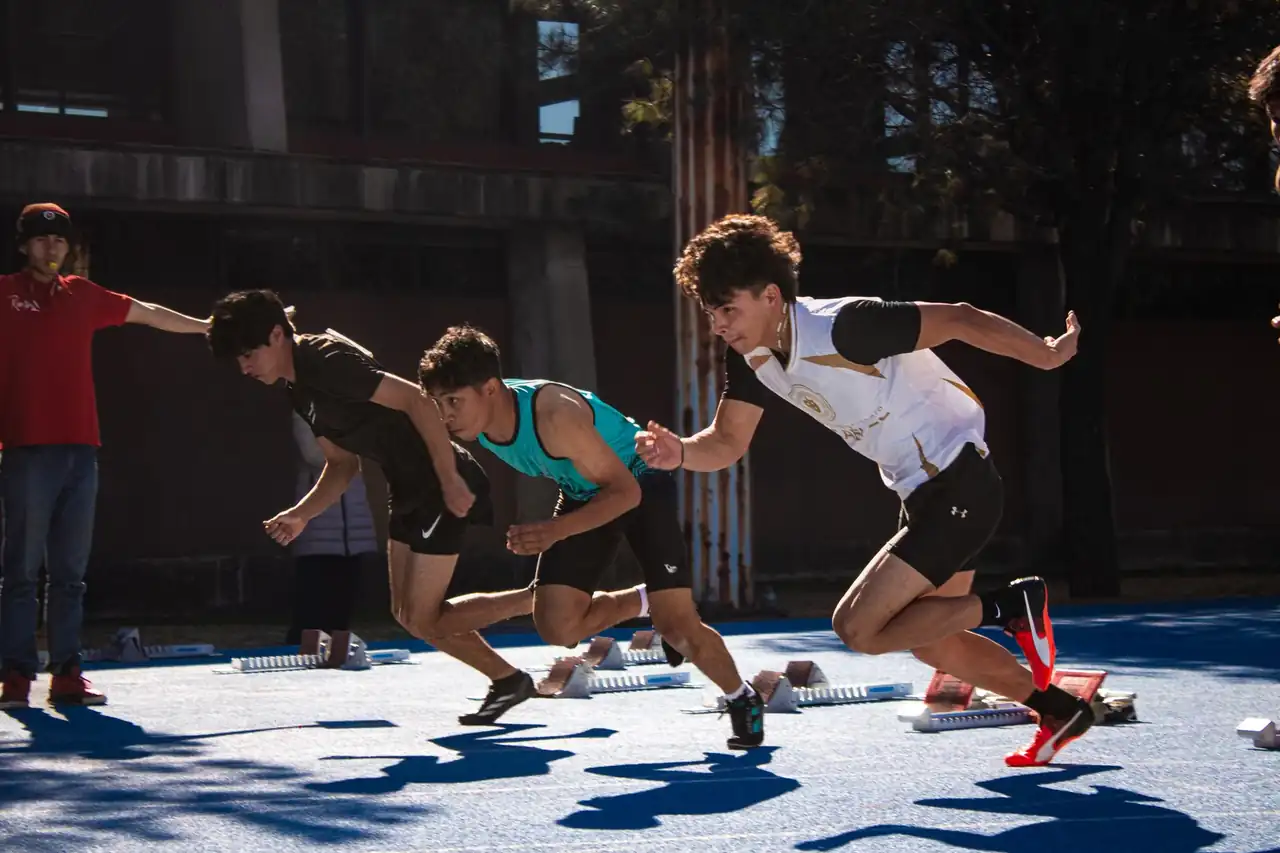
Dos Hermanas will once again be filled with strides on November 23, 2025, when the Tierra y Olivo Half Marathon reaches its twenty-sixth edition, with the start and finish at the Manuel Utrilla Municipal Stadium. The race has established itself as one of the major popular events on the Andalusian calendar, with an urban course, a limited entry cap, and an approach that blends sport, citizen participation, and a strong local identity.
The race will start at 9:30 a.m. from the Los Montecillos sports complex, on Meñaca Street, and will bring together athletes, recreational runners, and participants with disabilities or functional diversity in a day that keeps the heartbeat of a classic half marathon: 21,097 meters, timing checkpoints, refreshment stations, and a competitive atmosphere that looks as much to the clock as to the street.
A race that is already part of the Dos Hermanas calendar
The Tierra y Olivo is not understood simply as just another half marathon. Its continuity, its route through the city center, and its connection to the municipal Dos Hermanas Juega Limpio program have given it its own personality within the athletics offering of the province of Seville. It is not a quick-hit event or a one-off attraction: it is an event with a story, with memory, and with an organizational base that seeks to provide stability to a format that is very familiar to road runners.
The 2025 edition also arrives with a very specific framework. The Dos Hermanas City Council and the Orippo Athletics Club are listed as organizers of a race that aims to bring together 1,000 participants, although the regulations set a sporting maximum of 800 athletes in the competitive categories. This coexistence of figures reflects something common in local high-demand events of this kind: the desire to grow and the need to maintain order, safety, and control over logistics that leave no room for improvisation.
The start and finish will be at the same point, the Manuel Utrilla Municipal Sports Stadium. That choice has an obvious practical advantage. It centralizes bib distribution, timing, access to services, and the finish line, but it also concentrates the runner’s experience in a single space that functions as an operations base. From there, the entire race moves like a discreet machine, with parking, baggage storage, showers, medical staff, and control areas designed so that the race does not fall apart in the middle of the city streets.
Date, time, and starting point
The organizers have set the event for Sunday, November 23, 2025, with the start at 9:30 a.m. Access to the stadium and its parking areas will be open until 8:00 a.m., after which Meñaca Street will be closed and access to the parking lot will be exclusively via Serrana Street. These are details that, on paper, may seem secondary, but in an urban half marathon they make the difference between arriving on time and joining the last-minute rush.
The starting point will be at the Manuel Utrilla Municipal Stadium, located at 4 Meñaca Street. The finish line will also be there. This dual role as both start and finish gives the event a compact structure and makes it easier to control the course, which will run through the streets of Dos Hermanas and be federation-certified. For the runner, this translates into a course measured to official standards and a race where pace, consistency, and effort management matter more than improvisation.
The day also includes a bib pick-up time slot on the same day as the race, although only for participants not residing in Dos Hermanas, between 8:00 and 9:15 a.m. That narrow window requires precise planning, very much in keeping with this type of early Sunday event, where the margin for error shrinks and the clock rules both before and during the competition.
Registration, caps, and differentiated fees
Registration opened on August 11 and will remain available until 12:00 p.m. on November 18, or until the first 1,000 spots are filled. Registration is personal and non-transferable and is completed only through the Sportmaniacs platform. In events with this level of demand, the time window matters as much as the price: those who arrive late simply miss out.
The organizers apply a different pricing structure depending on ties to the municipality. Local participants pay 5 euros, and this rate applies to those who live in Dos Hermanas, work there, or are enrolled in official studies in the municipality with at least six months of effective connection during the calendar year. To prove this, documentation such as a certificate of registration, employment contract, or certificate from the educational center is required, dated within the last three months.
Non-local participants pay 8 euros. In addition, the first one hundred athletes classified in the overall male and female categories in the previous edition can enter free of charge, provided they respect the deadline and assigned groups. Measures like this reward sporting performance without completely breaking the event’s popular character, and help explain why the race combines a competitive spirit with a certain feel of civic celebration.
The price is modest for a half marathon with chip timing, refreshments, finish-line services, and prizes. In the end, the fee structure reveals the balance many municipal races seek: covering costs without excluding those who run for fun, for a personal best, or simply for the satisfaction of completing a long distance in a familiar, well-measured setting.
Course, refreshment stations, and race control
The official course will run through the urban area of Dos Hermanas and will be certified by the Andalusian Athletics Federation. Although the detailed course description has not been published in the reference documentation, several key elements of the competitive design are known. There will be four liquid refreshment stations at kilometers 5, 10, 15, and 18, each with a medical point, as well as a timing checkpoint at kilometers 12 and 18 with maximum times of 1 hour 24 minutes and 2 hours 8 minutes, respectively.
That kind of control is not just a formality. In an urban half marathon, split-time checks help keep participants safe and organize the flow of runners. They also draw a clear line between running and surviving. When an organizer sets intermediate time limits and a finish-line cutoff two and a half hours after the start, it is saying the race is intended for everyone, but it also has operational limits that protect the event and those who make it possible.
At the finish, each finisher will receive a long-sleeve technical T-shirt, a medal, and refreshments. In addition, the participant pack includes a commemorative medal, a race-themed technical T-shirt, and refreshments. In a market flooded with T-shirts that end up at the bottom of a drawer, the promise of a technical garment and a finisher’s medal still carries symbolic value. It is not just a souvenir; it is the physical mark of having covered a demanding distance with the body in motion and the mind managing the effort.
The organizers have also planned a support vehicle to collect anyone unable to finish, accident insurance and civil liability insurance, as well as chip timing integrated into the bib. These are invisible to the casual spectator, but essential for a race of this scale to run like clockwork rather than as a last-minute improvisation in running shoes.
Categories, trophies, and cash prizes
The competitive structure of the Tierra y Olivo Half Marathon is broad and designed to recognize both the overall standings and the different age ranges and participation conditions. There will be men’s and women’s categories in the overall classification, as well as Junior, Senior, Veteran A, Veteran B, and Veteran C groups. Categories are also established for runners with disabilities and for participants in assisted wheelchairs, a format that broadens the understanding of what it means to compete in and finish a half marathon.
Trophies will be awarded to the top three finishers in each of the overall, local, and running disability categories. In the assisted wheelchair category, a race memento will be given to everyone who finishes. This distribution reflects a deeply rooted idea in Spanish popular running: competition does not end at the overall podium, but extends to recognizing consistency, local belonging, and functional diversity.
Cash prizes are reserved for the overall category. The top three men and the top three women will receive 315, 235, and 155 euros, respectively. In addition, there is a course record prize of 395 euros for each sex, with benchmark times set below 1:06:20 for men and 1:24:04 for women. Prizes in sports equipment vouchers are also awarded for places 4 through 50, with amounts of 36, 24, and 12 euros depending on position.
The fine print matters. Prizes are not cumulative except for the course record prize, they are considered gross amounts, and they are paid by bank transfer. To collect them, athletes must submit specific documentation, including ID card or passport, third-party registration form, and in some cases, a bank account ownership certificate. That level of detail may seem bureaucratic, but it avoids uncertainty and makes clear that sports prizes also require very specific administrative traceability.
Bib collection, services, and runner logistics
Bib collection has three clearly defined windows. On November 20 and 21, it will take place at the Sports Delegation Office on Serrana Street, from 10:00 a.m. to 1:00 p.m. and from 5:00 p.m. to 8:00 p.m. On Saturday the 22nd, an additional slot will open from 10:00 a.m. to 1:00 p.m. at the stadium itself. On Sunday, during reduced hours, only non-residents of Dos Hermanas who have not previously collected their bib during the regular times will be able to pick it up.
This organization into several time slots reduces queues and prevents Sunday morning from turning into a last-minute scene. The bib is no minor formality: it is the key to entering the race, the identifier for timing, and the visible document that authorizes competition. The race even specifies how it must be pinned to the chest with four safety pins, and warns that triathlon belts are not allowed, reinforcing the regulatory tone of a race that takes itself seriously.
Planned services include baggage storage, showers, refreshments, a runner’s bag, timing, finisher’s medal, and medical care. For runners, that means a more orderly experience and less dependence on personal improvisation. For the city, it means activating a small sporting ecosystem for a few hours, with local police, civil protection, volunteers, and support staff coordinating access, the finish area, and urban traffic.
The organizers also set a reporting time at the start: at least 30 minutes before the race begins. This is not an empty formality. In an urban half marathon, the staggered start, runner control, and bib checks depend on the crowd already being in place before the gun goes off. The minute before the start, almost always silent, can be the most tense of the whole morning.
What the race conveys beyond the clock
The Tierra y Olivo Half Marathon is built on a very familiar idea in Andalusian popular sport: running is also a way of inhabiting the city. The race does not merely close streets; for a few hours it turns them into a shared space where individual effort coexists with public logistics, volunteering, and the curiosity of people watching from the sidewalks. That intersection of everyday life and competition gives the event a special texture.
The fair play slogan is not just an institutional decoration. In the regulations it is linked to values such as equality, tolerance, solidarity, and healthy sports practice. These are words that may sound predictable in a brochure, but in the context of a half marathon they take on a tangible meaning: respecting times, accepting limits, living alongside other runners, and understanding that the race is as much about athletic marks as it is about sportsmanship.
There is also an element of local prestige. Dos Hermanas does not simply organize a half marathon; it turns it into a showcase for its sporting activity. The race speaks of municipal facilities, cooperation between clubs and the administration, and a city that uses running as a display of participation and identity. In an increasingly broad landscape of urban races, that consistency is worth more than any grand gesture.
The 2025 edition therefore presents itself as a compact, clearly defined event: a fixed date, a clear time, regulated access, limited spots, broad categories, and specific prizes. What remains is the most recognizable image of all, the start at Manuel Utrilla, with the fresh November air, taut bibs, and the line of runners waiting for the first step. It is there, in that silent instant, that a half marathon stops being a calendar entry and becomes a complete sporting scene.



How to prevent thigh chafing: causes and real solutions

Women’s running windbreakers: seven jackets and how to choose

Do more workouts get rid of soreness? A guide for runners

Jaén Half Marathon 2026: Record 3,800 Runners Registered

Men’s short running tights: how to choose the right pair

World Triathlon confirms data breach involving medical data

Izan Edo targets podium at Miyazaki World Cup

María Pérez ranks ninth in World Athletics’ 2026 top ten

Dos Santos, Duplantis and Sawe: World Athlete of the Year finalists

San Silvestre Vallecana 2026: 42,000 places, prices and start times

 Races3 months ago
Valencia Half Marathon 2027: date and registration

 Races3 months ago
Valencia Marathon 2026: entry, ballot and course

 Reviews and Comparisons4 months ago
Asics Gel-Roadmiles 3 for men: review and current price

 Reviews and Comparisons4 months ago
Asics Gel Sonoma 8 Gore-Tex: complete analysis for trail and rain

 Sneakers3 months ago
Saucony Endorphin Pro 4: full review and verdict

 News5 months ago
Strava API 2026: what changes for clubs, challenges and runner apps?

 Reviews and Comparisons5 months ago
Nike Alphafly 3: opinions, sensations, and real key points

 Reviews and Comparisons4 months ago
Under Armour running shoes review 2025-2026: models and key features

 Sports Equipment4 months ago
Shoe sizes in cm: a clear guide to getting the right fit for your footwear

 Sneakers3 months ago
Skechers GO RUN Consistent 2.0 analysis: comfort and limits

 News5 months ago
Valencia Marathon 2026 route: key tips to train and run better

 Sneakers4 months ago
Adidas Adizero Boston 13 for men: review and verdict