Races
Dunedin Marathon 2026: date, routes and prices
The 2026 event brings together the marathon, half marathon, 10K, and 5K on an iconic course by the port of Dunedin.

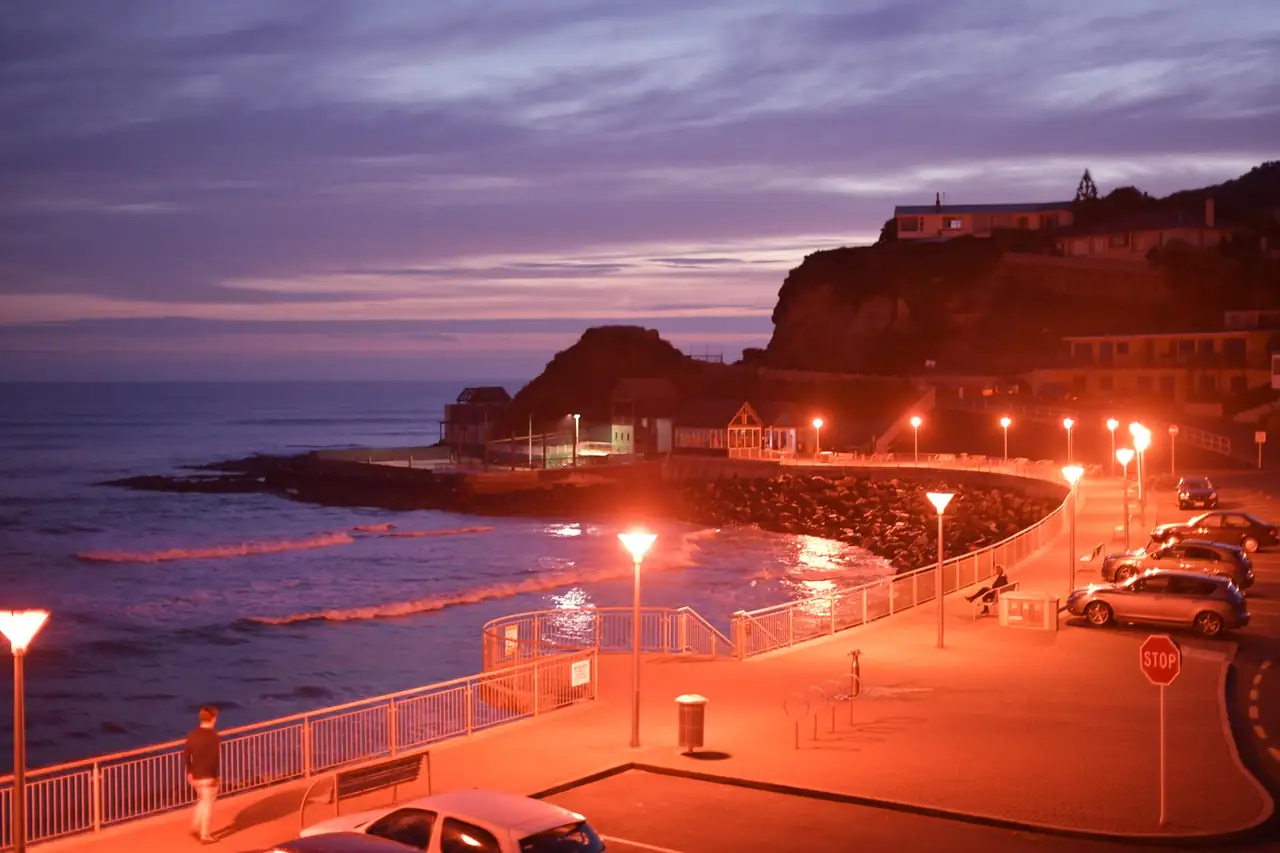
The 46th edition of the Dunedin Marathon will be held on Sunday, September 13, 2026, with the start and finish in the Dunedin harbor area in New Zealand, and with a program that combines marathon, half marathon, 10 kilometers, and 5 kilometers. The event retains its profile as a major popular race and also a competitive one, with options to run and walk over several distances and with a course that once again puts the Otago coast in the spotlight and finishes beside Emerson’s Brewery.
The interest in this race is not explained by the date alone. Its history, its AIMS certification for the full marathon, and an entry structure with clearly defined price tiers from February to September also matter. For local and visiting runners alike, the event works like an athletic postcard: a demanding start, a return toward the city with the harbor as the visual thread, and a finish that captures the atmosphere of a veteran race, born in 1979.
A long-standing event on New Zealand’s running map
Dunedin Marathon is not a newcomer or an event built on fleeting trends. Its history, which now spans more than four decades, gives it a recognizable identity within New Zealand’s calendar. The organization is run by the Caversham Harrier and Athletic Club, an important detail because it explains the community character of the event and its balance between mass participation, local tradition, and solid organization.
The 2026 edition once again brings together runners of different profiles in the same setting. Some want to complete the 42.2 kilometers, others prefer the half marathon, others do better over 10K, and some simply want to enjoy the atmosphere over 5 kilometers. That breadth of distances is part of its strength: it turns one morning into a shared experience, without forcing everyone to take on the same physical load.
The race also retains a very useful feature for traveling runners: the full marathon is certified by AIMS. That accreditation adds value to the result and places it within the network of officially measured races that many athletes use as a benchmark for their international goals. It is no small detail; in a marathon, certification works as the seal that separates a beautiful setting from a reliable course.
Date, schedule, and competitive framework for 2026
The main race will take place on September 13, 2026. The registration information lists a start time of 7:00 am, a logical schedule for an event with several distances and the goal of taking advantage of the morning light in the heart of the southern winter. That early start also helps organize the flow of participants and ease the coexistence of different race paces.
This year’s edition also arrives with a new addition to the pre-race program: the ASB George Street Mile will be held on Saturday, September 12, one day earlier. This addition broadens the weekend’s appeal and adds a more urban, faster, and more visible element in the city center. It includes races for different profiles, from children’s categories to New Zealand’s national mile.
That pairing between the main event and the mile on the day before reinforces the idea of an athletic festival. Dunedin is not merely putting a marathon on the calendar; it is building a small sequence of races spread between the coast, the city, and the downtown area. For runners, that means more options. For the city, it means more street presence and more hours of activity around the event.
Courses along the harbor and a finish in front of Emerson’s
The full marathon starts at Portobello Recreation Reserve on the peninsula, and develops an opening section heading northeast before turning between Penguin Place and Te Rauone Reserve. From there, the route heads back toward the city to finish in front of Emerson’s Brewery, crossing the Ward Street ramp area and the railway bridge that dominates the final stretch.
The other distances start near the finish, around the Caledonian Ground area and also finish in front of Emerson’s. That setup simplifies logistics and concentrates the finish in a recognizable point of the urban landscape. The end is one of the most photogenic elements of the race: the bridge, the descent, and the brewery façade act as the backdrop for the decisive straight.
The course design explains much of the race’s visual prestige. This is not a generic loop through flat streets, but a route that embraces Otago Harbour and showcases Dunedin’s geography with a rhythm that alternates sea, coastline, city, and industrial architecture. For the runner, that changes the mental experience of the distance. The scenery is not just decoration: it accompanies, distracts, punishes, and comforts depending on the section.
Distances, formats, and options for different profiles
The 2026 edition offers marathon, half marathon, 10 km, and 5 km, as well as run and walk options in some of those distances. The full marathon is run-only, but the half marathon, 10K, and 5K include the possibility of walking in certain categories. That flexibility means the day is not limited to one type of participant.
The 5-kilometer race also has a family focus, with categories designed for different ages. The reference to age 12 and over in the general option and the reduced fee for children under 11 show that the organization sees the race as an entry point, not just a test of endurance. In essence, that mix of levels is one of the reasons the event remains vibrant year after year.
The variety also helps explain the race’s sporting significance. A classic marathon can feel intimidating, but a 10K or 5K lets people experience the atmosphere without the burden of a long preparation. At the other end, the half marathon and full marathon sustain the competitive prestige. That combination prevents the event from being trapped in a single identity.
Entry fees and the pricing schedule
The organization has published a tiered pricing structure with early bird, standard, and late rates. The schedule is clear: the early-bird fee runs from February 16 to May 3, the standard fee from May 4 to August 2, and the late fee from August 3 to September 9. Online registration closes at midnight on September 9, although late entries are accepted afterward at race bib pickup, with an additional fee and a paper form.
For the full marathon, the price ranges from 110 to 150 New Zealand dollars. The half marathon ranges from 80 to 120 NZD, the half-marathon walk from 70 to 110 NZD, the 10K from 65 to 100 NZD, the 10K walk from 50 to 90 NZD, and the 5K from 25 to 60 NZD, with a specific fee for children under 11 that drops to 10, 12, and 24 NZD depending on the tier.
That stepped structure reflects a fairly common logic in popular endurance races: reward early registration and penalize late decisions. It also gives runners room to compare the real cost of travel or accommodation with the value of competing in an AIMS race with an iconic finish. In a sports economy where every detail counts, the entry window matters almost as much as the training plan.
Why the Dunedin Marathon draws attention outside New Zealand
The 2026 edition appeared in a sixt.com.au analysis among the most highly rated races in Australia and New Zealand, ranking 8th out of 28 marathons studied. The report’s criteria focused on course ease and comfort, using variables such as elevation gain, temperature, humidity, fast times, altitude, number of participants, and social media presence.
This kind of ranking does not measure epic drama, but the runner’s real experience. And in that reading, Dunedin gains weight because it offers a recognizable route, a very strong visual identity, and an organization that does not rely solely on difficulty. In a circuit where many marathons are presented as tough tests by default, a race that stands out for balance and beauty has a meaningful advantage.
The position in that list also helps explain the interest of international runners. New Zealand does not usually compete in volume with other major marathon destinations, but it does compete in the quality of its setting. Dunedin, with its combination of bay, harbor, and compact city, fits well into that map of races people travel to for both the bib and the scenery.
What changes in the runner’s experience on a course like this
A coastal marathon never feels the same as a city race on straight boulevards. In Dunedin, the runner moves in and out of an environment that seems to breathe with the tide. There are sections where the horizon opens up and others where the city tightens around the effort. That alternation, if well managed, can ease the mental toughness of 42.2 kilometers.
AIMS certification adds a layer of sporting seriousness, but the course’s appeal goes beyond the stopwatch. The ups and downs, the harbor breeze, the peninsula views, and the final stretch toward Emerson’s create a very distinctive race narrative. This is not just an event for chasing times; it is a route with visual memory.
That said, beauty does not replace preparation. A race with coastal elements and shifting scenery can demand more concentration than it first appears. A runner who arrives with an overly rigid strategy often suffers when the course changes the rhythm. That is why, even in a race considered relatively comfortable in its setting, respect for the distance remains essential.
Weekend logistics and the importance of the local atmosphere
The event stresses that bib and race pack collection must be done before the start. That seemingly routine instruction is key for a race managing multiple distances and different start times. It also shows an organization aiming to avoid last-minute friction, a classic problem in races with participants traveling from other regions or countries.
The finish area, in front of Emerson’s Brewery, concentrates much of the day’s social atmosphere. The end of a marathon always has something of dry, honest theater: people arrive breathing hard, but the scene around them offsets the strain with applause, photos, and the feeling of having crossed a boundary. In Dunedin, that setting is further supported by a recognizable urban environment and a strong local identity.
The city also benefits. An event like this mobilizes hotels, shops, volunteers, and local transport over an entire weekend. In a city of Dunedin’s size and scale, the race is not a side note on the calendar, but a way of occupying public space with a sports story that repeats every year and is passed on naturally.
A race that blends history, scenery, and real access for different levels
The sustained success of Dunedin Marathon is understood through the sum of its parts: history, location, distance variety, technical recognition, and a pricing structure that lets people choose when to register with some clarity. It does not depend on a single argument, but on a set of decisions aligned around a simple idea: making the race a complete experience.
The runner finds a serious but not rigid event here. There is a marathon for those seeking a long-distance challenge with international value, a half marathon for those who want demand without the full leap, 10K and 5K options for those who prefer a more accessible entry, and walking events to broaden the range. That design, modest in appearance, is often what sustains races with a long life.
That is why the 2026 edition arrives with a clear narrative: a fixed date, published prices, defined courses, and a weekend that brings together a marathon, an urban mile, and a coastal landscape. Dunedin does not need to exaggerate itself to be attractive. It is enough for it to show its harbor, its finish, and its history to keep its own place on the international calendar.
You may also like: Wellington Marathon 2026: distances, route, and key details.



How to prevent thigh chafing: causes and real solutions

Women’s running windbreakers: seven jackets and how to choose

Do more workouts get rid of soreness? A guide for runners

Jaén Half Marathon 2026: Record 3,800 Runners Registered

Men’s short running tights: how to choose the right pair

World Triathlon confirms data breach involving medical data

Izan Edo targets podium at Miyazaki World Cup

María Pérez ranks ninth in World Athletics’ 2026 top ten

Dos Santos, Duplantis and Sawe: World Athlete of the Year finalists

San Silvestre Vallecana 2026: 42,000 places, prices and start times

 Races3 months ago
Valencia Half Marathon 2027: date and registration

 Races3 months ago
Valencia Marathon 2026: entry, ballot and course

 Reviews and Comparisons4 months ago
Asics Gel-Roadmiles 3 for men: review and current price

 Reviews and Comparisons4 months ago
Asics Gel Sonoma 8 Gore-Tex: complete analysis for trail and rain

 Sneakers3 months ago
Saucony Endorphin Pro 4: full review and verdict

 News5 months ago
Strava API 2026: what changes for clubs, challenges and runner apps?

 Reviews and Comparisons5 months ago
Nike Alphafly 3: opinions, sensations, and real key points

 Reviews and Comparisons4 months ago
Under Armour running shoes review 2025-2026: models and key features

 Sports Equipment4 months ago
Shoe sizes in cm: a clear guide to getting the right fit for your footwear

 Sneakers3 months ago
Skechers GO RUN Consistent 2.0 analysis: comfort and limits

 News5 months ago
Valencia Marathon 2026 route: key tips to train and run better

 Sneakers4 months ago
Adidas Adizero Boston 13 for men: review and verdict