Races
EcoTrail Valencia 2026: routes, registration, and key details
The Valencian race combines trail running, sustainability, and routes for different levels right in the heart of the capital.

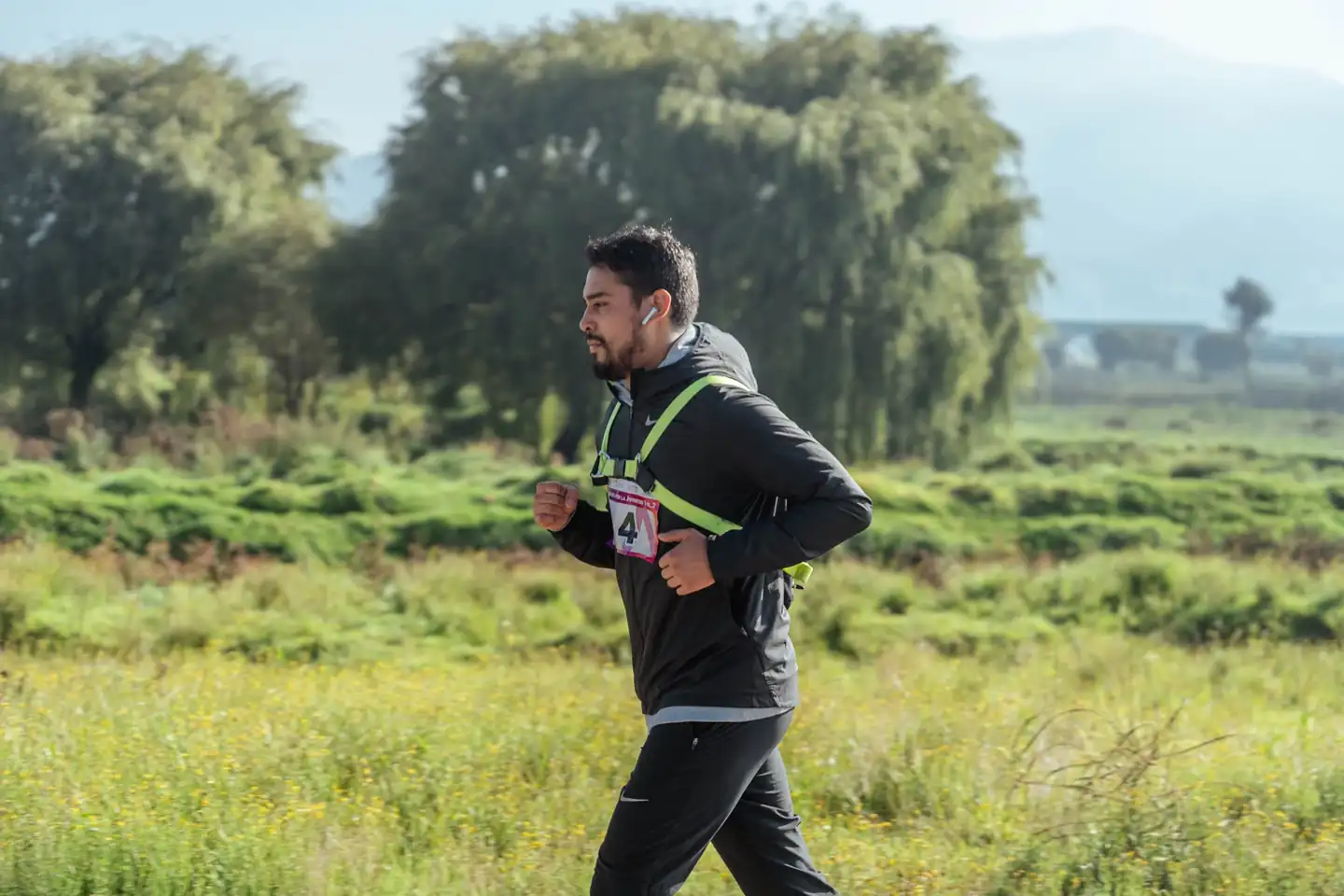
EcoTrail Valencia has established itself as a trail event with its own identity in the Valencian capital: an event that blends urban asphalt, public parks, and nearby trails with a clear idea of environmental responsibility. The 2026 edition is scheduled for late October and retains three official distances, 20 km, 43 km and 80 km, with profiles designed for runners looking for anything from a first introduction to a long and demanding challenge.
The race stands out for a philosophy that goes beyond the course itself. Its organization focuses on sustainability, accessibility, and a participatory spirit, with a dynamic closely tied to the atmosphere of a big city and, at the same time, to the nature experience. In practice, this makes the race more than just a sporting day out: it is a way to get to know Valencia from your running shoes, with logistics that require good planning of effort, fueling, and gear.
A urban trail with its own identity in Valencia
The uniqueness of this event lies in its balance between the urban and the natural. Valencia offers geography that is comfortable for runners, but also a very distinctive scene: city center, public park, and green surroundings that make for a trail that is less abrupt than in high mountains, though by no means easy. That mix helps the race attract very different profiles, from those making their debut at the distance to those looking to prepare more technical autumn goals.
The organizers present it as a close, open experience for different levels, with a clearly popular vocation. This is reflected in the design of the distances and in the overall atmosphere of the event, which revolves not only around sporting performance but also around the surroundings, togetherness, and family participation. In an increasingly crowded calendar, that approach sets it apart from purely competitive events.
There is also an element that explains part of its appeal: the race is understood as a bridge. A bridge between the 5K or 10K runner and the one who wants to move toward long distances; a bridge between beginner trail running and progression into more demanding terrain. That logic, as simple as it is effective, has helped the event gain traction among those who value a challenge that feels manageable, but still has a sense of adventure.
The official distances and what each one demands
The 2026 edition offers three clearly differentiated formats. The 20 km course appears as the most popular and accessible; the 43 km route raises the bar with a significant physical commitment; and the 80 km route enters the realm of pure endurance, with a duration and effort management that require racing smart. The reference data lists elevation gains of 156 mD+ for 20 km, 316 mD+ for 43 km, and 673 mD+ for 80 km, figures that portray a moderate-profile race with enough variety to avoid monotony.
The 20-kilometer format is usually the most advisable for anyone who wants to feel the race without accumulating excessive fatigue. It is a distance that leaves room to push, but also to learn how to read the terrain, manage pace changes, and avoid emptying the tank too early. In this kind of event, the most common mistake is not lack of strength, but anxiety: starting too fast on the favorable sections and paying for it later on any climb or surface transition.
The 43 kilometers already require thinking in blocks. It is not just about running more; it is about pacing, eating, drinking, and staying focused for longer. In terms of the course, this distance usually attracts runners with experience in trail or road running who want to take a step forward without yet jumping to a very long ultra. As for the 80 kilometers, the race moves into a very different territory: the challenge is not only muscular, but mental, logistical, and energetic. You run with your mind on the aid stations, the accumulated wear and tear, and the ability to keep going when your body starts asking for a break.
The participation figures seen in previous editions also help illustrate the scale of the event. The 20 km distance surpassed 600 participants in the previous edition cited by the source, while the 43 km and 80 km routes each hovered around 300 entrants or more. That distribution reflects a common trend in trail running: the longer and more demanding the race, the smaller the runner field, but also the greater the prestige of the bib.
A course designed for running and respecting the environment
The label of an event committed to the planet is not just decorative. The reference information includes specific measures to reduce waste and limit the use of plastics. Runners are asked to bring their own backpack, hydration pack, or personal bottle, and the aid stations do not operate with bottles in the conventional way. The idea is simple and demanding at the same time: each runner must arrive prepared to manage hydration independently.
That policy changes how the race is approached. In events like this, it is not enough to rely on what you will find along the way; you have to carry what you need and calculate water intake carefully from the start. For the runner, this has an immediate practical consequence: gear is not an extra, but part of the strategy. A hydration pack or equivalent system goes from being convenient to almost essential.
The organization also emphasizes a commitment to more responsible materials in the apparel provided, with a minimum of 50% recovered yarn required from suppliers in the consulted reference. This kind of decision, not especially visible from the outside, is part of what sustains the event’s identity. It is not just about running in nature, but about reducing the impact on it. In a calendar where sustainability is often used as a label, here it is integrated into logistics and participation rules.
That approach adds another layer of meaning to the event: trail running not as quick consumption of scenery, but as coexistence with the space. Valencia provides an ideal setting for that message, because its combination of city, parks, and relatively accessible routes allows the race to reach a wide audience without losing contact with nature altogether. It is a way of understanding sport that fits well with today’s sensibility, which pays more attention to context than to the stopwatch alone.
Schedule, atmosphere, and the logic of a full day
The available information places the starts between 10:00 and 11:00 in this circuit, a time window that turns the event into an all-day experience. That start time is no coincidence: it allows for staggered arrivals, a more relaxed buildup, and an atmosphere that continues long after the finish line. The race does not end at the finish; it continues with music, social spaces, food, and a format designed so that runners and companions can share the day.
That long-day design is especially appealing to family audiences and runners who are not only looking to compete. There is a meeting-point atmosphere that, in essence, explains much of EcoTrail’s success in different cities. The event is not sold as an epic battle, but as a complete sporting experience, with room for socializing, photos, rest, and post-race conversation. In a calendar where many races are consumed at high speed, this more human pace is refreshing.
In addition, the fact that the race is held in autumn helps reinforce the appeal of the calendar. Late October usually offers more favorable temperatures for running than the Valencian summer, something runners appreciate in medium and long distances. The weather does not guarantee anything, but it does create a favorable context for a more stable day, with less heat stress and better feelings for those who arrive with a reasonable training base.
Registration, runner profile, and what to check before racing
The reference information places the next edition at late October 2026, although it does not specify an exact start date or a confirmed registration fee. In this type of event, registration is usually organized by distance and with separate quotas, so it is worth checking entry availability and mandatory gear before confirming participation. In the absence of an official fee verified in the consulted source, it is prudent to leave that data under review and not assume a rate that could change.
The usual participant profile is broad. On one hand, there are those who are just starting out in trail running and find the 20 kilometers a friendly distance, with enough variety to be exciting without being overwhelming. On the other, there are more experienced runners who choose the 43 kilometers as an intermediate step toward bigger goals. And, of course, there is the group taking on the 80 kilometers, where the value of the result goes far beyond the placing: finishing is already a statement of endurance.
Before signing up, it is worth reviewing three issues that carry real weight in this event. The first is mandatory hydration, because the water logistics are not like those of a classic road race. The second is the gear used to carry liquids, which must be part of the kit from the start. The third is the terrain profile and elevation gain, which, although not extreme, does require some familiarity with changing surfaces, broken rhythms, and constant attention.
The inclusion component highlighted by the organizers also matters. The reference includes specific categories and recognition for children under 12 and for people over 70, who have special conditions and differentiated treatment. That detail reinforces a very characteristic idea of the event: opening the door to more people, not just to elites or experienced runners. In this case, trail running also functions as an intergenerational meeting point.
The local footprint: city, tourism, and the sports community
Valencia is not just a backdrop. The city directly influences the runner’s experience, because it offers easy access, services, accommodation, and a recognizable sporting identity. The fact that the event combines sport and tourism explains why it attracts participants from different parts of the country. Running in a capital with urban appeal and proximity to natural surroundings extends the stay and turns the race into a weekend getaway for many travelers.
The reference also includes suggestions for nearby accommodation, a detail that tends to matter more than it might seem when it comes to events with early starts and a long day ahead. Sleeping close to the course reduces travel, makes bib pickup easier, and lowers pre-race stress. In races experienced as a full experience, that kind of logistics ends up being just as important as the training done in the previous weeks.
The community around EcoTrail also has a continuity component. This is not an isolated event, but a circuit with different host cities and a repeated identity across several locations. That repetition creates familiarity, but also a kind of common language among runners: they know what to expect in terms of atmosphere, ecological commitment, and format. Valencia thus joins a network that adds value to the brand and turns each edition into a piece of a broader story.
What this edition leaves on the map of Spanish trail running
EcoTrail Valencia holds an interesting place in the Spanish calendar because it does not try to compete with the great mountain ultras or with pure asphalt road races. Its strength lies in the middle ground: an accessible, urban, and sustainable trail race, with enough courses for different levels and a philosophy that fits the current moment in sport. That position, less spectacular at first glance, may be the smartest one for growing consistently.
The 2026 edition arrives with the ingredients that explain its continuity: three well-spaced distances, reasonable elevation gains, an attractive Valencian setting, and an environmental message that has become central to its proposal. In a season where every race competes for attention, the combination of usefulness, identity, and experience makes the difference. There is no unnecessary artifice here: there is a race that asks you to run, respect the environment, and understand that trail running can also be done from the city, with your feet on the ground and your eyes on the landscape.
EcoTrail Valencia is not limited to adding kilometers. It offers a specific way of experiencing trail running: with autonomy, environmental awareness, and a human scale that does not give up the challenge. That is, probably, the underlying reason why it has found a place in the calendar and in the memory of those who return. It is not just another race; it is a way to organize effort in an environment that invites you to see the city differently.
For anyone looking for an autumn bib with an adventurous spirit without getting into technical extremes, the event offers a recognizable and solid formula. And for the runner seeking a long distance with context, not just with the clock, the 43 and 80 kilometers add that degree of commitment that turns a race morning into a day that is remembered for much longer than the result alone.



How to prevent thigh chafing: causes and real solutions

Women’s running windbreakers: seven jackets and how to choose

Do more workouts get rid of soreness? A guide for runners

Jaén Half Marathon 2026: Record 3,800 Runners Registered

Men’s short running tights: how to choose the right pair

World Triathlon confirms data breach involving medical data

Izan Edo targets podium at Miyazaki World Cup

María Pérez ranks ninth in World Athletics’ 2026 top ten

Dos Santos, Duplantis and Sawe: World Athlete of the Year finalists

San Silvestre Vallecana 2026: 42,000 places, prices and start times

 Races3 months ago
Valencia Half Marathon 2027: date and registration

 Races3 months ago
Valencia Marathon 2026: entry, ballot and course

 Reviews and Comparisons4 months ago
Asics Gel-Roadmiles 3 for men: review and current price

 Reviews and Comparisons4 months ago
Asics Gel Sonoma 8 Gore-Tex: complete analysis for trail and rain

 Sneakers3 months ago
Saucony Endorphin Pro 4: full review and verdict

 News5 months ago
Strava API 2026: what changes for clubs, challenges and runner apps?

 Reviews and Comparisons5 months ago
Nike Alphafly 3: opinions, sensations, and real key points

 Reviews and Comparisons4 months ago
Under Armour running shoes review 2025-2026: models and key features

 Sports Equipment4 months ago
Shoe sizes in cm: a clear guide to getting the right fit for your footwear

 Sneakers3 months ago
Skechers GO RUN Consistent 2.0 analysis: comfort and limits

 News5 months ago
Valencia Marathon 2026 route: key tips to train and run better

 Sneakers4 months ago
Adidas Adizero Boston 13 for men: review and verdict