Races
El Palo Popular Race 2025: route, schedule, and key details
The Malaga event returns with a seaside atmosphere, varied distances, and a strong spirit of solidarity.

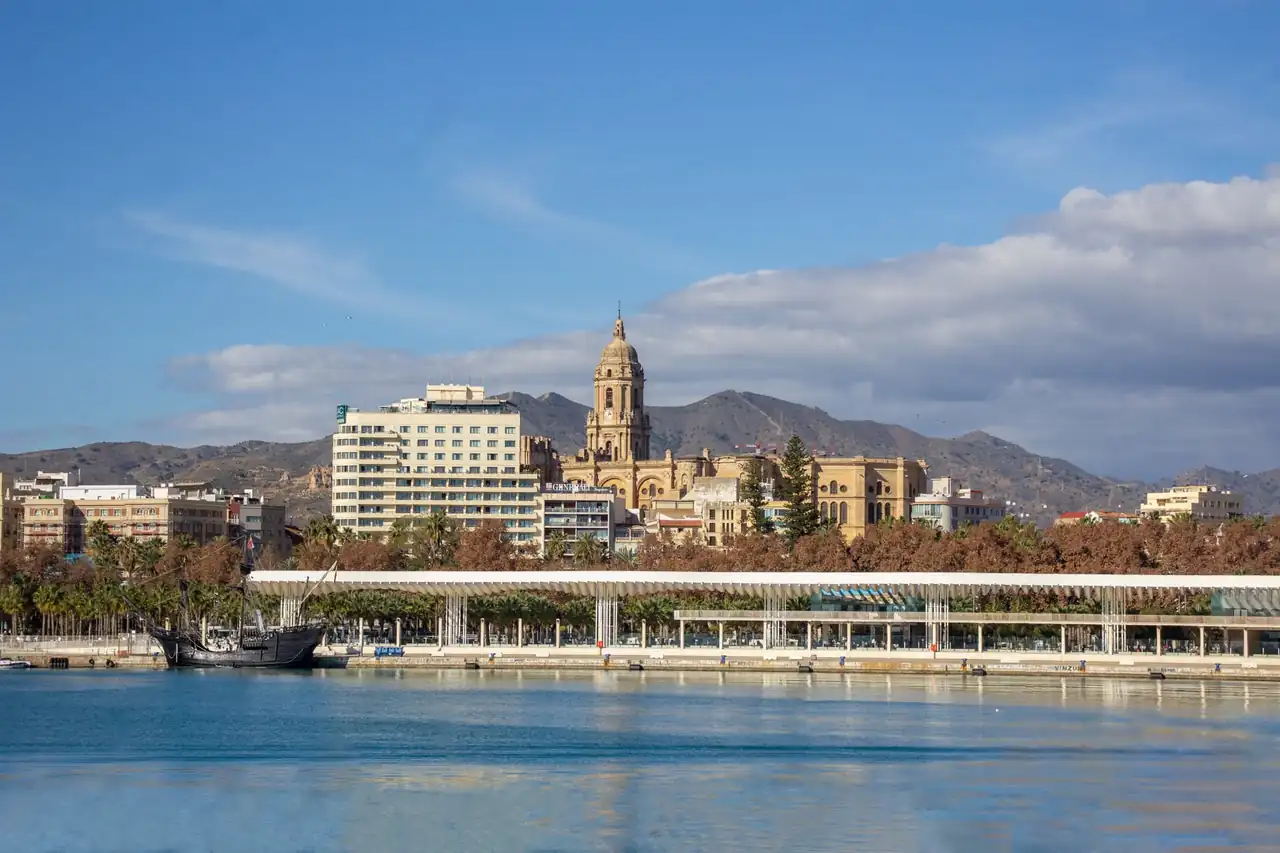
The El Palo Popular Race 2025 once again turned the eastern stretch of Málaga’s coastline into an open track for the neighborhood, with the sound of footsteps on the asphalt, the sea beside it, and an event that blends sport, community, and solidarity. The 45th edition was held on Sunday, April 27 at 9:00 a.m., with the start and finish at Plaza del Padre Ciganda, in a format designed to bring together runners of different ages and levels.
The race retained its most recognizable hallmark: an urban route hugging the coast, a strongly neighborhood atmosphere, and an entry fee linked to a social cause. The organizers set a price of 5 euros for adults, donated to the El Palo soup kitchen run by AMFREMAR, while under-18s were able to take part free of charge, a formula that reinforced the popular profile of a race with a long tradition in Málaga.
An event that combines neighborhood life, the sea, and popular athletics
El Palo offers no neutral backdrop. Here, the race unfolds among familiar streets, open promenades, and stretches where the Mediterranean seems to set the pace with its constant presence. That setting explains much of the event’s appeal: it is not just a sporting test, but a day in which the district recognizes itself through shared effort. In this case, the asphalt is not merely a technical surface; it is the ground on which families, schoolchildren, veterans, and runners seeking an active morning without unnecessary solemnity all come together.
The event was organized by the Municipal Board of the Eastern District, at the initiative of the El Palo Neighborhood Association, with the collaboration of the Sports Department of the Málaga City Council. That institutional and community backing has been key to sustaining a race that has occupied its own place in the local calendar for decades. It is not a huge mass event, but it is a race with identity, one of those that endure because the neighborhood feels it belongs to them.
The 2025 edition also confirmed a highly valuable trait in grassroots athletics: the ability of a simple event to bring together sport, school participation, and solidarity in a single morning. That combination explains why the race remains interesting year after year, even in a calendar crowded with larger, more media-focused events.
Timetables, distances, and the logic of a staggered race
The start schedule was designed to avoid overlap and make for a more orderly experience. The 2-kilometer children’s race started at 9:00 a.m., and the 5-kilometer event began once the first race finished, while the 400-meter race for people with functional diversity was held after the 5K. This staggered structure allows each block to have its own space and lets the neighborhood follow along without rush, as if the event were breathing in stages.
The main adult distance was 5 kilometers, a very common distance in popular running because it is accessible for runners looking to compete without facing extreme effort. The 2-kilometer children’s distance broadens the day’s reach and makes it easier for schoolchildren to take part. And the inclusive 400-meter race, introduced as a new feature, sent a clear message: the race does not aim to be only a competition, but also a place to give adaptive sport visibility.
This spread of distances turns the event into a small snapshot of citizen running: from children’s initiation to inclusive participation, passing through the everyday runner measuring themselves over a short but demanding distance if the pace picks up early on. In races like this, time matters, but so does the social journey the race creates around the finish.
The coastal route and the role of the neighborhood
The main race route took participants from Plaza del Padre Ciganda toward some of the most recognizable spots in the El Palo area. According to the edition’s information, the 5-kilometer course passed along Salvador Allende Avenue, Carmencita La Comadrona Square, El Candado Marina on its northern side, Los Canadienses promenade, Fábrica de Cemento Beach, Peñón del Cuervo Beach, the southern stretch of Los Canadienses, and El Candado Beach, before heading back toward the finish via Playa El Chanquete Street, Banda del Mar, and Plaza del Padre Ciganda.
The children’s race also followed a route closely tied to the daily life of the neighborhood, passing by Salvador Allende Avenue, the area around La Milagrosa school, the Salvador Allende minor road, the Gállica stream, and Banda del Mar. The design follows a clear logic: bring sport into a recognizable setting and avoid turning the race into a technical abstraction. Here, the map does not separate the race from the neighborhood; it embeds it within it.
The seaside route adds value that goes beyond a postcard: the air, humidity, exposure to the wind, and the succession of gentle bends and open stretches can alter both sensations and pace. Running there demands attention, especially over a short distance where every acceleration counts. It is not a circuit with major elevation changes, but it is one where the continuity of effort makes the difference.
The organizers themselves described a route close to the sea, with wide views and an atmosphere designed to extend the day beyond the finish line. In a city like Málaga, where the popular runner lives alongside the climate, the promenade, and neighborhood life, that combination helps explain why these events work best when they do not lose their local character.
Solidarity entry fees and the social dimension of the race
One of the most consistent features of this race has been its charitable side. In 2025, the adult entry fee was 5 euros and went to benefit the El Palo soup kitchen, managed by AMFREMAR. Participants were also asked voluntarily to donate one kilo of non-perishable food for delivery to that organization, with a designated area next to the finish line for collecting donations.
That gesture is not decorative. In popular races like this one, the social component becomes a natural part of the participation experience. The race thus becomes something broader than a sum of bib numbers and times: it activates a neighborhood network that mixes sport, mutual aid, and visibility for concrete needs. The 5-euro fee, by itself, is modest; what matters is the purpose and the context in which it is charged.
The relationship between running and solidarity appears here without artifice: an affordable entry fee, an identifiable local cause, and a complementary food donation request shape a race with low financial cost and high community value. At a time when many popular races compete for attention, that kind of connection to the territory remains one of the strongest factors in sustaining runners’ loyalty.
Prizes, services, and the importance of the finish-line experience
The organizers provided prizes for the top finishers in each category and gender, as well as trophies for the overall men’s and women’s champions of each race. Core services of a well-established popular race were also maintained, such as baggage storage, chip timing, children’s races, massage service, and trophies for the winners. These are standard elements, yes, but their presence helps enhance the experience and lends seriousness to an event that, while remaining approachable, takes its structure seriously.
Chip timing provides an objective reference for those competing with ambition, while baggage storage and massage ease logistics and post-race recovery. In events of this kind, these details often go unnoticed beforehand, but they decisively affect the runner’s final perception. The difference between a merely pleasant race and one that is truly well run is usually found in that level of operational care.
The prizes, however modest, also serve a symbolic function: they recognize the effort of very diverse categories and reinforce the idea that the race does not belong only to those flying at the front. In a neighborhood popular race, reward is measured not only by podiums; it is also measured by the feeling of having been part of a well-crafted morning.
A race designed to bring together schoolchildren, families, and regular runners
The presence of children’s categories and the reward in sports equipment for participating schools fit a very specific strategy: planting the seed of a habit. Málaga has spent years supporting events in which schools are not left out of the sports calendar, and this race fits well within that line. The result is a day with multiple layers, where experienced runners, first-time children, and families strolling along at their own pace all coexist.
The 2-kilometer race, with benjamín and alevín categories, serves as an entry point. It does not require complex preparation, but it does introduce the youngest participants to the rhythm of a start, a marked route, and a shared finish. That first experience may seem small, although in popular athletics it is almost always everything: the memory of the atmosphere, the bib, the applause crossing the line.
In the adult distance, the race offers a 5K that works well for very different profiles. It can be used to set a brisk pace, to test sensations in the middle of spring, or to take part without the burden of a long-distance effort. In events of this size, the open character of the race is part of its strength. No one needs a long résumé to feel they belong at the start line.
The Málaga context and the place it holds in the calendar
The El Palo Popular Race takes place in a city with a broad sports offering and in an environment where running has become an urban habit. In recent years, Málaga has built a dense calendar, with road races, neighborhood events, and others with greater visibility. Within that ecosystem, this popular race holds special value because it continues to look more toward the neighborhood fabric than toward the showcase.
Southern Spain, and Málaga’s coast in particular, also offers a highly recognizable relationship between climate and sport. The mild spring temperatures allow for a more relaxed kind of participation than in the height of summer, and the closeness to the coast adds a special texture to the effort. Running there is not just moving forward; it is feeling the air, the light, and the sound of the surroundings as part of the route.
In that context, El Palo works as a local race with enough ambition: it does not seek grandiosity, but rather solid organization, broad participation, and a symbolic weight that makes it endure. Often, strength in popular running comes precisely from that balance between simplicity and doing things well.
What a race with its own identity leaves behind
The 2025 edition confirmed that small races can say a great deal about a city. A start by the sea, a route crossing familiar squares and promenades, a clear social cause, and an engaged neighborhood are enough to build a meaningful morning. The El Palo Popular Race is understood not only by its 5 kilometers or its standings; it is understood by the way it places runners within a specific community.
That is, ultimately, its main journalistic and sporting value. While other events sell epic narrative or personal bests, this one offers closeness, accessibility, and a very clear territorial identity. And that is where much of its staying power lies: in the combination of asphalt, sea, and neighborhood, three elements that together turn a simple registration into a much broader experience.
In an era of overblown events, a race like this reminds us that running still has a street-level soul: the neighborhood cheering, the runner returning, the child making a debut, and the solidarity cause accompanying each stride. Few scenes better capture the true force of popular athletics.



How to prevent thigh chafing: causes and real solutions

Women’s running windbreakers: seven jackets and how to choose

Do more workouts get rid of soreness? A guide for runners

Jaén Half Marathon 2026: Record 3,800 Runners Registered

Men’s short running tights: how to choose the right pair

World Triathlon confirms data breach involving medical data

Izan Edo targets podium at Miyazaki World Cup

María Pérez ranks ninth in World Athletics’ 2026 top ten

Dos Santos, Duplantis and Sawe: World Athlete of the Year finalists

San Silvestre Vallecana 2026: 42,000 places, prices and start times

 Races3 months ago
Valencia Half Marathon 2027: date and registration

 Races3 months ago
Valencia Marathon 2026: entry, ballot and course

 Reviews and Comparisons4 months ago
Asics Gel-Roadmiles 3 for men: review and current price

 Reviews and Comparisons4 months ago
Asics Gel Sonoma 8 Gore-Tex: complete analysis for trail and rain

 Sneakers3 months ago
Saucony Endorphin Pro 4: full review and verdict

 News5 months ago
Strava API 2026: what changes for clubs, challenges and runner apps?

 Reviews and Comparisons5 months ago
Nike Alphafly 3: opinions, sensations, and real key points

 Reviews and Comparisons4 months ago
Under Armour running shoes review 2025-2026: models and key features

 Sports Equipment4 months ago
Shoe sizes in cm: a clear guide to getting the right fit for your footwear

 Sneakers3 months ago
Skechers GO RUN Consistent 2.0 analysis: comfort and limits

 News5 months ago
Valencia Marathon 2026 route: key tips to train and run better

 Sneakers4 months ago
Adidas Adizero Boston 13 for men: review and verdict