Races
Emperor’s Route in Cuacos de Yuste 2026: complete guide
History, landscape, and cuisine intersect in La Vera in an event that takes in Jarandilla, Aldeanueva, and Cuacos with an imperial seal.

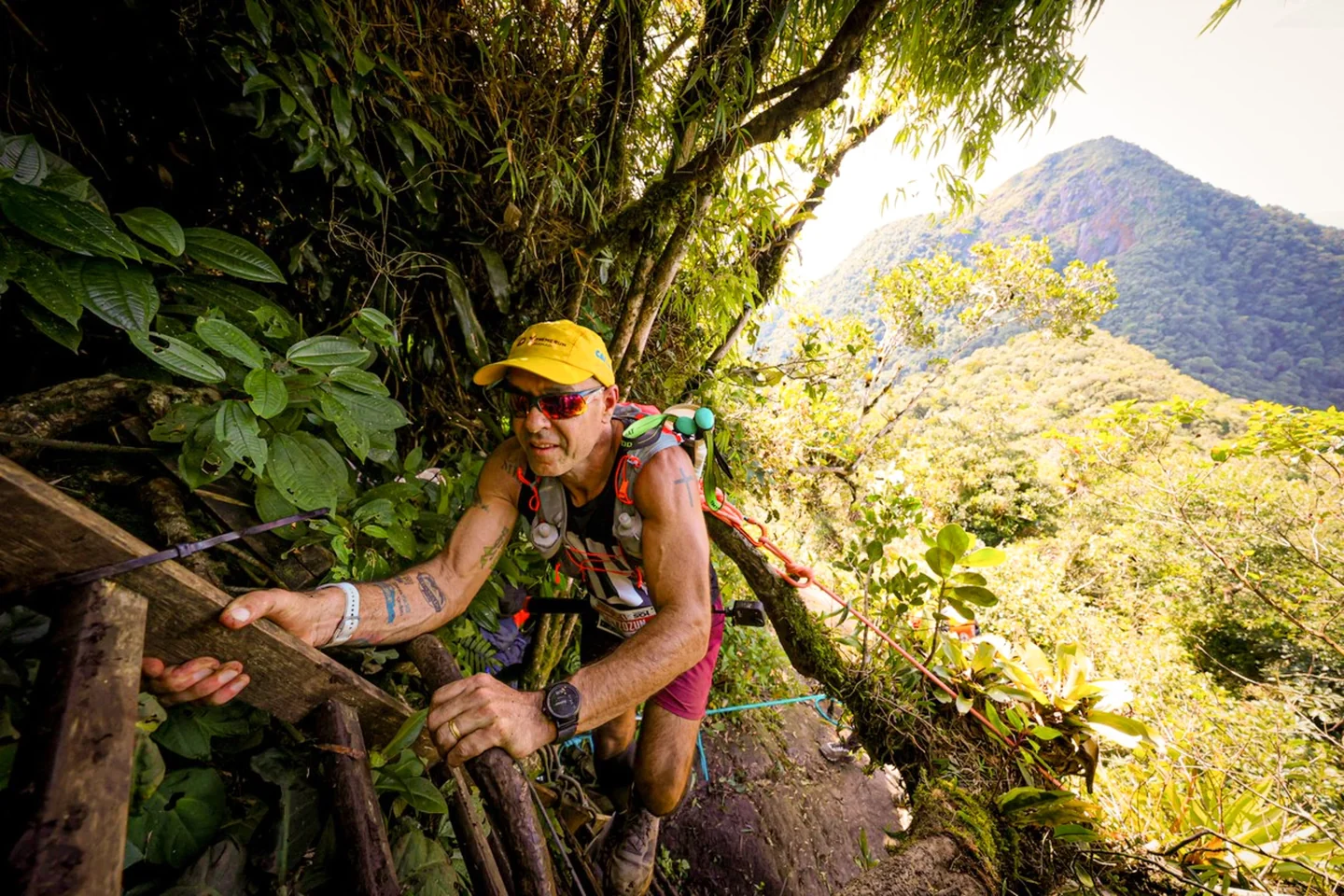
The Emperor’s Route in La Vera puts Cuacos de Yuste back on the map in 2026, although the hiking edition scheduled for February 7 was suspended due to weather conditions. The organizers kept part of the institutional and cultural events, while the equestrian version, scheduled for February 14, was still on the agenda at the time of the latest known update. For anyone looking at this event with tourist or sporting interest, the key is to understand that this is not just a route: it is a historical reenactment, a regional festival, and a very well-crafted excuse to read the landscape of La Vera as if it were a living document.
The itinerary pivots on Charles V’s final journey to the Monastery of Yuste, starting at the Parador de Jarandilla de la Vera and passing through Aldeanueva before ending in Cuacos. In the reference materials there are two main routes: one on foot, about 10 kilometers in the final stretch between Jarandilla and Yuste, and another on horseback, starting from the same point in Jarandilla and ending with a reception at the monastery. The 2026 edition also brought back the parallel program of Renaissance market, theater, folk music, workshops, and free buses between towns, reinforcing its character as a district-wide celebration rather than a simple popular walk.
A route that blends memory, territory, and the calendar
La Vera does not sell a postcard, but a complete narrative. The comarca in Cáceres turns each winter into an old-time scene with a script that brings together heritage, cuisine, and trails. The emblem is well known: Charles V left public life to retire in Yuste, and the route he followed has become an annual evocation with huge social appeal. In 2026, the main news was not the sporting event itself, but its cancellation due to weather, a detail that confirms something important in this kind of event: the calendar exists, but the mountain and the weather rule.
The latest press reference spoke of a 28th edition of the route. That places the event as a well-established tradition, with a consolidated story and a participant base that usually fills the final stretches. The figure of more than 10,000 people mentioned in previous editions gives an idea of the scale the event has reached, although each year the actual turnout depends on the weather, the parallel program, and the tourist pulse of the region. The mix of walking, theatrical reenactment, and tastings turns the route into something closer to a festive march than a competitive event.
That balance between movement and celebration explains its magnetism. People do not come just to walk, but to take part in a scene that links the castle-palace of Jarandilla, the paths among oak trees and ravines, and the solemnity of the monastery. The result is an experience with layers: historical, scenic, gastronomic, and, in 2026, also climatic, because the suspension of the hiking route forced the focus to shift to the events that could still be held indoors or in safer formats.
What happened in the 2026 edition
The organizers announced the suspension of the hiking route on Saturday, February 7, due to weather conditions. Even so, the program did not disappear completely. The awards ceremony, the liturgy in Yuste, and various indoor cultural activities were maintained, while other proposals, such as the Renaissance market, workshops, and folk music, were spread across Cuacos, Aldeanueva, and Jarandilla over the weekend. That adjustment is revealing: the Emperor’s Route does not depend solely on the walker, but on an ecosystem of events that sustains the story even when rain or wind make the journey difficult.
The equestrian route on February 14 was still planned in the available information. In its most recognizable format, it started from the Parador de Jarandilla with riders dressed in 16th-century costume, folk entertainment, and a final arrival in Cuacos de Yuste. The reception at the monastery by the Prior of the Order of Saint Paul the First Hermit, together with the prize draw and ceremonial seal, gives this version the feel of a historical procession that is closer to a civic parade than to an ordinary sporting event.
There was also a practical detail worth keeping in mind: registration was handled by phone and gave access to the Carolino Passport. That passport included insurance and gastronomic perks, such as chocolates, sweets, and migas at different points along the route. In the context of La Vera, that dimension is essential, because much of the event’s appeal lies in the way the walk blends with local hospitality. Visitors do not just move from town to town; they stop, taste, and talk. And in that, the route has been smart for years.
The actual itinerary and the best-known stretch
Charles V’s historical footprint in La Vera cannot be understood without the Jarandilla-Aldeanueva-Cuacos axis. That is the heart of the story. The emperor stayed at the Castle of the Counts of Oropesa, now the Parador de Jarandilla, while the monastery adaptation works were being completed. He then continued to Aldeanueva and Cuacos, where Yuste became the final destination of his retirement. That sequence, well told, is what justifies why every February the territory walks over itself again.
The most repeated historical reference speaks of a final stretch of about 10 kilometers between Jarandilla and Cuacos. It is the most suitable section for the organized hiking march built around the reenactment, and the one that best condenses the transition from the urban landscape to monastic retreat. The path crosses oak woods, streams, and the surroundings of the Garganta Jaranda, with the monastery as the visual and symbolic finale. It is no coincidence that people remember that arrival: the finish line has the weight of a final scene written to stay in memory.
Excluded from that festive portion is the longer route that some guides and cultural reports associate with the emperor’s full journey from the Jerte Valley to La Vera. That crossing exceeds 20 kilometers and requires more stamina and more time. But the popular celebration that makes headlines each year focuses above all on the imperial stretch from Jarandilla to Yuste, with its added reenactment and social gathering. The difference matters because it avoids confusion between the full historical journey and the annual version promoted as the main event.
Jarandilla, Aldeanueva, and Cuacos: three settings with their own personality
Jarandilla de la Vera functions as a gateway. There, the Parador, housed in the former castle-palace, preserves the imperial lodging’s significance and remains one of the most photographed symbols of the comarca. The building, with its moat, parade courtyard, and towers, adds a medieval gravity that fits the narrative of the emperor worn out, ill, and seeking rest. It is a perfect starting point because it has something of a theatrical prelude: whoever arrives in Jarandilla is already entering the performance.
Aldeanueva de la Vera appears as a bridge between solemnity and lived landscape. Its fountains, chapels, parish church, and Plaza San Antón usually form part of the passing sequence, as does its popular architecture and the rhythm of a mountain village. In the 2026 documentation, the arrival of the procession was planned for mid-morning, with continuation toward Yuste shortly afterward. That intermediate stop helps explain that the route is not meant to be a straight line, but a seam between places that retain their own identity.
Cuacos de Yuste, for its part, concentrates the resolution of the story. Its image is linked to the monastery, but the town also preserves a network of craftsmanship, timber-framed houses, a porticoed square, and local memory. Here history stops being purely imperial and blends with trades, shops, taverns, and the murmur of visitors. In the 2026 edition, Cuacos also hosted the Renaissance market and weekend activities, reinforcing its role as the finishing point and as a showcase for the region.
Food as part of the route, not an extra
One of the great strengths of this event is that food does not appear at the end, but at the center of the story. La Vera has learned to tell its landscape through the table. Migas with egg, patatas revolconas with pork cracklings, lamb, cod, Iberian pork jowl, blood sausage fritters, or garden dishes with local paprika work as a natural extension of the path. Eating here is not a pause: it is a way of continuing to read the territory.
The reference reports mention several establishments as part of that gastronomic constellation. The Parador de Jarandilla is presented as a logical starting point because of its history and cuisine. Inns and traditional eateries in the area, as well as more contemporary offerings in Cuacos and Jarandilla, complete a range that goes from honest cooking to reinterpretations of local products. The Fogones Imperiales label has become a kind of thread connecting history and pantry, with dishes inspired by Charles V’s court and by the cuisine that may have accompanied his retirement.
The key is not spectacle, but coherence. Visitors find smoked paprika, vegetable gardens, cheeses, game, mushrooms, sweets, and nearby wines in a context where every bite seems to have a geographic explanation. That gives the route a dimension that many popular marches do not reach: yes, you can walk, but you can also understand why the path tastes like something. That comarca flavor is part of its success.
Verato landscape: ravines, oak groves, and the mountains in view
The route’s visual strength lies in the alternation between water, stone, and vegetation. The Jaranda ravine, the Parral Bridge, the oak groves, and the foothills of Gredos create a stage set that changes with the February light. When the day is clear, the landscape seems crisp and sharp; when the mist rolls in, everything becomes more intimate, almost monastic. That is why the weather has such an influence on both the experience and the event’s viability.
Press references also cite other recurring names in the comarca, such as the Garganta de Cuartos, Alardos, and Gualtaminos, as well as natural pools and viewpoints. Although not all of them are part of the annual celebration’s itinerary, they help place the setting: La Vera lives among waterways and slopes, with a relief that demands slow looking. It is not a plain to pass through quickly, but a land on a human scale where each kilometer changes the tone of the walk.
That topography helps explain Charles V’s choice. The emperor was not seeking just any place; he wanted climate, peace, and an architecture of retirement that, five centuries later, remains readable today. Yuste works not only as a monument, but as an emotional destination. The annual walk recalls it without grandiloquence, with an almost elemental gesture: move, climb, descend, cross, arrive. History, when done on foot, feels different.
Craftsmanship, legends, and trades that sustain the story
The cultural dimension of the Emperor’s Route is not limited to monuments. La Vera preserves craft traditions that add texture to the journey: wicker baskets, pottery, willow work, cork, embroidery, and regional dress that remain alive thanks to real hands and a generational handoff that is not always guaranteed. That less visible side of the territory is what sustains the authenticity of the whole and prevents everything from being reduced to a photo with a monastery view.
In Cuacos de Yuste, craftsmanship and traditional commerce appear in reports as part of the same cultural landscape as the monastery or the route. Legends such as the Serrana de la Vera, in Garganta la Olla, also surface, adding another layer of lore. The comarca handles the mix of documented history and oral memory very well, something decisive for ensuring that visitors do not see La Vera as a set piece, but as a territory with its own story.
That balance between the tangible and the legendary explains why the route has such pull beyond the strictly sporting circuit. Walking to Yuste, or following the reenactment of the imperial journey, means crossing a territory that tells its own story through food, embroidery, drying houses, monasteries, and names handed down from generation to generation. The experience works because it is not flat: it smells of wood, paprika smoke, rain on stone, and well-preserved history.
What to keep in mind in an edition marked by the weather
The 2026 edition made one thing very clear: in this route, the calendar cannot be separated from the sky. The suspension of the hiking march due to weather conditions showed the vulnerability of outdoor events, but also the resilience of a program that knows how to fold back without losing its shape. When the most visible stretch is canceled, the memory of the route, the liturgy, the market, the awards, and the equestrian version remain, continuing to shape the whole.
For readers looking for reliable references, the useful information lies in distinguishing between the historical route, the annual reenactment, and the specific versions that each edition adds or cancels. The approximate distance of 10 kilometers between Jarandilla and Yuste corresponds to the best-known stretch of the festive walk, while the 2026 edition was affected by adverse weather that altered the schedule. That nuance avoids misunderstandings and helps place the event in its real context, not in a simplified tourist fantasy.
Cuacos de Yuste remains the emotional and symbolic destination, but the whole comarca takes part in the scene. Jarandilla provides the imperial start, Aldeanueva serves as the link, and Yuste closes the circle. Between the three towns, a story is built that does not depend on a single monument, but on a sequence of places. And that is where the route’s strength lies: not in the isolated destination, but in the sum of gestures, landscapes, and trades that make La Vera walk toward its own memory every February.
In a Spain full of marches and reenactments, few proposals combine heritage, gastronomy, and landscape so naturally. The Emperor’s Route in Cuacos de Yuste, even in a year affected by rain, retains that ability to turn history into a physical experience. There is no unnecessary artifice. Just an emperor who sought retirement, a comarca that learned to narrate it, and a trail that every winter once again proves that some destinations are better understood with boots, with a table, and with patience.



How to prevent thigh chafing: causes and real solutions

Women’s running windbreakers: seven jackets and how to choose

Do more workouts get rid of soreness? A guide for runners

Jaén Half Marathon 2026: Record 3,800 Runners Registered

Men’s short running tights: how to choose the right pair

World Triathlon confirms data breach involving medical data

Izan Edo targets podium at Miyazaki World Cup

María Pérez ranks ninth in World Athletics’ 2026 top ten

Dos Santos, Duplantis and Sawe: World Athlete of the Year finalists

San Silvestre Vallecana 2026: 42,000 places, prices and start times

 Races3 months ago
Valencia Half Marathon 2027: date and registration

 Races3 months ago
Valencia Marathon 2026: entry, ballot and course

 Reviews and Comparisons4 months ago
Asics Gel-Roadmiles 3 for men: review and current price

 Reviews and Comparisons4 months ago
Asics Gel Sonoma 8 Gore-Tex: complete analysis for trail and rain

 Sneakers3 months ago
Saucony Endorphin Pro 4: full review and verdict

 News5 months ago
Strava API 2026: what changes for clubs, challenges and runner apps?

 Reviews and Comparisons5 months ago
Nike Alphafly 3: opinions, sensations, and real key points

 Reviews and Comparisons4 months ago
Under Armour running shoes review 2025-2026: models and key features

 Sports Equipment4 months ago
Shoe sizes in cm: a clear guide to getting the right fit for your footwear

 Sneakers3 months ago
Skechers GO RUN Consistent 2.0 analysis: comfort and limits

 News5 months ago
Valencia Marathon 2026 route: key tips to train and run better

 Sneakers4 months ago
Adidas Adizero Boston 13 for men: review and verdict