Races
2025 European Under-23 Athletics Championships: key points and results
Bergen left behind titles, records, and a European generation ready to step onto the track.

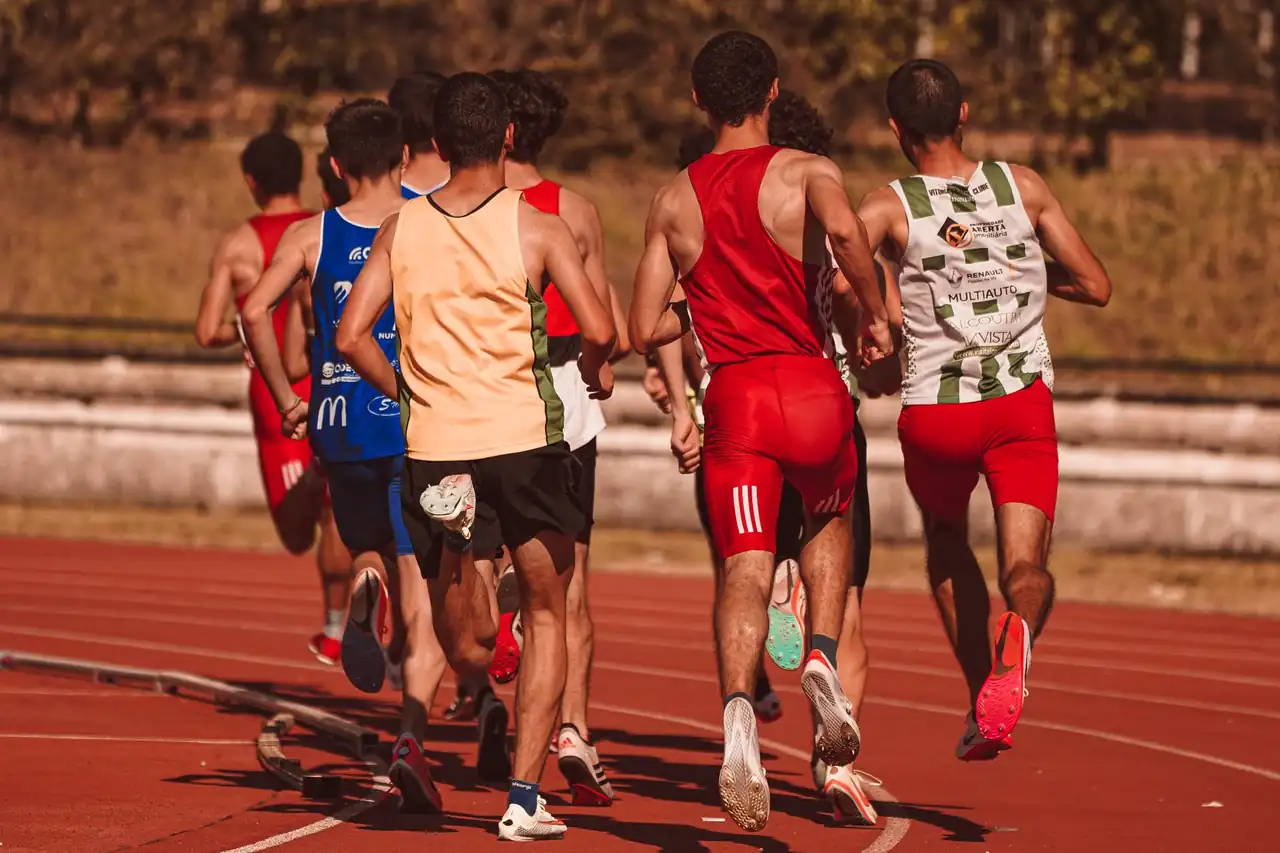
Bergen 2025 confirmed that grassroots athletics in Europe is no longer in a promising phase, but in a phase of real performance. The Fana Stadium brought together 1,198 athletes from 44 federations and left a clear picture: Germany led the medal table, the United Kingdom and Spain delivered a strong presence, and several events broke the usual limits of the category. It was not a transition championship, but a showcase of international level where the U23 sounded like the present, not a draft.
The competitive weight of the XV European U23 Athletics Championships became clear from day one. The finals not only awarded titles, they also produced U23 European records, championship bests, and national records of enormous value for runners, jumpers, and throwers who are already competing in elite language. For Spain, moreover, the overall outcome shone on the track and in the field, with medals, records, and a feeling hard to ignore: Europe’s pipeline is arriving tightly packed and very well prepared.
Bergen as the setting for a generation that already competes without asking permission
Fana Stadium, in the Norwegian city of Bergen, provided the backdrop for a championship held from July 17 to 20, 2025. The event, organized by European Athletics, brought together athletes born to compete in an age bracket that usually marks a delicate border: too old for the youth showcase, still developing for the senior level. But that line, in Bergen, seemed thinner than ever. There was tactical maturity in the middle-distance runners, power in the throwers, and an execution speed that reminded everyone that U23 has, for years now, been a category with its own identity.
The number of participants also helps explain the scale of the event. With 618 men and 580 women, the championship functioned as a broad radiograph of emerging European athletics. It was not a reduced selection or a symbolic tournament; it was a massive gathering of talent, with 44 federations on stage and a diversity of styles ranging from pure sprinting to endurance, including relays, race walking, pole vault, and combined events. That variety makes this championship a key piece of the continental calendar.
The choice of Bergen also had extra sporting value. The northern climate, the track, and the atmosphere of the stadium push athletes to compete with precision, as if every heat and every jump demanded extra concentration. In a U23 championship, where placement mistakes, poorly judged pace changes, or a late takeoff can cost a final, that context matters more than it seems. Bergen was not a backdrop; it was a filter.
A medal table dominated by Germany, with the United Kingdom and Spain high up
Germany finished the championship in first place in the medal table with 26 medals, split into 5 golds, 9 silvers, and 12 bronzes. That figure reflects not only depth, but also a solid competitive structure across several disciplines. From sprint events to throws, the German team showed a consistency that usually distinguishes delegations with a long-term plan. It does not rely on a single star: it adds up layer by layer, like a well-founded building.
The United Kingdom and Spain were tied in total medals, 11 each, although with a different distribution. The British team took 4 golds, 4 silvers, and 3 bronzes, while the Spanish delegation collected 4 golds, 3 silvers, and 4 bronzes. That Spanish balance is significant, because it reflects presence across different event groups and not just in a single niche. There was speed, middle-distance, distance, hurdles, relays, and throws; a varied map that gives an idea of the current state of Spanish U23 athletics.
The Netherlands, France, and Italy also produced notable hauls. The Dutch finished with 8 medals, the French with 12, and the Italians with 9. Beyond the numbers, the championship confirmed something that tends to repeat itself in this age band: the competition for the podium has become extremely dense. Few events had relaxed finals; almost everything was decided by tenths, centimeters, or tactical decisions on the final turn. The medal table, then, tells a clear story: U23 Europe is spread out, but with some very well-built national blocs.
Spain left Bergen with heavyweight marks and a very broad presence
The Spanish team produced one of the championship’s most interesting overall results because of its breadth. It did not focus on just one discipline, but appeared across different competitive fronts. In sprinting, Abel Jordán finished third in the 100 meters with 10.31, while Jaime Sancho took bronze in the 200 with 20.76. That double podium presence speaks of speed that is no longer limited to isolated prospects, but to runners capable of contesting European finals over multiple short distances.
In the distance and middle-distance events there were also signs of quality. Jaime Migallón finished third in the 10,000 meters with 29:06.85, and María Forero won gold in the 5,000 meters with 15:43.44. In such a demanding category, where race reading matters as much as fitness, those results carry a lot of weight. Forero also reinforced a valuable trend for Spanish women’s athletics: distance running continues to produce athletes capable of fighting for continental titles with poise and determination.
The steeplechase events and the relays also gave reasons to look closely at Spain. Lourenço Rodrigues finished third in the men’s 3,000-meter steeplechase with 8:21.99, while Marta Serrano narrowly missed the podium in the women’s event with 9:30.74. In the relays, the men’s 4 × 100 ended with bronze, and both the men’s and women’s 4 × 400 set U23 national records. When a team manages to combine medals, records, and individual progression, the result is no longer circumstantial: it points to a competitive base that is beginning to consolidate itself.
There was also an impact in the technical events. Inés López won the discus throw with 58.20, a mark that also became the Spanish U23 record. That is an enormously valuable result in a discipline where room for improvement is usually tied to physical maturation and technical refinement. In the heptathlon, Spanish athlete Berta Segura was part of the women’s 4 × 400 relay that broke the national record in the category. In short, the championship left Spain varied, competitive, and able to add points in different contexts.
The events that produced the highest tension of the championship
The men’s 400 meters was one of the most significant races on the program. Jonas Phijffers won in 44.82, a championship record, in an event that always requires a balance between raw speed and tolerance to lactic acid buildup. There is no simple trick there: either the curve is managed well, or the final straight becomes a wall. That kind of mark does not come from a perfect race by accident; it is built through years of careful work and a very mature understanding of effort.
In the women’s 800, Switzerland’s Audrey Werro clocked 1:57.42, also a championship record, in a distance where positioning matters as much as strength. Spain’s Rocío Arroyo finished second with 1:59.18 and set the Spanish U23 record, one of the clearest highlights of the championship for national middle-distance running. The mark sums up Bergen’s spirit very well: young athletes, but already capable of sustaining top European pace without falling apart in the decisive phase.
Henriette Jæger provided another of the weekend’s images. The Norwegian won the women’s 400 in 49.74 and also reached the podium in the 200, in a performance that reinforced her status as one of the key names on the young European circuit. At home, the impact is always amplified: every stride seems to echo. At that level, U23 stops being a waiting room and becomes a very busy intermediate station between development and the senior stage.
The relays deserve a special mention because they often condense a delegation’s character. France won the men’s 4 × 100 in 38.43, a U23 European record, and Spain finished third in 38.86, a U23 national record. In the men’s 4 × 400, Spain took the title in 3:02.02, also a U23 European record. The British women’s 4 × 400 did likewise in 3:26.52, another continental age-group record. In relays, the clock matters, yes, but so does baton chemistry, blind trust in teammates, and the millimetric precision of the exchange. Bergen left several lessons in that common language.
Records, marks, and signs of maturity in an increasingly demanding category
The record board was one of the main news angles of the championship. There were U23 European records, championship records, and several U23 national marks. The point is far from minor: when a tournament produces so many new references, it is showing that the category has stopped being merely a stepping stone and has become a high-performance space. Athletes no longer arrive at these meets just to learn the craft; they arrive to win, to measure themselves, and often to break barriers.
Among the men’s highlights were the French 4 × 100, Spain’s 4 × 400, Jonas Phijffers’s 400, Francesco Pernici’s 800 in the heats with 1:44.06, Maciej Megier’s 3,000-meter steeplechase in 8:20.17, and Owe Fischer-Breiholz’s 400 hurdles in 48.01. Each of those marks reflects a different kind of excellence: sustained speed, tactical management, resistance to lactate accumulation, or hurdle technique under pressure. The common denominator is the same: clean execution.
On the women’s side, the British 4 × 100, the British 4 × 400, Henriette Jæger’s 400, Audrey Werro’s 800, Emily Newnham’s 400 hurdles, and Saga Vanninen’s heptathlon set the bar high. Vanninen, with 6,563 points, also delivered a result of enormous competitive value, because combined events always tell more than a simple sum of marks: they speak of consistency, versatility, and the ability to maintain quality across two full days. It is perhaps the most complete way to measure a young athlete.
In Spain’s case, the record marks from Rocío Arroyo, Inés López, and the U23 relays have a double effect. On one hand, they certify that the group is already competing at a very serious speed. On the other, they raise the bar for the coming seasons, because a record is not an isolated photograph, but a starting point that changes expectations, rivals, and goals. In championships like this, the stopwatch does not just determine a podium; it also orders the immediate future.
Why Bergen mattered beyond the medals
The European U23 Championships are a strategic piece of continental athletics because they capture the most delicate moment of sporting progression. At this age, athletes have already passed the most school-like stage of learning, but they are still building body, technique, endurance, and tactical understanding. Not everyone develops at the same pace, and that is precisely where the interest lies: it allows us to see who turns talent into performance under real pressure, against opponents from the same generational bracket.
The 2025 edition confirmed that the step up to the European elite is measured not only in medals, but in stability. The champions who emerged from Bergen did so with serious marks; the finalists did so with performances that support a trajectory; and the most complete countries did so with a base that allows them to aim for more than one final per day. That competitive density is what makes this championship valuable: it serves as a thermometer for a continent that continues producing speed, endurance, technique, and power on a large scale.
For Spain, the outcome reinforces a familiar idea, but one that is increasingly backed by results: there is continuity between generations. When a championship delivers titles in middle-distance running, distance, discus, and relays, we are not talking about a single great performance, but about a structure that is beginning to bear fruit on several levels. There is no triumphalism, but there is a reasonably optimistic reading. In events like this, the medal table matters; the way it is built matters even more. And in Bergen, Spain did not improvise: it competed with a clear plan, high-level marks, and a presence that left its mark on the European stopwatch.
The next time U23 returns to the stage, the bar will already be higher. That is, after all, the purpose of a well-run championship: not to close a chapter, but to open another with the highest level of demand that competition leaves behind. Bergen was exactly that, a stepping stone turned into a benchmark.
A championship that leaves a memory in the stopwatch and pressure for the future
The XV European U23 Championships were not just a sequence of results arranged in a table. It was a week in which several names confirmed that they no longer compete on instinct, but on solidity. When a relay breaks a continental record, when an 800 is decided by an almost surgical execution, or when a thrower turns a final into a national record, the championship stops being statistics and becomes a reference point. Bergen delivered exactly that.
The final reading is clear: Germany emerged as the big leader by volume, the United Kingdom maintained an ultra-high-level presence, and Spain produced one of its most complete results in recent years in this category. Between records, podiums, and valuable marks, the championship drew a live, competitive, and increasingly unpredictable U23 Europe. For the fan, the message is simple; for athletics, much more important: the next generation is already here and competing under its own name.
Official results: live.european-athletics.com.



How to prevent thigh chafing: causes and real solutions

Women’s running windbreakers: seven jackets and how to choose

Do more workouts get rid of soreness? A guide for runners

Jaén Half Marathon 2026: Record 3,800 Runners Registered

Men’s short running tights: how to choose the right pair

World Triathlon confirms data breach involving medical data

Izan Edo targets podium at Miyazaki World Cup

María Pérez ranks ninth in World Athletics’ 2026 top ten

Dos Santos, Duplantis and Sawe: World Athlete of the Year finalists

San Silvestre Vallecana 2026: 42,000 places, prices and start times

 Races4 months ago
Valencia Half Marathon 2027: date and registration

 Races4 months ago
Valencia Marathon 2026: entry, ballot and course

 Reviews and Comparisons4 months ago
Asics Gel-Roadmiles 3 for men: review and current price

 Reviews and Comparisons4 months ago
Asics Gel Sonoma 8 Gore-Tex: complete analysis for trail and rain

 Sneakers3 months ago
Saucony Endorphin Pro 4: full review and verdict

 News5 months ago
Strava API 2026: what changes for clubs, challenges and runner apps?

 Reviews and Comparisons5 months ago
Nike Alphafly 3: opinions, sensations, and real key points

 Reviews and Comparisons4 months ago
Under Armour running shoes review 2025-2026: models and key features

 Sports Equipment4 months ago
Shoe sizes in cm: a clear guide to getting the right fit for your footwear

 Sneakers3 months ago
Skechers GO RUN Consistent 2.0 analysis: comfort and limits

 News5 months ago
Valencia Marathon 2026 route: key tips to train and run better

 Sneakers4 months ago
Adidas Adizero Boston 13 for men: review and verdict