Races
Festival Cavalls del Vent 2026: complete guide to the hike
The Cadí-Moixeró race combines high mountains, mountain huts, and a 24-hour time limit with two routes and a night start.

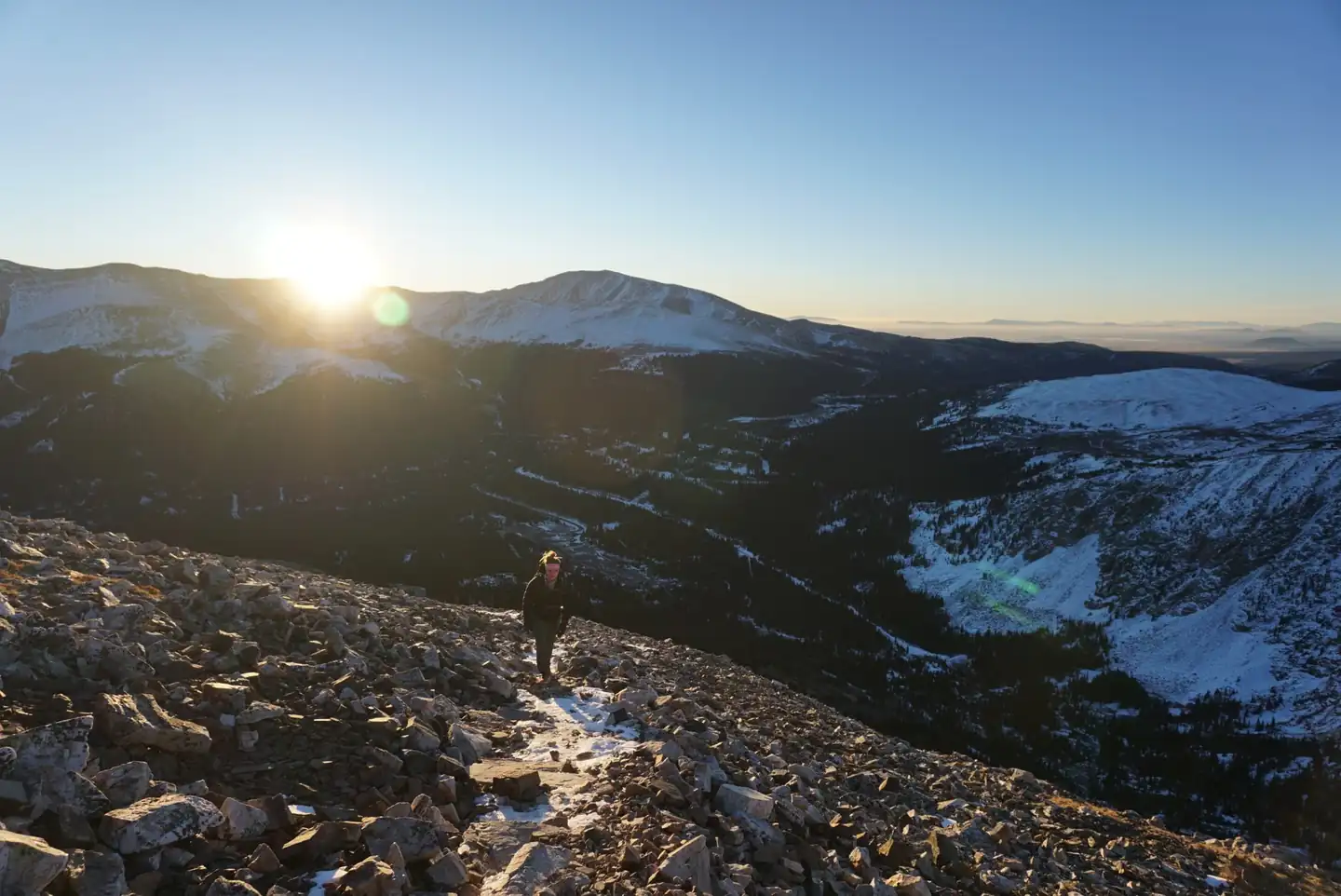
The Cavalls del Vent Festival once again puts one of the season’s most distinctive offerings on the Pyrenean trail map: a high-mountain crossing, non-competitive in nature, linking mountain huts, elevation gain, and night navigation in the heart of Cadí-Moixeró Natural Park. The 2026 edition is set for Saturday, June 20, starting from the Rebost refuge and with a maximum time of 24 hours to complete the route.
The event is structured in two official formats, OPEN and HALF, both sharing the same starting point and a common logic: follow the Cavalls del Vent circuit counterclockwise, with aid stations at the refuges and tracking via chip. The OPEN covers 84.2 kilometers and 5,600 meters of positive elevation gain; the HALF offers a shorter version of 42 kilometers, designed to complete the loop in a single stretch.
A refuge-to-refuge crossing that moves between sport and mountain experience
The essence of the Cavalls del Vent Festival is not in the standings, but in the way the route is experienced. It is not a race in the usual sense, with an explosive start and the finish as the only horizon, but a mountain march in which each participant manages their pace, decides when to run, when to walk, and how to distribute their strength on terrain that changes its face at every stretch. That mix explains much of its appeal: it demands, but does not crush; it measures, but also leaves room for contemplation.
The itinerary links eight mountain refuges in a great circular loop through one of the most recognizable landscapes in the Catalan Pyrenees. Along the way appear limestone ridges, black pine forests, open passes with views of Pedraforca, and valleys that remind you that here the mountain is not scenery, but a living organism. That contrast, so clean and so harsh at the same time, turns the route into something closer to a classic crossing than to a certified road event or a steady-pace ultra.
There is also a cultural element that gives the name its identity. Cavalls del Vent refers to Tibetan prayer flags, the so-called Lung-Ta, which flutter on mountain passes like small fragments of color and motion. The result is a very recognizable image: an endurance adventure with one foot in alpine tradition and the other in modern trail running, where the refuge is not just a technical stop, but part of the story.
Date, times, and the real margin to finish
The organizers have set a very clear schedule for 2026. On Friday, June 19, passport and welcome pack pickup will take place between 6:30 p.m. and 9:00 p.m. On Saturday, pickup is repeated between 4:00 a.m. and 5:00 a.m., just before the OPEN starts at 5:00 a.m. and the HALF at 6:00 a.m.. The finish cutoff for both formats is Sunday, June 21 at 5:00 a.m.
That timetable defines the character of the event very well. The OPEN starts at night and requires a headlamp from the first meter, something that completely changes how the terrain is read. It is not just about seeing the trail, but about interpreting the mountain in the dark, when visual references shrink and the body works to a different rhythm. The HALF, though shorter, is still set in a high-mountain context that leaves no shortcuts.
The 24-hour limit gives room to very different profiles: runners aiming to finish quickly, relay teams, and participants who prioritize making the cutoff with a conservative strategy. That breadth is part of the festival’s value, because it allows the same route to work as a sporting challenge, a personal goal, or a long day in the mountains with official timing.
Two routes with their own logic: OPEN and HALF
The OPEN is the full route. It starts from Rebost and is divided into three sections: Rebost – Serrat de les Esposes, 23 kilometers; Serrat de les Esposes – Gresolet, 32.1 kilometers; and Gresolet – Rebost, 29.1 kilometers. Altogether, that is 84.2 kilometers and 5,600 meters of positive elevation gain, a figure that places the route firmly in the territory of major mountain ultras.
This format can be completed solo or in relay teams of 2 or 3 people. In the two-runner option, the handoff takes place at Gresolet; with three, the relays are split between Serrat de les Esposes and Gresolet. That possibility changes the kind of effort involved: it is no longer just about individual endurance, but also group coordination, time management at the refuges, and logistical reliability in the middle of the mountains. The chip is passed from participant to participant, which keeps official tracking of the route intact.
The HALF reduces the formula to a single stretch, Rebost – Rebost, at about 42 kilometers. It is a more compact format, but not necessarily gentler. In Cadí-Moixeró, shorter kilometers can be misleading, because the elevation gain and the technical nature of the trail weigh as much as pure distance. That is why this version works well for anyone looking for an intense immersion in the festival atmosphere without taking on the full load of the OPEN.
The organizers also mention a third reference on other platforms, the Dégustation version of 28 kilometers, but in the official festival information for 2026 the highlighted routes are OPEN and HALF. In any case, the core remains the same: a mountain crossing linked by refuges, with a non-competitive format and checkpoint control.
What registration includes and why the refuges are the heart of the event
Registration is not limited to a bib and a stopwatch. It includes aid stations, tracking chip, finish meal, welcome pack, and a passport that must be stamped at each refuge. That passport is not just an aesthetic detail: it introduces an almost artisanal mechanic, like a travel notebook recording progress through the mountains and turning each stop into a small waystation.
The refuges add a very concrete dimension to the event. They do not just serve food and drinks; they also redistribute the mental load of the effort. Knowing that there is a support point every so often changes how the route feels, especially in a long-duration event where fatigue can disrupt strategy. In the festival, eating and refueling is not an add-on, but an essential part of the experience design.
The finish meal is also scheduled by time. Until 7:00 p.m., pasta salad and botifarra sausage will be served; after that, soup and botifarra sausage. The gesture may seem homely, but in long mountain events a hot table is worth as much as a well-placed aid station. After many hours of effort, the body asks for more than energy: it asks for warmth, salt, and recovery that is not merely theoretical.
How to navigate Cadí-Moixeró without losing your way
The route is marked only with fixed markers, with no tape or flagging. That means paying close attention to the terrain and not relying entirely on instinct. The organizers recommend using GPS or, as an alternative, the official map. This is no minor warning, because the format crosses high-altitude areas where changes in light, fog, or fatigue can make the most basic orientation fragile.
In such an environment, the headlamp stops being an accessory and becomes a central piece of equipment. The night start of the OPEN makes it mandatory, but even in the HALF conditions may require it if the crossing runs long. June usually brings milder weather than other times of year, although on the Cadí ridges temperatures still drop easily once night falls. Above 2,000 meters, summer does not always mean heat.
The mountain itself invites a cautious reading. Pedraforca stands out as one of the great visual landmarks of the area, but beauty does not reduce the difficulty. The climbs sustain the rhythm of the route, and the descents, often technical, punish legs and concentration. That is why this crossing is best understood as a sequence of small decisions: when to drink, when to adjust pace, when to eat, when to save energy for the next pass.
Gear and practical criteria for serious high mountain conditions
The rules and the nature of the route itself point to a sober, functional kit. Headlamp, windproof jacket, long-sleeve thermal shirt, whistle, thermal blanket, charged mobile phone, and reusable cup are part of the core essentials for this kind of event. In the OPEN, nighttime conditions make the headlamp not a prudence recommendation, but an operational necessity from the start.
Clothing should follow a simple principle: protect without trapping heat. A waterproof windbreaker and a light thermal layer usually matter more than bulky garments, because the route combines exposed stretches with more sheltered sections and the body changes temperature quickly. In the mountains, sweating too much and then cooling down is a familiar equation; here, the goal is to avoid it.
Footwear choice also matters. The terrain of Cadí-Moixeró combines technical trails, limestone rock, loose dirt, and gradients that do not forgive flat soles or unreliable grip. Without getting into brands, the useful criteria are clear: traction, stability, and downhill responsiveness. On an 84.2-kilometer route, a few millimeters of tread or a less secure fit can matter as much as poor pace management.
Trekking poles, although not mandatory according to the reference information, fit well with an event like this. They do not make the mountain easier, but they distribute effort and help on long climbs. In crossings with 5,600 meters of positive gain, every tool that stabilizes movement helps, as long as the runner knows how to use it naturally and without turning it into another burden.
What role do ITRA points and the UTMB Index play?
The festival’s OPEN awards 4 ITRA points and is classified within the UTMB Index 100K. The HALF earns 2 ITRA points and falls into the UTMB Index 50K range. This information does not change the character of the event, but it does place it on the international trail map, where runners use these markers as references for other mountain races.
These labels should be understood as an organizational language, not as a measure of the sporting value of the experience. There are events with few points and brutal difficulty, and others with more points that are less demanding in terms of terrain. In Cavalls del Vent, the specific weight lies in the mountain, the continuity of the effort, and the refuge logistics, not only in the final index number.
The combination of timing, non-competitive format, and official scoring explains part of the interest the event arouses among very different profiles. Those looking for a personal challenge find a serious endurance test; those prioritizing calendar and classification see a useful race within the season; and those approaching the calendar from the perspective of experience find a long, hard, and visually memorable day.
How the start feels and what changes when night falls
The 5:00 a.m. start in the OPEN has something of a severe stage setting. Darkness still hangs over the valley, the headlamp opens a brief tunnel of light, and the mountain seems quieter than usual. That start leaves no room for frivolity. The first hours require a cool head, because the initial push can be paid for later in the long stretches between refuges.
The HALF starts an hour later, at 6:00 a.m., with kinder light but the same underlying discipline. Even there, the mountain can change its mood without warning. June offers long days, but Cadí-Moixeró retains a high-mountain climate memory that means being prepared for wind, temperature changes, and the occasional shower, as even the usual weather outlook for the area reminds us.
The difference between running on flat ground and moving through this crossing becomes clear quickly. Here, night is not an accident, but part of the design. And when it falls, the runner learns that the mountain becomes more acoustic: you hear breathing, footsteps, the rubbing of the headlamp against the backpack. That sensory reduction demands precision, and explains why so many participants treat this festival with almost ritual respect.
The value of an event that competes against nothing but the terrain
The Cavalls del Vent Festival occupies an uncommon place on the calendar: it is not a massive ultra, it does not seek elite spectacle, and it does not need the noise of standings to justify itself. Its strength lies in having found a formula that brings together adventure, relative autonomy, and refuge hospitality in one of the most recognizable landscapes of the Catalan Pyrenees. That mix gives it personality, and personality, on an increasingly homogeneous calendar, is worth a lot.
That is why the event appeals to very different profiles. Some see it as a long-distance test with ITRA points; others, as a shared relay crossing; others, simply, as a way to experience the mountain within an organized and safe framework. The landscape, the schedule, the refuges, and the 24-hour limit build a very specific experience, one remembered not only for the final time, but for the cold air at the start, the light on the ridges, and the hot meal on the way back.
In an era when many events look alike, Cavalls del Vent preserves something hard to manufacture: a sense of place. And that is perhaps its greatest merit. There is no need to dress it up as epic to understand it. Just look at the route profile, listen to the silence of the night in the mountains, and accept that, for a few hours, the refuge and the trail matter more than the clock.
The 2026 edition arrives, then, with a promise that is simple and demanding at the same time: move through Cadí-Moixeró with respect, orientation, and consistency, on a crossing that measures the body but also the way of being in the mountains. That is no small thing.



How to prevent thigh chafing: causes and real solutions

Women’s running windbreakers: seven jackets and how to choose

Do more workouts get rid of soreness? A guide for runners

Jaén Half Marathon 2026: Record 3,800 Runners Registered

Men’s short running tights: how to choose the right pair

World Triathlon confirms data breach involving medical data

Izan Edo targets podium at Miyazaki World Cup

María Pérez ranks ninth in World Athletics’ 2026 top ten

Dos Santos, Duplantis and Sawe: World Athlete of the Year finalists

San Silvestre Vallecana 2026: 42,000 places, prices and start times

 Races4 months ago
Valencia Half Marathon 2027: date and registration

 Races4 months ago
Valencia Marathon 2026: entry, ballot and course

 Reviews and Comparisons4 months ago
Asics Gel-Roadmiles 3 for men: review and current price

 Reviews and Comparisons4 months ago
Asics Gel Sonoma 8 Gore-Tex: complete analysis for trail and rain

 Sneakers4 months ago
Saucony Endorphin Pro 4: full review and verdict

 News5 months ago
Strava API 2026: what changes for clubs, challenges and runner apps?

 Reviews and Comparisons5 months ago
Nike Alphafly 3: opinions, sensations, and real key points

 Reviews and Comparisons4 months ago
Under Armour running shoes review 2025-2026: models and key features

 Sports Equipment4 months ago
Shoe sizes in cm: a clear guide to getting the right fit for your footwear

 Sneakers3 months ago
Skechers GO RUN Consistent 2.0 analysis: comfort and limits

 News5 months ago
Valencia Marathon 2026 route: key tips to train and run better

 Sneakers4 months ago
Adidas Adizero Boston 13 for men: review and verdict