Races
Gran Canaria Half Marathon 2025: key points, dates, and context
The island brings together in 2025 a restored urban race and an international ultratrail with strong appeal.

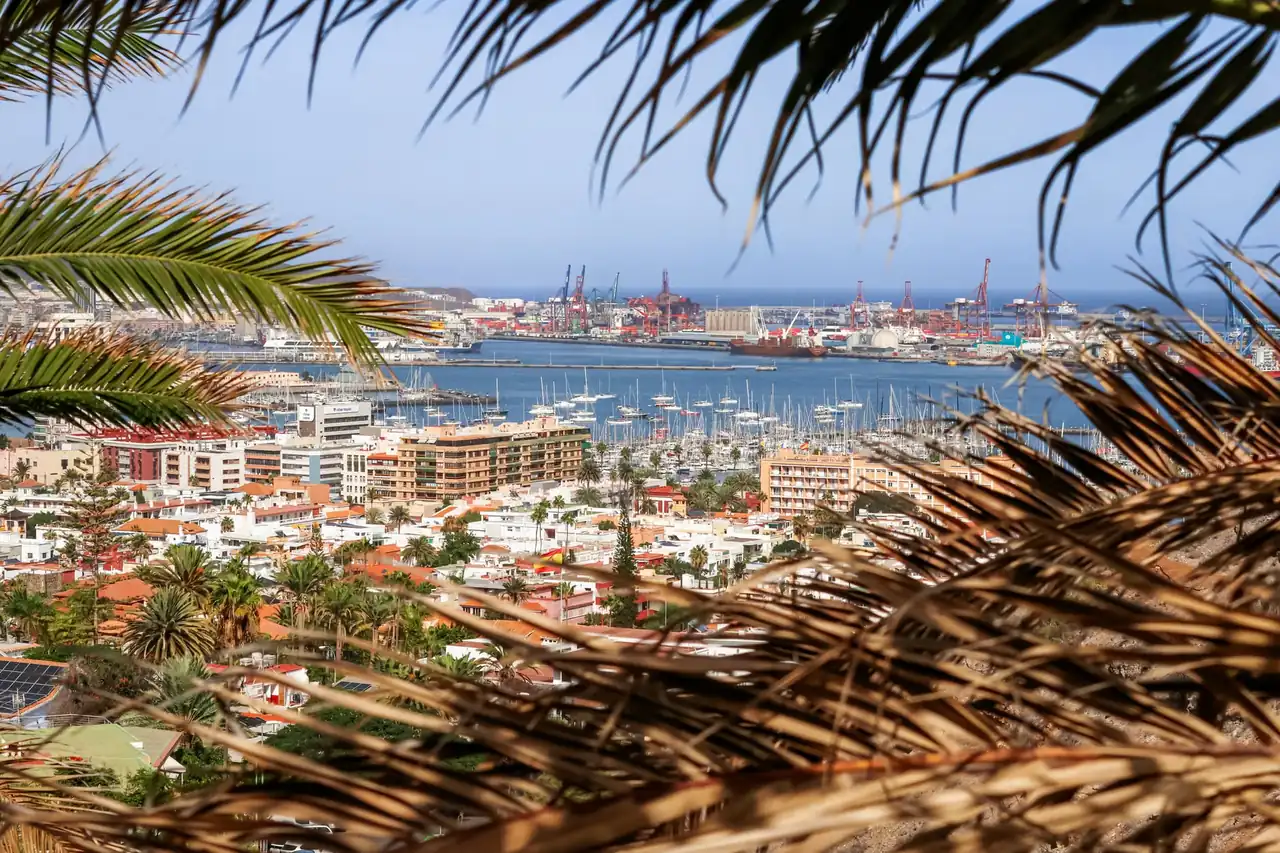
Gran Canaria once again takes a central place in the Spanish running calendar in 2025, although the half marathon label coexists this year with a broader reality: the island blends urban races, certified courses, and mountain challenges that attract very different types of runners. The event drawing the most interest in the mid-distance sphere is the return of the Fundación Puertos de Las Palmas Half Marathon, scheduled for Sunday, January 25, 2026, while much of the island’s sporting conversation also looks toward events of greater toughness and international reach.
The island’s competitive map is no longer understood as a single race, but as an ecosystem. In the same territory, the urban pulse of the Port of La Luz coexists—where the asphalt creates a recognizable and fast loop—and the rugged terrain of Tejeda, epicenter of an ultradistance traverse that has become a world reference. That duality explains why Gran Canaria attracts runners with such diverse profiles: those seeking a fast time, those wanting an experience, and those pursuing pure endurance.
The mid-distance race putting Las Palmas back on the radar
The return of the capital’s half marathon is an important development for the city. The race is born with the ambition of establishing itself in the calendar, and it does so from an unusual setting: the interior of Port of La Luz, a space tied to logistics activity that, for a few hours, opens to the passage of runners. That mix of industrial landscape and sporting atmosphere offers a singular, almost cinematic image, where cranes and docks replace the conventional seafront promenade.
The organizers have also designed a course certified by the RFEA, an important detail for those competing with official times in mind and on accurately measured routes. The race will feature three distances: half marathon, 10 kilometers, and 5 kilometers. The half marathon will complete two laps of the port circuit; the 10K will complete one lap; and the 5K will offer a more accessible distance, designed to broaden participation without losing its competitive edge.
That structure has clear sporting value. In a half marathon with a flat, certified course, runners find favorable terrain for sustaining consistent paces, although wind, humidity, and the exposure of some port sections can introduce variables that do not appear on a more enclosed urban circuit. It is a race that rewards running economy and punishes overexcitement in the first third, because asphalt near the sea always demands its due.
Tejeda and the other major image of the year
The conversation about races in Gran Canaria would not be complete without the 360º The Challenge Gran Canaria 2025, which will celebrate its tenth edition from November 5 to 9, 2025 with start and finish in Tejeda. Although it is not a half marathon, its importance helps explain why the island features so prominently in the international trail and ultradistance calendar. Three months before the event, the organizers had already surpassed 100 registered runners from 23 countries, a figure that speaks to the event’s global appeal.
The race maintains its extreme character: a course without markers, a high level of navigational demand, partial self-sufficiency, and a combination of elevation gain, weather, and mental fatigue that place it in another league. In its latest edition it reached 258 kilometers and more than 12,600 meters of positive elevation gain. That number is impressive not only for its scale; it also helps explain how Gran Canaria has managed to build a sporting identity that depends not only on asphalt, but also on volcanic relief, slopes, and the paths that cross the heart of the island.
On the elite roster appear names with major standing in European ultratrail, such as Claire Bannwarth, Sébastien Raichon, Anitah Lehmann, and Luca Papi. The presence of athletes of this level raises the media spotlight on the island and reinforces a simple idea: Gran Canaria is no longer competing only to host races, but to offer settings that engage with the identity of endurance runners. Here, the landscape is not decoration; it conditions, measures, and sometimes decides.
An island that combines asphalt, port, and mountain
The strength of Gran Canaria’s running scene lies in that variety of settings. The capital’s half marathon opts for an urban and accessible approach, with a route that makes the effort easy to follow and, at the same time, connects with the city’s daily activity. The 360º, by contrast, shifts the spotlight to the mountains, where navigation and self-sufficiency matter as much as fitness. Between these two extremes lies a highly complete, almost educational sporting territory, one that shows that running is not always the same thing even when the stopwatch says otherwise.
In such a context, Gran Canaria gains value as a sports tourism destination. January offers mild temperatures for racing in the capital, while November places the island in an ideal transition period for trail running, with conditions that can be favorable or demanding depending on altitude and time of day. That climatic breadth, combined with geographic variety, explains why the island’s races are not tied to a single season, but to a calendar spread across the year.
There is also an identity effect. The city, the port, and the summit form a recognizable trio for any runner who follows the Canary calendar. This is not just about collecting bib numbers; it is about offering different experiences within the same island framework. A half marathon that can be used to chase a personal best, an ultra that demands sporting survival, and a network of events that keeps the athletic conversation around the island alive for months.
Registration, prices, and benefits for specific profiles
The new half marathon in Gran Canaria’s capital will begin with an access policy designed to broaden participation. The organizers have announced free registration for wheelchair participants and for those over 65 years old, subject to prior request, as well as a 50% discount for workers in the port community. These measures do not alter the race’s competitive character, but they do place it within a more open and social framework.
At the same time, the 360º maintains a policy of support for local runners and finishers from previous editions. Registered runners residing in the Canary Islands can access reduced rates and installment payments. Those who have already completed the race receive a €30 discount for each finished edition, cumulative up to a maximum of four participations. This formula rewards loyalty and helps sustain a community of runners who return year after year to test themselves on the same terrain.
The presence of these incentives says a lot about how endurance races are being organized on the island. Rather than raising barriers, more flexible access formulas are being designed, compatible with the event’s international scope. For runners, this translates into a more diverse offering: from an urban half marathon with a certified course to a mountain traverse that demands experience, logistics, and a mental toughness that is hard to overstate.
What the 2025 calendar reveals for mainland runners
Demand for races in the Canary Islands often grows for a very simple reason: runners find there a combination of climate, landscape, and calendar that is not always easy to match on the mainland. In the case of Gran Canaria, that advantage is multiplied because the island offers a range of events that cover several sporting needs. The capital’s half marathon suits those seeking pace and control; the 360º attracts those chasing mountains, elevation gain, and sustained endurance.
For runners looking at the 2025 calendar with the idea of traveling, this offer has a clear reading. There is no need to choose between a road race and a mountain race as if they belonged to separate worlds. In Gran Canaria, both coexist and feed into each other. The city gains visibility thanks to the appeal of the port, and the mountains reinforce the image of an island capable of challenging even international specialists. That coexistence gives depth to the sporting landscape and prevents the island from becoming a one-race destination.
Moreover, the return of a half marathon to the capital has obvious symbolic value. Bringing back a race like this means returning a reference date to the urban center, a meeting point for clubs, recreational runners, and athletics fans. This is no minor gesture: in many cities, the half marathon becomes a kind of sporting and social barometer. When it is absent, it is noticed. When it returns, it reorganizes the year’s conversation.
The mark left by running between the sea and the summit
Gran Canaria has understood well that running is not limited to performance. It is also narrative, setting, and memory. Running through the port, with the murmur of the water and the metallic geometry of the surroundings, creates a different sensation than doing so among ravines or along volcanic ridges. Each terrain calls for a different kind of attention, as if the island changed its voice depending on whether the runner is on asphalt or trail.
That contrast is, in truth, the great strength of Gran Canaria’s sporting offer. The capital’s half marathon provides accessibility and measurement; Tejeda’s ultradistance provides epic scope and toughness; together, they position the island as a destination that can speak several athletic languages at once. For fans, experienced runners, and sports travelers alike, the reading is similar: in 2025, Gran Canaria is not just a place where people run, but a territory where each race tells a different story and yet remains recognizable.
With that combination of asphalt, port, and mountain, the island consolidates a position that goes beyond the occasional calendar entry. The capital’s half marathon restores a valuable urban event; the 360º reaffirms the international prestige of Canary trail running. Together, they draw an accurate portrait of what running in Gran Canaria means today: competing, traveling, navigating, and, above all, understanding that sport is also written with landscape.



How to prevent thigh chafing: causes and real solutions

Women’s running windbreakers: seven jackets and how to choose

Do more workouts get rid of soreness? A guide for runners

Jaén Half Marathon 2026: Record 3,800 Runners Registered

Men’s short running tights: how to choose the right pair

World Triathlon confirms data breach involving medical data

Izan Edo targets podium at Miyazaki World Cup

María Pérez ranks ninth in World Athletics’ 2026 top ten

Dos Santos, Duplantis and Sawe: World Athlete of the Year finalists

San Silvestre Vallecana 2026: 42,000 places, prices and start times

 Races3 months ago
Valencia Half Marathon 2027: date and registration

 Reviews and Comparisons4 months ago
Asics Gel-Roadmiles 3 for men: review and current price

 Races3 months ago
Valencia Marathon 2026: entry, ballot and course

 Reviews and Comparisons4 months ago
Asics Gel Sonoma 8 Gore-Tex: complete analysis for trail and rain

 Sneakers3 months ago
Saucony Endorphin Pro 4: full review and verdict

 News5 months ago
Strava API 2026: what changes for clubs, challenges and runner apps?

 Reviews and Comparisons5 months ago
Nike Alphafly 3: opinions, sensations, and real key points

 Reviews and Comparisons4 months ago
Under Armour running shoes review 2025-2026: models and key features

 Sports Equipment4 months ago
Shoe sizes in cm: a clear guide to getting the right fit for your footwear

 Sneakers3 months ago
Skechers GO RUN Consistent 2.0 analysis: comfort and limits

 News5 months ago
Valencia Marathon 2026 route: key tips to train and run better

 Sneakers4 months ago
Adidas Adizero Boston 13 for men: review and verdict