Races
Gran Fondo Ezaro 2026: route, date and key details of the event
The cycling event returns to the Costa da Morte with a demanding route and a finish on the Ézaro wall.

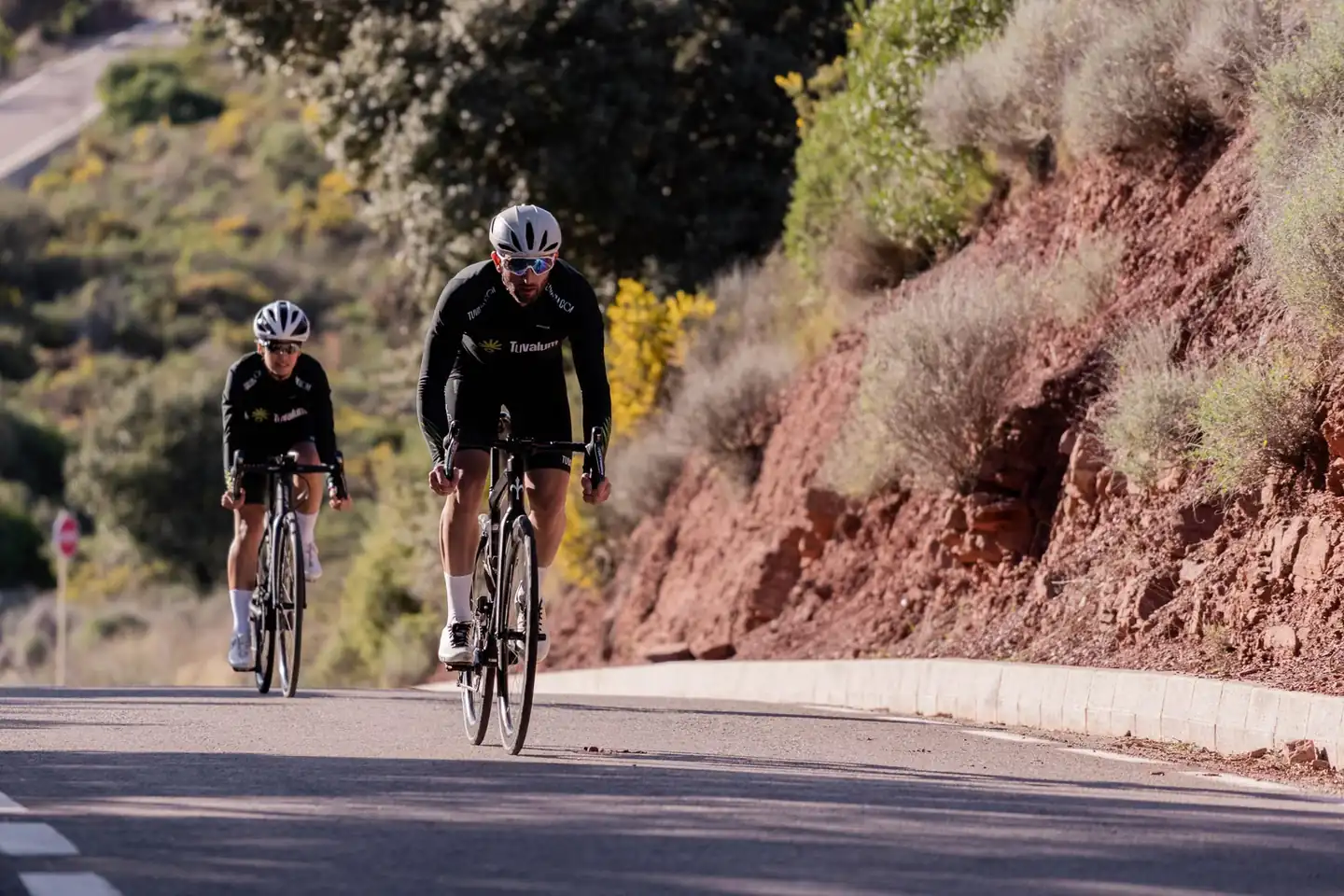
The Costa da Morte will be back in motion on October 3, 2026. That day, the cycling tide will return to the Galician tarmac with an event that has turned the Ézaro wall into a cult image for recreational cycling. The route blends sea, mountains, and secondary roads in a course that demands legs, brains, and a certain tolerance for the vertigo of open landscapes.
The Gran Fondo Ezaro is not just a ride with elevation gain and an Atlantic postcard. It is a sporting experience marked by the toughness of the finish, by the relief of A Costa da Morte, and by an organization that has managed to attract cycle tourists from all over Spain and also from abroad. Its hallmark remains the climb to the Ézaro Viewpoint, a wall that is brief in appearance but ferocious in gradient, condensing the tension of the entire day into a few minutes.
The wall that made the event famous
The Ézaro climb is the signature that explains the reputation of this event. It is not a long mountain pass or a steady, rhythmical ascent, but a short, explosive wall that is instantly recognizable for its ramps. That finish has featured in the Vuelta a España and has become associated with images of riders at their limit, with bikes swaying and spectators pressed against the roadside.
The appeal of the event comes precisely from that contrast. The rest of the route allows riders to roll along roads with a friendlier profile, though never truly flat, while the finale puts participants face to face with a climb that changes the tone of the whole day. It is a design very much in keeping with modern cyclosportive events: scenery, physical endurance, and a finish with a competitive edge, even if the event keeps its popular spirit.
The organizers have managed to turn that difficulty into a sporting narrative. They do not sell a softened, domesticated ride, but a challenge with its own identity. That honesty attracts cyclists who want more than just to cover kilometers. They want a day with personality, one that leaves photos, fatigue, and conversation long after the finish line.
A route that draws on the geography of A Costa da Morte
The course runs through Dumbría, Carnota, Mazaricos, Cee, Muxía, and Vimianzo. That combination is no accident: it traces a journey through one of the most recognizable areas of the northwestern Iberian Peninsula, where coastline, valleys, and hills alternate with a deceptive natural ease. What looks like a scenic drive turns into a real effort on the bike.
La Costa da Morte has a very distinctive look and feel. The sea appears and disappears with each bend, the wind often blows head-on in certain stretches, and the sense of openness makes every rise seem longer than the profile suggests. In that context, the event gains an almost cinematic dimension. Every stretch of road adds a different texture: small villages, sweeping curves, gray or blue horizons, and that Galician backdrop that always seems damp, alive, and changing.
The 150 kilometers of the long format and the 80 of the short route, both noted in recent editions, reinforce that idea of an adaptable but demanding event. At either distance, the day gives nothing away. The long version tightens the screws more clearly, while the short one preserves the essence of the event: accumulated climbing, constant transitions, and a finish with history.
Why it has earned a place among the most recognizable cyclosportive events
Not every popular event manages to break out of its local sphere. This one did. Partly because of the beauty of the route, partly because of the strength of the Ézaro name itself, and partly because of the organizers’ skill in turning the ride into a benchmark event. Over the years, well-known names from cycling have appeared there, a factor that reinforces the event’s pull without blurring its identity as an event for amateurs.
The presence of figures such as Purito Rodríguez, Alejandro Valverde, or Samuel Sánchez helps explain the media reach of the Gran Fondo Ezaro. So does the memory of rivalries between riders from another era, evoked by the sports press when discussing the Galician course. That crossover between professional cycling and popular participation gives the event a special sheen, as if each edition absorbed part of the epic of the great roads.
The event also works as a territorial showcase. It does not only bring cyclists to Dumbría or Cee; it also projects the landscape and identity of the area. In a calendar saturated with events, that ability to tell the story of a place makes all the difference. Here the route does not merely serve to accumulate meters, but to narrate a territory that asserts itself through climbs, wind, and a sea horizon.
The 2026 edition: a marked date and renewed anticipation
The next edition is set for October 3, 2026. That clear, useful date is what now focuses the attention of those following the cyclosportive calendar. Choosing October usually means milder temperatures and lower light, two elements that fit well with the Atlantic landscape and with an event that rewards pacing and effort management more than pure explosiveness.
The reference to 2026 also speaks of continuity. The Gran Fondo Ezaro has been consolidating its own identity and no longer needs elaborate gimmicks to attract attention. The date, the wall, and the Costa da Morte are enough to shape an event with personality. The road provides the rest: tired legs, reading the wind, conserving energy on the intermediate climbs, and the final moment when everything comes down to holding the pace.
In an event like this, the calendar is not just an administrative detail. It is part of the story. October in Galicia does not offer the same setting as July or August: humidity changes, the color of the sky changes, and so does the way the road is perceived. That nuance helps explain why this event keeps its appeal year after year.
What awaits participants on the road and in the logistics
The start in Dumbría places the event in an area well connected to the heart of the Costa da Morte. From there, the route advances through short climbs, false flats, and transition sections that force riders not to become overconfident. Cyclists who arrive thinking they will cruise comfortably soon discover that the profile is in charge, and that the event requires patient effort management.
Logistics are also part of the experience. The involvement of several municipalities, the local tourism ecosystem, and the event’s own reputation mean that the day includes a travel and overnight-stay component that many participants plan well in advance. This is not a ride you do and forget in one morning; it often becomes a full getaway, with accommodation, food, and time to explore the area.
That long-weekend effect is one of its quiet strengths. The event is not isolated from the territory, but integrated into it. The cyclist arrives, rides, sleeps, looks at the sea, looks again at the wall, and leaves with the feeling of having taken part in something that naturally combines sport and geography. Few popular events work that blend so well.
What makes the finish at the Ézaro Viewpoint different
The final climb carries a symbolic weight that goes beyond its length. It is not just an obstacle; it is the moment in which everything before it is distilled. After kilometers of buildup, the cyclist is faced with a ramp that offers no respite. Speed drops, cadence breaks, and the landscape, for a moment, stops being a beautiful backdrop and becomes a wall to be chewed through meter by meter.
This kind of finish leaves a very particular mark. Some climbs are remembered for the time they took, others for their intensity. Ézaro belongs to the second category. Those who conquer it know that the reward is not only at the finish line, but in the sequence itself: the approach, the tension, the change of rhythm, and the feeling of having beaten a place that was already part of cycling’s imagination before they arrived.
The wall’s toughness also helps explain the public’s loyalty. There are beautiful rides that end with satisfaction, and others that become a story worth telling. This event belongs to both, but especially to the second. And that is where much of its value lies: it does not promise ease, it promises a memory.
The surroundings that sustain the event beyond the race number
The Costa da Morte is not a backdrop, but a central piece of the event. The roads that make up the route are not neutral postcard scenery. They have personality, changing light, and a very recognizable atmosphere. The sea, just a few kilometers away, influences the mood of the peloton; the terrain affects the breathing; and the area’s scattered architecture adds to the feeling of moving through a territory that still keeps a human scale.
There is also heritage value that strengthens the appeal of the event. The region offers a strong cultural setting, with a marked Galician identity and a very close relationship between everyday life and the environment. In events like this, that context matters as much as the route length. Riding there means moving within a map that blends toughness and beauty without either canceling the other out.
That is why the event remains more than just another cyclosportive gathering. It works as a way of reading the landscape from the saddle. Every municipality, every bend, and every descent add a layer to the whole, until they shape a day remembered as much for what it costs as for what it shows.
An event that has learned to speak the language of recreational cycling
The Gran Fondo Ezaro has understood very well what modern cycle tourists are looking for. They want a demanding route, yes, but also a coherent narrative, a place with identity, and an experience that does not dissolve once the finish line is crossed. This event offers exactly that: a tough but readable course, a prestigious final climb, and a landscape that accompanies the effort without masking it.
Its success cannot be explained by a single factor. Not even by the wall, despite it being the best-known image. The key is in the sum: the setting of A Costa da Morte, the tradition of previous editions, the presence of illustrious names, the range of distances, and the ability to turn a physical challenge into an event with its own reach. All of that gives it journalistic and sporting depth.
In the Spanish cyclosportive calendar, few events bring together beauty, toughness, and sporting memory so clearly. That is why the announcement of each new edition generates interest beyond Galicia. It is not just another ride: it is a route with character, a legendary finish, and a landscape that, far from softening the difficulty, makes it more memorable.
The image left by Ézaro when the road empties
When the day is over, a very specific scene remains. The silent road, the wall already conquered, the bikes leaning against any permitted corner, and the Atlantic air washing the sweat from the climb. That image sums up what this event offers: effort, territory, and a visual reward that needs no embellishment.
The Gran Fondo Ezaro has achieved something rare among popular rides. It has turned a demanding climb into a recognizable symbol and made the landscape an active part of the event. That combination explains why its name keeps appearing among the references of endurance cycling and why the 2026 edition is once again drawing attention even before the first wheel turns.
The date is set, the setting too, and the story repeats with a formula that never loses its force. Costa da Morte, road, fatigue, and final wall. Sometimes the best definition of an event needs nothing more than that.



How to prevent thigh chafing: causes and real solutions

Women’s running windbreakers: seven jackets and how to choose

Do more workouts get rid of soreness? A guide for runners

Jaén Half Marathon 2026: Record 3,800 Runners Registered

Men’s short running tights: how to choose the right pair

World Triathlon confirms data breach involving medical data

Izan Edo targets podium at Miyazaki World Cup

María Pérez ranks ninth in World Athletics’ 2026 top ten

Dos Santos, Duplantis and Sawe: World Athlete of the Year finalists

San Silvestre Vallecana 2026: 42,000 places, prices and start times

 Races3 months ago
Valencia Half Marathon 2027: date and registration

 Races3 months ago
Valencia Marathon 2026: entry, ballot and course

 Reviews and Comparisons4 months ago
Asics Gel-Roadmiles 3 for men: review and current price

 Reviews and Comparisons4 months ago
Asics Gel Sonoma 8 Gore-Tex: complete analysis for trail and rain

 Sneakers3 months ago
Saucony Endorphin Pro 4: full review and verdict

 News5 months ago
Strava API 2026: what changes for clubs, challenges and runner apps?

 Reviews and Comparisons5 months ago
Nike Alphafly 3: opinions, sensations, and real key points

 Reviews and Comparisons4 months ago
Under Armour running shoes review 2025-2026: models and key features

 Sports Equipment4 months ago
Shoe sizes in cm: a clear guide to getting the right fit for your footwear

 Sneakers3 months ago
Skechers GO RUN Consistent 2.0 analysis: comfort and limits

 News5 months ago
Valencia Marathon 2026 route: key tips to train and run better

 Sneakers4 months ago
Adidas Adizero Boston 13 for men: review and verdict