Races
Granollers Half Marathon: route, history and key points of the race
The Granollers race brings together the half marathon, 10K and 5K with a fast start, tiered pricing and a huge crowd atmosphere.

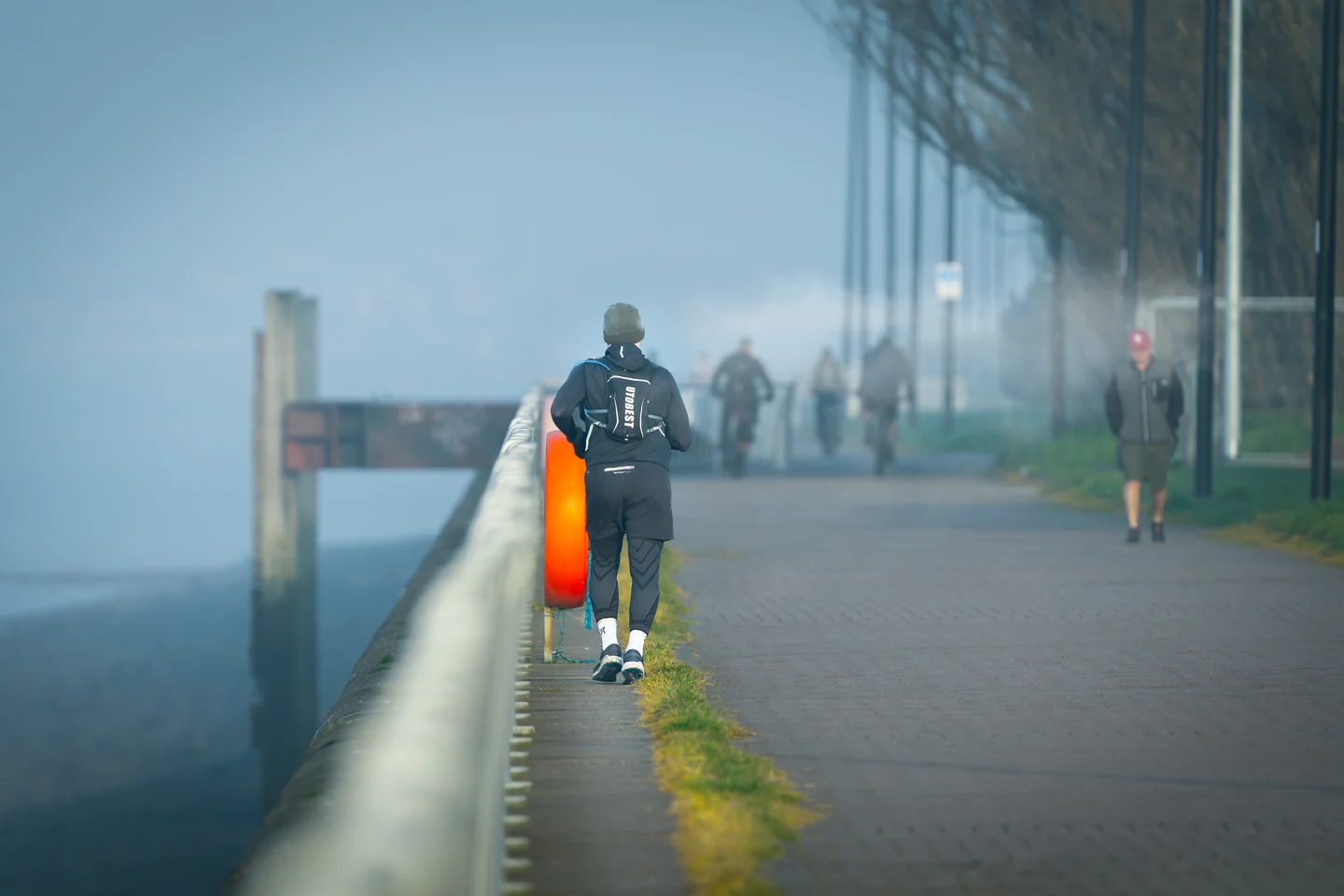
Granollers maintains a very close relationship with road running. The half marathon that runs through the city and links up with Les Franqueses del Vallès and La Garriga has established itself as one of the most recognizable events on the Spanish calendar, with an uncommon mix of tradition, massive participation and competitive level. In the 2027 edition, the pulse is once again on the asphalt, with a start set for 9:30 and a structure designed to bring together runners of very different standards without losing the character of a major popular event.
The flagship race covers 21.097 certified kilometers and shares the spotlight with a 10K and a 5K, as well as other activities tied to the day’s program. That design explains much of its appeal: it is not just a fast, selective half marathon, but also a gateway for those looking to compete over shorter distances within the same atmosphere. The result is a January morning with the logic of a major event, where the clock matters, but so does the weight of history and the feeling of running in a city used to living this day as a celebration of athletics.
A race with its own name on the Spanish running map
The Mitja de Granollers was born in 1987 and since then it has grown to become one of the half marathons with the most identity in the country. Its evolution is not understood only by the number of participants, but by the quality of the names that have passed through its start line. International top-level athletes have won it, and so have Spanish runners who have posted very serious times, which has established the race as a stage capable of mixing elite and mass participation without one side canceling out the other.
The importance of the event can be seen in the way the course has become a reference. This is not a neutral, cold or anonymous circuit. Granollers and its neighboring municipalities provide urban scenery, wide stretches, very recognizable passing areas and an atmosphere that changes as the kilometers go by. That gives the race its own character, almost narrative, as if the course had very different chapters. For some runners, that nuance is worth as much as the final time.
It also matters that the race has managed to stand the test of time without losing its essence. In an increasingly crowded calendar, where many races compete to stand out with fleeting gimmicks, the Granollers half marathon has built prestige through consistency, solid organization and a clear position within the Catalan winter athletics scene. That loyalty is reflected in the response from participants and in the collective memory of the circuit.
The course: a half marathon that rewards a cool head
The route links Granollers, Les Franqueses del Vallès and La Garriga, and that combination gives it personality. The 2027 start is scheduled on carrer Esteve Terradas, at the corner with Francesc Serra, while the finish line is on carrer de Francesc Macià, in front of the Pavelló d’Esports de Granollers. Between one point and the other there is a 21.097-meter course that demands good management of effort, because reading the profile is not usually as innocent as it may seem on a technical sheet.
The race has a reputation for requiring experience. There are phases where it makes sense to let the stride flow, but also moments when caution prevents paying for it later. Anyone who takes it on at too ambitious a pace in the early sections may feel the wear in the middle part, when the race forces you to sustain the effort with discipline. The key is not only speed; it is the ability to read the terrain and distribute fuel with some intelligence, like someone who does not spend all the light at dawn if they know there is still a long day ahead.
Refreshment stations appear at kilometers 5, 10, 15 and at the finish, a relevant detail for those planning the race with precision. In addition, the organization provides intermediate references at kilometers 5, 15 and 20, something useful for gauging sensations and adjusting the real pace against the target. In a half marathon where the atmosphere pushes you on, those checkpoints work almost like small truth stations: they reveal whether the body is moving in a straight line or starting to fray behind the ambition.
The course is also usually good news for those who enjoy routes with popular support. The presence of spectators in the towns through which the race passes adds noise, color and a kind of electric current that makes the more tense stretches easier to handle. It is not an environment of sporting solitude, but of a living road, with the asphalt turned into a stage and the runners, for a few minutes, into the protagonists of a city stretched out over kilometers.
Timetables, start and organization of a very measured morning
The main start of the half marathon is set for 9:30, a usual time for a winter endurance race, when the temperature can still be pleasant and the morning light helps organize the effort. At that same time the 10K and other starts linked to the day’s program also begin, while the elite and the different starting pens are distributed later according to expected times. That setup is not just a logistical detail: it orders the human traffic of the race and prevents the mass of participants from becoming a bottleneck from the first meters.
Bib collection takes place at Roca Umbert, in Granollers, on Friday 22 and Saturday 23 January 2027, from 10 to 14 and from 16 to 20 hours. The organization insists that to collect the bib and chip you must present the registration receipt or ID. It may seem like a minor formality, but in events of this size administrative precision saves problems on race morning, when time is measured in minutes and any setback can spread unnecessary nerves.
One of the most interesting features of the organization is the commitment to quiet hours for bib collection, a gesture designed to reduce sensory load, crowds and stress. That kind of measure reflects a broader vision of the event, less focused on spectacle and more on the experience of those taking part. In a popular race with thousands of entrants, that detail can make the difference between a chaotic afternoon and a calmer preparation for Sunday.
The event also offers bag drop, showers and massage therapists at the Palau d’Esports, as well as a round-trip Rodalies ticket for registered runners from any point on the Barcelona commuter rail service to Granollers Centre. These are elements that reinforce the idea of a well-built race, where logistics are not limited to placing a finish line, but to solving the before and after with a certain practical sense. In long races, that infrastructure weighs almost as much as the course profile.
Prices, quotas and the logic of tiered registration
The 2027 registration is structured by bib tiers, a system that raises the price as the quota advances. For the first 1,000 bibs, the price is set at 28 euros with a personal yellow chip, 30 with a virtual chip and 32 if the virtual chip is purchased. Between bibs 1,001 and 3,000, the cost rises to 32, 34 and 36 euros, respectively. From bib 3,001 to 5,000, the fees go up to 36, 38 and 40 euros. In the 5,001 to 7,000 range, they are set at 38, 40 and 42 euros, and from bib 7,001 onward the amount is 40, 42 and 44 euros.
That model, common in highly demanded races, seeks to reward early registration and organize demand. It also gives a clue about the real level of interest in the race: when an event can sell out entire tiers at rising prices, it is clear that it does not work only as a competition, but as a calendar event with its own identity. In 2027, moreover, the organization sets a limit of 8,000 entrants and closes registration on 17 January or earlier if that cap is reached.
The race adds a 4-euro day license for those who do not have a federation license, and clarifies that athletes with a license from the Catalan Athletics Federation or the RFEA can request a refund of that amount once registration closes. This kind of administrative detail may seem minor, but it is essential for anyone who regularly takes part in official races and needs to know the real costs, not just the base bib price.
The cancellation or refund policy is also strict: once the registration is accepted, the fee is not refunded under any circumstances. That rule places the race in the same logic as many established events, where the runner’s commitment begins long before the starting gun. Registering here is not a flexible reservation; it is a closed decision that carries organization, places and financial planning with it.
A fast race, but not flat in sporting terms
Granollers has produced times of enormous level, and that explains why many runners choose it when they are looking for a serious winter test. Haile Gebrselassie, Samuel Wanjiru, Wilson Kipsang, Stephen Kiprotich and Carles Castillejo are among the names that have left their mark on the race. In the women’s event, athletes such as Marta Domínguez, Gete Wami, Nancy Kiprop, Irene Pelayo and Miriam Ortiz have also added prestige to a very solid record.
The value of these records is not limited to the list of winners. It also speaks to the type of course and the conditions the event offers for running fast. In 2008, Samuel Wanjiru went under 60 minutes with 59:26, a time that remains a very serious benchmark in the Spanish context. Later, in 2020, Stephen Mokoka won in 1:01:28 and Darya Mykhaylova posted 1:12:39 in the women’s race, confirming that the competitive level has remained high over the years.
At the same time, the race maintains an important balance: it has not become an exclusively elite showcase. The number of participants and the variety of distances allow the day’s big story to depend on more than just the podium. That makes it feel more like an ecosystem than a simple race. There are people coming to fight for a time, others to finish well, others to enjoy a shared morning. Everything fits on the same asphalt, and that mix gives the event depth.
The long distance shares the bill with a 10K and a 5K, something that greatly broadens its appeal. In journalistic terms, that means Granollers is not selling a single experience, but a family of connected races. The half marathon is the axis, but around it moves an offer that brings together debut runners, speedsters, atmosphere lovers and families taking part in other activities linked to the event. That design explains why the day attracts both those looking to compete and those who simply want to be part of the scene.
What to look at before taking your place at the start
The great enemy in this half marathon is usually impatience. Not because the course is a trap, but because its reputation and atmosphere invite you to run above what you really have in hand. The presence of other runners, the crowd noise and the feeling that everything is set up to go fast create a current that is hard to ignore. Those who manage to hold back that impulse usually arrive better to the second half of the race.
It is also worth paying attention to the weather. The race takes place in January, a date when the Catalan winter can offer very acceptable conditions or a colder morning than expected. That variability affects the warm-up, clothing choice and the opening pace. In endurance distances, too much clothing is as troublesome as too little, and the start of a half marathon forgives neither overconfidence nor lack of preparation.
The combination of timing, logistics and atmosphere makes the Mitja de Granollers a very complete race. It is not enough to look only at the distance. The start time matters, the order of the pens, the price tiers, access to bib collection, the finish line location and even the small mental margin required at each refreshment point. Everything adds up. And in a race with so much history, the details are not decoration; they are part of the sporting story.
That is why this race still has such drawing power. It is not just a half marathon in a Catalan city; it is a date where endurance, organization and tradition align quite naturally. In a calendar full of interchangeable events, Granollers still offers a recognizable identity, something increasingly valuable for the runner looking for more than a bib and a medal.
Granollers’ mark on the athletic winter
The Granollers half marathon has managed to turn a race into a collective habit. That is its great achievement. It has crossed decades, seen changes in popular running and in the elite, and still maintains a structure that makes it perfectly recognizable. Its mix of city, territory and athletic tradition has made it a proper name within the Spanish winter.
The 2027 edition reaffirms that position with a clear program, segmented prices, defined quotas and an organization that takes care of both logistics and the runner’s experience. In the end, that is what distinguishes races that endure: they do not depend only on a flashy time or a trendy name, but on a stable architecture that stands the test of time. Granollers has built exactly that, a race that keeps growing without losing the pulse of its origins.
Anyone looking for a half marathon with history, atmosphere and a recognizable course will find a solid reference here. And so will anyone who simply wants to glimpse the spectacle of road running. That is why this race lives not only on the memory of its great champions or record times, but on the way every January it once again puts thousands of people on the asphalt with a simple and powerful idea: running can also be sporting heritage.
You may also like: El Tast de la Mitja 2025: route, schedules and key details.
Where to stay in Granollers
Hotels available 20–23 January 2027.
Affiliate links: if you book through this map we earn a commission, at no extra cost to you.



How to prevent thigh chafing: causes and real solutions

Women’s running windbreakers: seven jackets and how to choose

Do more workouts get rid of soreness? A guide for runners

Jaén Half Marathon 2026: Record 3,800 Runners Registered

Men’s short running tights: how to choose the right pair

World Triathlon confirms data breach involving medical data

Izan Edo targets podium at Miyazaki World Cup

María Pérez ranks ninth in World Athletics’ 2026 top ten

Dos Santos, Duplantis and Sawe: World Athlete of the Year finalists

San Silvestre Vallecana 2026: 42,000 places, prices and start times

 Races3 months ago
Valencia Half Marathon 2027: date and registration

 Races3 months ago
Valencia Marathon 2026: entry, ballot and course

 Reviews and Comparisons4 months ago
Asics Gel-Roadmiles 3 for men: review and current price

 Reviews and Comparisons4 months ago
Asics Gel Sonoma 8 Gore-Tex: complete analysis for trail and rain

 Sneakers3 months ago
Saucony Endorphin Pro 4: full review and verdict

 News5 months ago
Strava API 2026: what changes for clubs, challenges and runner apps?

 Reviews and Comparisons5 months ago
Nike Alphafly 3: opinions, sensations, and real key points

 Reviews and Comparisons4 months ago
Under Armour running shoes review 2025-2026: models and key features

 Sports Equipment4 months ago
Shoe sizes in cm: a clear guide to getting the right fit for your footwear

 Sneakers3 months ago
Skechers GO RUN Consistent 2.0 analysis: comfort and limits

 News5 months ago
Valencia Marathon 2026 route: key tips to train and run better

 Sneakers4 months ago
Adidas Adizero Boston 13 for men: review and verdict