Races
The Great Mediterranean 21K Race: route and key facts
Alicante and Santa Pola once again join their coastline in a unique half marathon, with practical information and route details.

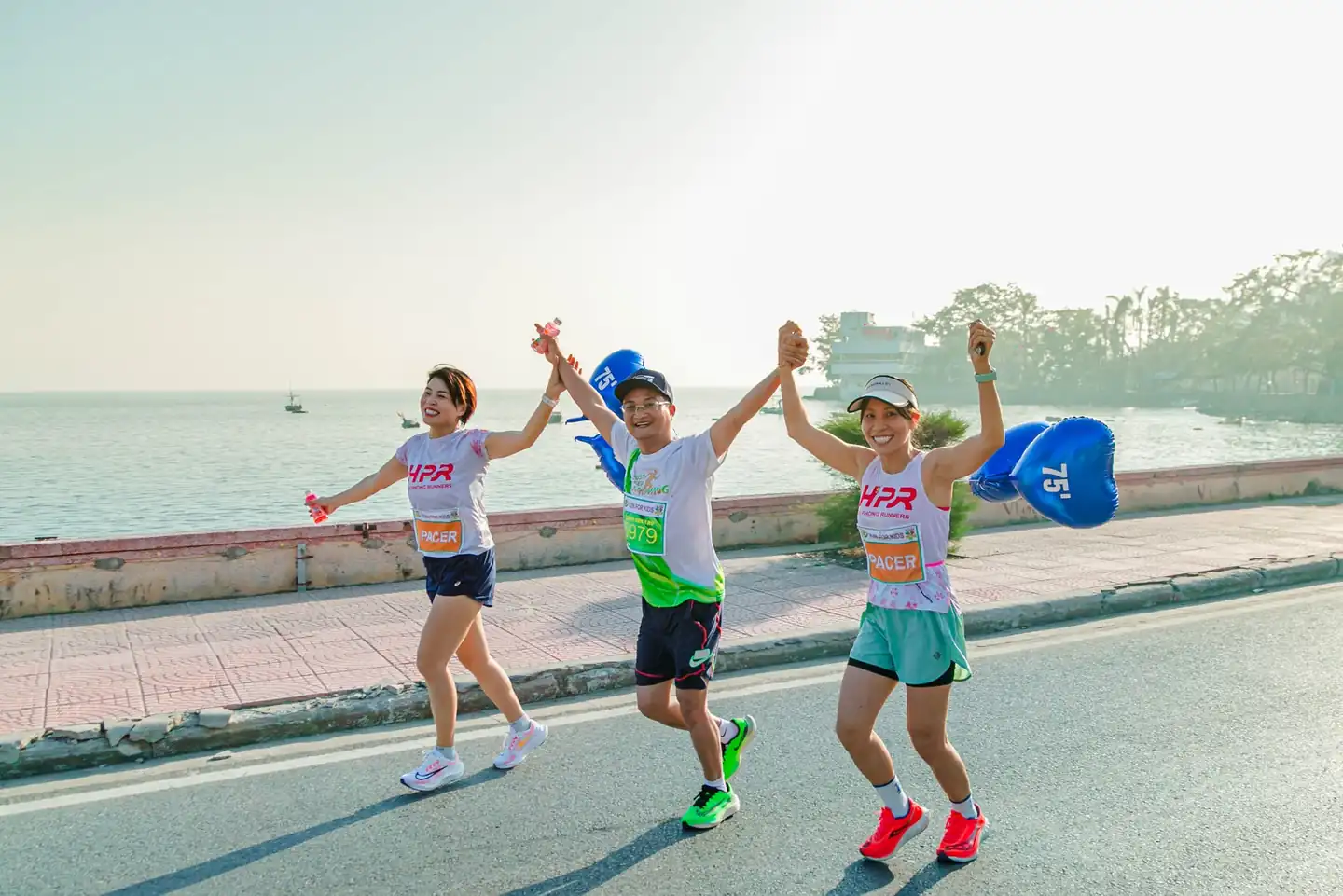
Imagen: Thanh Long Bùi / Pexels
The VII Great Mediterranean Race 21K once again draws one of the most recognizable images on the Spanish calendar: a half marathon that runs right by the sea, between the center of Alicante and Varadero beach in Santa Pola, with the blue horizon as a constant guide. The race, certified by the Royal Spanish Athletics Federation, takes place on November 8, 2026 at 9:00 a.m. and features a 21.0975-kilometer course designed for those looking for a fast, scenic race with the atmosphere of a major athletics event.
The start is set next to the Provincial Palace of the Alicante Provincial Council, on Avenida de la Estación, and the finish comes in Santa Pola, a detail that defines the personality of the event as much as its coastal profile. This is not a typical urban half marathon: here the route combines coastline, beaches, sea breeze, and stretches that reveal the landscape step by step, as if the runner were moving through a continuous postcard of the Mediterranean.
A course that makes the coastline the star
The route between Alicante and Santa Pola is the reason this race has earned a reputation inside and outside the Valencian Community. The race starts in the city, glides alongside El Palmeral Park, and continues through well-known spots such as Urbanova, Arenales del Sol, and Carabassí before finishing at Varadero beach. It is a point-to-point route, from city to city, where the sea appears not as a secondary backdrop but as the true visual and emotional axis of the entire day.
That kind of route tends to attract runners who value more than just the clock. The half marathon keeps the competitive appeal of a certified race, but adds a different reading of the effort: the feeling of leaving the urban layout behind and entering a bright coastal strip, with traffic noise fading away and the sound of the water taking up mental space. In a race like this, the landscape does not distract; it helps set the pace, sustain rhythm, and make the middle kilometers more manageable, which in any half marathon usually require focus and experience.
The organizers also highlight a detail that broadens the race’s story: the course passes several Blue Flag beaches, an element that reinforces the image of a well-kept, recognizable coastline that the event showcases. This is no minor detail for traveling runners or local fans. In a discipline where so many races resemble one another, this event builds its identity with real geography, with proper names that many participants know from leisure, tourism, or weekend getaways, but which for a few hours become checkpoints in a precisely measured effort.
Timing, start, and finish with half-marathon precision
The official start time is 9:00 a.m., a reasonable slot for November, when the heat is no longer intense and the morning still offers a pleasant temperature for running. Competitors and the official reference agree on that start, although promotional texts for the event also mention 9:30 a.m. in some secondary descriptions. For runners, the operational time that should prevail is the main call time: 9:00 a.m., with the start in Alicante and the finish in Santa Pola.
The schedule fits a distance race designed to take advantage of daylight and the mild weather of Alicante’s coast. In November, maximum temperatures are usually gentle along the coast, which favors steady performance and reduces thermal stress. Even so, a half marathon by the sea is not a walk in the park: humidity, wind, or shifting breezes can affect sensations and pace, especially on the more open stretches of the coastline. It is a friendly setting, yes, but not a neutral one.
The finish at Varadero Beach in Santa Pola completes the logic of the route. Ending by the water usually leaves a very recognizable scene, with runners crossing the line after 21 kilometers in which the coast has been a reference point, orientation aid, and visual attraction. That combination of finish and landscape explains, in large part, why the race has established itself as one of the most attractive events on the Valencian calendar.
Race bibs, prices, and registration window
Registration for the race is structured in tiered price brackets, a common formula in major races to reward early planning. In this case, the bib starts at 25 euros in the early registration period, valid from January 15 for the first 1,000 spots or until February 28, 2026. After that comes a promotional bracket of 28 euros, running from registration number 1,001 or from March 1 to May 30. Summer raises the cost to 32 euros between June 1 and September 15, and the final window climbs to 35 euros from September 16 to October 25. If bibs remain available at the runner expo, the price on site increases to 40 euros.
That fee structure shows a race with enough demand to organize registration in waves. It also reflects the logistical scale of the event, which is not limited to starting thousands of runners but also involves a small machinery of services, bibs, transfers, and advance pick-up. For those who follow the popular racing circuit with any regularity, this pricing scale is already a constant: the earlier the spot is secured, the lower the cost, and the closer the date gets, the more expensive the bib becomes.
The reference article also places bib collection at the Runner Expo, set up in the gardens of the Provincial Council Palace, at Avenida de la Estación, 6. Pickup is split between Friday, November 6, from 5:00 p.m. to 8:00 p.m., Saturday, November 7, from 10:00 a.m. to 8:00 p.m., and Sunday, November 8, from 7:00 a.m. to 8:30 a.m. It is a broad time slot, designed to accommodate both early arrivals and those traveling from other parts of the Valencian Community or the rest of Spain.
Runner services and details that shape the experience
The race offers aid stations every 5 kilometers, a practical pattern for a coastal half marathon in which regular water supply helps sustain effort. It also includes changing rooms at the start and finish, plus a bag transport system and medical support. These are elements that may not draw as much attention as the scenery or the finish-line photo, but they help a race like this run smoothly and reduce friction points for participants.
In a half marathon, on-course support matters more than it may seem. Aid stations every 5 kilometers force you to think of the race in segments, not just as a single 21-kilometer block. For many runners, that helps organize the effort: drink at kilometer 5, again at 10, check how you feel at 15, and save something for the final stretch. Here, the organizers turn the distance into a familiar sequence, almost as if each water point were a reference on a mental map.
The available information also indicates that the race is adapted for athletes with sensory, physical, and intellectual disabilities, as well as wheelchair athletes. Registration fees are reduced by half for these participants, and the accompanying person gets in free. This approach broadens the event’s meaning and places it in a more inclusive line, especially relevant for a coastal urban race that already aims to be a major sporting showcase.
Time limit, intermediate cutoffs, and real demands
The half marathon sets a maximum time of 3 hours, a standard reference for a race of this type, but it also establishes intermediate cutoffs that should be read as part of its competitive DNA. The pass-through at kilometer 5 must be reached in 45 minutes, the 10K in 1 hour 20 minutes, the 15K in 2 hours, and the 20K in 2 hours 50 minutes. These are not just administrative details: they define the minimum pace of continuity that the organizers consider necessary to keep the race alive over its full route.
Those marks outline a race open to different profiles, from experienced recreational runners to participants chasing a more ambitious time on a seemingly favorable course. The point-to-point layout and limited elevation gain can help you run steadily, but a half marathon does not complete itself. The cutoffs show that the event demands consistency and a realistic understanding of effort. The sea offers beauty; the clock, discipline.
The same logic explains the mention of cash prizes for the top three finishers overall, men and women: 500 euros for first, 400 euros for second, and 300 euros for third. The financial focus is not the center of the event, but it does reinforce its status as a serious race, with both elite and mass-participation components. The medal for all finishers closes the loop with a classic and effective gesture: recognizing the effort of everyone who crosses the line, regardless of placing.
Santa Pola, Alicante, and the pull of a race with a destination
The connection between Alicante and Santa Pola gives the race added value that goes beyond the course itself. The race links a provincial capital with a coastal town of strong character, turning it into both a sporting and tourist experience. Runners do not just complete a certified distance; they also travel through a stretch of coastline that many people associate with promenades, beaches, light, and gastronomy—three ingredients that help explain why the event has gained prestige year after year.
The official description itself emphasizes that this is one of the most spectacular races in Spain. The phrase may sound promotional, but it rests on a visually easy-to-verify reality: a continuous stretch of sea, sand, promenades, and recognizable landmarks along the Alicante coast that turns the route into a series of clean images. In a national calendar full of urban half marathons, those that combine brand identity, scenery, and logistics tend to leave a lasting impression.
The international dimension also matters. The competitors’ reference highlights a diverse field and a festive atmosphere, with runners from outside Spain adding language, pace, and a cosmopolitan layer to the event. You can feel it at the start, at bib pickup, and throughout the race morning itself, where the mix of accents is usually a clear sign that the event has moved beyond the local sphere and entered a broader circuit of interest.
What it helps to know before pinning your goal on the bib
The Great Mediterranean Race 21K works well for anyone looking for a half marathon with a clear identity, but also for those who value the practical side of the calendar. Its November date gives it a strategic spot in the running year: far from the summer heat, avoiding the saturation of some autumn race campaigns, and offering weather that, in principle, favors performance. That makes it a very logical option for closing the autumn cycle with a serious, visually distinctive race.
There is also a little-discussed advantage: the point-to-point route reduces the feeling of repeated loops and allows the effort to be experienced as a journey. For many recreational runners, that completely changes the perception of the mile. The road stops being a closed circuit and becomes a line moving forward. And in a half marathon, that psychological difference can be as valuable as a hill that is a little less steep or a well-placed aid station.
The race is supported by a solid infrastructure, with institutional organization and a defined calendar, and that gives it a specific weight that goes beyond a simple call to participate. Being certified adds credibility to the course and makes it a suitable race for chasing a personal best in a known and measurable setting. From there, each runner adds their own story: first time at the distance, time trial, return to a fast half marathon, or simply the desire to run by the Mediterranean on a November morning.
A half marathon also measured by the memory it leaves behind
The races that endure are not always the toughest or the fastest; often they are the ones that build a recognizable image, easy to remember and hard to confuse with any other. In this case, the sea serves as the thread, the start in Alicante provides a solemn opening, and the finish in Santa Pola closes things with a distinctly coastal feel. The combination has something of a classic route and, at the same time, a very contemporary athletic getaway.
That explains why the race has been gaining space on the Spanish running map. It is not based solely on tourist appeal or technical certification. It rests on the sum of both worlds: a genuinely beautiful route and a serious sporting structure. It asks runners for the same things any well-designed half marathon does, but it also gives them a landscape that does not fade when the clock stops.
In the end, the image that remains is simple and powerful: a line of runners moving between Alicante and Santa Pola, with the Mediterranean setting the beat, the aid station serving as a brief pause, and the finish offering relief by the sea. In an increasingly crowded calendar, that mix of beauty, order, and challenge still has enough strength to set a race apart and keep its name in memory long after the finish line has been crossed.



How to prevent thigh chafing: causes and real solutions

Women’s running windbreakers: seven jackets and how to choose

Do more workouts get rid of soreness? A guide for runners

Jaén Half Marathon 2026: Record 3,800 Runners Registered

Men’s short running tights: how to choose the right pair

World Triathlon confirms data breach involving medical data

Izan Edo targets podium at Miyazaki World Cup

María Pérez ranks ninth in World Athletics’ 2026 top ten

Dos Santos, Duplantis and Sawe: World Athlete of the Year finalists

San Silvestre Vallecana 2026: 42,000 places, prices and start times

 Races3 months ago
Valencia Half Marathon 2027: date and registration

 Races3 months ago
Valencia Marathon 2026: entry, ballot and course

 Reviews and Comparisons4 months ago
Asics Gel-Roadmiles 3 for men: review and current price

 Reviews and Comparisons4 months ago
Asics Gel Sonoma 8 Gore-Tex: complete analysis for trail and rain

 Sneakers3 months ago
Saucony Endorphin Pro 4: full review and verdict

 News5 months ago
Strava API 2026: what changes for clubs, challenges and runner apps?

 Reviews and Comparisons5 months ago
Nike Alphafly 3: opinions, sensations, and real key points

 Reviews and Comparisons4 months ago
Under Armour running shoes review 2025-2026: models and key features

 Sports Equipment4 months ago
Shoe sizes in cm: a clear guide to getting the right fit for your footwear

 Sneakers3 months ago
Skechers GO RUN Consistent 2.0 analysis: comfort and limits

 News5 months ago
Valencia Marathon 2026 route: key tips to train and run better

 Sneakers4 months ago
Adidas Adizero Boston 13 for men: review and verdict