Races
Guadix Half Marathon 2026: date, route, and key details
Guadix brings back a historic race: 21 tough kilometers and practical information for runners and fans.

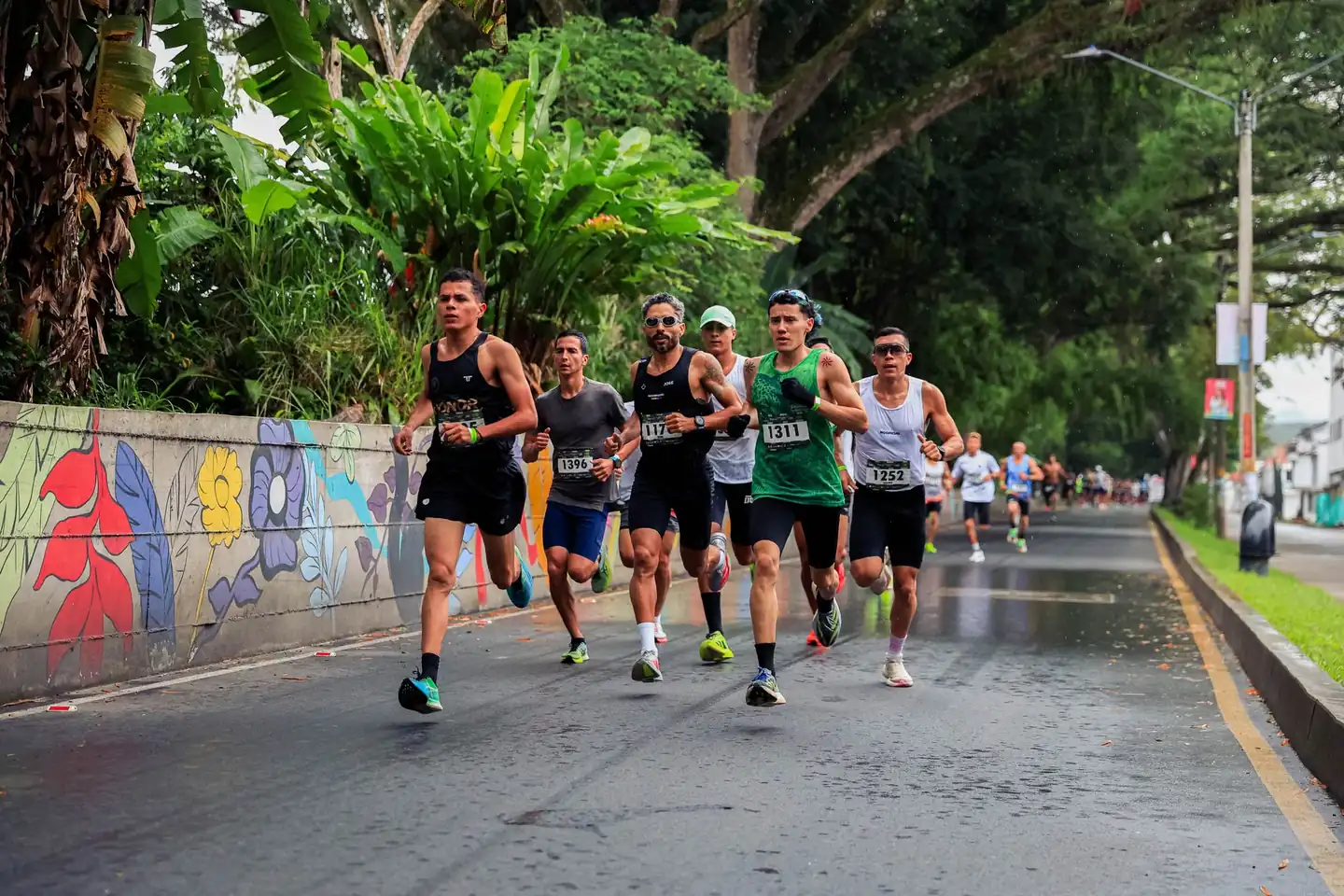
Imagen: CRISTIAN CAMILO ESTRADA / Pexels
Guadix will once again bring together distance runners from all over Andalusia and much of Spain on September 20, 2026, with the start at 10:00 from Plaza de la Constitución. The race, organized by the Guadix City Council and included in the Grand Prix of the Provincial Council of Granada’s Road Racing Circuit, reaches its eighteenth edition with its usual appeal: a course of middle distance, an uneven profile, and an identity strongly shaped by the landscape of Guadix.
The race is run over 21,097 meters, with official timing, aid stations distributed לאורך the route, and a time limit of 2 hours and 30 minutes to complete the event. The registration fee listed in the reference information is 10 euros, with registration closing on September 16, 2026. For local runners, there was also a free registration option in the announced edition, always with proof of residency and processing by email within the indicated deadline.
A long-distance event with its own identity on the Andalusian calendar
The half marathon in Guadix is not just another race on the calendar. Its popular name, “del Melocotón” (“Peach”), neatly sums up the bond between sport and place: an event that has become a showcase for Guadix and a recognizable fixture within the Granada circuit. The organization is run by the Guadix City Council, and the sporting coordination falls under the Grand Prix of the Provincial Council of Granada, a framework that gives it continuity, visibility, and a stable competitive structure.
In races of this kind, value is not measured only by the clock. The city behind the event matters too, as does the way the streets fill up and how the course interacts with its surroundings. Guadix brings that character of a city with history visible on every corner: a central start, a passage through urban areas and neighboring parts of the municipality, and a finish that returns to Plaza de la Constitución the classic image of arrival after effort. The result is a race with the feel of a serious long-distance challenge, one that demands focus from the first kilometer.
The announced eighteenth edition confirms a well-established tradition. That continuity is key to understanding why so many runners come back: this is not an improvised call, but a race with memory, rules, defined services, and a story of its own. In a season with an increasingly crowded calendar, that identity acts as a magnet for those looking for a half marathon with personality, not just another certified distance.
Start, course, and a profile that punishes complacency
Plaza de la Constitución is both the starting and finishing point. From there, the pack will set off at 10:00, on a morning that usually plays a decisive role in performance: the September heat in the province of Granada can be intense, and effort management becomes important from the very first meters. The route runs through Guadix and neighboring localities such as Benalúa, following a path described as irregular and winding—two adjectives that, in runner’s language, mean pace changes, small traps, and less room to run on autopilot.
The official distance is 21,097 meters, although the format is also cited in some references as 21.0975 kilometers. In both cases, the idea is the same: a textbook half marathon, but with a script that does not allow the comfort of flat, repetitive pavement. The course, supervised by judges from the Andalusian Athletics Federation, adds the usual technical framework of a sanctioned race, something that matters both to athletes chasing a time and to those who simply want a properly measured and well-organized competition.
The route is not especially kind to runners who go out too fast. The course’s irregularity forces runners to read the race, to know when to hold pace and when to protect the legs so as not to pay for it later. In races like this, the feeling at each kilometer can vary more than on a straight avenue: a turn, a slight incline, a more open section, or a stretch through town can completely change the perception of effort. Guadix, in that sense, offers a half marathon that lingers in the legs.
Aid stations, timing, and medical support: what sustains the race
The organizers have planned aid stations at kilometers 5, 9, 13, and 17, plus one at the finish. That layout gives useful reference points for the average runner, as it marks roughly every four kilometers in the middle part of the race. These are not just tables with water: in a long-distance half marathon, each aid station acts as a small mental anchor, a brief pause to adjust sensations, relax shoulder tension, and check the watch more wisely.
Mandatory checkpoint controls have also been announced along the route, an important detail in a sanctioned race with a long organizational tradition. This kind of control helps preserve the sporting integrity of the event and prevents shortcuts or incidents during the race. Alongside this, medical assistance is part of the planned setup, an essential safety net in an event of this kind, where prolonged effort, changing temperatures, and a demanding course require close monitoring.
The finish area is not limited to a symbolic gesture. In addition to water and basic care, local tradition adds a very distinctive touch: the runner’s bag includes Guadix peaches, a detail that has already become part of the race’s memory. This mix of simple nutrition and local produce fits well with the philosophy of many popular Spanish races, where recovering strength also becomes a postcard from the area. It is not a minor embellishment; it is part of the event’s identity.
Registration, price, and deadlines worth keeping clear
The announced fee for this edition is 10 euros, a modest amount for a half marathon with official timing, basic services, runner’s bag, and trophies. In a context where many races have raised their prices, that amount places the event in an affordable range for recreational runners. Registration closes on September 16, 2026, just four days before the start, so the window to secure a spot is relatively tight.
Bib pickup will take place on race day at the start area, up to one hour before the beginning. This setup simplifies logistics for those coming from other municipalities, although it does require some planning to avoid queues and last-minute issues. In races with a central start, runner flow, access management, and the time needed to warm up can affect the start of the day more than one might think.
For local runners, the available reference points to free registration, processed by email before September 17, with proof of residency in Guadix. This kind of measure not only encourages participation by athletes from the municipality; it also reinforces the bond between the race and the host city, something common in events that aim to remain a reference point for their immediate surroundings. The rest of the participants, meanwhile, find an inexpensive registration and a very specific closing date that is worth not leaving until the last minute.
Prizes, trophies, and the appeal of racing at home
The half marathon awards trophies to the top finishers in the men’s and women’s categories, a classic recognition that keeps the competitive edge of the event alive. In the most recent information, five overall prizes are also mentioned, along with five for local runners, again for both men and women, reinforcing the sporting side without losing the event’s popular character. That balance between local elite runners, visiting distance runners, and club athletes is one of the traits that best explains the race’s enduring appeal.
In races of this kind, prizes are not just about the podium. They serve as a symbolic motivator for those running near the limit of their abilities and add a note of recognition to the effort built up over weeks or months of training. In a half marathon with a tough profile, the reward is not always measured by a personal best; it also lies in having managed fatigue well on a course that offers no respite.
The local runner finds an extra motivation here. Racing at home changes the outlook: familiar streets weigh less on the mind, but more in emotional terms; people from the runner’s circle appear along the course; the finish carries a different human warmth. Guadix uses that connection to turn the race into a sporting event and, at the same time, a celebration of municipal identity. That element explains why the race has held its place on the Andalusian long-distance map for so many years.
What kind of runner fits Guadix best
This is not a half marathon designed simply to rack up kilometers. The uneven route demands a certain tactical maturity, which favors those who can hold pace without obsessing over every kilometer. Athletes accustomed to leg-breaking sections, mixed terrain, or races with frequent turns usually adapt better than those looking for a flat course to squeeze out a pure time. Guadix rewards the head as much as the legs.
That does not mean it is only for specialists. The distance is the classic half marathon and, as such, remains accessible to much of the recreational distance-running community with reasonable preparation. What changes is how effort is read. Instead of thinking in a mechanical sequence of splits, the runner has to live with a more human profile, more like a conversation with the route than a mathematical exercise. The reward is to finish the race solidly, without being carried away by the course’s first impression.
The weather can also tip the balance. September in Guadix can still be hot, and that calls for careful hydration, pace control from the start, and not confusing early sensations with the actual ease of the race. In a half marathon of this kind, mistakes usually come from too much enthusiasm: an overly fast opening stretch, a climb or change of direction that breaks the rhythm, and suddenly the watch no longer seems so forgiving. The race invites respectful running.
Guadix as a setting: a race that also tells the story of the place
The appeal of the race is not limited to its sporting side. Guadix provides a visual backdrop that many road races cannot offer: a city with historical weight, streets that tell centuries of stories, and an urban geography that makes itself felt in the runner’s experience. Even for those who come only to compete, the image of the start in Plaza de la Constitución and the passage through the old town leave a deeper memory than an anonymous race on any ordinary avenue.
The mention of neighboring localities such as Benalúa broadens that map and reminds us that the half marathon is set within a living territory, not in a closed circuit of out-and-back only. This comarcal dimension is important because it helps frame the race as part of Granada’s sporting life, not as an isolated event. In the end, the race also serves to project Guadix outward and to reinforce, once again, the relationship between sport and heritage.
The peaches in the runner’s bag are almost a signature detail. Few images summarize a race’s personality better than that final touch, as simple as it is recognizable. In the world of popular running, where identical formats abound, small local traits make the difference. Guadix has known how to preserve them and turn them into part of its competitive story, something that is not improvised and that largely explains the loyalty of many participants.
A half marathon that combines endurance, place, and sporting memory
The Guadix race offers more than 21 kilometers: it offers context. Date, time, price, course, aid stations, and official timing make up the practical information; the central square, the popular name “Peach,” and the peaches in the runner’s bag complete the human picture. That combination is what keeps the race interesting for those looking for a half marathon with a clear identity rather than just another line on the calendar.
At a time when recreational running is caught between the search for personal bests, the growing supply of events, and the need to stand out, Guadix maintains a recognizable profile. It is a long-distance race, yes, but also a sporting portrait of the city. Whoever crosses the finish line will have completed a demanding, sanctioned, and well-defined half marathon; whoever sees it from the outside will recognize one of those races that do not need to exaggerate in order to leave a mark.
The enduring appeal of this half marathon lies in its mix of simplicity and character. A reasonable entry fee, a course with personality, concrete services, and a setting that is not easily forgotten are enough to sustain an event that is already part of Granada’s autumn running map. Guadix once again turns the classic distance into an experience with its own accent.
You may also like: Guadalajara Half Marathon 2025: date, route, and key details.



How to prevent thigh chafing: causes and real solutions

Women’s running windbreakers: seven jackets and how to choose

Do more workouts get rid of soreness? A guide for runners

Jaén Half Marathon 2026: Record 3,800 Runners Registered

Men’s short running tights: how to choose the right pair

World Triathlon confirms data breach involving medical data

Izan Edo targets podium at Miyazaki World Cup

María Pérez ranks ninth in World Athletics’ 2026 top ten

Dos Santos, Duplantis and Sawe: World Athlete of the Year finalists

San Silvestre Vallecana 2026: 42,000 places, prices and start times

 Races3 months ago
Valencia Half Marathon 2027: date and registration

 Races3 months ago
Valencia Marathon 2026: entry, ballot and course

 Reviews and Comparisons4 months ago
Asics Gel-Roadmiles 3 for men: review and current price

 Reviews and Comparisons4 months ago
Asics Gel Sonoma 8 Gore-Tex: complete analysis for trail and rain

 Sneakers3 months ago
Saucony Endorphin Pro 4: full review and verdict

 News5 months ago
Strava API 2026: what changes for clubs, challenges and runner apps?

 Reviews and Comparisons5 months ago
Nike Alphafly 3: opinions, sensations, and real key points

 Reviews and Comparisons4 months ago
Under Armour running shoes review 2025-2026: models and key features

 Sports Equipment4 months ago
Shoe sizes in cm: a clear guide to getting the right fit for your footwear

 Sneakers3 months ago
Skechers GO RUN Consistent 2.0 analysis: comfort and limits

 News5 months ago
Valencia Marathon 2026 route: key tips to train and run better

 Sneakers4 months ago
Adidas Adizero Boston 13 for men: review and verdict