Races
Half Madrid Triathlon: date, distances and prices 2026
The Madrid event returns with middle distance, short, and aquabike at Casa de Campo. Dates, routes, and fees.

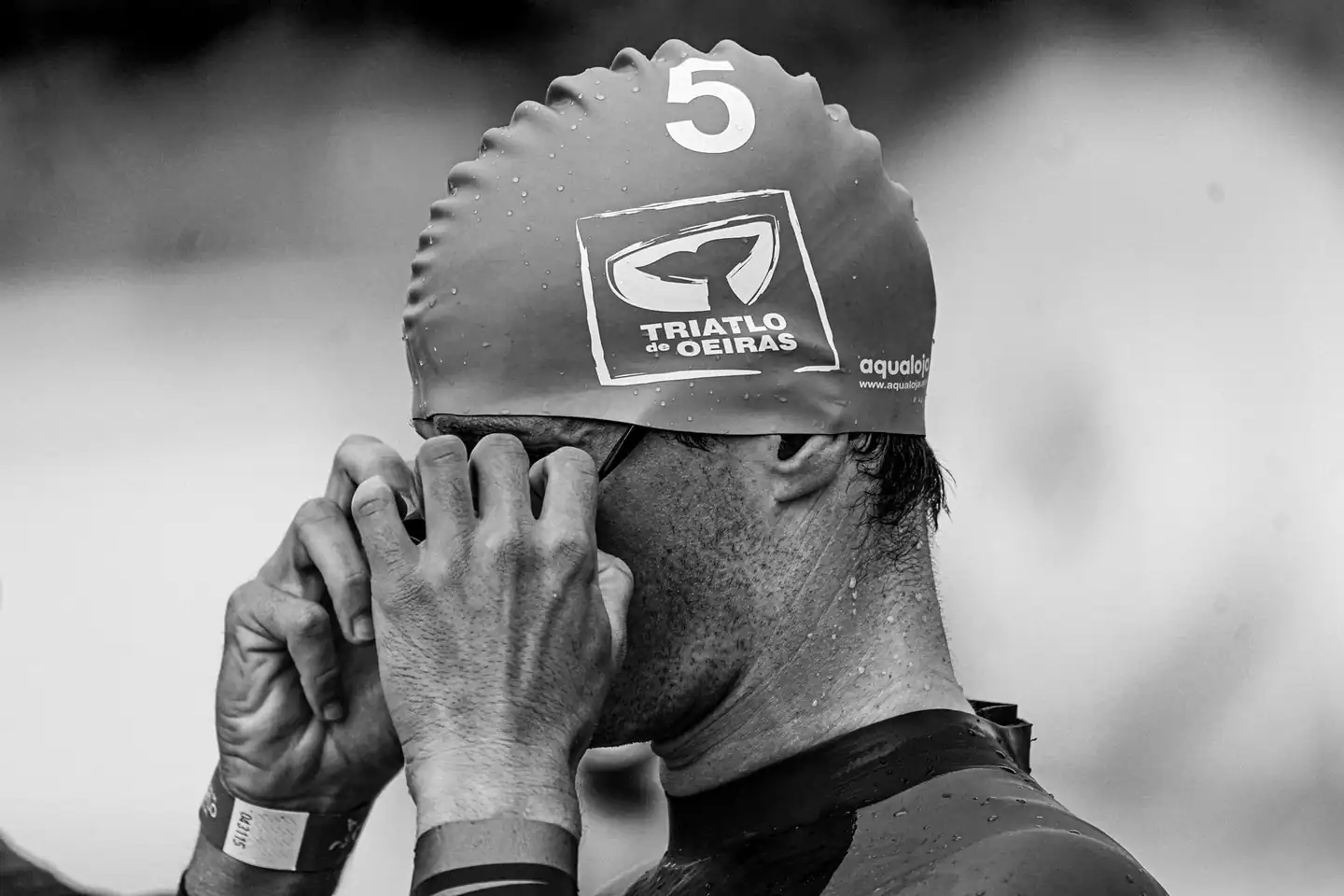
The middle-distance triathlon returns to Madrid with an edition that combines sport, urban scenery, and very recognizable logistics: Casa de Campo as the nerve center, the lake as the swim start, and a closed circuit that avoids the noise of traffic. The event will take place on September 27, 2026 and will once again bring together three formats in a single day: Half, Short, and Aquabike.
The race also arrives with added competitive value. The Half Madrid Triathlon serves as the Madrid Middle-Distance Championship and earns points for the national middle- and long-distance ranking. That places it in a very attractive middle ground: demanding enough for those looking for a complete race and, at the same time, urban enough to feel more accessible than other middle-distance events with a more remote profile.
A race with its own identity on the map of Spanish triathlon
Madrid has few races that blend city center and triathlon so well. In this one, the Casa de Campo lake is not just a backdrop, but the axis of the entire day. The swim starts there, the bike leg is done in one lap, and the run passes through emblematic areas such as Huerta de la Partida and Madrid Río, with the finish very close to the transition area. That sequence creates a sense of continuity that is unusual in a major capital.
The course also explains much of the interest the event generates. There is no labyrinthine design or long out-and-back stretches with open traffic; the organizers propose a traffic-free route, with reinforced signage and a broad control setup. For the triathlete, that means racing in a cleaner, more readable environment and, in practical terms, a friendlier one for sustaining steady paces.
The 2026 edition also retains a very Madrid-style spectacle element. The swim offers views of the city’s monumental surroundings, with visual references toward the Royal Palace and the Almudena Cathedral, while the run section goes through an area that combines shade, gentle curves, and the most recognizable landscape of the urban river. This is not an anonymous race: it is raced inside a postcard with sporting pulse.
The three formats and what changes in each one
The main distance, the Half, draws most of the attention, but the race does not end there. The program also includes Short and Aquabike, two formats that broaden participation and allow the event to bring together very different profiles in the same start. That coexistence gives the day a fuller feel, almost like a competitive festival, without losing order or clarity.
The Half consists of 1,850 meters of swimming, 83 kilometers of cycling, and 18.6 kilometers of running. The bike leg is completed in a single lap, something especially appreciated by those who prefer a simpler reading of effort and fewer tactical interruptions. The run, meanwhile, goes around the lake, crosses Huerta de la Partida, and runs along Madrid Río to the finish.
The Short reduces the challenge to 950 meters of swimming, 40 kilometers of cycling, and 10 kilometers of running. It maintains the same closed-environment, controlled-route philosophy, but on a shorter scale. It is a distance that usually attracts those who want an intense experience without the volume burden of the Half, or those approaching a long day without yet taking on the full physiological demands of middle distance.
The Aquabike shares the Half’s swim and bike segments, but ends after the cycling section with a finish run of just 280 meters. This format follows a different logic, more focused on endurance across two disciplines than on the impact of the run, and it fits well in an event where the organizers want to make room without diluting the competitive profile of the race.
Schedules, access, and the order of the day
The schedule is designed to distribute preparation time very well. Saturday is reserved for optional bib collection, from 17:00 to 21:00, and bike drop-off in the transition area from 17:15 to 21:00. That pre-race afternoon reduces logistical pressure and allows Sunday to begin with fewer lines and less improvisation, something especially useful in a race that brings together several formats.
On Sunday, the clock is in charge. The opening of the registration desk for SHORT is scheduled for 06:45 and the transition area opens at 06:55. For Half and Aquabike, registration opens at 07:15 and transition at 07:25. Then come the camera calls and the staggered starts: 08:15 for SHORT and 08:50 for HALF and Aquabike. It is a rational sequence, designed so the space can breathe and the start does not turn Casa de Campo into a bottleneck.
The awards ceremony is also spread throughout the day, with prizes for SHORT at 11:00, for Aquabike at 13:00, and for the overall Half at 14:00, before the age-group trophies at 14:30. The finish closes at 16:00. That wide margin is consistent with a race that combines competitive level, different distances, and an urban setting that requires fine coordination.
Swimming in the lake and cycling in one lap
The swim segment is one of the race’s most identifiable features. Swimming in the Casa de Campo lake not only provides a clear visual reference, it also shapes the race dynamic. Open water requires better orientation, better acceptance of contact, and a calmer head before entering the bike segment. In an environment like this, the first meters matter almost as much as the rest of the segment.
The bike leg, meanwhile, relies on a course of 83 kilometers in a single lap in the Half and 40 kilometers in the Short. The advantage of one lap is obvious: it avoids the mechanical repetition of turns and crossings, and allows the athlete to settle into a sustained rhythm sooner. In addition, the organizers have highlighted pre-race mechanical assistance, a detail that may seem minor but has real value in long races when it comes to avoiding setbacks in the early stages.
The weather context also matters. At the end of September, Madrid can offer temperatures close to 26 degrees Celsius, enough to demand effort management and good hydration, though far from the most extreme summer heat. In a middle-distance race, that thermal threshold makes a difference: it forces pacing, but it does not turn the event into a survival battle. That balance partly explains the popularity of the date.
Run course with urban scenery and shaded areas
The final leg does more than just add kilometers. In the Half, the 18.6 kilometers of running close out a day that has already heavily loaded the legs, so the shape of the course matters as much as the distance. The route through Casa de Campo, Huerta de la Partida, and Madrid Río mixes more open areas with more sheltered ones, which helps athletes read effort better and find small moments of relief within the accumulated fatigue.
The reference to shade is not a decorative detail. In a long race, every protected area counts. The body arrives after swimming and cycling with limited economy, and any environmental respite can soften the strain. That makes the run course less hostile than other exposed urban designs from start to finish, without ceasing to be a serious test of endurance.
The finish, very close to the transition area, closes the race with the feeling of a compact circuit. There are no long transfers or scattered spaces that pull the public apart. The finish line is integrated into the same setting where much of the activity began, reinforcing a basic idea of the race: everything happens within a recognizable radius, as if the event folded the city in on itself for a few hours.
Entries, slots, and starting prices
The organization limits the total field to 800 participants across the three formats. That cap not only controls the number of entrants; it also preserves course flow and the event’s operational quality. In triathlon, a reasonable field size makes the difference between an orderly race and a saturated experience, especially when multiple distances converge in the same space.
Entries for the 2026 edition opened on Thursday, January 8 at 17:00, a relevant detail because pricing changes by tier and by federation status. The federated Half starts at 195 euros and the non-federated rises to 205 euros. In the Short, fees are 100 euros for federated athletes and 110 euros for non-federated athletes. In Aquabike, the price is 125 euros for federated athletes and 135 euros for non-federated athletes.
The organizers also remind participants to check the jersey size chart beforehand, because the selection cannot be changed once registration is completed. They also include a specific cancellation insurance policy, with coverage worth reading before finishing the process. In parallel, the withdrawal policy provides a 70% refund until May 31, 2026, 50% between June 1 and August 30, and no refunds from September 1 onward for those without cancellation insurance.
Prizes, trophies, and what this race represents on the calendar
The Half is not just a beautiful or well-organized race. It also awards prizes and sporting recognition in a way that underscores its weight on the calendar. There will be trophies for the top three men and women in each format, as well as medals for the top three in each age group. In the Half overall classification, prize money is also awarded.
The prize purse for the overall Half is set at 500 euros for the male and female winners, 250 euros for second place, and 150 euros for third place. These are not enormous amounts, but they are enough to confirm that the race aims to maintain a serious competitive level, compatible with the open atmosphere of a major capital city. That combination, right there, is part of its appeal.
Beyond the trophies, the event has a very clear calendar value. Its status as a regional championship and its points toward the national ranking give it a relevance that goes beyond the label of a popular race. In an increasingly crowded calendar, the Half Madrid Triathlon occupies a unique place: it brings together performance, visibility, and urban logistics that make participation easier without giving up the challenge.
The triathlete’s experience in a city that never stops
Racing in Madrid adds both an emotional and practical layer. The city does not close itself to sport, but it does not completely transform either; it coexists with it. That requires precise organization and, at the same time, offers an energy that few venues can replicate. The distant noise of traffic, the openness of the park, and the echo of footsteps by the lake create a very particular atmosphere.
For the athlete, that atmosphere has value because it combines clear references and real demand. This is not a race in a neutral setting, but an event set in a living landscape, with history and everyday use. Casa de Campo, in this context, acts as a great sporting chamber: it absorbs the participants, organizes them, and returns them to the city as part of the day’s story.
That is why the Half Madrid Triathlon often appears on the calendars of those looking for more than just another date on the schedule. The swim in the lake, the one-lap bike, the run by the river, and the compact finish make for a race that is easy for the public to understand and serious enough for the triathlete. The race works because it does not overstate itself: it promises what it can deliver and fulfills it with a coherent design.
An urban middle-distance race that gains weight every season
The event’s evolution points to clear consolidation. Reaching a special edition, maintaining the regional championship, and opening space to different formats show that this is not a one-off race, but an event with a vocation for permanence. Spain’s capital already has enough major sporting events; what matters here is that this triathlon has found its own identity within that competitive noise.
The combination of a limited field, a closed circuit, a lake start, and a finish in the same area makes the experience more compact and more readable. Added to that is a well-timed calendar slot, in a season when the temperature can be favorable without giving anything away. There is challenge, there is imagery, and there is structure, three elements that usually support the races that truly end up establishing themselves.
In triathlon, the sum of details is never just decorative. A clear course, an orderly transition, a well-staggered schedule, and a recognizable urban frame are all part of the sporting result itself. The Half Madrid Triathlon relies on that logic, and that is why it draws interest from federated athletes, middle-distance enthusiasts, and sportspeople who value racing in a city that, for a few hours, makes room for water, the bike, and the stride.
The date, courses, prices, and schedules already outline a fully defined race. On September 27, 2026, Casa de Campo will once again be the meeting point for a middle-distance race with a Madrid stamp, a race that combines organizational precision and urban postcard appeal without losing the tough essence of triathlon. A good part of its strength lies in that balance.



How to prevent thigh chafing: causes and real solutions

Women’s running windbreakers: seven jackets and how to choose

Do more workouts get rid of soreness? A guide for runners

Jaén Half Marathon 2026: Record 3,800 Runners Registered

Men’s short running tights: how to choose the right pair

World Triathlon confirms data breach involving medical data

Izan Edo targets podium at Miyazaki World Cup

María Pérez ranks ninth in World Athletics’ 2026 top ten

Dos Santos, Duplantis and Sawe: World Athlete of the Year finalists

San Silvestre Vallecana 2026: 42,000 places, prices and start times

 Races3 months ago
Valencia Half Marathon 2027: date and registration

 Races3 months ago
Valencia Marathon 2026: entry, ballot and course

 Reviews and Comparisons4 months ago
Asics Gel-Roadmiles 3 for men: review and current price

 Reviews and Comparisons4 months ago
Asics Gel Sonoma 8 Gore-Tex: complete analysis for trail and rain

 Sneakers3 months ago
Saucony Endorphin Pro 4: full review and verdict

 News5 months ago
Strava API 2026: what changes for clubs, challenges and runner apps?

 Reviews and Comparisons5 months ago
Nike Alphafly 3: opinions, sensations, and real key points

 Reviews and Comparisons4 months ago
Under Armour running shoes review 2025-2026: models and key features

 Sports Equipment4 months ago
Shoe sizes in cm: a clear guide to getting the right fit for your footwear

 Sneakers3 months ago
Skechers GO RUN Consistent 2.0 analysis: comfort and limits

 News5 months ago
Valencia Marathon 2026 route: key tips to train and run better

 Sneakers4 months ago
Adidas Adizero Boston 13 for men: review and verdict