Races
2025 Zaragoza Half Marathon rankings: times and key points
Hamza Omari and Sara Benedí led a record edition in Zaragoza, with more than 5,000 runners and a fast course.

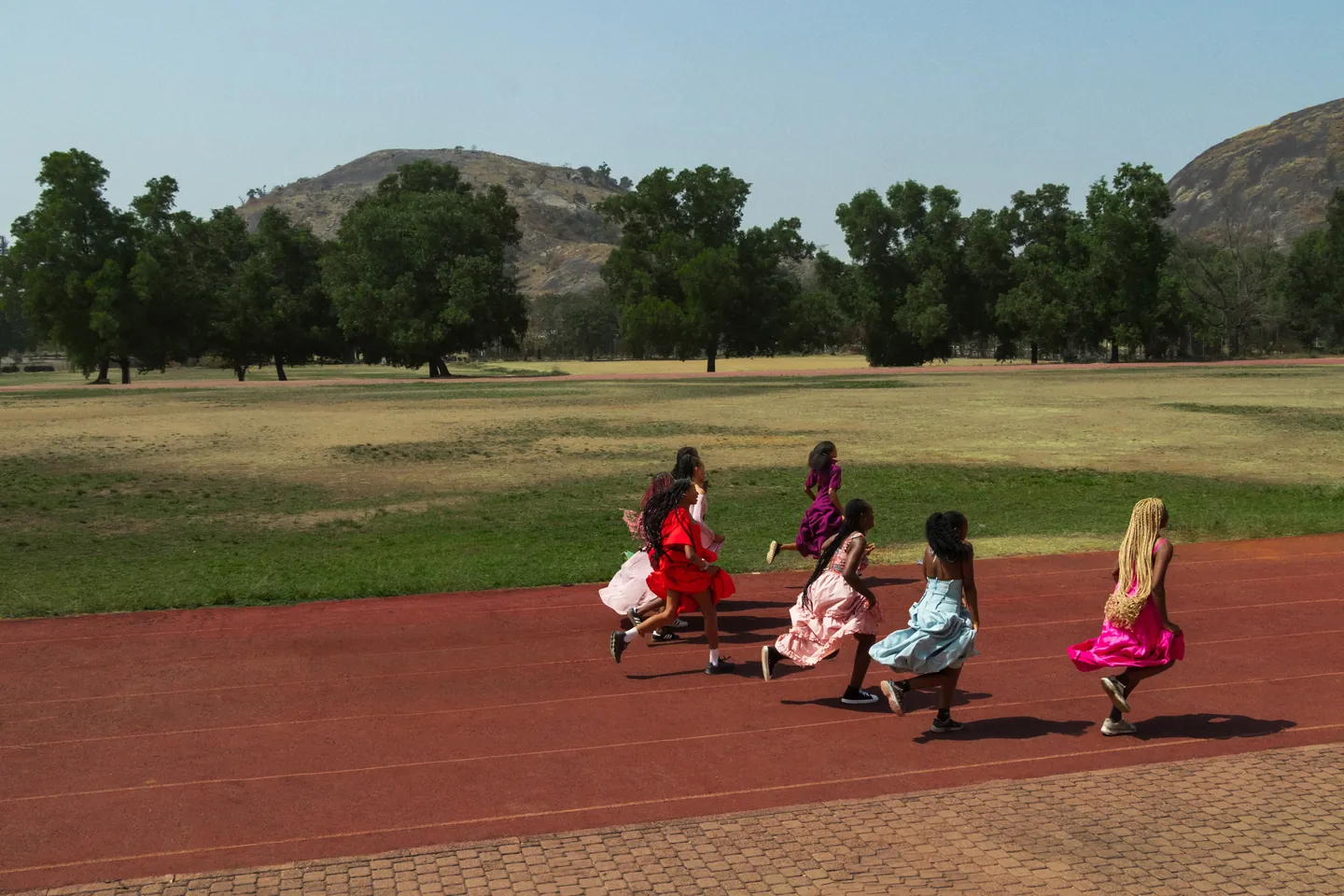
Imagen: magapls . / Pexels
The Zaragoza City Half Marathon 2025 left a powerful image: thousands of runners crossing the center of the Aragonese capital on a cool morning, with the Ebro as a backdrop and a very busy finish in Plaza del Pilar. Overall, Hamza Omari posted 1h03:56 and Sara Benedí won among the women with 1h16:42, in an edition that confirmed the appeal of an event that is increasingly massive and faster.
The search for the classification, in fact, tells two stories at once. On one side are the leading names at the top, where the pace demands an almost Swiss-watch race. On the other, the great popular story, that of the thousands of athletes who turn the streets into a ribbon of continuous effort, with different clocks but the same logic: hold the pace, survive the strain, and reach a finish that, for many, is worth as much as a podium.
A record-breaking edition in the heart of Zaragoza
The race filled central Zaragoza with athletics through a very central course with few hills, a combination that helps explain why the event brings together more high-level runners and more fans seeking a personal best every year. The route passed through major streets of the Aragonese capital and made small forays into neighborhoods on both banks of the Ebro, a formula that combines an urban showcase with competitive pace.
The weather also played in its favor. The morning was cool, a pleasant temperature for running and especially suited to maintaining a steady pace without the burden of heat. In 21-kilometer events, those nuances matter a great deal: a couple of degrees, a bit of wind, or an overambitious start can completely alter the outcome of a half marathon.
From 10:00 a.m., the arrival of athletes at Plaza del Pilar was constant, almost like a human current. The scene summed up the scale of the event well: not just a race for the fastest, but a city gathering, with crowd noise, the sound of shoes, held breath, and that final trickle of runners squeezing out the last meters as if every second were still counting within their bodies.
The times that shaped the classification
Hamza Omari won with 1h03:56, an impressive performance in an event that, because of its size and atmosphere, has already established itself among the most prominent on the Spanish popular running calendar. In the women’s category, Sara Benedí won with 1h16:42, a mark that also reflects the strong state of women’s distance running in fast urban races, where consistency usually ends up deciding more than sudden changes of pace.
Reading these results is not just about the first place. The classification of a half marathon serves to compare paces, check the depth of participation, and understand where the race was decided. In Zaragoza, the central, almost flat circuit favored those who knew how to maintain a clean stride from the start without spiking their heart rate or entering the red zone too early.
That balance between speed and control defines this type of event very well. Over 21.097 kilometers, starting too fast usually takes its toll from kilometer 15 onward, when the body begins to demand repayment. That is why the official classification not only orders names; it also reveals strategies, signs of endurance, and a silent reading of the race that is stamped into the clock.
More than 5,000 runners and a very busy finish
More than 5,000 athletes took part in the Zaragoza Half Marathon 2025, a figure that places the event in a high-demand bracket within the national calendar. The number is not trivial: the greater the number of entrants, the more complex the logistics of the start, intermediate checkpoints, pace control, and finish line arrival become. At the same time, the social dimension of the event becomes more visible.
In a popular race of this kind, very different profiles coexist. There are athletes chasing a personal best, club groups, first-timers aiming to complete the distance solidly, and runners who rely on the pack to sustain the effort. The final classification captures all of that with numerical coldness, but behind every position there is a miniature of fatigue, tactics, and mental resilience.
The finish at Plaza del Pilar also adds a symbolic component that is unusual. It is not just about completing 21 kilometers, but about entering one of Zaragoza’s most recognizable spaces after crossing avenues, wide streets, and narrower sections. That mix of monumental city and fast course helps explain the event’s strong reputation among distance runners.
How to read the official classification without losing nuance
The classification of a half marathon is not interpreted only by overall place. Official time and chip time also matter, especially in large events with crowded starts. Official time takes the start gun as the reference, while chip time measures from when the runner crosses the timing mat. In an event with thousands of participants, that difference can be decisive in fairly assessing individual performance.
In Zaragoza, the results search allowed each athlete to review their marks and compare them with other runners’ splits. That kind of information, as technical as it is useful, is what turns a classification into a sports-reading tool rather than just a list. It makes it possible to see whether the pace was evenly sustained, whether there was a drop in the final stretch, or whether the result reflects a well-managed race.
It also helps explain the relative value of the time. A 1h16 on a fast course with good weather does not carry the same weight as the same time on a hot day or on a route with more elevation gain. That is why, when the classification comes with context, the data stops being an isolated number and becomes a complete performance.
A course designed for speed
The course profile favored fast times. The central streets, the lack of major climbs, and the feeling of a smooth circuit made this half marathon an ideal setting for urban distance running. It is no coincidence that competitive times appear in events like this: the cleaner the route, the less energy is lost to abrupt pace changes, awkward turns, or long inclines.
That does not mean the race is easy. A fast course also punishes lack of control. Urban half marathons of this type require very precise running economy: not wasting meters on corners, not pushing too hard at the start, and saving some margin for the end. The difference between a great result and a mediocre time often lies in how that effort is managed.
The city, moreover, becomes a kind of parallel lane. While the athletes move forward, Zaragoza accompanies them with façades, bridges, avenues, and a finish that concentrates part of the emotion. It is a very recognizable postcard of popular Spanish running: sport, landscape, and community woven together in the same spring morning.
What this half marathon leaves for the calendar
The 2025 edition reinforces Zaragoza’s standing within the national map of urban half marathons. Not only because of participation, which comfortably exceeds the 5,000-runner mark, but because of the competitive level and the course’s ability to produce serious times. In an increasingly crowded calendar, that balance between popularity and performance is highly valuable.
There is also a broader reading in the rise of these races: recreational runners are increasingly looking for well-organized events, centrally located, with atmosphere and the chance to measure their true condition. In that sense, the classification is the final mirror of an experience that begins much earlier, in training, and ends with a number that summarizes months of effort.
Zaragoza’s appeal lies precisely there. The race does not need gimmicks to work. It only needs a reasonably fast course, a massive start, and a recognizable finish to build a strong narrative. The 2025 classification captures that idea clearly: speed at the front, a dense pack in the middle of the field, and a city devoted to the constant passage of runners.
A final photo that explains the race better than any summary
The image of the finish in Plaza del Pilar condenses the full meaning of the race. Some runners barely lift their eyes, others desperately search for the finish arch, and many cross the final meters with that mix of relief and pride that only a hard-fought 21K can offer. It is a scene of endurance running, yes, but also of a city open to sport.
That is why the Zaragoza Half Marathon 2025 classification is not just a list of times. It is the numerical footprint of a day with record participation, good weather for running, a favorable course, and clear victories at the top. And above all, it confirms that Zaragoza no longer just hosts a half marathon: it turns it into a reference event for thousands of runners.
In the end, that is the real journalistic reading of the results. Omari and Benedí’s names open the story, but the true value of the race lies in the sum of all the steps that came after. A half marathon is measured in minutes, although it is often remembered for the way an entire city learns to run at its pace.



How to prevent thigh chafing: causes and real solutions

Women’s running windbreakers: seven jackets and how to choose

Do more workouts get rid of soreness? A guide for runners

Jaén Half Marathon 2026: Record 3,800 Runners Registered

Men’s short running tights: how to choose the right pair

World Triathlon confirms data breach involving medical data

Izan Edo targets podium at Miyazaki World Cup

María Pérez ranks ninth in World Athletics’ 2026 top ten

Dos Santos, Duplantis and Sawe: World Athlete of the Year finalists

San Silvestre Vallecana 2026: 42,000 places, prices and start times

 Races3 months ago
Valencia Half Marathon 2027: date and registration

 Races3 months ago
Valencia Marathon 2026: entry, ballot and course

 Reviews and Comparisons4 months ago
Asics Gel-Roadmiles 3 for men: review and current price

 Reviews and Comparisons4 months ago
Asics Gel Sonoma 8 Gore-Tex: complete analysis for trail and rain

 Sneakers3 months ago
Saucony Endorphin Pro 4: full review and verdict

 News5 months ago
Strava API 2026: what changes for clubs, challenges and runner apps?

 Reviews and Comparisons5 months ago
Nike Alphafly 3: opinions, sensations, and real key points

 Reviews and Comparisons4 months ago
Under Armour running shoes review 2025-2026: models and key features

 Sports Equipment4 months ago
Shoe sizes in cm: a clear guide to getting the right fit for your footwear

 Sneakers3 months ago
Skechers GO RUN Consistent 2.0 analysis: comfort and limits

 News5 months ago
Valencia Marathon 2026 route: key tips to train and run better

 Sneakers4 months ago
Adidas Adizero Boston 13 for men: review and verdict