Races
Hondón-Aspe Descent 2025: date, route, and key details
The event between Hondón de las Nieves and Aspe returns in August with 11 km, a walking march, and prices already set.

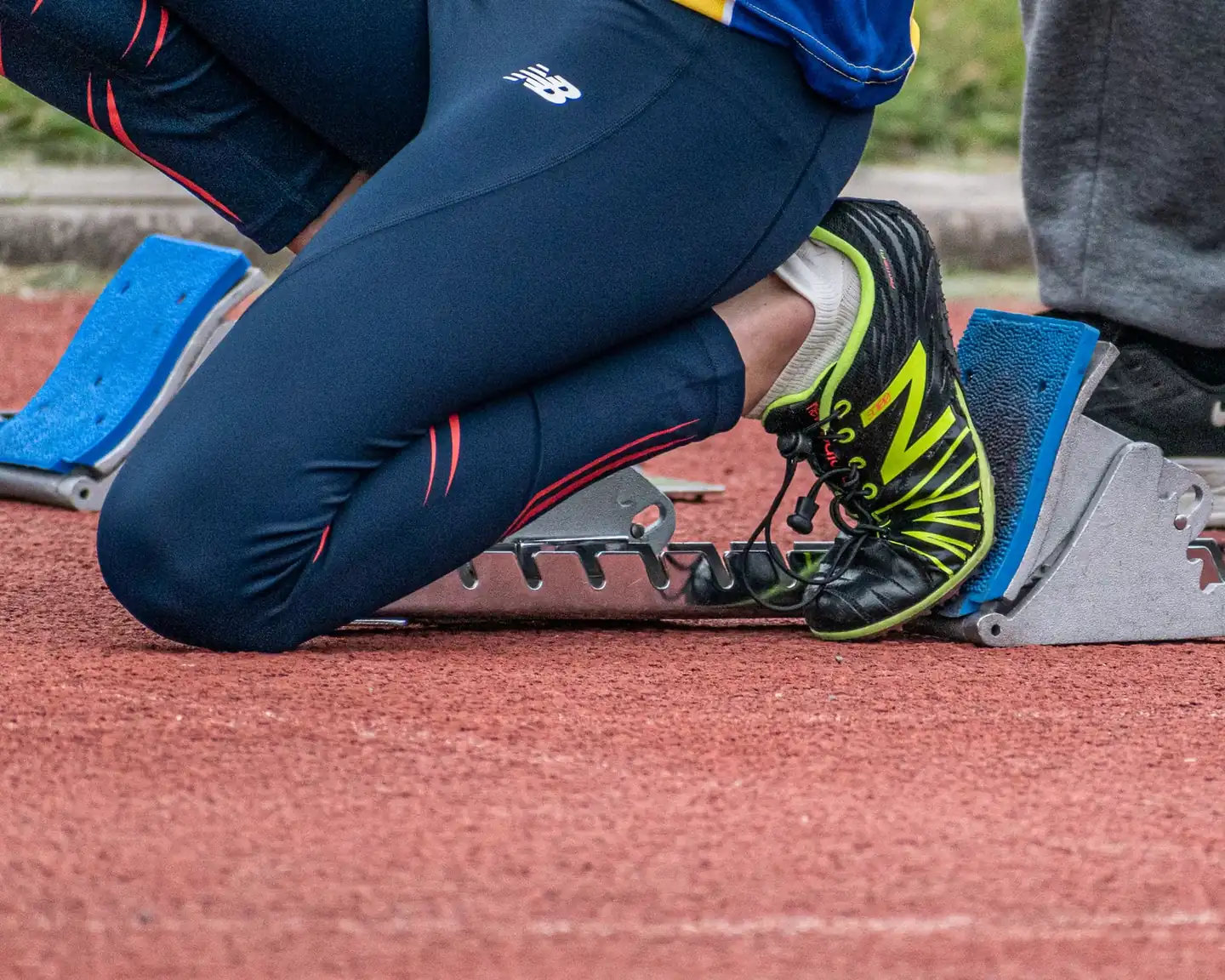
The Bajada Hondón-Aspe 2025 once again marks the sports summer in the Medio Vinalopó with an edition that combines road racing, popular participation, and the pull of a deeply rooted tradition. The event is scheduled for Friday, August 22, 2025, with the start at the town hall square in Hondón de las Nieves and two 11-kilometer formats: a race and a walking march.
The event keeps alive the spirit of a race that is no longer understood as competition alone. For the runner, it is a short but demanding day, one of those in which the clock rules from the first kilometer; for the walker, it is a shared route that preserves the atmosphere of the great summer events. Registration is set at 15 euros for the race and 12 euros for the walk, to which in the latter case are added management fees and the bank card POS commission.
A race with its own identity in the local calendar
The Bajada Hondón-Aspe is not just any race within the regional circuit. Its symbolic weight comes from its continuity, from the loyalty of clubs and athletes, and from a course that has turned the end of August into a small sporting ritual. The XXXVIII edition in 2025 confirms that solidity: years of presence, repeated bibs, and an organization that has managed to maintain interest without losing its popular character.
At its core, that permanence explains much of its appeal. There is no noise here from major urban events or the fireworks of a mass race; instead, there is a recognizable, accessible format with a local flavor. The starting town, Hondón de las Nieves, and the natural reference point of Aspe create a sporting connection that has already become part of the summer in the region.
Interest in this race is also fueled by its nature as a meeting point. Local runners, clubs from the province, and participants drawn by a course that demands pace and consistency all take part, but without reaching the extremes of trail running or the toughness of a major climb. That blend of apparent simplicity and real effort is precisely what sustains the prestige of many popular races.
Date, start, and official distances
The available information places the event on Friday, August 22, 2025. The start will be from the town hall square in Hondón de las Nieves, a point that already serves as a natural reference for runners, companions, and organizers. The official course covers 11 kilometers for both the race and the walking march, a distance that makes it brief in the calendar but serious enough to require good effort management.
That distance is important because it places the event in a very specific segment of popular running. It is neither a pure urban 10K nor a half marathon with long-duration strategies. It is not a mountain race either. It is a medium, compact, tactical effort, where positioning, starting pace, and the ability to sustain stride can matter as much as the training done beforehand.
The event is organized by the Club Deportivo Triaspe, a name already firmly associated with this race. In its official communication, the club website and contact email are also provided, two elements that reinforce the reliability of the information and the continuity of the event. In the world of popular races, that organizational stability is worth almost as much as the course itself: it builds trust and encourages broader participation.
Registration, price, and participation format
One of the most useful pieces of information for any runner is the entry fee. In 2025, the race is listed with a registration fee of 15 euros, while the walking march is set at 12 euros, plus management fees and the POS bank commission in this second case. It is a typical range for popular events of this size, where the price seeks to balance logistics without putting off those who make up the bulk of the field.
The existence of two modalities broadens the potential audience. The race attracts those looking for a time, a benchmark, and a ranking; the walk, those who prefer to cover the route at another pace, more recreational or less competitive. Both share the same setting and the same sporting narrative, but not the same intensity or the same type of experience.
This dual format also explains why the Bajada Hondón-Aspe retains such a broad social base. The events that survive over time are not always the longest or the fastest, but those that allow different levels of participation. Here, variety does not break the identity; it strengthens it. The runner comes to compete; the walker, to be part of the same scene.
What kind of course awaits the runner
With a distance of 11 kilometers, the race sits in terrain where speed still matters, but caution does too. Races of this profile often punish uncontrolled starts and reward consistency. An overly ambitious beginning can take its toll before the halfway point; a start that is too conservative can close the door to a good time. The key is usually to race smart from the very first section.
The race’s own name suggests a link between two nearby towns, which usually translates into a fast-paced event, with continuous tension and little room for relaxation. In that context, reading the terrain matters. Runners used to regional circuits know that these intermediate courses often do not forgive mistakes: neither for elevation, nor for heat, nor for the habit of starting faster than is reasonable.
In addition, August adds a layer of difficulty that does not appear on the map but does on the skin. Heat can completely alter the perception of effort, and in the Valencian Community that is never a minor detail. Hydration, heart-rate control, and pacing are part of the experience even if they do not appear in the technical sheet. In a summer race, the weather acts as a second judge.
A sporting summer that still carries a regional accent
The Bajada Hondón-Aspe fits into a very specific sporting geography: that of the popular races in the inland area and the Vinalopó, where local clubs sustain an essential part of the calendar. That network of events does not depend only on the elite or major sponsorships; it also lives on the perseverance of organizations that set up, measure, time, and keep a collective tradition alive.
On that map, Aspe and Hondón de las Nieves are connected by more than just proximity. The race works as a bridge between municipalities, a sporting route that brings together runners of different categories and fans who recognize in this kind of event the essence of popular athletics. The value lies not only in who wins, but in the fact that the race keeps taking place every year.
August’s calendar is usually demanding for amateur runners. There is less competitive volume than in spring, more heat, and often a mix of rest, reduced training, and a gradual return to race pace. That is why an 11-kilometer event at this time of year can work as a good benchmark: enough to test yourself, not so long as to require weeks of specialization.
Rankings, podiums, and the weight of notable names
In the 2025 reference there are overall rankings and men’s and women’s podiums, along with filters by category, local runners, and disability. That detail matters because it shows an organizational structure designed to order effort precisely and to give visibility to different groups of participants. The race is not limited to first place: it broadens the focus toward parallel categories and rankings that enrich the reading of the event.
Previous editions of the competition have produced top names on the podium. In recent years, the leading times have been around 35 minutes in the men’s category and 39-40 minutes in the women’s, figures that speak to a strong pace for an 11-kilometer distance. These are marks that define the race’s profile: fast, but not easy; accessible, but with enough competitive level to generate interest among clubs and regular runners.
Also relevant is the presence of local rankings, both for Hondón and Aspe. That element reinforces the sense of belonging to the territory and creates its own narrative within the final result. The local runner competes twice: for their overall position and for recognition from their surroundings, something that brings the race to life beyond the absolute podium.
The role of the organizing club and the event’s continuity
Behind a race like this there is always a quiet structure. The Club Deportivo Triaspe bears the weight of organization, communication, coordination with volunteers, and event management. In popular races of this size, continuity is not improvised: it requires experience, planning, anticipation, and a smooth relationship with the local environment.
The 2025 edition also arrives with a history that already spans well over three decades. That means the Bajada Hondón-Aspe is not a passing trend or an event born from a fleeting fashion. It is a stable part of regional sport, a tradition renewed every summer with the same gesture and a different list of bib numbers. The history of the race is, in part, the history of its persistence.
In journalistic terms, that longevity has value in itself. Races that survive for so long usually do so because they offer something recognizable: an honest course, a no-frills organization, and an atmosphere in which the runner feels part of something bigger than their time. The Bajada Hondón-Aspe preserves exactly that tone, without needing artifice.
What a race like this brings to the popular runner
For the regular runner, an event like this is useful for several reasons. It makes it possible to gauge fitness over an intermediate distance, forces a sensible pace from the start, and leaves room to compare sensations without the mental burden of a major goal. A well-run 11K says a great deal about the real condition of a popular athlete: aerobic capacity, heat tolerance, pace stability, and response in the final kilometers.
In addition, the popular format usually offers something that gets lost in other competitions: closeness. The atmosphere, the scale, and the bond between participants and organizers mean that the result is not just a number. There are cheers, cross-references, local rankings, and a shared memory that repeats year after year. The race ends, but the event stays alive in the mental calendar of those who know it.
That dimension explains why the Bajada Hondón-Aspe retains its place among the August races in the province of Alicante. It does not compete on spectacle; it competes on continuity, identity, and a formula that has proven capable of standing the test of time. And in popular sport, endurance is also a form of success.
A tradition that still outweighs fashion
The running calendar is full of new events, format changes, and races that appear and disappear quickly. Against that movement, the Bajada Hondón-Aspe offers a different lesson: the endurance of races that know how to adapt without losing their core. The distance remains, the date is fixed in August, and the bond between Hondón de las Nieves and Aspe is renewed once again.
The interest lies not only in the final result or the overall classification. It lies in the sum of the elements that give the race substance: the starting square, the organizing club, the parallel walk, the moderate entry fee, and the reading of a course that demands more than it seems. In that combination, the Bajada Hondón-Aspe moves naturally between popular athletics and local tradition.
That is why its 2025 edition carries more weight than a simple calendar appointment. It is a race with memory, its own audience, and a very clearly defined identity. And in a summer where many competitions resemble one another, that personality is worth as much as any benchmark time.



How to prevent thigh chafing: causes and real solutions

Women’s running windbreakers: seven jackets and how to choose

Do more workouts get rid of soreness? A guide for runners

Jaén Half Marathon 2026: Record 3,800 Runners Registered

Men’s short running tights: how to choose the right pair

World Triathlon confirms data breach involving medical data

Izan Edo targets podium at Miyazaki World Cup

María Pérez ranks ninth in World Athletics’ 2026 top ten

Dos Santos, Duplantis and Sawe: World Athlete of the Year finalists

San Silvestre Vallecana 2026: 42,000 places, prices and start times

 Races3 months ago
Valencia Half Marathon 2027: date and registration

 Races3 months ago
Valencia Marathon 2026: entry, ballot and course

 Reviews and Comparisons4 months ago
Asics Gel-Roadmiles 3 for men: review and current price

 Reviews and Comparisons4 months ago
Asics Gel Sonoma 8 Gore-Tex: complete analysis for trail and rain

 Sneakers3 months ago
Saucony Endorphin Pro 4: full review and verdict

 News5 months ago
Strava API 2026: what changes for clubs, challenges and runner apps?

 Reviews and Comparisons5 months ago
Nike Alphafly 3: opinions, sensations, and real key points

 Reviews and Comparisons4 months ago
Under Armour running shoes review 2025-2026: models and key features

 Sports Equipment4 months ago
Shoe sizes in cm: a clear guide to getting the right fit for your footwear

 Sneakers3 months ago
Skechers GO RUN Consistent 2.0 analysis: comfort and limits

 News5 months ago
Valencia Marathon 2026 route: key tips to train and run better

 Sneakers4 months ago
Adidas Adizero Boston 13 for men: review and verdict