Races
Huesca Corporate Race 2026: date and 5K
Three-person teams will run through central Huesca in an event combining competition, business and camaraderie.

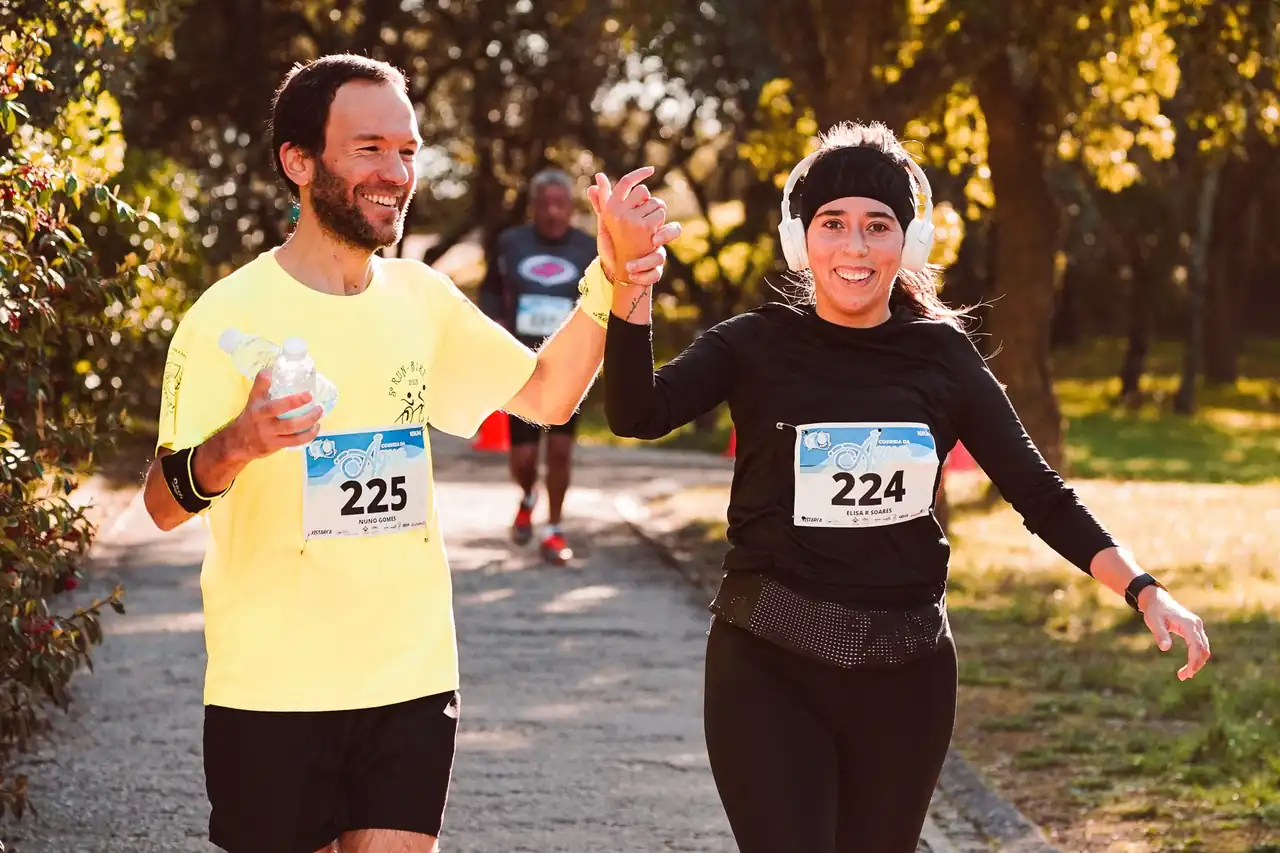
The third edition of the corporate race promoted by ESIC in Huesca is scheduled for Sunday, Oct. 25, 2026, starting and finishing at Plaza de Navarra. The announced schedule sets the start for 9:30 a.m. and features a 7.8-kilometer urban course through the city center and the San Jorge hill.
Its most distinctive feature is the format: teams are made up of three runners who must complete the race together. Individual participation is also planned in the Open and self-employed categories. Available information confirms the date, distance and format, but does not yet specify details such as the entry fee, registration period or final route around the hill.
Race date, start and distance
The event is scheduled for Oct. 25, 2026, in Huesca. The start and finish will be at Plaza de Navarra, beside the entrance to the tax office, with the race due to begin at 9:30 a.m. This is a useful reference for people traveling from elsewhere in Aragón, although organizers have yet to provide possible practical instructions for race day.
The 7.8-kilometer distance makes the course accessible to recreational runners who train consistently, but it is still a challenge. In a team race, moreover, the pace does not depend solely on each runner’s fitness: coordination and the ability to maintain a shared rhythm can matter as much as individual speed.
This is the event’s third edition in Huesca. Organizers hope to exceed the 300 participants who took part in the previous edition, a growth target rather than a confirmed 2026 entry figure. Available information also does not specify an updated cap on places.
An urban course through the center and San Jorge
The announced route passes through several central streets before heading toward San Jorge hill. From Plaza de Navarra, it follows Berenguer Street and San Lorenzo Street, continues through Luis López Allué Square and along Coso Alto, then crosses the Porches de Galicia before reaching Avenida del Parque.
Runners then take San Jorge Street for a loop around the hill and return along Avenida del Parque to the finish. The route alternates the rhythm of central streets with a different stretch on higher ground. The course covers 7.8 kilometers and remains urban in character, although no elevation profile or information sufficient to calculate the climbs precisely has been published.
The route is almost identical to previous editions, but a small adjustment near the hill could be made. That change is pending confirmation from the Local Police, so the published sequence should be treated as the planned route, not a final map. Information about road closures and access may also be confirmed closer to race day.
The rule that makes the race a team challenge
In the corporate category, each team consists of three people linked to the same company or public administration center, according to the conditions known from previous editions. The distinctive feature is not just wearing matching shirts: teammates must start together and cross the finish as a group. The team result is determined when the third member finishes, so the standings reflect the performance of the entire team.
This criterion changes the usual strategy for a recreational race. A runner who could speed up to improve an individual time must consider the pace of their teammates; someone falling behind is not a bystander to the result but a decisive part of it. The event therefore proposes a competition in which managing effort and staying close to the group count as much as running fast.
A previous edition set a maximum gap of 10 seconds between the first and last team members to cross the finish. However, information published for 2026 does not confirm whether that tolerance will remain in place. The prudent approach is to treat finishing together as the central rule and check the updated regulations once organizers publish the specific conditions for this edition.
Teams, categories and individual options
The race includes men’s, women’s and mixed teams, as well as alternatives for those who do not take part in a corporate team. Available information puts the number of planned categories at six, but does not describe in enough detail how they are divided or which criteria distinguish each category. The final names and requirements should appear in the 2026 regulations.
Open categories allow people to run individually if they do not have a full team or do not qualify for a team category. An individual option for self-employed runners is also planned. In previous editions, this required proof of self-employment; it remains to be confirmed whether the 2026 edition will use exactly the same documentation process.
Rules in previous editions said team members should wear a shirt or visible base layer in the same color. The practical purpose is to make the group easy to identify, while reinforcing its shared identity. As with team size and category composition, administrative details should be checked in the current regulations before registration is completed.
Who organizes the event and what it aims to do
The race is promoted by ESIC Aragón and technically organized by Club Atletismo Intec Zoiti, with support from Huesca City Council and Fartleck Sport. The event presentation also mentioned backing from organizations including Ibercaja and Automóviles Cabrero. The list of partners may change, so the names published so far should not be considered a final list for the new edition.
The concept brings physical activity and working life together, with companies, professionals and public administrations taking part. It is more than adding a competition to the corporate calendar: the format requires teams to negotiate their pace, sustain a shared effort and share the result. Team dynamics are at the heart of the event, whether participants are competing for places or treating the distance as a shared activity.
The event also aims to bring together people who may not usually meet at a conventional race. Employees from different companies, public-sector workers, self-employed professionals and individual runners share the start and route, even if they compete in different categories. That mix gives the race a local dimension: the course crosses the city and brings part of its professional community into view.
Registration and details that are still missing
The published information specifies the date, time, start and distance, but does not give the 2026 entry fee or registration opening and closing dates. No official website address is included in the reference information either. For that reason, the entry price cannot be confirmed, nor can it be stated that registration is open on the basis of the available details.
The 1,000-participant figure and Sept. 21 registration deadline appeared in information about a previous edition, not as conditions for the 2026 event. Applying them automatically would confuse two different years. The same applies to detailed proof requirements, team composition or finish-line time tolerances: they may provide background, but they need confirmation in the current rules.
Before traveling, keep in mind the logistical points still to be confirmed: the final route map, any change on the hill, bib pickup arrangements and instructions about traffic and parking. These are not minor details for an urban race. Official confirmation of those points will shape practical planning, especially for teams traveling from outside Huesca.
How running as a group changes the experience
The 7.8-kilometer distance may look straightforward on paper, but the format requires runners to find a sustainable speed for three people. A pace that is too fast can open gaps before the halfway point; a more controlled start, by contrast, leaves room for the hill section and the return to the city center. The decision does not belong to one runner: it is made as a team.
That agreement becomes visible during the race. The runner with more energy can ease off to avoid leaving the others behind, while a teammate going through a difficult patch receives support and helps maintain the shared goal. The standings reward a coordinated finish, not the best individual time, a distinction that changes how the clock is read and how teammates relate to one another.
For people taking part in this kind of event for the first time, team preparation matters as much as individual training. Agreeing on a reference pace and trying it during a shared run can help prevent surprises. There is no need to turn every workout into a race simulation; it is enough to check that all three can talk, keep a similar pace and adjust smoothly.
Huesca as the setting for a popular race
Plaza de Navarra provides a recognizable central start, while the route through shopping streets and urban spaces brings the race within view of residents and visitors. The course is not limited to a loop inside a closed venue: it connects the heart of the city with the surroundings of San Jorge hill, adding variety without losing its recreational scale.
Running through the center also calls for careful organization. An event of this kind requires organizers to manage intersections, protect participants and fit the route around the city’s normal activity. The Local Police’s review of the hill section reflects the fact that the route needs operational approval as well as a sporting description.
The corporate format may attract runners who do not usually enter races on their own. Sharing the experience with coworkers lowers the barrier to participation and gives people a common goal, while the individual Open category means that not having a team does not exclude other runners. The event therefore combines competition with a broad invitation to run through the city streets.
An event measured by more than the clock
The third Huesca edition arrives with a recognizable identity: 7.8 kilometers, a start at Plaza de Navarra and teams of three who must cross together. The scheduled date, Sunday, Oct. 25, at 9:30 a.m., places the race on an autumn morning when the weather could affect clothing and pace, although conditions cannot yet be predicted.
The day’s interest does not depend only on who records the fastest time. In a competition where the group is a condition for the result, patience, communication and the willingness to give up ground so all three teammates can finish together matter too. That rule gives meaning to the event’s name and sets it apart from a simple timed course for runners from the same company.
Essential details remain unknown, from entry fees and registration arrangements to the final route and complete regulations. Once published, they will clarify participation conditions without mixing rules from previous years with those for this edition. For now, the clearest image is a field of teams moving through Huesca at a shared pace, with the finish line reflecting a decision made by three people.



How to prevent thigh chafing: causes and real solutions

Women’s running windbreakers: seven jackets and how to choose

Do more workouts get rid of soreness? A guide for runners

Jaén Half Marathon 2026: Record 3,800 Runners Registered

Men’s short running tights: how to choose the right pair

World Triathlon confirms data breach involving medical data

Izan Edo targets podium at Miyazaki World Cup

María Pérez ranks ninth in World Athletics’ 2026 top ten

Dos Santos, Duplantis and Sawe: World Athlete of the Year finalists

San Silvestre Vallecana 2026: 42,000 places, prices and start times

 Races3 months ago
Valencia Half Marathon 2027: date and registration

 Races3 months ago
Valencia Marathon 2026: entry, ballot and course

 Reviews and Comparisons4 months ago
Asics Gel-Roadmiles 3 for men: review and current price

 Reviews and Comparisons4 months ago
Asics Gel Sonoma 8 Gore-Tex: complete analysis for trail and rain

 Sneakers3 months ago
Saucony Endorphin Pro 4: full review and verdict

 News5 months ago
Strava API 2026: what changes for clubs, challenges and runner apps?

 Reviews and Comparisons5 months ago
Nike Alphafly 3: opinions, sensations, and real key points

 Reviews and Comparisons4 months ago
Under Armour running shoes review 2025-2026: models and key features

 Sports Equipment4 months ago
Shoe sizes in cm: a clear guide to getting the right fit for your footwear

 Sneakers3 months ago
Skechers GO RUN Consistent 2.0 analysis: comfort and limits

 News5 months ago
Valencia Marathon 2026 route: key tips to train and run better

 Sneakers4 months ago
Adidas Adizero Boston 13 for men: review and verdict