Races
Ironman 70.3 Marbella 2023: cycling course and route
Cycling route, elevation gain, technical sections, and pacing keys to tackle a tough course in Marbella.

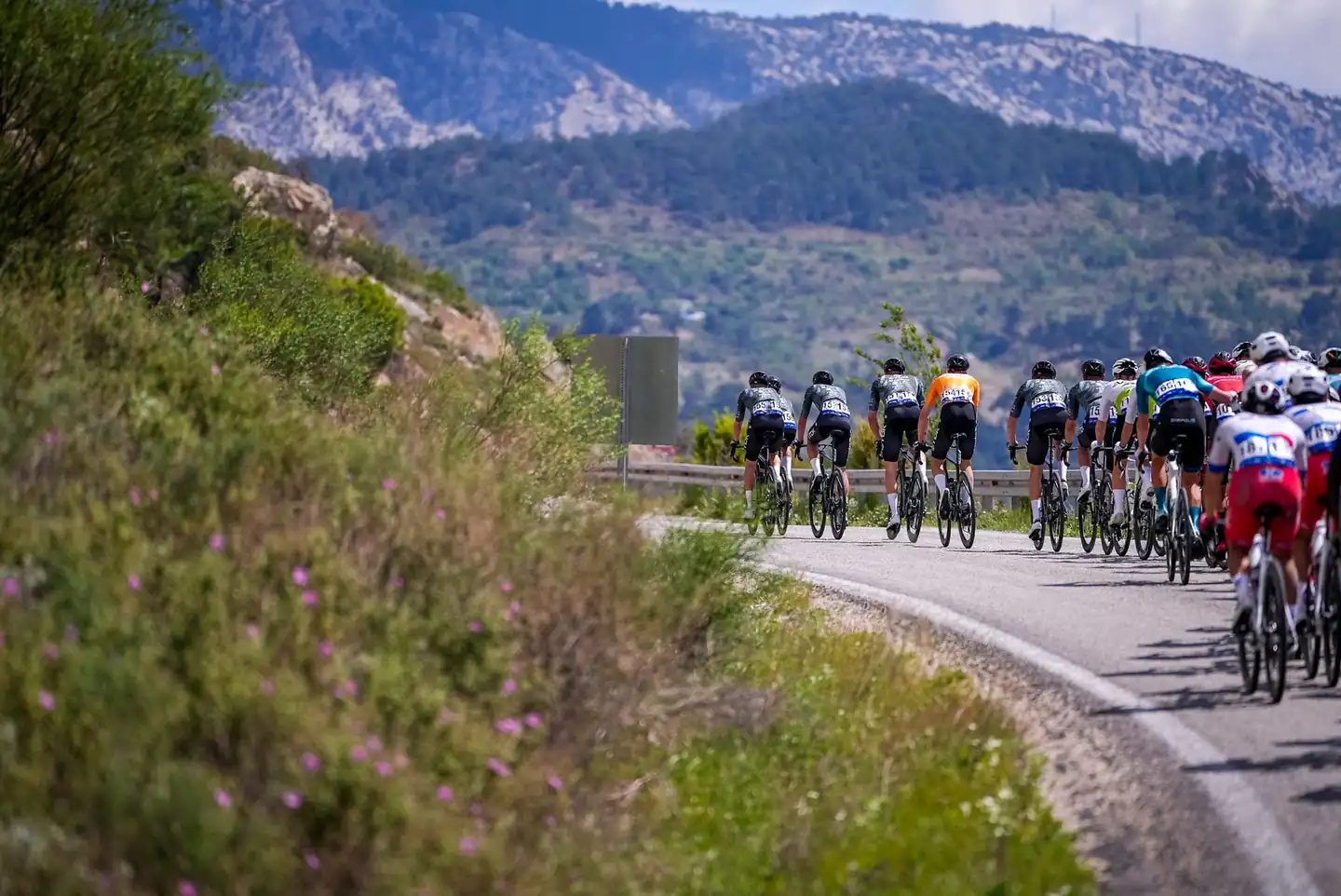
The cycling leg of Ironman 70.3 Marbella has earned a solid reputation among triathletes: this is not a stretch to improvise on, but a course that demands a cool head, measured legs, and a certain amount of descending skill. The start along the coast opens into a race that soon leaves behind the easy profile of the seafront promenade and heads into rougher roads, with changes in gradient that punish any excess enthusiasm from the first kilometers onward.
The race combines sea, mountains, and Andalusian tarmac on a route that usually covers around 90 kilometers of cycling, with a demanding total elevation gain and a very clear logic: whoever gets out of shape on the climbs pays for it later in the run. Marbella offers a scenic backdrop, but the landscape gives nothing away; between the sparkle of the Mediterranean and the inland ramps lies a course that forces you to distribute effort as if every corner carried a small hidden bill.
A course that changes character in just a few kilometers
The first reading of the route is deceptive. From the coastal strip, the cyclist may feel that the day starts with a certain softness, but that relief lasts only briefly. As soon as the route turns inland, the road begins to climb with a broken rollercoaster rhythm, where the flat sections are little more than a pause between efforts. That transition is one of the key features of the bike leg: there is no time to settle into an automatic rhythm.
The terrain around Marbella, Ojén, Monda, and Coín sketches a geography very familiar to anyone who knows triathlon in Andalusia: roads that climb decisively, descents that demand attention, and asphalt that can alternate fast stretches with more nervous ones. This is not a single big-climb course, but one of accumulation. And that accumulation, in long races, wears you down as much as, or even more than, a long sustained climb.
The result is a course where steady power matters more than isolated attacks. In an Ironman 70.3, cycling is not won with theatrical gestures, but with the ability to hold a reasonable intensity without emptying the tank too early. Here, the geometry of the terrain favors those who can read the road, anticipate the next rise, and conserve energy on every descent.
Why this cycling course breaks people more than it seems
The toughness of Marbella does not always show on a flat map, but it is felt in the body. A profile with linked climbs, technical descents, and prolonged false flats forces riders to shift gears intelligently. It is not just about climbing hard; it is about not wasting a single useless heartbeat in sections where momentum could do the work.
For the athlete, the real problem is the sum of small decisions. A poorly judged surge on a ramp, an extra brake squeeze on a descent, a bad cadence choice on a rolling section: all of it adds up. Fatigue on this route is usually silent, because it does not arrive in one blow, but like a fog that steadily thickens the transition toward the final half marathon.
That is why Marbella’s route fits so well with the logic of middle-distance triathlon. The bike leg is not just an intermediate segment; it acts as a filter. It forces a choice between ambition and preservation, between ego pace and useful pace. In a race like this, the clock usually rewards the prudent cyclist more than the brave one over a single kilometer.
Reading the elevation gain and the real cost of each climb
The accumulated elevation gain becomes the true protagonist. The figures associated with the course point to a route that is clearly mountainous for the category, with terrain that punishes the ability to keep power steady. In practice, that means perceived effort rises faster than average speed, because the short, repeated inclines break pedaling economy.
On this kind of course, the rider cannot think in terms of instant speed, but of energy distribution. A climb that looks modest can cost more than expected if it comes after a tense section or if the wind is blowing from the wrong side. The value of cadence increases dramatically: pedaling too hard and too slowly turns every rise into a small hammer on the quadriceps, while spinning too lightly can reduce stability in traction.
The sporting consequence is very clear. Whoever manages the elevation well reaches the second half of the course with enough margin to maintain an aerodynamic position and keep useful sensations. Whoever empties the tank too early often finds, kilometers later, that the bill is paid on the asphalt of the final stretch, where every second lost seems to cost twice as much.
Descents, corners, and that speed that also wears you down
Descending in Marbella is not fully resting, either. The downhills offer free speed in appearance, but they demand precision in line choice, reading of the asphalt, and calm hands. This is not a course for those who confuse boldness with efficiency. In triathlon, a poorly executed descent can wipe out the time saved over several minutes of climbing.
Technique matters as much as strength. Holding a stable position, braking with judgment, and exiting each corner on a clean line allows you to gain seconds without mortgaging your legs. The fast bike here is not the most aggressive one, but the most stable one. That distinction matters because the course rewards flow, not chaotic impulse.
In addition, the Mediterranean setting adds another layer of complexity. Heat, humidity, and the possible coastal breeze alter the feeling of control at the handlebars. A day that seems benign at the start can turn uncomfortable in exposed areas, where the crosswind changes the sense of security and demands near-surgical concentration.
Pacing strategy: winning without breaking down
The key on the bike is not going fast, but going well. In an Ironman 70.3, the bike leg directly affects the half marathon that follows, so pace has to be planned with a long-range mindset. In Marbella, that idea becomes even more important because the profile does not allow mistakes to be hidden. One effort too many in the first hour turns into a bigger loss later in the day.
The most sensible strategy is usually based on maintaining controlled intensity on climbs, recovering actively on descents, and avoiding abrupt spikes during changes in pace. Consistency becomes more valuable than showmanship. The cyclist who gets carried away by the excitement of feeling strong at the start may find, too soon, that the legs are gone and the mind is no longer clear for the next transition.
It is also worth understanding that this route punishes stubbornness. At certain moments, giving up a few watts on a climb allows for a better position, calmer breathing, and less nervous energy spent. It may seem like a tiny concession, but in middle distance those decisions are often the difference between running with control or dragging your body from kilometer three of the run onward.
Nutrition and hydration under the sun of the Costa del Sol
The heat in Marbella is not an environmental detail, but a sporting factor. Even when the day is not extreme, prolonged exposure to sun and humidity can significantly increase fluid loss. In races like this, it is not enough to drink by habit; you have to do it before thirst appears, because thirst arrives late and poorly.
The bike leg is the ideal time to solidify the day’s fueling. The feeling of relative stability, compared with swimming and running, makes it easier to take in carbohydrates and fluids more regularly. A well-executed plan sustains performance, while poor hydration turns the final kilometers of the bike into a constant negotiation with fatigue.
On a course like this, heat and elevation gain feed off each other. Climbing raises core temperature; descending does not always cool you enough; and the wind can create a false sense of relief. The result is a subtle thermal fatigue that steadily drains concentration. That is why the cycling segment demands not only legs, but discipline with every sip, every gel, and every small act of self-control.
The transition to the run starts long before you get off the bike
Marbella punishes those who forget the second half of the equation. The goal is not to reach the end of the bike leg first, but to preserve the best possible version of yourself for the half marathon. The transition does not begin when you dismount; it starts earlier, in the way you pedal, in the effort you choose for each rise, and in the caution with which you tackle the descents.
An untidy arrival into T2 is usually immediately felt in the legs. Sensations turn harsh, the stride takes longer to loosen, and the body needs more time to switch muscular language. The Marbella bike leg is, in a sense, a long-term test: you win or lose it in how you manage the present while thinking about the immediate future.
That perspective explains why the route carries so much weight among those who follow middle-distance triathlon. It is not just a beautiful coastal course with postcard scenery. It is a test of judgment. And in that test, the mark depends less on a spectacular move than on a sum of sober, repeated, and well-executed decisions under pressure.
What makes Marbella’s setting different within the middle-distance calendar
The location gives the race its personality. Marbella offers an uncommon mix of coastline, inland roads, and a high-profile competitive atmosphere. That combination gives the event a strong visual identity, but also a very defined sporting demand. The triathlete is not racing on an abstract circuit; they are competing in a territory with character, where the sea disappears quickly behind you and the mountains enter the scene without asking permission.
Compared with other, more linear or more predictable courses, this bike leg feels more alive. There is a stronger tactical component, a sense of racing in layers, as if each stretch had its own language. The bike is not a long straight line, but a continuous conversation with the road. Those who know how to listen to it usually arrive more intact and with a better margin for the finale.
The visual dimension also matters. Racing or riding in an event like this leaves a very recognizable image: coast at dawn, a mass of bikes moving along open roads, dry hills in the background, and a sky that can shift from calm to harsh brightness in a matter of minutes. That contrast between beauty and demand defines much of the event’s appeal.
Equipment and position matter more than usual
Position on the bike matters as much as power. On a course with climbs, descents, and stretches of variable wind, aerodynamics cannot be treated as a luxury. Every centimeter of clean posture counts. A more stable back, relaxed shoulders, and efficient support on the saddle all help you spend less energy for the same speed.
Equipment should also be understood as a tool for control, not just for speed. The right gearing, tire pressure suited to the surface, and a bike properly fitted to the rider can make subtle but real differences. A sense of security helps you hold pace, and mechanical confidence reduces mental load on a day when the head works as hard as the legs.
On a course like Marbella’s, that relationship between fit and performance becomes more visible than on a flat route. A poor setup shows sooner because the terrain does not forgive. The bike vibrates, the body tightens more than it should, or the cyclist loses smoothness in the transitions. These are small details, yes, but in middle distance small details behave like big ones.
What this course reveals about modern triathlon
Marbella neatly captures the direction of middle-distance triathlon: races that look fast on the surface, but are highly complex underneath. It is no longer enough to swim well, ride hard, and run with control. You have to connect those three parts with a logic of conservation and control that turns effort into sustainable performance. The bike leg sits at the center of that negotiation.
That is why courses like this fascinate coaches, analysts, and athletes: because they reveal training quality with no makeup. There are not many places to hide. The terrain tells the truth. Those who have worked on pacing know it; those who arrive with disordered ambition discover it quickly. And in that brutal transparency lies much of the appeal of Ironman 70.3 Marbella.
In the end, the bike course offers a simple but severe lesson: useful speed is the speed you can repeat. Marbella rewards the athlete who keeps form, judgment, and patience while everything around them invites them to push harder. That is its strength and also its challenge. Between the coast and the hills, between the shine of the sea and the punch of the ramps, the race makes it clear that here it is not enough to pedal; you have to know how to manage every kilometer as if it were part of the same breath.
A well-read bike is worth more than a racing pulse gone wild
The true picture of Marbella is not that of an isolated attack, but of a race well built. In that setting, the bike becomes a precision instrument: it moves you forward, yes, but it also decides how much is left in reserve for the final section. The athlete who understands this usually leaves the bike leg with something more valuable than pure speed: margin.
And that margin, in such a demanding middle distance, feels very much like the difference between surviving and competing. The Marbella bike route does not reward noise; it rewards logic. It rewards continuity, technique, and the intelligence not to turn an elegant race into an early defeat. Perhaps that is why it keeps drawing so much attention: because under the Andalusian sun, it reveals with almost cruel precision who really knows how to race when the terrain stops being kind.



How to prevent thigh chafing: causes and real solutions

Women’s running windbreakers: seven jackets and how to choose

Do more workouts get rid of soreness? A guide for runners

Jaén Half Marathon 2026: Record 3,800 Runners Registered

Men’s short running tights: how to choose the right pair

World Triathlon confirms data breach involving medical data

Izan Edo targets podium at Miyazaki World Cup

María Pérez ranks ninth in World Athletics’ 2026 top ten

Dos Santos, Duplantis and Sawe: World Athlete of the Year finalists

San Silvestre Vallecana 2026: 42,000 places, prices and start times

 Races3 months ago
Valencia Half Marathon 2027: date and registration

 Races3 months ago
Valencia Marathon 2026: entry, ballot and course

 Reviews and Comparisons4 months ago
Asics Gel-Roadmiles 3 for men: review and current price

 Reviews and Comparisons4 months ago
Asics Gel Sonoma 8 Gore-Tex: complete analysis for trail and rain

 Sneakers3 months ago
Saucony Endorphin Pro 4: full review and verdict

 News5 months ago
Strava API 2026: what changes for clubs, challenges and runner apps?

 Reviews and Comparisons5 months ago
Nike Alphafly 3: opinions, sensations, and real key points

 Reviews and Comparisons4 months ago
Under Armour running shoes review 2025-2026: models and key features

 Sports Equipment4 months ago
Shoe sizes in cm: a clear guide to getting the right fit for your footwear

 Sneakers3 months ago
Skechers GO RUN Consistent 2.0 analysis: comfort and limits

 News5 months ago
Valencia Marathon 2026 route: key tips to train and run better

 Sneakers4 months ago
Adidas Adizero Boston 13 for men: review and verdict