Races
Islantilla Beach Golf Resort Triathlon 2023: date and venue
The Islantilla event brought together swimming, cycling, and running by the sea in a tourist enclave turned into a sporting showcase.

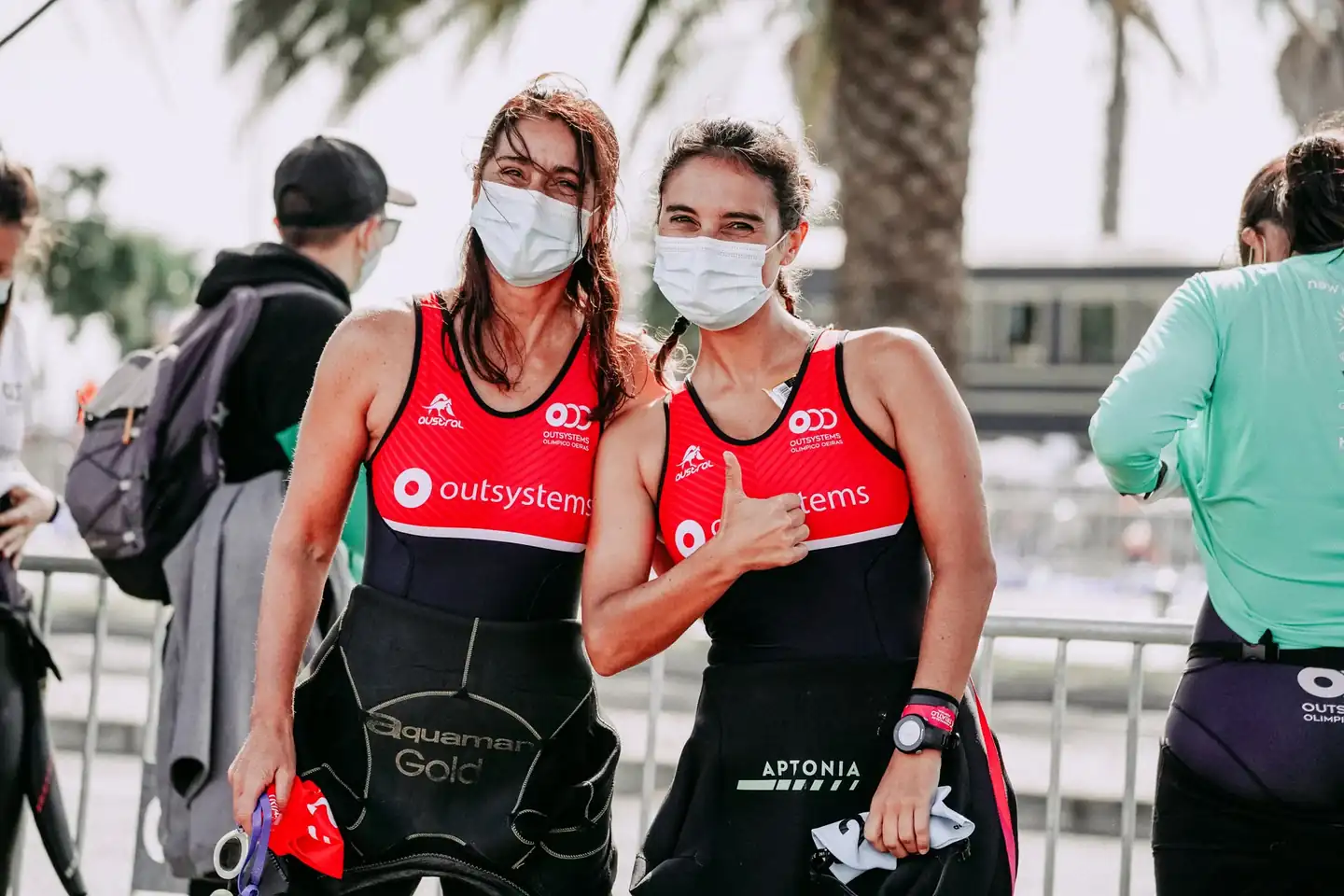
The triathlon held at the DoubleTree by Hilton Islantilla Beach Golf Resort turned a tourist complex on the Huelva coast into a first-class sporting stage. The event featured two distances, middle and Olympic, and placed the swim start in front of the Beach Club, with a course that then linked road cycling and running through some of the most recognizable spots in Islantilla. It was not just a competition: it was a postcard of sport, tourism, and finely tuned logistics.
The event stood out for its size, the level of its participants, and the way it integrated the surroundings into the development of the race. On a day marked by the presence of around 400 triathletes in one of its most memorable editions, the event established itself as a benchmark in the Andalusian calendar, with a deployment of volunteers, security, and institutional support that gave it the stature of a major regional occasion.
An enclave designed to compete and to welcome visitors
Islantilla Golf Resort is no ordinary setting. The complex combines a four-star hotel, a 27-hole golf course, and leisure areas facing the sea, in an environment between Isla Cristina and Lepe that blends beaches, marshes, and tourist development. That mix explains why the triathlon found fertile ground here: the race could grow without breaking the landscape, making use of the broad coastline and the surrounding road network.
The event’s image is not limited to the stopwatch. The resort itself, renovated and aimed at a broad audience, provides infrastructure, accommodation, and services, while the local coast adds a bright atmosphere, with Atlantic wind, light sand, and a constant sense of open space. For a triathlon, that matters as much as the course: a swimmer emerges from the water, a cyclist picks up speed, and a runner enters a landscape where effort seems to travel with the horizon.
The location on the Huelva coastline also gives the event sporting meaning. This is not a competition enclosed in a rigid circuit, but an experience that uses the territory as part of the story. The Beach Club, the beach line, and the surrounding roads make it possible to build a recognizable, visual, and demanding race, with that delicate balance between spectacle and endurance that defines modern triathlon.
This is how the competition was structured
The race was contested over middle distance and Olympic distance, two formats that require very different paces and strategies. Middle distance demands better energy management, sustaining effort for longer, and avoiding the small mistakes that are costly at the end; Olympic distance, by contrast, is more intense and leaves less room for maneuver. Having both in the same event broadened the participant profile and added variety to the spectacle.
The swim began at 14:00 on the beach in front of the Islantilla Beach Club, next to the Barriada de Pescadores, a point that makes the start a very recognizable scene. From there, the race moved into the cycling segment and finished with the run, which passed through emblematic places in the area. That classic triathlon sequence was reinforced here by the landscape: water, asphalt, and promenade created an almost cinematic progression.
The format also had an important organizational dimension: the coexistence of multiple distances requires coordination of schedules, transitions, safety, signage, and technical support. In an event like this, smoothness does not happen by chance. Behind it lies a discreet engineering that the public only partly sees, but which becomes decisive when hundreds of athletes share starts, aid stations, course, and finish line.
The names and times that marked the day
In the edition most closely followed by the specialist press, Mikel Ugarte and María Pujol won the middle distance. Ugarte, from Atlético San Sebastián, posted 4h 01m 54s, while Pujol, Spanish champion in the discipline, completed the course in 5h 02m 21s. Their victories reinforced the competitive profile of the race and helped place it on the radar of triathletes with serious ambitions.
In the Olympic distance, the victories went to Andrés Carnevali del Castillo and Maddi Marquet Ferrán, with times of 1h 47m 54s and 2h 11m 19s, respectively. Those times reflect the more explosive nature of the format, where every transition matters and any loss of rhythm can completely change the standings. In a well-run event, the margins become as fine as a buoy line.
The podiums also showed a broad picture of the competitive level. In the men’s middle distance, Peru Alfonso San Ildefonso and Francesc Artigues Ramis joined Ugarte on the podium; in the women’s, Susana Román Bernet and Lucía Vinagre Mateo took second and third. In the men’s Olympic distance, Diego Méntrida Zamarra and José Alix completed the top three, while in the women’s Sandra Schenkel and Raquel Úbeda Fernández rounded out the podium. Beyond the names, what mattered was the depth of the field and the solidity of the times.
An event with institutional backing and logistical muscle
The triathlon did not function as an isolated event, but as one piece within a broader sports tourism strategy. The organization involved the hotel complex, the Islantilla Association of Municipalities, local city councils, the Andalusian Triathlon Federation, and partner companies. That network of support allows a competition to grow without losing safety or territorial coherence.
There was also a notable volunteer deployment, with around a hundred people, along with reinforcement from the Local Police and the Civil Guard. In endurance events, that invisible layer is what prevents everything from falling apart. Managing crossings, aid stations, athlete support, access control, and finish-line assistance are all part of a choreography that is barely seen, but that sustains the entire experience.
The awards ceremony also helped give the event its identity. It took place in the golf club gardens and included institutional and organizational representatives. There was even a tribute moment in which paratriathlete Kini Carrasco dedicated a few words to Extremaduran triathlete Diego Paredes, a gesture that reminded everyone that these races are also about community, memory, and respect within sport.
The course as part of the spectacle
One of the great attractions of the Islantilla triathlon was the relationship between route and landscape. The swim on the beach, the cycling section on the surrounding roads, and the run through emblematic points of the town created a highly visual competition, ideal for those who follow these races both for their difficulty and their aesthetics. Triathlon gains strength when the course tells a story, and here the course spoke of coast, summer, openness, and sustained effort.
In middle distance, the territory demands a different management of the body. The bike turns the wind into a silent rival and the run immediately reveals who has paced their effort well. In Olympic distance, by contrast, speed rules from the first meter and gaps open quickly. Islantilla offered both faces of the sport, like the same film told with two different cuts.
There is also a symbolic reading in the choice of location: competing beside a beach and golf resort places triathlon halfway between vacation leisure and high physical demand. This is not a forced contrast, but a coexistence that is increasingly common in modern sport, where destinations seek to attract visitors with events capable of filling hotels, mobilizing services, and projecting an active image of the territory.
What it left for the Andalusian calendar
The race established itself as one of the most notable events in Islantilla’s sporting scene and one of the dates with the greatest ability to combine competition, tourism promotion, and public participation. Not all races achieve that balance. Some are technically solid, but invisible; others have a commercial name, but lack soul. Here both things came together: robust organization and a recognizable identity.
Its inclusion in the Andalusian Triathlon Federation calendar also gave it a clear institutional dimension. That matters because it organizes seasons, attracts athletes from different areas, and helps the race be perceived as part of a competitive network, not as an isolated weekend event. On that map, Islantilla appeared with a rare blend of solidity and ambition.
Over time, the DoubleTree by Hilton Islantilla Beach Golf Resort triathlon came to be understood as a showcase for the destination. The race showed not only the athletes, but also the area’s ability to host major events. And that is where much of its journalistic value lies: it is not just a competition, but a way of seeing how sport reorganizes tourist spaces and turns them, for a few hours, into a kind of open-air stadium by the sea.
A sporting postcard that explains the destination better
The interest in this event lies not only in who won or how long each athlete took. What truly matters is the sum of factors: a resort ready to receive guests, a beach that serves as the start, a territory that invites you to move through it, and an organization capable of turning the Huelva coast into a triathlon stage in the fullest sense. That combination leaves a clear mark on the memory of the event.
The race helped show Islantilla from another angle. Not as a simple vacation destination, but as a place where endurance sport finds a recognizable, beautiful, and functional setting. Between the soft sound of the waves, the tense passage of the bicycles, and the final push of the runners, the triathlon drew a very precise scene: that of a coastline that also competes.
On the Andalusian triathlon map, Islantilla earned its own place. And it did so without artifice, relying on something much harder to build: a well-placed event, an environment with personality, and a sporting experience that connected effort, landscape, and organization with the naturalness of something that seems to have always been there.



How to prevent thigh chafing: causes and real solutions

Women’s running windbreakers: seven jackets and how to choose

Do more workouts get rid of soreness? A guide for runners

Jaén Half Marathon 2026: Record 3,800 Runners Registered

Men’s short running tights: how to choose the right pair

World Triathlon confirms data breach involving medical data

Izan Edo targets podium at Miyazaki World Cup

María Pérez ranks ninth in World Athletics’ 2026 top ten

Dos Santos, Duplantis and Sawe: World Athlete of the Year finalists

San Silvestre Vallecana 2026: 42,000 places, prices and start times

 Races3 months ago
Valencia Half Marathon 2027: date and registration

 Races3 months ago
Valencia Marathon 2026: entry, ballot and course

 Reviews and Comparisons4 months ago
Asics Gel-Roadmiles 3 for men: review and current price

 Reviews and Comparisons4 months ago
Asics Gel Sonoma 8 Gore-Tex: complete analysis for trail and rain

 Sneakers3 months ago
Saucony Endorphin Pro 4: full review and verdict

 News5 months ago
Strava API 2026: what changes for clubs, challenges and runner apps?

 Reviews and Comparisons5 months ago
Nike Alphafly 3: opinions, sensations, and real key points

 Reviews and Comparisons4 months ago
Under Armour running shoes review 2025-2026: models and key features

 Sports Equipment4 months ago
Shoe sizes in cm: a clear guide to getting the right fit for your footwear

 Sneakers3 months ago
Skechers GO RUN Consistent 2.0 analysis: comfort and limits

 News5 months ago
Valencia Marathon 2026 route: key tips to train and run better

 Sneakers4 months ago
Adidas Adizero Boston 13 for men: review and verdict