Races
Jabalí Trail de Algimia de Almonacid 2026: route and distances
The Algimia de Almonacid race returns with two tough routes, the Espadán landscape, and very clear technical rules.

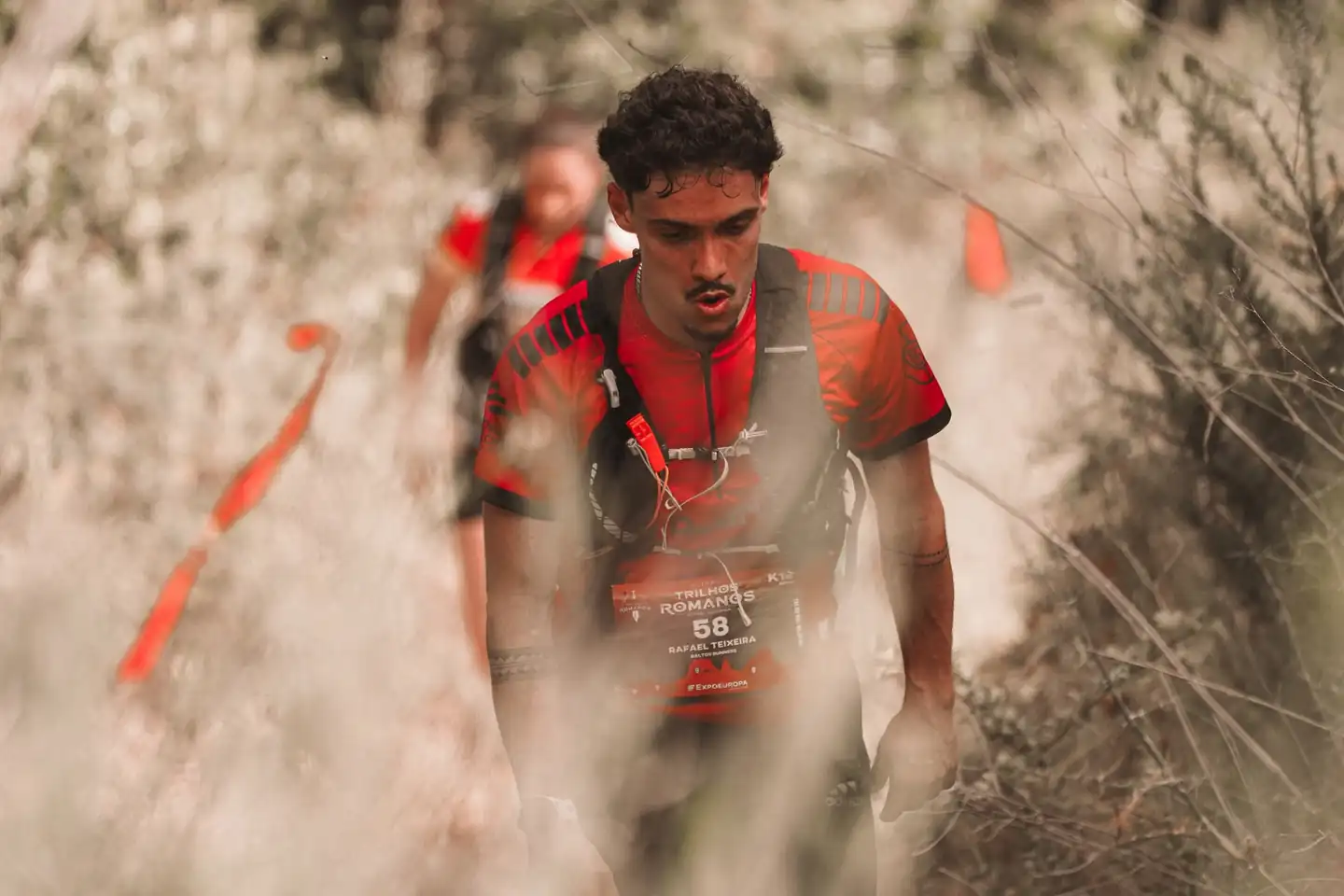
Algimia de Almonacid is once again putting itself on the map of Valencian trail running with a race that combines elevation gain, narrow paths and a very recognizable mountain setting. The eighth edition of the Jabalí Trail, scheduled for 29 March 2026, keeps the format of a demanding mountain race, with start and finish in the Castellón town and two distances designed for different runner profiles.
The event takes place right in the heart of the Sierra de Espadán, a landscape of broken relief, forest tracks and stretches of trail where technique matters just as much as the legs. In its main version, the race offers a long course of about 25.4 kilometers with around 2,800 meters of accumulated elevation between climbing and descending, while the shorter option is around 18.3 kilometers and an accumulated elevation gain close to 1,480 meters.
A mountain race with its own stamp in Espadán
The Jabalí Trail is not a transition race or just a simple calendar formality. Its identity is anchored in the landscape, in the toughness of the mountain and in the route that runs through the municipal area of Algimia de Almonacid. The combination of trails, forest tracks and terraced sections gives it a very particular character, closer to a mountain crossing than to a fast race focused on stacking up kilometers.
That kind of route explains why this race has gained ground among trail fans in the Comunitat Valenciana. The area offers a setting of Mediterranean forests, stone ridges, ravines and open views over the Alto Palancia. It is not a neutral backdrop: the terrain conditions the pace, forces you to read each climb and punishes overdoing it on the descents. The mountain is in charge here, and it does so with a changing, demanding and very visual layout.
The start and finish town adds another important nuance. Algimia de Almonacid is not just a logistical point; it also gives the event a sense of closeness. That mix between a small town and a tough race usually leaves a very recognizable feeling in the runner: that of a race organized from the territory, without artifice, with an authentic mountain atmosphere and participation very closely tied to the surroundings.
The two distances define the profile of the race
The long distance is the one that concentrates the greatest sporting interest. The 25.4-kilometer route comes with a positive and negative elevation total of about 2,800 meters accumulated, a figure that makes the race’s character very clear. The time limit is 5 hours and 30 minutes and the minimum age for participation is 18 years. It is therefore not a course to improvise on or to rely on aerobic endurance alone.
The short version, at 18.3 kilometers, also demands experience. Its roughly 1,480 meters accumulated still place it in a zone of intense effort, with a maximum duration of 4 hours and a minimum age of 16 years. It is a more accessible format in terms of distance, but not in terms of elevation or sensations. In the mountains, a shorter label does not mean forgiving.
Both routes share the same backdrop and much of the technical language of trail running: trail, navigation, effort management and reading the terrain. Passing through places such as the Collado de los Erizos, the Fuente de la Parra, the Barranco del Agua Negra or the Pico de la Rápita, which reaches 1,106 meters, sums up very well the kind of effort the race proposes. There are stretches where running feels more like negotiating a living terrain than linking strides together.
A route that demands legs, head and effort management
The big key in this kind of race is not only the climb, but the sum of small factors that build up over time. The gradients break the rhythm, the descents punish muscles and coordination, and the alternation between tracks and trails forces you to change gears constantly. Effort management is just as important as physical condition, because going too hard usually gets paid for long before the final kilometer.
In a setting like Algimia de Almonacid, the terrain can go from comfortable to technical in a matter of meters. Forest tracks invite you to lengthen your stride, but narrow trails, terraced sections and the more stony passages demand constant attention. That contrast is part of the appeal: those who sign up are not just looking for a time, but for a mountain experience with its dose of uncertainty and rough beauty.
There is also a strategic component worth highlighting. In races with such marked elevation changes, starting too fast is usually a classic mistake. Fatigue does not arrive all at once; it settles in little by little, like a thick fog, and ends up reducing efficiency with every footstrike. That is why, in races like this, pacing yourself from the start is usually more profitable than chasing aggressive splits in the first kilometers.
Refreshments, mandatory gear and race rules
The organization provides refreshment stations with solid and liquid products, a key aspect in a race of this profile. Foods such as fruit, gummies, biscuits, sandwiches and sweets are planned, as well as water, isotonic drink and soft drink. On the long distance there are five refreshment points plus the finish, while on the short one there will be three points plus the finish line.
One of the most relevant requirements is the use of a personal non-disposable container. The race does not provide cups, a measure that is increasingly common in mountain events to reduce waste and encourage more sustainable management of the environment. This rule forces the runner to think ahead about how they will drink during the race, something that is already part of the basic kit in modern trail running.
Specific mandatory gear is also set. On the 25-kilometer distance, the organization requires a hydration system with a minimum capacity of 1 liter and a mobile phone with a charged battery. Added to that is the obligation to follow the marked route and not leave waste outside the designated areas. These are simple rules, but decisive for safety and for preserving the environment. The mountain is a shared space, not a private track.
Safety, coverage and control over the runner
The presence of medical services and insurance for non-licensed participants places the race within the usual standards of well-organized mountain races. It does not eliminate risk, because trail running always adds variables such as falls, dehydration, overload or disorientation, but it does provide a framework for response and assistance that is essential on routes with elevation and remote sections.
In this context, control of gear and behavior during the race is not a formality. Every detail aims to reduce incidents and make the organization’s work easier. Carrying enough hydration, keeping the phone operational and respecting the markings are not decorative conditions; they are part of the basic safety structure. In the mountains, a minimum level of self-sufficiency is a rule of sporting civility.
The logic of the event also explains why runners are urged to check the official information before racing. Practical details in trail events can change because of terrain conditions, course adjustments or logistical changes. In a race like this, where elevation, ground type and weather can greatly alter the experience, that prior review is not a minor recommendation, but part of sensible preparation.
What it means for the trail calendar in Castellón
The Jabalí Trail holds an interesting place within the provincial calendar because it combines continuity, territorial identity and a route that does not aim to be easy. Castellón has a very lively background of mountain races, but not all of them offer the same balance between toughness, local atmosphere and landscape. Here the appeal does not lie in mass participation or speed, but in the feeling of entering a mountain range that demands respect.
That landscape value also helps explain why the race keeps its appeal year after year. Passing through Espadán offers a reading of the territory that goes beyond sport: runners cross forest areas, gullies and high points that sketch a kind of physical story of the inland Castellón landscape. The race works as a window onto the landscape, and that partly explains the loyalty of those who come back.
In addition, the coexistence of two distances allows the race to reach a wider audience without losing its personality. The long distance satisfies those looking for an intense mountain day, while the short one opens the door to runners with less time available or more moderate experience. Even so, both share the same essential trait: this is not a place to just cruise along, but to negotiate a mountain with character.
The setting of Algimia de Almonacid as part of the experience
There are races that could be held almost anywhere and would still say the same thing. This is not the case. Algimia de Almonacid provides a clear rural setting, with quiet streets, nearby mountains and a small-town start that fits very well with the narrative of classic trail running. The human dimension of the event matters as much as the clock. The race cannot be understood without the town that hosts it.
The type of runners it usually attracts also plays a role. Trail running in the Sierra de Espadán brings together local enthusiasts, athletes from the province and participants looking for routes with personality, far from the big urban circuits. That diversity usually translates into a closer atmosphere at the start and a more recognizable one at the finish, where shared effort matters more than the standings.
In terms of experience, the race leaves an easy-to-picture scene: an early wake-up, the fresh air of late March, bars and small bottles in the backpack, the murmur of the town before the race starts and, after that, the mountain setting the tone. It is the kind of event where the landscape does not just accompany you, it actively takes part. And that, in trail running, is worth a lot.
The event that consolidates a very specific mountain identity
The Jabalí Trail in Algimia de Almonacid fits into that category of races that do not need embellishment to explain themselves. Its strength lies in the combination of high elevation gain, technical routes, well-planned refreshment stations and a mountain setting with its own weight. The runner knows from the start what kind of challenge awaits, and precisely for that reason, the event keeps its authenticity.
In an increasingly broad calendar, where races with very similar formats are abundant, this event stands out for a clear personality. It does not aim to be universal or massive; it aims to be recognizable. That makes it valuable for those looking for real mountain running, without makeup. The time limit, the mandatory reusable container, controlled hydration and the passage through specific reference points draw a race with clear rules and a very defined spirit.
Algimia de Almonacid and the Sierra de Espadán form, in short, the setting for a race that already has its own name within the provincial trail scene. Anyone who sees it only as another date on the calendar will see just another race; anyone who looks at its elevation, its route and its context will understand that what matters here is something else: a mountain that gives nothing away and an event that has learned how to make the most of that character.



How to prevent thigh chafing: causes and real solutions

Women’s running windbreakers: seven jackets and how to choose

Do more workouts get rid of soreness? A guide for runners

Jaén Half Marathon 2026: Record 3,800 Runners Registered

Men’s short running tights: how to choose the right pair

World Triathlon confirms data breach involving medical data

Izan Edo targets podium at Miyazaki World Cup

María Pérez ranks ninth in World Athletics’ 2026 top ten

Dos Santos, Duplantis and Sawe: World Athlete of the Year finalists

San Silvestre Vallecana 2026: 42,000 places, prices and start times

 Races4 months ago
Valencia Half Marathon 2027: date and registration

 Races4 months ago
Valencia Marathon 2026: entry, ballot and course

 Reviews and Comparisons4 months ago
Asics Gel-Roadmiles 3 for men: review and current price

 Reviews and Comparisons4 months ago
Asics Gel Sonoma 8 Gore-Tex: complete analysis for trail and rain

 Sneakers4 months ago
Saucony Endorphin Pro 4: full review and verdict

 News5 months ago
Strava API 2026: what changes for clubs, challenges and runner apps?

 Reviews and Comparisons5 months ago
Nike Alphafly 3: opinions, sensations, and real key points

 Reviews and Comparisons4 months ago
Under Armour running shoes review 2025-2026: models and key features

 Sports Equipment4 months ago
Shoe sizes in cm: a clear guide to getting the right fit for your footwear

 Sneakers3 months ago
Skechers GO RUN Consistent 2.0 analysis: comfort and limits

 News5 months ago
Valencia Marathon 2026 route: key tips to train and run better

 Sneakers4 months ago
Adidas Adizero Boston 13 for men: review and verdict