Races
Kom Trail del Corredor 2026: complete guide to the race
Schedules, routes, elevation gain, services, and prices for the Llinars del Vallès event, with the context of its natural surroundings.

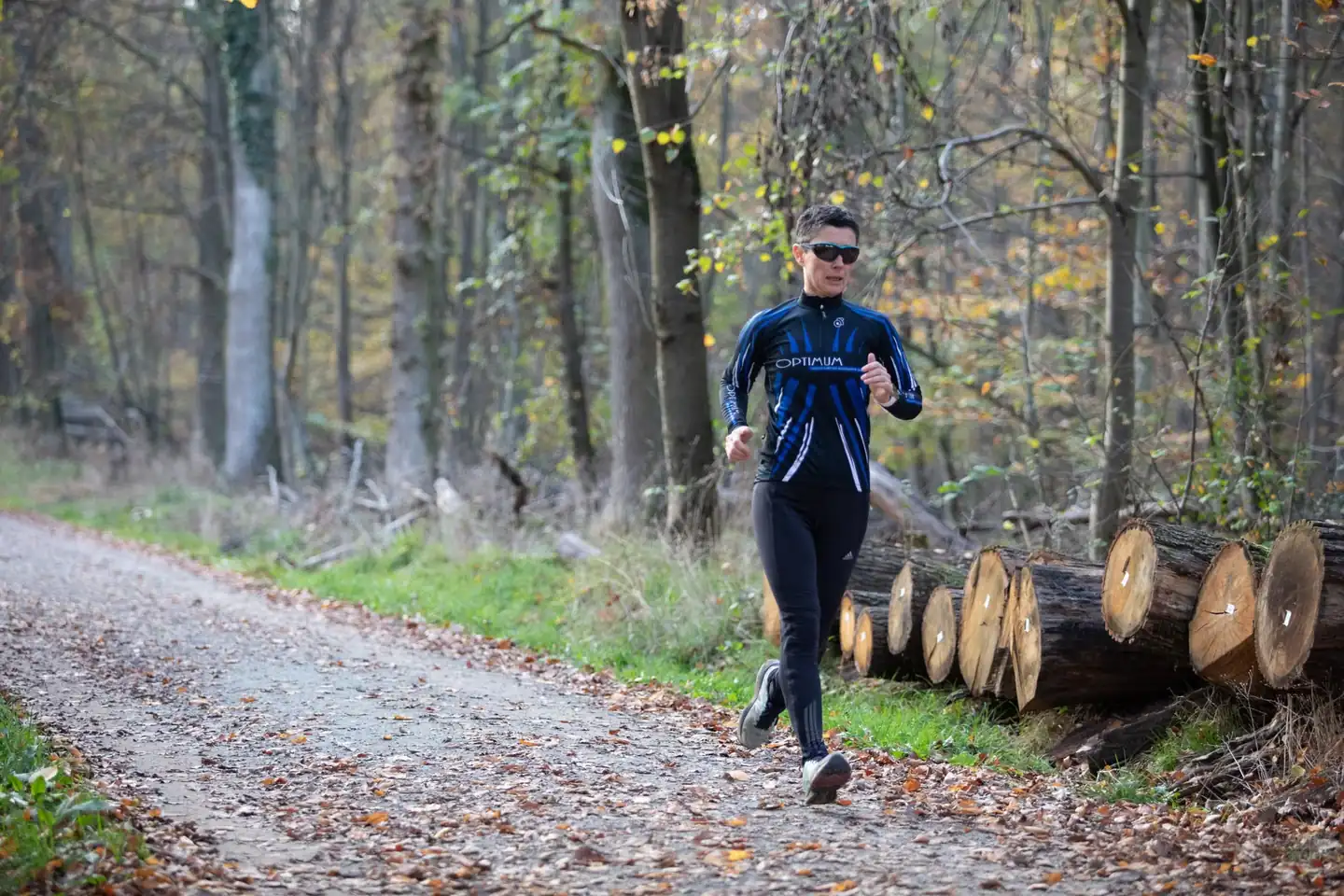
The KOM Trail del Corredor once again puts Llinars del Vallès on the Catalan trail map with a very recognizable proposal: nearby mountains, circular routes, and an environment that blends narrow trails, tracks, and fast-running stretches under the protection of the Corredor-Montnegre Natural Park. The 2026 edition is set for Sunday, October 4, at 9:00 a.m., with start and finish at the Zona Esportiva de Llinars del Vallès, in Plaça dels Països Catalans. This is not a race designed for noise, but for reading the terrain: climbing, linking sections, managing effort, and returning to the same point with mud, dust, or moisture still clinging to your shoes.
The event keeps the structure that has made it recognizable in recent years, with two official distances: Kom 24, about 23.27 kilometers, and Kom 12, 11.24 kilometers. Both follow a circular course and share a simple but demanding logic: start from the urban center, gain altitude progressively, and then enter a landscape of forest, trail, and loose stone where the pace changes without warning. The announced positive elevation gain for the long distance is 785 meters, with the same cumulative descent, while the short course has around 376 meters of climbing. The result is a mountain race that seems accessible on paper, but with enough elevation gain and continuity to empty your legs if you start out too enthusiastically.
A race born to showcase the territory
The KOM Trail del Corredor is not understood only as a sporting event. Its concept also responds to an idea of territorial outreach: bringing runners to a natural setting that many people in the region know by name, but do not explore with the same care as those who go out training along the trails. The Corredor-Montnegre acts here as both showcase and backdrop, with forests that muffle the noise, trail intersections where it pays to look beyond the next step, and a topography that forces you to pace yourself. In trail running, the landscape is not decoration; it is part of the script.
That approach explains the circular nature of the route and the presence of emblematic points in the area, such as the Font d’en Bacs, the Dolmen de Ca l’Arenes, the Roques del Nyàcara, the Pi cargolat, the Roques del Pare Jaume, the Gatell de Ca l’Arenes, and the Turó Rodó. These are names that, for runners, become navigation references and, at the same time, small snapshots of a very specific geography. The race takes advantage of this network of landmarks to create an experience richer than the mere sum of its kilometers.
In the 2026 edition, the event also retains one of the most appreciated constants among participants: the feeling of being in a race on a human scale. The start and finish share the same space, the circuit is clearly marked, and the organization provides support at the trickiest crossings. That reduces uncertainty and leaves everything else in the hands of the mountain. And the mountain, as always, ends up setting its own clock.
Two distances, two ways to read the same mountain
The long distance, Kom 24, is the one that defines the sporting character of the day. Its 23.27 kilometers and 785 meters of positive elevation gain place it somewhere between a demanding short trail and a mountain half marathon. It is neither an ultra nor a purely explosive race, but a route where endurance, the ability to descend safely, and the capacity to sustain a steady effort on false-flat sections all coexist. On dry days, the terrain invites you to run; on damp days, every stride demands more attention than it seems to.
Kom 12, on the other hand, offers a shorter and less time-consuming version, though not necessarily an easy one. Its 11.24 kilometers and 376 meters of elevation gain allow a runner less accustomed to mountain racing to get in touch with the course without committing to a too-long day. It also works well for those looking for intensity without turning the morning into an extended outing. In a race like this, the difference between staying in control and blowing up can lie in the first incline, where the momentum of the opening meters still fools the legs.
Both distances share a valuable trait: the route does not depend on a single major climb or a never-ending descent, but rather on a succession of pace changes. That makes strategy a delicate matter. Patience is worth more than spectacle. Those who hold back in the first half usually arrive with better chances of enjoying the final stretch; those who rush learn quickly that the mountain does not forgive overconfidence. That balance is part of what makes the KOM Trail del Corredor so appealing.
Schedules, start times, and the rhythm of a very specific morning
The organization sets the start of Kom 24 at 9:00 a.m. and Kom 12 at 10:00 a.m., both from the same area in Llinars del Vallès. The finish remains open until 1:00 p.m., a window that gives enough margin to complete the course sensibly. On the long distance, the maximum time set is 4 hours, which fits the nature of a mountain race where technique and effort management matter just as much as pure speed.
That schedule concentrates the day into a very recognizable autumn time slot: cool air early on, moisture in the forest shade, and light still low when the first runners begin to settle into their rhythm. It is one of those mornings when runners build their own laboratory of sensations. The body starts cold, the heart rate rises quickly on the first ramp, and as the sun reaches the trails, the ground begins to dry out or, depending on the year, retains the fragrance of damp earth. In trail running, the weather never goes unnoticed.
Choosing that time also helps organize the sporting traffic and allows the event to move forward without unnecessary tension. The short distance starts once the long race is already underway, so each participant encounters a more open environment and a race already in motion. For spectators, that means less crowding and more space to read the landscape. For the organization, it means clearer control of flows in an area that combines open paths and narrow trails.
Terrain, elevation gain, and what really punishes you on the course
In the KOM Trail del Corredor, elevation gain matters, but it is not the only thing that counts. The presence of trails, tracks, and small sections of asphalt creates a very varied reading of effort. The declared breakdown for the long race is 5% asphalt, 45% track or dirt road, and 50% trails. In runner language, that means there is very little room for autopilot. The race demands frequent gear changes, adaptation to the grip of the terrain, and acceptance that not every meter is run the same way.
The climb also has a trap. Gaining 785 meters over 23 kilometers may seem moderate on paper, but the punishment comes through accumulation, through the succession of ramps, and through the need to maintain technique when the heart rate is already high. Add to that the descent, which rarely offers real rest: downhill running in the mountains also loads the quads, demands ankle stability, and rewards those who keep a cool head. The runner who handles the descents well gains time; the one who lets themselves go can lose far more than they imagine.
The maximum altitude, around 651 meters, places the race in a mountain that is gentle in terms of height, but with enough personality for every turn in the path to matter. There is no great alpine altitude here, nor is it necessary. The value of this race lies precisely in its closeness. It is real mountain, without overblown epic language or artifices, with a toughness that shows up more clearly in the calves than on the map.
Registration, prices, and a model designed for licensed and non-licensed runners
The 2026 reference information sets prices from 21 euros for licensed runners and 25 euros for non-licensed runners in an initial phase, rising to 25 and 29 euros in a later period and to 35 and 39 euros on the same day, always depending on the category and licensing status. Members of the Centre Excursionista Llinars del Vallès have a specific rate of 16 euros in the indicated periods. This pricing structure not only organizes registration, it also reflects a common logic in local mountain races with limited capacity: reward early sign-up and recognize the connection with the organizing club.
In previous editions, entry was said to be limited to 300 participants, a relevant detail because it helps explain the scale of the event. It is not a massive field of bib numbers but a relatively contained community, where volume does not overwhelm the experience. That size supports on-course services, course marking, and the overall friendly atmosphere. At the same time, it requires anyone who wants to race it to keep an eye on dates and deadlines, since the margin tightens when demand concentrates in just a few days.
Registration includes elements that, in mid-level trail running, make the difference between a bare-bones race and a well-run day. The bib with chip timing, aid stations, accident insurance, shower facilities, bag drop, and medical support are part of a package that gives the event solidity. It usually also includes a breakfast with tomato bread, butifarra, and drinks, a commemorative T-shirt, gifts for participants, and trophies for the top male and female finishers. It is not a flashy display; it is the kind of detail that makes the end of the morning taste like a completed race rather than just accumulated effort.
Services and logistics: what runners find at the finish
A race like this is best understood when you look at what happens after the finish line. The shower service keeps the trip home from becoming a small hygienic defeat; the bag drop solves the problem of keeping clothes and personal items safe; medical assistance and staff at critical points add a layer of security that is essential in the mountains. At the same time, chip timing and trophies for the winners reinforce the competitive side of the event without displacing its more open spirit.
There is also a social component that explains much of the loyalty to this kind of race. The shared breakfast, the goodie bag, and the feeling of finishing in the same space where you started create an almost homely continuity. There are no long transfers between start and finish, nor unnecessary logistical complications. Everything happens within a recognizable area, as if the race day folded in on itself. The participant not only adds kilometers; they also inhabit, for a few hours, a small mountain community.
For those coming from outside the area, that compact organization brings peace of mind. Llinars del Vallès concentrates the action in one central hub, with start and finish at the Sports Area. That makes parking, orientation, and movement before and after the race much easier. In a crowded calendar of events, those details matter just as much as a good climb.
A very well-defined runner profile, between consistency and ambition
The KOM Trail del Corredor is not aimed only at pure mountain specialists or road runners looking for a single adventure each year. Its structure attracts an intermediate profile: people used to competing, training on trails, or alternating road and mountain, but who value a clear, well-marked race with reasonable elevation gain. The long distance offers a real test; the short distance opens the door to those who want to try trail running without facing an excessive challenge.
The race also suits a type of runner who values the consistency of the local calendar. In Catalonia and, more broadly, in the Valencian Community and the rest of the Mediterranean arc, there is a very attentive audience for autumn races, when the heat eases and the mountains become more welcoming. There is no need to look for major international events to find interest: often, the story is in these mid-sized races, where effort management, downhill technique, and terrain reading create real differences between runners who are very similar in fitness.
That is why the event remains interesting beyond its size. It is not just another date on the calendar; it is a specific way of understanding trail running. Less artifice, more terrain. Less external spectacle, more conversation between the body and the path.
The value of running in the Corredor-Montnegre without unnecessary embellishment
There are races that sell an image of extreme toughness and then offer a softened course. The KOM Trail del Corredor works almost the other way around: its appeal lies in not promising more than it delivers, but in delivering enough for the runner to leave feeling they really worked. The forest, the stone, the changes in incline, and the combination of track and trail create an honest experience. And that honesty, in trail running, is worth gold.
The setting of the Corredor-Montnegre Natural Park also adds a layer of scenery that needs no makeup. The runner sees trees, hills, rocks, and trail junctions that force them to stay alert. They hear the scrape of a shoe on dry earth or the cushioned footfall on leaves and understand that the race is meant to be run, not just talked about afterward. That difference, small on the surface, separates races that are quickly forgotten from those that leave a mark.
In 2026, the KOM Trail del Corredor keeps that identity: a clear start, defined times, two well-separated distances, and a network of services that supports the experience without turning it into an impersonal product. The result is a mountain race with a local accent and broad appeal, capable of attracting those looking to compete, those wanting to debut in trail running in a welcoming setting, and those who simply understand that some October mornings are best measured among pines, stones, and climbs rather than anywhere else.



How to prevent thigh chafing: causes and real solutions

Women’s running windbreakers: seven jackets and how to choose

Do more workouts get rid of soreness? A guide for runners

Jaén Half Marathon 2026: Record 3,800 Runners Registered

Men’s short running tights: how to choose the right pair

World Triathlon confirms data breach involving medical data

Izan Edo targets podium at Miyazaki World Cup

María Pérez ranks ninth in World Athletics’ 2026 top ten

Dos Santos, Duplantis and Sawe: World Athlete of the Year finalists

San Silvestre Vallecana 2026: 42,000 places, prices and start times

 Races3 months ago
Valencia Half Marathon 2027: date and registration

 Races3 months ago
Valencia Marathon 2026: entry, ballot and course

 Reviews and Comparisons4 months ago
Asics Gel-Roadmiles 3 for men: review and current price

 Reviews and Comparisons4 months ago
Asics Gel Sonoma 8 Gore-Tex: complete analysis for trail and rain

 Sneakers3 months ago
Saucony Endorphin Pro 4: full review and verdict

 News5 months ago
Strava API 2026: what changes for clubs, challenges and runner apps?

 Reviews and Comparisons5 months ago
Nike Alphafly 3: opinions, sensations, and real key points

 Reviews and Comparisons4 months ago
Under Armour running shoes review 2025-2026: models and key features

 Sports Equipment4 months ago
Shoe sizes in cm: a clear guide to getting the right fit for your footwear

 Sneakers3 months ago
Skechers GO RUN Consistent 2.0 analysis: comfort and limits

 News5 months ago
Valencia Marathon 2026 route: key tips to train and run better

 Sneakers4 months ago
Adidas Adizero Boston 13 for men: review and verdict