Races
Kos Xtreme Triathlon 2027: date and event type
The Canary Islands event has a confirmed date, but its exact venue and some course details still need clarification.

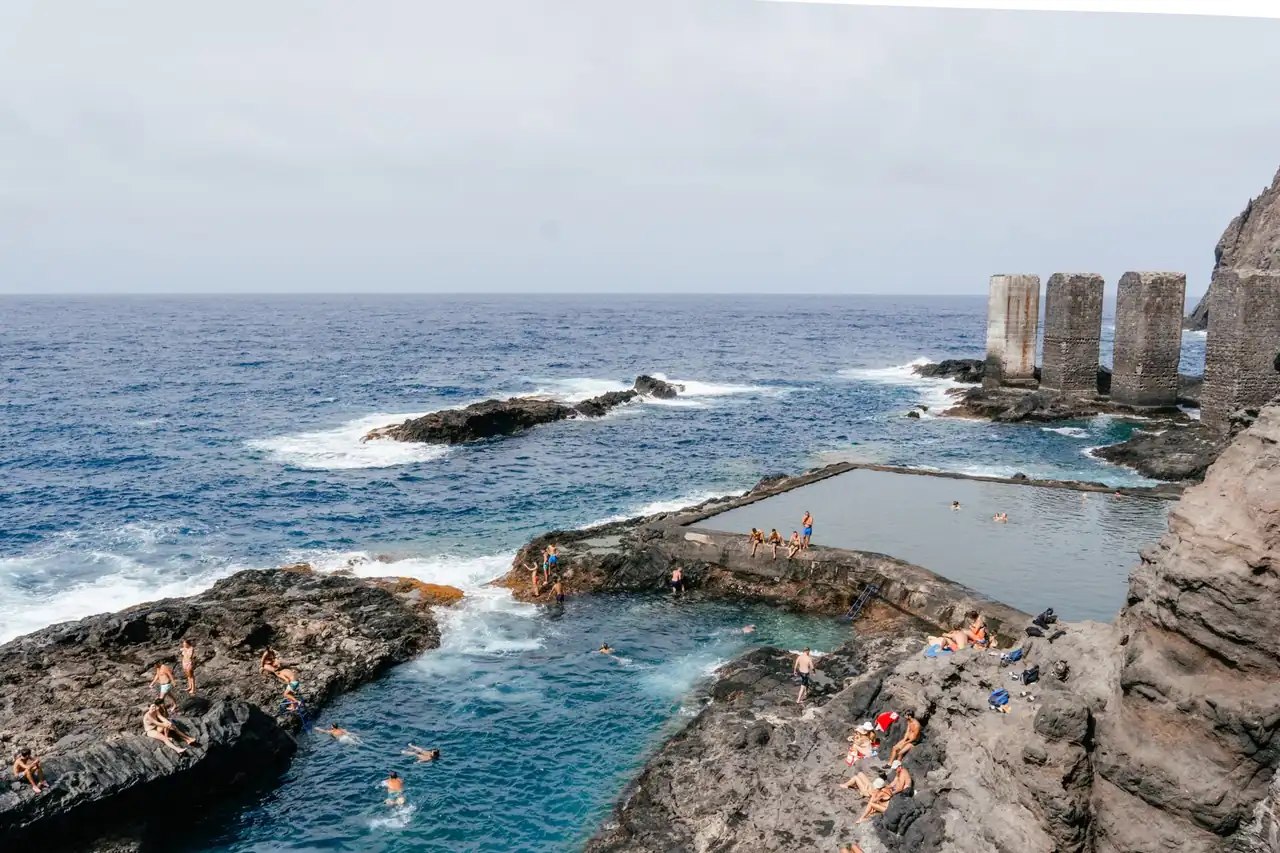
The next edition of KOS Xtreme is scheduled for Saturday, June 5, 2027, in La Palma, as part of Spain’s middle-distance triathlon calendar. A registration listing gives a 7 a.m. start and says entries are open, while other references describe a course comprising a 2-kilometer swim, 50 kilometers of cycling and a 10-kilometer run.
Public information is not consistent, however: some listings place the race in La Palma, while others give a different provisional location or course details that are difficult to reconcile with the advertised category. The date is therefore the most solid detail for planning; the precise venue, final course and entry fee still require confirmation from the organizers.
A confirmed date on the 2027 calendar
The event is listed for June 5, 2027, a date also included in a calendar of middle-distance races in Spain. With races spread across the mainland and islands, the event adds a Canary Islands option in early June, when the season already features several major competitions. For anyone comparing dates, the Saturday makes it possible to organize travel and accommodation around race day, although complete schedules for all disciplines have not been published.
The registration listing gives a start time of 7 a.m. An early start is common in triathlons with multiple segments because it helps manage the transitions between swimming, cycling and running, while allowing time for daylight and temperature conditions. Still, this should be understood as the time given on the registration platform; the available information does not detail transition-area opening, equipment checks or wave starts.
The event is identified as the sixth edition, suggesting continuity within the race brand. That numbering points to a competition with a history, but it does not establish that the 2027 course will be identical to previous years. For island events, wind, sea conditions and traffic permits can affect logistics, so the useful reference is the confirmed date rather than an old route copied forward without an update.
La Palma is listed as the venue, but one discrepancy remains
The Spanish triathlon calendar lists KOS Xtreme in La Palma, in the Canary Islands. That is the location given for this edition. However, another registration page marks the venue as unconfirmed and uses Santa Cruz de Tenerife in its location field, while a race listing gives Las Palmas de Gran Canaria. These references do not match and should not be treated as if they identify the same municipality.
La Palma is an island, not a specific municipality, so the start area, transition zone and finish location have yet to be identified. That distinction matters in practice: a race may pass through different communities and require travel between the beach, transition area and finish. Without a confirmed address, it is also unwise to book accommodation on the assumption that the start will be in a particular town.
The island offers an Atlantic setting shaped by its coastline, volcanic terrain and sharp elevation changes over relatively short distances. That context matters in a triathlon: sea conditions affect the swim, gradients and wind can change the demands of the bike leg, and sun exposure shapes the final run. But the island’s geography does not reveal the course. A description of the landscape is no substitute for the race’s official map, which is not included in the information reviewed.
What is known about the distances and what does not add up
One race listing gives a 2-kilometer swim, 50 kilometers of road cycling and a 10-kilometer run. It also classifies the event as an M-distance triathlon. Other information includes it among the middle-distance events planned for 2027. The two descriptions do not clearly align: the cycling and running distances in the first listing are shorter than those normally associated with a middle-distance triathlon.
The discrepancy could reflect a cataloguing error, an incomplete listing or a special format, but there is not enough information to determine which explanation is correct. It would therefore be misleading to present those distances as final regulations or compare them without qualification with an Ironman 70.3 or a standard Olympic-distance triathlon. The accurate approach is to report that one listing gives those three segments, while another calendar reference classifies it as middle distance.
The number of laps, elevation gain, cut-off times and rules on drafting are not detailed either. Those details affect both preparation and race-day logistics. A multi-lap course, for instance, creates different demands from a point-to-point route; the same is true of a bike leg exposed to wind compared with a sheltered one. Until the 2027 regulations are released, the available figures are provisional guidance, not a complete technical specification.
Registration: published dates, but no entry fee
The registration platform reviewed says entries are open. The published window begins on July 13, 2026, at 1 p.m. and ends on May 20, 2027, at 11:59 p.m. Registration is listed as being managed by the Canary Islands Triathlon Federation through RockTheSport, while the organizer is named as lapalmaxtri. These details identify the channel carrying the event listing, but do not resolve questions about the venue or course.
No entry fee is stated in the available reference information. It also gives no details about price tiers, booking fees, refund policies or what the entry includes. Since costs can change according to timing and registration conditions, any unpublished figure would be speculation. The absence of a price on the listing does not mean participation is free; it means the amount cannot be confirmed from the current information.
The announced deadline leaves several weeks between the close of registration and race day, but the number of available places and current capacity are not specified. That information is useful when coordinating travel and accommodation for an island race, though it should not be mistaken for a guarantee of availability. The overall budget also depends on flights, ferry connections, hotel nights and transporting a bike, costs that vary with the starting point and booking lead time.
A triathlon that requires three efforts to work together
The race’s appeal lies in combining three disciplines that require continuous effort management. The swim opens the day and can feel very different depending on waves, water temperature and the direction of the course. Then comes the bike, where position, cadence and fuelling matter; after dismounting, the legs must adapt to running before the body has fully recovered its usual rhythm.
In an event of this kind, it is not enough to assess each segment in isolation. The transitions are part of the challenge too: finding equipment, changing quickly and staying composed as fatigue sets in. That continuity explains why a detail such as cycling distance is not minor. If the provisional 50-kilometer figure is confirmed, the demands will differ from those of a longer middle-distance course; a general label cannot replace official figures.
An island event adds a logistical variable that is less pronounced in many mainland races. Bikes, luggage and transfers have to fit around arrival and departure times, and a change to the exact venue could affect which accommodation makes the most sense. This is not a reason to overstate the difficulty; it is simply part of the experience. On an island, even a short distance between a port, hotel and race area can affect transfer times and pre-race routines.
The Canary Islands landscape shapes the experience, not the course
La Palma has coastal scenery and steep terrain, but there is not enough published information to attribute those features to a specific race segment. The swim could take place in open water or a more sheltered area; the bike route could follow coastal roads or climb inland. Without an official itinerary, describing any of those options as a confirmed part of the event would mean anticipating information that is not available.
June weather deserves consideration without turning general averages into a forecast for race day. Sun exposure, humidity, wind and sea conditions can vary across the island. In a race that starts early, the temperature at the beginning may not reflect what participants face later. For that reason, the regulations and updates closer to the event will be more useful than a broad description of typical Canary Islands weather.
The geography does help explain why an island race can offer a different experience from a conventional urban course. The ocean horizon, changing light and visible terrain accompany the effort, while the proximity of coast and mountain can make the surroundings shift quickly. But it is important to distinguish landscape from route: La Palma is the announced setting; the roads, access points and specific segments still need official publication.
Accommodation and travel around the race
Without a confirmed municipality or start address, it is not yet possible to say which hotels will actually be close to the event. On an island, distance in kilometers does not always reflect travel time: road layout, gradients, traffic and equipment drop-off points can matter as much as the accommodation’s location. Choosing somewhere solely because it looks nearby on a map could leave a participant far from the start or transition area.
Missing logistics include race-pack collection, transition-area access times, parking options and potential road closures. It would also be useful to know whether transport is available for participants or spectators between the start and finish, especially if the segments do not share the same location. Until those details appear, the island setting provides context but not enough information to recommend a specific neighborhood or property.
Transporting a bike deserves particular attention, especially when it involves air or sea travel. Sports baggage rules depend on the carrier and may add costs or packing requirements. Those expenses are not necessarily included in the entry fee, so the final budget can vary considerably between participants. For realistic planning, the race listing must be considered alongside carrier rules and the confirmed locations of each transition.
How to read the available listings
The pages reviewed agree that an edition is planned for 2027 and that the event is a triathlon. Some references also place it in La Palma and give June 5 as the date. By contrast, information about location, category and distances does not match across all listings. That difference between stable details and provisional fields matters: a commercial listing or shortened calendar entry should not be mistaken for a complete set of regulations.
The date is clearly stated in the edition information, while the 7 a.m. start and registration window come from a registration platform. The 2-kilometer swim, 50-kilometer bike and 10-kilometer run appear in a separate listing, but sit uneasily with the middle-distance label. The exact venue also varies between references. Separating each detail by its level of certainty gives an honest picture: there is enough information to identify the event, but its technical specification is not complete.
The inconsistency does not prove the race will change or has been cancelled. It simply indicates that directories may contain partial versions or errors that have not yet been corrected. The most careful approach is to retain details that agree or are explicitly stated and mark the rest as pending. In this case, the date and edition are more solid than the municipality, price or full description of the segments.
What organizers still need to clarify before race day
The key missing information is the 2027 rulebook, including maps for each segment and the exact locations of the start, transitions and finish. That document should confirm whether the distances in the initial listing are final and how the format will be classified. It would also provide elevation profiles, lap details, checkpoints, cut-off times, aid stations and technical rules that are absent from current listings.
Logistics also require a clear, consistent announcement of the host municipality. La Palma is a large island, and the provisional reference to Santa Cruz de Tenerife is not the same as a start point there; likewise, the mention of Las Palmas de Gran Canaria does not identify the La Palma venue. A precise address would prevent travel mistakes and let participants assess accommodation, transport and journey times using useful information rather than estimates.
A verifiable entry fee and a breakdown of what it includes are also missing. Publishing the price, any fee tiers and cancellation terms would help participants compare the event with other races, particularly those travelling from outside the Canary Islands. Until those details are available, the public listing is enough to identify the event and save the date, but not to calculate a precise budget or assess the course.
An appealing event whose profile needs greater precision
The 2027 edition stands out for having a listed date and an announced setting in La Palma, a backdrop that could give a triathlon day a distinctive character. The registration listing adds a start time and entry window, while calendar references include the event among middle-distance races. Together, these details identify a real event and place it on the calendar, although they do not yet provide everything needed to plan travel or understand the sporting demands.
Taking a cautious approach does not diminish interest in the race; it avoids confusing an initial listing with a final one. The published distances and category do not fully align, and the available geographic references name different locations. Once the rules, map and address are released, it will be possible to assess whether the format is an M-distance triathlon, a middle-distance race or a configuration of its own.
For now, the most consistent information points to a start on June 5, 2027, with La Palma as the island venue. Everything else should be read with the reservation due to an event listing that is still incomplete: not as an invitation to fill in the gaps, but as an indication of what is needed for a precise description. In a three-discipline race, knowing every kilometer matters as much as knowing where the day begins.



How to prevent thigh chafing: causes and real solutions

Women’s running windbreakers: seven jackets and how to choose

Do more workouts get rid of soreness? A guide for runners

Jaén Half Marathon 2026: Record 3,800 Runners Registered

Men’s short running tights: how to choose the right pair

World Triathlon confirms data breach involving medical data

Izan Edo targets podium at Miyazaki World Cup

María Pérez ranks ninth in World Athletics’ 2026 top ten

Dos Santos, Duplantis and Sawe: World Athlete of the Year finalists

San Silvestre Vallecana 2026: 42,000 places, prices and start times

 Races3 months ago
Valencia Half Marathon 2027: date and registration

 Races3 months ago
Valencia Marathon 2026: entry, ballot and course

 Reviews and Comparisons4 months ago
Asics Gel-Roadmiles 3 for men: review and current price

 Reviews and Comparisons4 months ago
Asics Gel Sonoma 8 Gore-Tex: complete analysis for trail and rain

 Sneakers3 months ago
Saucony Endorphin Pro 4: full review and verdict

 News5 months ago
Strava API 2026: what changes for clubs, challenges and runner apps?

 Reviews and Comparisons5 months ago
Nike Alphafly 3: opinions, sensations, and real key points

 Reviews and Comparisons4 months ago
Under Armour running shoes review 2025-2026: models and key features

 Sports Equipment4 months ago
Shoe sizes in cm: a clear guide to getting the right fit for your footwear

 Sneakers3 months ago
Skechers GO RUN Consistent 2.0 analysis: comfort and limits

 News5 months ago
Valencia Marathon 2026 route: key tips to train and run better

 Sneakers4 months ago
Adidas Adizero Boston 13 for men: review and verdict