Races
La Coruña Women’s Race 2026: route, start and registration
The race in A Coruña will once again fill the seafront with pink, solidarity and an accessible route alongside the Atlantic.

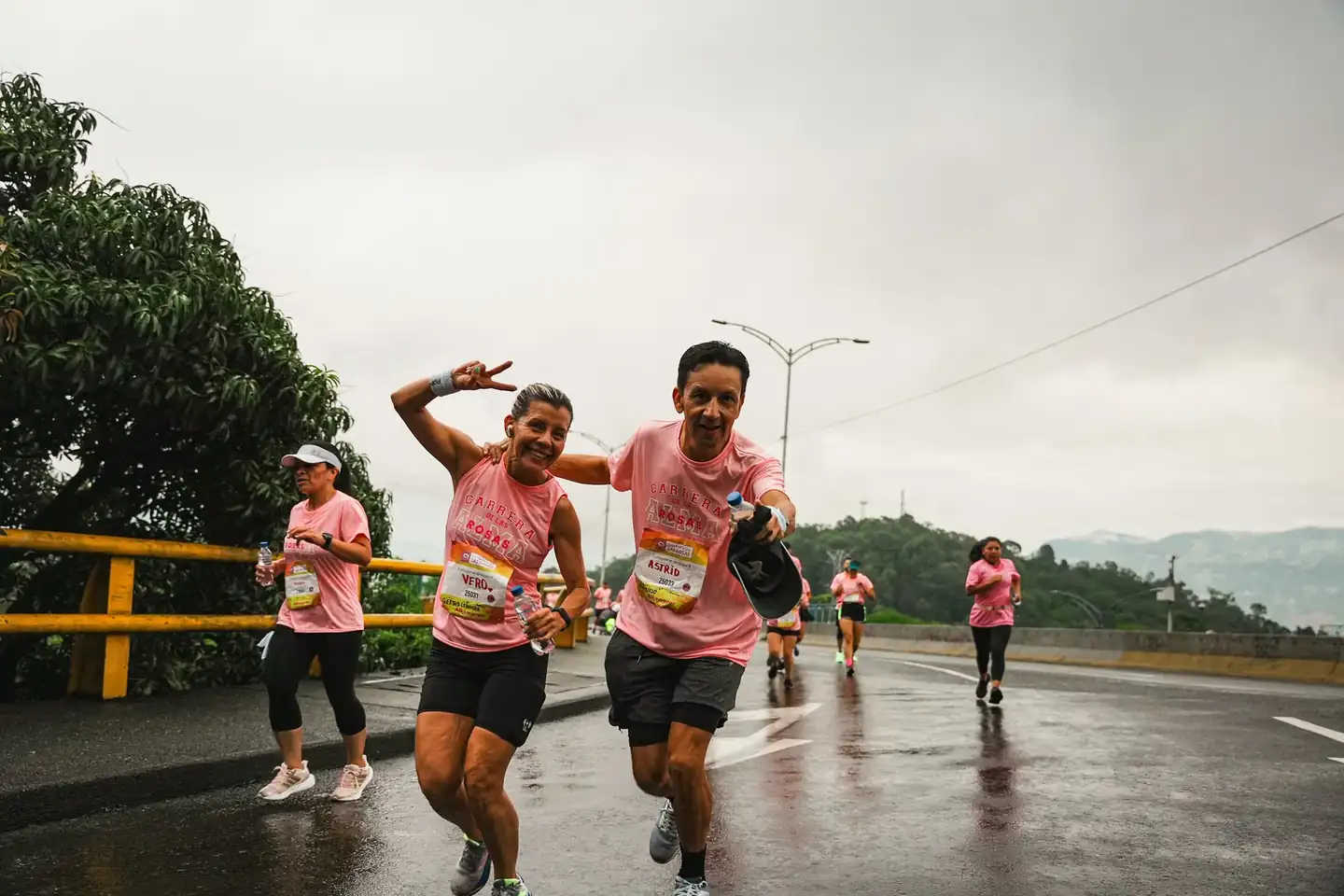
The A Coruña Women’s Race 2026 will once again rank among the most recognisable events on Spain’s popular racing calendar, thanks to a very specific combination of sport, advocacy, solidarity and a collective atmosphere. The event is scheduled for Sunday, September 27, 2026, a date that places the race in the transition between summer and autumn and which, according to the information published by the organisers, keeps registration open from July 15.
The race will bring together women of different levels on an urban course linked to the seafront, with the Atlantic as its backdrop. The announced distance ranges from the 6 kilometres that appear in some listings to approximately 6.5 kilometres in other circuit references and previous editions. The final figure will have to be established in the official 2026 regulations, but in either case this is an accessible route, designed both for regular runners and for those wishing to take part in a popular race for the first time.
The indicative entry fee communicated for registration ranges between 13 and 16 euros, depending on the time of purchase, the registration period and any promotions or included services. Before completing payment, it is worth checking the final price, any additional charges and the conditions applicable to changes or amendments to personal details.
The appeal of the A Coruña Women’s Race does not lie solely in its distance. The event has established itself as a genuine pink tide, associated with encouraging female participation, social visibility, promoting sport among women and charitable fundraising which, edition after edition, has directed resources towards health and research projects and associations linked to different social causes.
In A Coruña, moreover, the coastal setting turns the race into an Atlantic postcard: open air, tarmac beside the sea, beaches, buildings in the city centre, spectators on both sides and a finish that usually blends music, applause, fitness activities and aerobics and gymnastics sessions. The day combines physical activity, awareness and a festive atmosphere, meaning that the stopwatch is only one part of the experience.
Date of the A Coruña Women’s Race 2026
The date announced for the 2026 edition is Sunday, September 27. The initial information placed the event around the middle or second half of September, but the published announcement ultimately specifies the last Sunday of the month. The starting time has yet to be officially confirmed for 2026.
In the most recent reference for the race in A Coruña, the start was scheduled for 10:00 a.m. on Sunday. This is a common time for this type of event because it makes participation easier for runners and accompanying spectators and usually offers better temperatures than the middle of the day. Nevertheless, it would not be sensible to automatically transfer the time from previous editions to the new event: the organisers must specify the final time in the regulations or official guide.
Some other important operational details are also still awaiting confirmation:
- The exact starting time.
- The final location of the start and finish lines.
- The arrangement of the starting corrals.
- The maximum time allowed to complete the race.
- Refreshment points.
- The rules for accessing the starting area.
- The address, dates and opening hours of the Runner’s Fair.
- Access routes, road closures and areas available for parking or public transport.
The choice of September is not accidental. The second half of the year concentrates numerous popular races and, in Galicia, this period usually offers milder temperatures than the central weeks of July and August. Even so, a race beside the sea is heavily influenced by the weather. Wind, humidity, perceived temperature and the possibility of rain can alter the perception of effort, even on an almost completely flat course.
Those travelling from other municipalities in Galicia or from outside the region should check the weather forecast and logistical information in the days beforehand. Conditions can change quickly on the Atlantic coast, so it is worth preparing clothing and travel plans with some flexibility.
Course and distance: between 6 and 6.5 kilometres beside the Atlantic
The A Coruña course runs along urban tarmac and makes use of some of the city’s most recognisable spaces. The available references describe it as an almost flat route around the seafront, passing near Riazor and Orzán beaches and maintaining a direct connection with the Atlantic landscape.
The distance announced in some listings is 6K, while other circuit references and previous editions mention approximately 6.5 kilometres. This difference may be due to the way the course is rounded, a variation between editions or the way the distance is presented on different platforms. For this reason, the final figure should be checked in the official regulations for the A Coruña Women’s Race 2026.
Information about the event has linked the start and finish to the Riazor area. The race’s reference article places the start at the Esplanade of the Riazor Sports Palace, with a return to the same point and a passage through the area around the Tower of Hercules. At the same time, in previous editions the start and finish have been associated with central areas near Los Cantones and Avenida de la Marina. As the exact location for 2026 must be checked in the official guide, both references should be understood as precedents and areas linked to the course, not as definitive confirmation of the operational location.
A flat and accessible course
The A Coruña course therefore covers a distance of roughly six and a half kilometres. It is a distance that fits the spirit of the event and explains much of its success. It does not require the same specific preparation as a longer urban race while still offering enough of a competitive incentive for those who want to run with a clear pace target.
It can be tackled by running at a good pace, moving steadily or combining running and walking. This possibility broadens the profile of participants and gives the event a more inclusive dimension. The format is aimed at women of different ages and abilities: experienced runners, beginners, participants returning after years without competing and people who simply want to complete the course alongside friends, relatives or work colleagues.
The almost flat profile encourages a comfortable experience for those taking part in a popular race for the first time. It also allows more experienced participants to maintain a steady pace. However, the density of the group can affect the opening metres, while crosswinds, bends in the course or a wet surface can change the sensation of effort on a route that, on paper, seems straightforward.
The out-and-back route along the seafront is easy for spectators to understand and simple to follow for anyone starting their first race. The proximity of the sea, recognisable landmarks and the visual continuity of the course make the race very easy to identify, with few uncertainties for runners.
The seafront as a setting
More than a succession of streets, the course functions as a panoramic route along A Coruña’s seafront. It runs through one of the city’s most emblematic areas, with the sea as a constant backdrop, passing alongside Riazor and Orzán beaches and near central buildings, open avenues and recognisable features such as the Tower of Hercules.
The choice of course also has symbolic value. Running in an open setting, with a sea horizon, provides a sense of space that is unusual in urban races enclosed by buildings. The sound of footsteps mixes with the waves, the wind, the salty air and the applause of the crowd. Together, these elements turn the day into something closer to a collective celebration than a simple timed competition.
The terrain is urban and paved; this is not a trail, mountain or cross-country event. For most participants, training shoes with good cushioning and a sole suitable for urban surfaces will be more appropriate than a technical mountain model. Comfort should matter more than the appearance of the equipment on a busy race day.
A Coruña Women’s Race 2026 registration
According to the information published by the organisers, registration for the A Coruña event opened on July 15. Registration must be completed through the organiser’s official channels, where the participation requirements, change policy and instructions needed to complete the process should be available.
Race number availability may vary, particularly for an event that has brought together thousands of participants in previous years. This is not an improvised race or a last-minute event: its strength depends precisely on carefully planned logistics and advance registration, which make it possible to organise the start, services and distribution of race materials.
Indicative price and included services
The price communicated in the available information ranges between 13 and 16 euros. This does not necessarily mean that there is a single fee. The cost may depend on the registration period, the sales phase, active promotions or the services included in each stage.
Before paying, it is worth checking:
- The final registration fee.
- Whether any additional charges apply.
- The conditions applicable to a possible change of details.
- The change or cancellation policy.
- The documentation that must be presented to collect the race number.
- The specific services included in the runner’s bag.
The race number usually includes a timing system and provides access to the runner’s bag, the official T-shirt and the services planned at the finish, although the exact contents for the 2026 edition must be confirmed in the official guide. Registration may also include participation in the post-race activities linked to the sports festival.
Runner’s Fair, race number and pink T-shirt
The organisers usually centralise the collection of race numbers and runner’s bags at a pre-race fair. In the reference edition, the so-called Runner’s Fair was held at Palexco. For 2026, the final address, dates and opening hours have not yet been publicly confirmed, so the official information should be checked before travelling.
The general format usually includes prior registration, collection of the race number and materials, practical information about the event and access to activities by collaborating brands or organisations connected with health and sport. The fair may also include talks, personal accounts and wellbeing activities. In the reference consulted, a dietitian and nutritionist even gave a talk on guidelines for before and after exercise.
For those travelling from other municipalities in Galicia or from outside the region, knowing the location and opening hours of the fair in advance is particularly important. Race-number collection may affect travel, accommodation and the organisation of race morning.
The pink T-shirt is one of the most visible elements of the event and, for many entrants, forms part of the participation ritual. It is not merely technical clothing or a souvenir: it acts as a symbol of identification and as part of the collective landscape of the race. When thousands of women move along the seafront wearing the same colour, the city takes on a uniform and powerful tone, as if the entire avenue had leaned for a few minutes in the same direction.
Atmosphere at the start, along the course and at the finish
The beginning is usually one of the most intense moments of the day. The Riazor area, or the location ultimately chosen by the organisers, brings together participants, relatives, spectators, volunteers and technical staff. For a few minutes, the area seems compressed by the colour pink, the sound, the music and the anticipation.
The start often pays tribute to sporting figures and women who serve as role models, adding narrative and memory to an event already loaded with meaning. The gathering beforehand makes it possible to see the variety of reasons that bring each participant to the starting line: some are chasing a time, others want to overcome a personal challenge, many share the race with friends and there are also those taking part for reasons connected with health, family memory or solidarity.
Very different paces coexist along the route. Some runners try to improve their times, others move at a relaxed pace and many alternate between running and walking. Some complete the course in groups, supporting one another through the longer, windier or more demanding sections.
This coexistence of paces does not weaken the race; on the contrary, it defines it. The event is not about standardising effort, but allowing different ways of engaging with running to share the same road. Walking on some sections does not diminish participation: the popular format is designed to make physical activity accessible and to give the collective atmosphere as much importance as the result.
Once the finish has been crossed, the return to the starting point usually leads into a very lively finale. Music, an aerobics and gymnastics festival, guided activities, fitness sessions and recovery initiatives are often scheduled. The runners stay, talk, take photographs and extend the sense of community that the race has created throughout the morning.
The post-race festival serves a practical as well as a recreational purpose. It helps distribute participants leaving the finish area, provides a space for active recovery and keeps attention focused on the messages of the day. In an event of this nature, the shared experience is as valuable as the recorded time.
Solidarity and the visibility of women’s sport
The A Coruña Women’s Race cannot be understood solely as a race. It forms part of a national circuit that has made female participation its main focus and solidarity one of its defining features. At its various venues, the event has brought together thousands of women around a shared sporting cause, with a message that goes beyond the stopwatch: visibility, health, mutual support and a presence in public spaces.
The circuit links popular sport with different charitable initiatives. The organisation maintains a space dedicated to social projects and entities working with women in vulnerable situations. The charitable dimension may include donations, awareness campaigns and products whose proceeds are allocated to specific programmes.
Information published about the circuit also links the event to the fight against breast cancer and the prevention of gender-based violence. It is important to distinguish between the general purpose of the race and the exact beneficiaries of each edition: the recipient organisations may vary and must be listed in the official documentation for A Coruña 2026.
In the 2024 edition, the organisers announced more than 7,000 participants in A Coruña, a figure that pointed to a new local record. Other more recent information released in connection with the event’s history stated that more than 8,000 women joined A Coruña’s pink tide. The figures come from different references and help show the event’s ability to attract participants, but they do not automatically predict the number of entrants in 2026.
The fundraising and donations linked to the circuit have played a significant role in research projects and social associations, with specific contributions to organisations such as:
- The Spanish Association Against Cancer.
- Wanawake Muller.
- The GEICAM Foundation.
- Clara Campoamor.
- Local and Galician initiatives.
The exact list of beneficiaries and the distribution of contributions in 2026 must be confirmed in the event’s official information. Not every organisation linked to the circuit necessarily takes part at every venue or in every edition.
The pink T-shirt serves as a visual identifying element, but its meaning goes beyond its colour. On the streets, it represents the presence of women from different generations in a sporting space that for a long time was less occupied by them. The race turns that presence into a public image, visible and difficult to ignore.
Popular women’s sport is also built through less visible gestures: setting aside time to train, overcoming the insecurity of taking part for the first time, running again after a break or finding a group with whom to share the activity. The A Coruña event provides a collective setting for these experiences without requiring every participant to pursue the same level of performance.
How to prepare for a six-kilometre distance
The preparation required depends on the starting point. Someone accustomed to walking can alternate walking and running sections, while someone who already trains regularly will probably be able to complete a distance of between 6 and 6.5 kilometres without major difficulty. The important thing is to increase the workload gradually and arrive on race day feeling in control, rather than carrying accumulated fatigue.
Basic plan for beginners
For a beginner, two or three sessions per week can serve as a general guide, always adapted to age, health and previous experience. A common combination might include:
- One easy session at a comfortable pace.
- Another session with gentle changes of pace.
- A slightly longer run, without turning it into a competition.
It is not essential to run every day. Rest allows the body to absorb the effort and reduces the risk of discomfort. The aim should be to gradually accustom the body to the duration, practise a sustainable pace and see how the feet, calves and knees respond to running on tarmac.
Urban surfaces require particular attention to the calves, feet and knees, especially when moving quickly from walking to running. A simple warm-up with joint mobility exercises and a few minutes of gradually increasing jogging prepares the body better than starting at maximum intensity.
After training or the race, recovery can include several minutes of walking and hydration adjusted to thirst and environmental conditions. There is no need for special formulas for a distance of this type, but it is important to listen to the body’s signals and not ignore persistent pain.
Pace during the race
In a crowded race, starting too quickly is one of the most common mistakes. The concentration of participants can create a sensation of speed that does not correspond to the actual effort. Maintaining a pace during the first kilometres at which it is possible to speak relatively normally allows energy to be saved for the final section and makes it easier to enjoy the route.
Runners seeking a particular time should take the density of the group, bends in the course and possible gusts of wind into account. Those whose priority is to finish can alternate running and walking from the beginning, rather than waiting until they are completely fatigued.
What to bring on race day
Clothing should be chosen according to the expected weather, not only the image of the event. A Coruña can offer a cool, damp or windy morning in late September, so it is worth checking the weather forecast in the days beforehand.
Lightweight, breathable garments adapt better than excessive layers, especially once the group starts moving and body temperature rises. If rain or wind is possible, it may be useful to have a light garment for waiting periods, although unnecessary weight should be avoided during the race.
Footwear should have been tested beforehand. Wearing new shoes on race day increases the possibility of chafing, pressure on the toes or discomfort that could have been avoided. It is also advisable to use familiar socks, protect sensitive areas and carry only the items that are necessary, so as not to add weight or depend on an uncomfortable backpack.
Food and hydration
Food before the race does not require special formulas for a distance of between six and six and a half kilometres. A usual breakfast, eaten sufficiently in advance, is generally wiser than experimenting with unfamiliar foods. Hydration should be maintained during the preceding hours without forcing excessive intake.
Refreshments available at the finish and any water points along the route will depend on the organisers and should be checked in the 2026 services guide. In any case, it is not advisable to try gels, drinks or supplements for the first time on race day if they have not been tested beforehand during training.
How to organise the morning and travel
Getting around a city with road closures requires planning. The final location of the start and finish, race-number collection times, access routes, parking areas and public transport alternatives should be checked before attending.
The arrival of thousands of participants may lead to restrictions in the city centre and along the seafront. Arriving with plenty of time avoids turning the minutes beforehand into an additional race and makes it easier to find the assigned starting corral calmly.
It is also advisable to prepare the following in advance:
- The race number and the items needed to attach it.
- The T-shirt and clothing to be worn during the race.
- Shoes and socks that have already been tested.
- Any documentation required to collect the race number, if applicable.
- The location of the Runner’s Fair.
- The route to the start.
- Where clothing can be left or collected, if the organisers provide this service.
- Access times for the corrals and entry rules.
Those travelling from outside A Coruña should bear in mind that the pre-race fair may be where race-number collection is concentrated, and that its address, dates and opening hours have not yet been confirmed for 2026. Checking these details in advance makes travel planning easier and avoids unnecessary journeys on race day.
The Women’s Race within the national calendar
A Coruña holds a prominent position within the Women’s Race calendar. The 2026 edition will take place after the events held in Gran Canaria, Madrid, Vitoria, València and Gijón, and before the events scheduled in Zaragoza, Seville and Barcelona.
The Galician city will therefore once again become one of the meeting points for the pink tide, an image that sums up the concentration of participants wearing the official T-shirt. The national calendar places the A Coruña event within a series of races that share a sporting and charitable identity, although each venue contributes its own route and local character.
The A Coruña edition has a recognisable profile within that circuit: a short distance, an urban course beside the Atlantic, an open seafront and a highly diverse field of participants. The city provides the coastal setting, while the race creates an image of Galicia connected with exercise, solidarity and women of all ages taking up sport.
The race’s recent history in A Coruña
The response to previous editions helps explain the scale of the event. In 2024, the organisers reported more than 7,000 participants and a figure that suggested a new local record. Another reference in the race’s recent history mentioned the participation of more than 8,000 women. Although the figures should not be confused or used as an automatic forecast for 2026, both demonstrate a very broad capacity to attract participants.
Growth in participation is not measured only at the starting line. An event of this size means streets occupied for several hours, volunteers in attendance, assistance points and close coordination with municipal services. For spectators, the event changes the appearance of the city centre and seafront; for participants, it creates an atmosphere of support that is difficult to reproduce in an individual training session.
The event’s continuity has consolidated a relationship between A Coruña and the national circuit. The city offers a recognisable route, a strong maritime identity and a tradition of participation in popular activities. The race, in turn, projects an image of the city associated with running, women’s sport and solidarity.
This history does not guarantee the number of race numbers, services or programme for 2026. The organisers still have to confirm the maximum number of participants, the final course configuration, the location of the fair and the details of the day. Until then, data from previous editions serve as context, not as a guarantee that every element will be repeated.
A Coruña as a sporting setting
The city has a natural relationship with urban running. Its broad coastline, seafront and recognisable landmarks such as the Tower of Hercules provide an ideal setting for events that need visibility, continuity and space for spectators.
The Women’s Race makes the most of precisely this combination: a city that allows itself to be run without fuss and a geography that turns every kilometre into a panorama over the Atlantic. The course is easy to identify, the start and finish are linked to familiar areas and spectators can follow part of the action with relative ease.
For a popular race, this combination has significant practical value: less complication for the runner, greater clarity along the route and a cleaner experience for anyone taking part for the first time. There is no need to know A Coruña in detail to understand the race; the city itself explains it through its avenues, beaches, seafront and changing light.
Galician weather also introduces a nuance that road runners know well. Humidity can make the effort seem greater than the pace suggests, while a headwind along the seafront can drain the legs somewhat over the final metres. These details do not change the nature of the event, but they do make it more authentic and less abstract than other urban races where everything seems completely controlled.
Why the event still has so much pull
Some races survive through tradition, while others grow because they connect with a real need. The A Coruña race combines both. It has a recognisable history, its own aesthetic and a clear social message, but it also offers something very concrete: a manageable route, a familiar organisation and an experience that does not require being an athlete to feel part of it.
This makes it an entry point into running for many women and an annual event for many others who have already made it their own. Some take part to run, others to walk, others to accompany someone and many to share the kilometres with their group. The variety of motivations is part of the event’s identity.
Its continuity is also explained by the balance between celebration and purpose. It does not trivialise competition, nor does it become excessively solemn. It occupies a difficult middle ground where sport serves as a vehicle for a collective cause without losing its lightness.
The result creates powerful images: pink T-shirts, open sea, smiles, satisfying tiredness, groups of friends, relatives waiting at the finish and the murmur of the city accompanying everything like a backdrop. For a few hours, the seafront stops being merely a road beside the sea and becomes the centre of a civic and sporting experience.
A day that goes beyond the finish line
The true impact of this event is not measured only in times. It is measured in the number of women who finish feeling that they have been part of something bigger, in the visibility gained by women’s sport and in the continuity of a message that has secured a place on the popular agenda.
The emotional dimension matters too. Many participants come for personal reasons: health, shared challenges, family memories, solidarity or simply the pleasure of being part of a chorus of runners. In an event like this, the images of the start and finish become almost cinematic. Those who finish encourage those still on the course, while the people waiting at the finish create a current of applause that pushes the final arrivals onwards.
A Coruña contributes a particularly favourable setting to this equation, because the city is not merely a backdrop: it accompanies, amplifies and gives character to the event. The sea, beaches, seafront, avenues and spectators create an experience that is not limited to completing a specific distance.
That is why the race retains its appeal even for those who are not competing ambitiously. Its value lies in arriving, sharing public space with thousands of people and turning an ordinary morning into a civic and sporting experience at the same time. At a time when many events seek to stand out through innovation, this one maintains a simple and effective format: a clear route, a recognisable cause and an atmosphere that is already part of its history.
Practical information still awaiting confirmation
The 2026 event already has a defined date, a communicated registration opening date and an approximate distance. However, before travelling to the race, it will be essential to consult the official documentation to confirm the details that may still change.
- Date: Sunday, September 27, 2026.
- Registration: open from July 15, according to the published information.
- Indicative price: between 13 and 16 euros, depending on the time of purchase and registration conditions.
- Distance: 6K in some listings and approximately 6.5 kilometres in other references.
- Surface: urban tarmac.
- Course type: almost flat and linked to the seafront.
- Setting: Riazor, Orzán, the seafront and other recognisable points in A Coruña.
- Start and finish: previous references have linked them to Riazor and, in other editions, to areas near Los Cantones and Avenida de la Marina; operational confirmation for 2026 is still pending.
- Starting time: not yet confirmed; in a previous edition it was scheduled for 10:00 a.m.
- Runner’s Fair: expected to serve as the collection point for the race number and runner’s bag, but no final address, dates or opening hours have been published for 2026.
- Charitable beneficiaries: must be checked in the official documentation, as they may vary from one edition to another.
Updated information about this event can be consulted alongside the popular races calendar and the popular races map. Both resources make it possible to place the A Coruña event within the national calendar and compare it with other urban races when planning the season.
Conclusion: a popular race with its own identity
The A Coruña Women’s Race 2026 combines an accessible distance, an urban course, an Atlantic setting and a social dimension that sets it apart within the Galician calendar. The sea accompanies much of the experience, but the true distinguishing feature is the diversity of the participants: women who run, walk, take part for the first time, return after years away, chase a personal best or turn the day into a shared celebration.
On September 27, 2026, A Coruña will once again turn pink during a day when the stopwatch will be only one part of the story. The route beside the Atlantic, the large turnout, the pink T-shirt, the post-race festival and the charitable element explain why this event continues to hold its own place on the women’s running calendar.
The date, approximate distance, seafront and pink atmosphere are not separate elements. Together they form a very clear image of what the race represents: an open, accessible and socially conscious event that transforms the city for a few hours and turns popular sport into a form of collective expression.



How to prevent thigh chafing: causes and real solutions

Women’s running windbreakers: seven jackets and how to choose

Do more workouts get rid of soreness? A guide for runners

Jaén Half Marathon 2026: Record 3,800 Runners Registered

Men’s short running tights: how to choose the right pair

World Triathlon confirms data breach involving medical data

Izan Edo targets podium at Miyazaki World Cup

María Pérez ranks ninth in World Athletics’ 2026 top ten

Dos Santos, Duplantis and Sawe: World Athlete of the Year finalists

San Silvestre Vallecana 2026: 42,000 places, prices and start times

 Races4 months ago
Valencia Half Marathon 2027: date and registration

 Races4 months ago
Valencia Marathon 2026: entry, ballot and course

 Reviews and Comparisons4 months ago
Asics Gel-Roadmiles 3 for men: review and current price

 Reviews and Comparisons4 months ago
Asics Gel Sonoma 8 Gore-Tex: complete analysis for trail and rain

 Sneakers3 months ago
Saucony Endorphin Pro 4: full review and verdict

 News5 months ago
Strava API 2026: what changes for clubs, challenges and runner apps?

 Reviews and Comparisons5 months ago
Nike Alphafly 3: opinions, sensations, and real key points

 Reviews and Comparisons4 months ago
Under Armour running shoes review 2025-2026: models and key features

 Sports Equipment4 months ago
Shoe sizes in cm: a clear guide to getting the right fit for your footwear

 Sneakers3 months ago
Skechers GO RUN Consistent 2.0 analysis: comfort and limits

 News5 months ago
Valencia Marathon 2026 route: key tips to train and run better

 Sneakers4 months ago
Adidas Adizero Boston 13 for men: review and verdict