Races
La Pota Roja: complete guide to the Cervelló race
Routes, schedules, prices, and atmosphere of a trail running and mountain biking event in Cervelló, with all the key details.

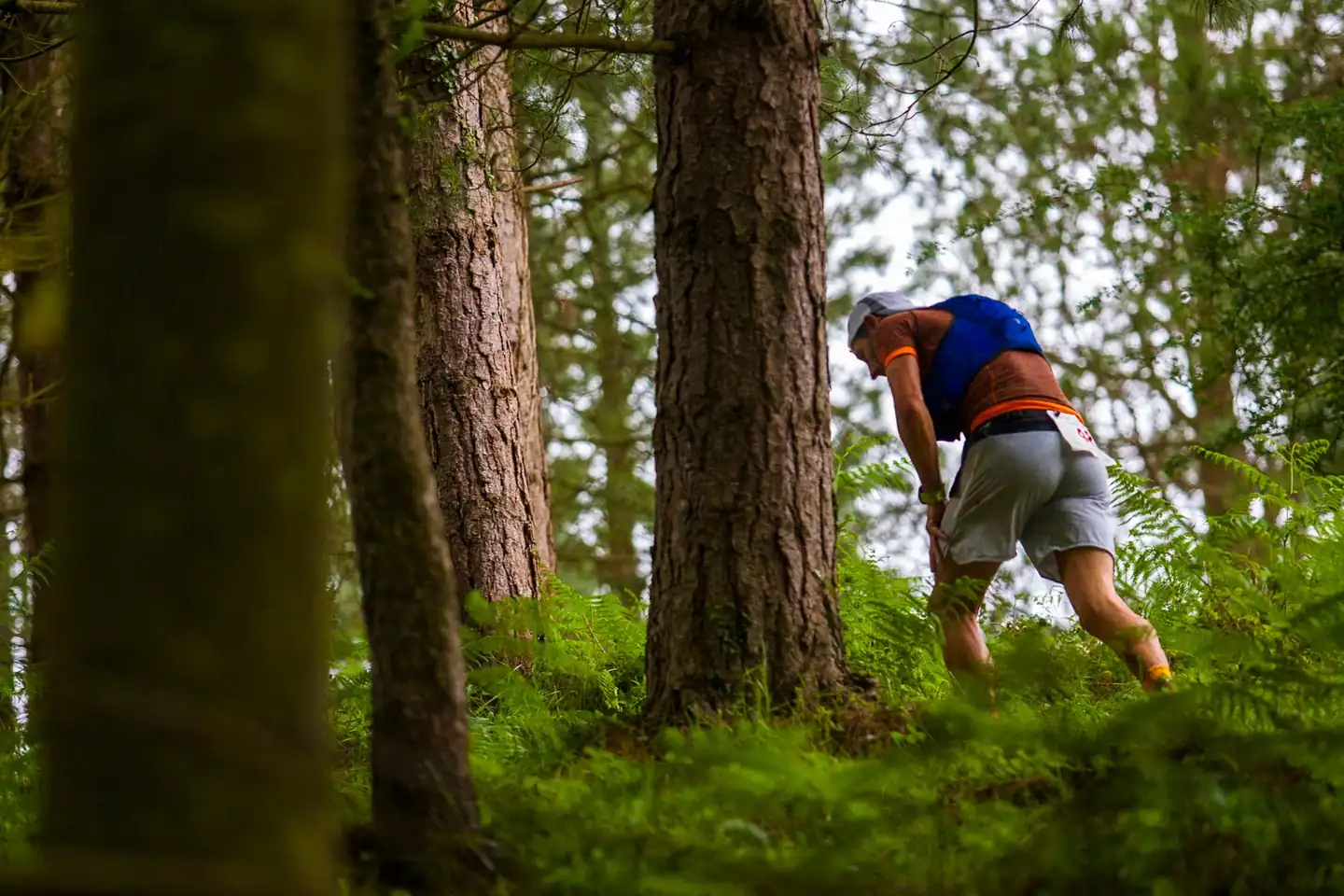
La Pota Roja in Cervelló has established itself as one of the most distinctive events on the mountain calendar in Catalonia: on the same Sunday it brings together trail running and mountain biking in a forest setting, with staggered starts, several elevation profiles and an organization designed to handle a large number of participants without losing order. The 2026 edition is set for November 8, with start and finish next to the Ceraqua complex, in a format that blends sporting challenge with a town fully engaged with the event.
This is not a showcase race. Its appeal lies in its variety: 8, 14, 24 and 42 kilometers for running, and 20 and 35 kilometers for mountain biking. That combination explains why the event has gained prominence among runners and cyclists looking for a long day, with mountain terrain and a route that is not limited to a simple local circuit. Cervelló appears here as a meeting point, not merely as a backdrop.
A mountain event with its own identity
La Pota Roja is not understood only by its distances. Its value lies in the way it brings together sport, place and community. The start from Cervelló and the passage through nearby trails and forests turn the race into a very recognizable mountain experience, without gimmicks. The runner does not find a great urban festival or an asphalt marathon: they find elevation gain, trail and changing pace, three ingredients that are enough to explain its personality.
In trail running, the difficulty increases very logically. The 8-kilometer distance serves as a gentle introduction to the event, although it still adds 263 meters of positive elevation gain. The 14-kilometer race rises to 546 meters of elevation, the 24-kilometer race reaches 1,114 meters and the 42-kilometer marathon soars to 1,925 meters. There is no deception: here every meter of climbing is paid for in the legs.
The bike routes are no less demanding. The 20-kilometer and 35-kilometer routes are designed for those who prefer the technical challenge of mountain biking, with a profile that combines rideable sections and others where strength, balance and reading the terrain make the difference. The coexistence of both disciplines on the same day is one of the keys to the event’s success.
Schedules, distances and the order of Sunday
The start program is precisely staggered to avoid awkward crossings between disciplines. In 2026, the 42- and 24-kilometer races start at 9:00; the 20- and 35-kilometer MTB events at 9:20; the 14-kilometer race at 9:35; and the 8-kilometer race at 9:50. That sequence reduces crowds and allows each group to find its own rhythm in the opening stages.
Race bib collection is also clearly defined: on Saturday, November 7, from 4:00 p.m. to 8:00 p.m., and on Sunday itself, from 7:00 a.m. to 8:50 a.m., at the Ceraqua sports complex. In events with several disciplines, logistics matter almost as much as the course. A bib collected on time, an operational baggage area and showers available at the end are details that ease a day that can last quite a while.
The organization also provides free parking about 200 meters from the start, a non-trivial detail in an event with such a large turnout. In practical terms, the race works like a small mechanism: starts, timing, aid stations, finish area, medical assistance and post-race recovery all fit together so that the focus returns to where it should be, on the effort.
How much it costs to sign up and what the bib includes
Prices vary according to distance and registration phase, with a tiered system that penalizes hesitation. In phase 1, until October 8, the 8-kilometer trail costs 23 euros, the 14-kilometer trail 29 euros, the 24-kilometer trail 35 euros and the 42-kilometer trail 49 euros. For MTB, the 20-kilometer route costs 30 euros and the 35-kilometer route 34 euros.
From November 8, that is, from the final phase onward, prices rise to 26 euros for the 8 kilometers, 32 euros for the 14 kilometers, 38 euros for the 24 kilometers and 57 euros for the 42 kilometers. In MTB, they go up to 35 euros and 39 euros, respectively. The range is not decorative: in the marathon, the difference between signing up early or late reaches 8 euros.
Registration includes a finisher medal, official T-shirt, gift bag, digital certificate, single-use timing chip, photo service, drink and nutrition stations, medical assistance, baggage drop, shower, changing rooms, accident insurance, parking and bike cleaning at the finish. In other words, the bib buys much more than a starting place; it buys a complete infrastructure designed to ensure the experience does not fall apart over minor details.
Routes that demand legs, head and patience
The Cervelló trail is an exercise in reading the terrain. The 8 kilometers are not just short; they serve as an entry into the forest without the elevation gain swallowing you from the start. The 14 kilometers already require pacing your effort, because the terrain does not forgive an overly ambitious start. The 24-kilometer race, with its more serious profile, is usually the point where real ambition is separated from mere sporting curiosity.
The 42-kilometer marathon is another story. With 1,925 meters of positive elevation gain, the route enters the category of a long mountain day, not just a standard marathon. That fact alone explains why many participants arrive with a mix of respect and competitive appetite. It is not just about running farther; it is about sustaining effort when the terrain bites and the forest seems to tilt upward.
The MTB also offers a technical reading of the space. The 20- and 35-kilometer routes add a different kind of effort, with the cadence unique to mountain biking, changes in traction and the need to manage the body well. In a shared event, that duality enriches the race: some legs climb at running stride and others bite into the earth on two wheels.
Aid stations, safety and services that matter more than they seem
The aid stations are distributed with competitive logic. In the 8-kilometer race there is one at km 5.1; in the 14-kilometer race, at km 6 and 10.9; in the 24-kilometer race, at km 6.1, 14 and 21.6; and in the 42-kilometer race, at km 9.6, 17.8, 27.2, 33.8 and 41.2. In MTB, the 20-kilometer route has one at km 8 and the 35-kilometer route has two, at km 12 and 23.
The layout is not just a matter of organizational courtesy. In mountain races, the aid station is part of performance. Water, electrolytes, something solid if the course is long, and simply knowing that the next point is located ahead help sustain the effort. When the terrain steepens, the brain becomes as important as the pulse.
In addition, the race includes medical service, online tracking of participants, photos along the course, accident insurance and a recovery area at the finish. In MTB, the bike-washing station completes a cycle of care that prevents the experience from ending with dry mud on the frame. These are services that are not always visible in the main image, but they support the credibility of a race.
Why Cervelló is such a good fit for this format
Cervelló offers a nearby, recognizable mountain setting, with forests, trails and elevation changes that do not need makeup. The municipality is in the province of Barcelona and provides a mix of accessibility and natural terrain that favors high-participation events. You do not need a remote major mountain range to build a demanding race; sometimes it is enough to know how to read a hillside well and organize it with common sense.
The event also benefits from a social advantage: the local area gets involved. That feeling of a special weekend, where neighbors, volunteers, sponsors and athletes come together, creates an atmosphere that cannot be improvised. An event like this works as a community barometer: if the logistics are orderly and the flow of participants responds, the race gains continuity and prestige.
The other great virtue is diversity. There is an 8-kilometer race to get started, a 14-kilometer one to test yourself, a 24-kilometer one to compete with more endurance, a 42-kilometer one for those seeking a big day, and two MTB options for those who prefer the bike. That broad offering, carefully balanced, prevents the event from being locked into a single participant profile. La Pota Roja speaks several sporting languages at once.
What previous years tell us
The recent trajectory confirms solid growth. Previous editions have kept their momentum in 2021, 2022, 2023, 2024 and 2025, and the organization has been consolidating a repeatable and recognizable structure. In races with continuity, repetition is a form of quality: if the course, schedules and services hold from edition to edition, confidence grows.
There is also a symbolic reading in the presence of runners and cyclists who return. When a race becomes a calendar fixture, it stops being just an event and becomes an annual marker. That loyalty is not bought with slogans; it is earned with well-measured routes, proper treatment and a final experience that does not unravel once the finish line is crossed.
The event’s profile has also grown thanks to its ability to accommodate different levels of ambition. Not everyone comes to Cervelló looking for a record. Some want to finish a short distance in a good atmosphere; others want to accumulate hard elevation; others simply want a mountain day that smells of wet earth, effort and reward at the end.
A mountain Sunday that captures the current state of trail running well
La Pota Roja reflects a clear trend in running and MTB in Spain: the success of events that combine sport, place and solid services. It is no longer enough to draw a beautiful course. Participants value the schedule, price, assistance, cleanliness, parking, ease of bib collection and the feeling that the event has been thought through from start to finish. Cervelló has managed to put all those pieces on the table.
That is why this event is more than just a November date. It is a mountain race with its own rhythm, where elevation gain rules, logistics support and the local atmosphere completes the picture. Trail running and MTB share the stage without getting in each other’s way, and that coexistence gives the day a character that is uncommon on the Spanish calendar.
In a landscape full of races that resemble one another, Cervelló keeps a clear identity: forest, climbing, compact organization and multiple options for different profiles. That combination, simple in appearance and complex in execution, is what explains why the race continues to attract attention year after year.
The imprint of a race that does not need a disguise
What makes La Pota Roja recognizable is not a campaign of grand adjectives, but its coherence. The date, the location, the distances, the elevation gain and the services fit together like a well-built unit. The result is a mountain day where every detail makes sense, from the tiered pricing to the aid stations and bike cleaning.
In Cervelló, sport does not seem like imported scenery, but part of the landscape. And that, in a crowded calendar full of proposals, is worth a lot. La Pota Roja does not try to disguise itself as something it is not: it is a race of effort, forest and precise organization, capable of bringing runners and cyclists together in the same competitive heartbeat.
This leaves us with an event that has found its place: tough enough to challenge, varied enough to attract, and well-built enough to repeat. In the mountains near Cervelló, November no longer sounds only like the end of the season; it also sounds like earth, climbing and that very specific mix of fatigue and satisfaction left by races well run.



How to prevent thigh chafing: causes and real solutions

Women’s running windbreakers: seven jackets and how to choose

Do more workouts get rid of soreness? A guide for runners

Jaén Half Marathon 2026: Record 3,800 Runners Registered

Men’s short running tights: how to choose the right pair

World Triathlon confirms data breach involving medical data

Izan Edo targets podium at Miyazaki World Cup

María Pérez ranks ninth in World Athletics’ 2026 top ten

Dos Santos, Duplantis and Sawe: World Athlete of the Year finalists

San Silvestre Vallecana 2026: 42,000 places, prices and start times

 Races3 months ago
Valencia Half Marathon 2027: date and registration

 Races3 months ago
Valencia Marathon 2026: entry, ballot and course

 Reviews and Comparisons4 months ago
Asics Gel-Roadmiles 3 for men: review and current price

 Reviews and Comparisons4 months ago
Asics Gel Sonoma 8 Gore-Tex: complete analysis for trail and rain

 Sneakers3 months ago
Saucony Endorphin Pro 4: full review and verdict

 News5 months ago
Strava API 2026: what changes for clubs, challenges and runner apps?

 Reviews and Comparisons5 months ago
Nike Alphafly 3: opinions, sensations, and real key points

 Reviews and Comparisons4 months ago
Under Armour running shoes review 2025-2026: models and key features

 Sports Equipment4 months ago
Shoe sizes in cm: a clear guide to getting the right fit for your footwear

 Sneakers3 months ago
Skechers GO RUN Consistent 2.0 analysis: comfort and limits

 News5 months ago
Valencia Marathon 2026 route: key tips to train and run better

 Sneakers4 months ago
Adidas Adizero Boston 13 for men: review and verdict