Races
La Puebla del Río Half Marathon 2025: date and distance
A 21-kilometer race that mixes asphalt and trails in a unique natural setting, with the date, route, and prizes already set.

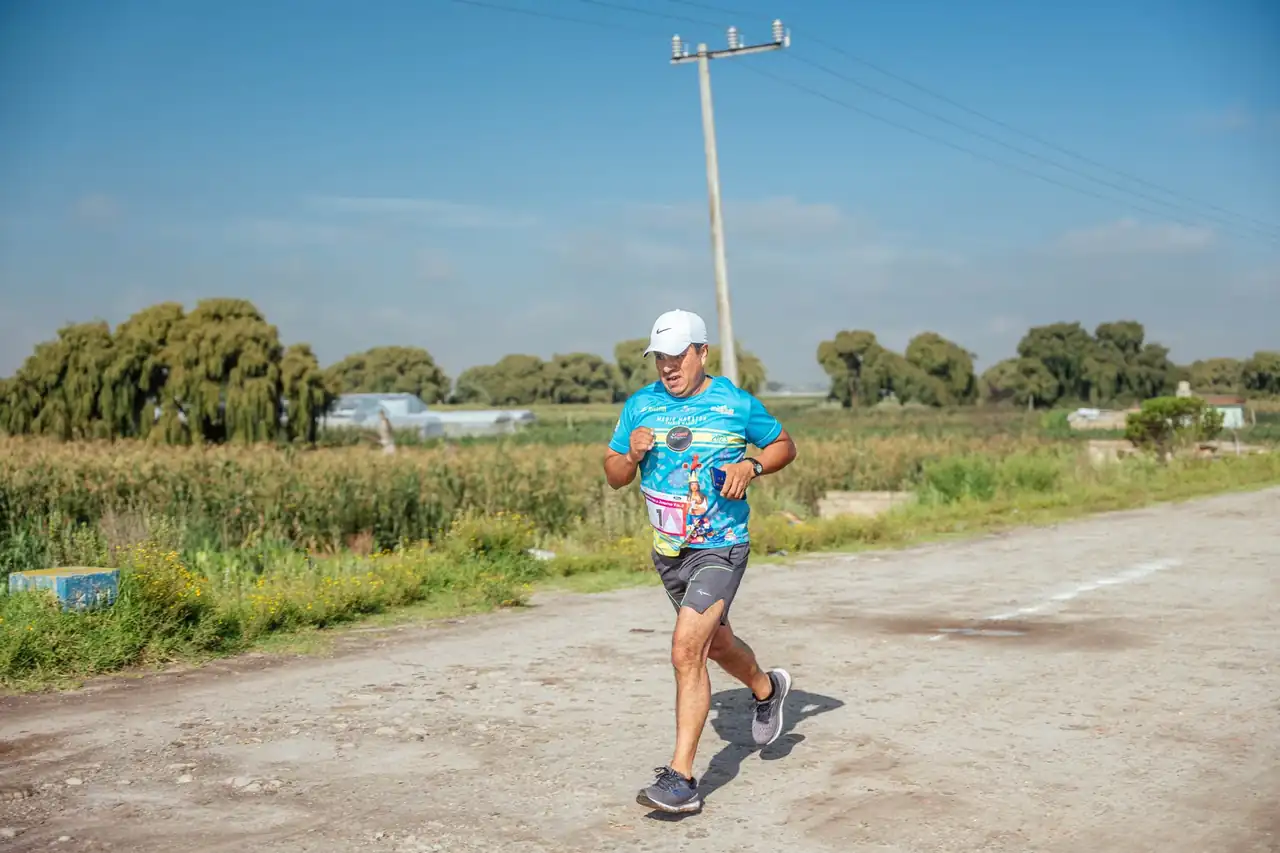
The cross half marathon of La Puebla del Río once again stands among the most distinctive races on the Andalusian calendar for a very simple reason: you are not racing only against the clock, but also against a terrain that changes character with every step. The 2025 edition was held on 12 January and kept the hallmark that has made this Seville event so recognizable, with a start in the riverside municipality, a 21-kilometer route, and a course that alternates asphalt, dirt, and open landscapes of remarkable natural value.
In an increasingly crowded calendar of urban races, this event stands out for its own identity. It does not seek the shine of a grand avenue or the speed of a flat circuit; it opts for a more complete experience, where the runner must read the terrain, pace their effort, and accept that pace does not always rule. That nuance explains why this race attracts both half-marathon enthusiasts and those seeking a different day out, less predictable and more connected to the surroundings.
A 21K with its own name on the Andalusian calendar
La Puebla del Río has turned its cross half marathon into a winter event with a very marked identity. The 2025 edition confirmed that continuity: a popular, demanding race with a profile that blends moderate toughness and scenery. It is neither a pure asphalt race nor a mountain trail in the usual sense, but an intermediate format that punishes extreme technique less while demanding constant concentration.
The race took place in La Puebla del Río, Seville, over an official distance of 21.1 kilometers, with the start at 11:00 a.m. That schedule, kinder than other winter competitions, helps the atmosphere warm up as the morning progresses, even if the body still feels January’s cold. In practice, that translates into a more cautious start and a very clear reading of the race: those who rush usually pay for it when the ground changes beneath their shoes.
The 2025 edition remained faithful to the essence of previous years and reinforced the idea that this event is measured not only by participation, but by personality. Andrés Márquez, according to the available reference, took part in a particularly demanding race and finished 60th in the Vet-A category, a fact that illustrates the kind of effort the course demands. In this half marathon, the result usually depends as much on preparation as on the ability to adapt to a changing environment.
The course: asphalt, dirt, and riverside scenery
The most striking feature of this race is the terrain. The course alternates sections of asphalt with dirt stretches, a combination that transforms the experience from the very first kilometers. The runner moves from a compact, fast surface to a softer one, with small irregularities, changes in grip, and a different muscular demand. That contrast alters the stride and forces the mind to stay as active as the legs.
The 2025 reference highlights another decisive element: the passage through natural settings of tremendous beauty. In a half marathon of this kind, the surroundings are not a backdrop, but part of the effort. The runner crosses a sequence of paths and open stretches where the horizon widens, breathing becomes more noticeable, and the landscape turns into a kind of visual metronome. There are no walls of spectators on every corner, but there is a more intimate beat, almost like a conversation with the terrain.
That mixed profile explains why the race tends to attract very different types of runners. Some come looking for a respectable mark over 21 kilometers, even knowing that the clock does not flow here as it does on a flat avenue. Others come precisely for that blend of controlled toughness and rural atmosphere. In both cases, the course has a rare virtue: it does not disguise its nature. What you see is what you get, and that makes it more honest, but also more demanding.
A race designed to endure, not just to run fast
The La Puebla del Río half marathon does not reward only top speed. It rewards economical movement, control over surface changes, and the ability to sustain prolonged effort without throwing the race off balance from the start. That brings it closer to events that leave a more complete mark on the runner, because they force you to manage small details: footstrike, support, cadence, when to push, and when to hold back.
The organizers set an official maximum time of 3 hours in the reference from previous years, a figure that places the event within the usual range for a popular 21-kilometer race, but also reflects the intention to keep the development orderly. The sweep vehicle and the limits set by the organization make it necessary to avoid unnecessary overexertion in the toughest sections. This is no minor warning: on a mixed surface, fatigue appears unevenly and can surprise even experienced runners.
The presence of dirt over much of the course adds a moderate technical component, without reaching the complexity of a high-mountain trail. Here, the difference is not marked by major elevation changes, but by the sum of small shifts. A looser stretch, a bend with less firm footing, a straight where the wind bites a little more than expected. These are details that, in a half marathon, end up shaping each participant’s true ranking.
Registration, cap, and cost: what defined the 2025 edition
The reference information places the registration for a previous edition within very specific boundaries: the entry period opened on 9 November and closed on 30 December at 2:00 p.m., or earlier if 700 registrations were reached. The fee was 12 euros. Although that data belongs to a previous edition, it helps explain the usual logic of the race: a limited field, steady demand, and a personal, non-transferable entry process, with individual registration only and no club-based entries.
In 2025, the event arrived already consolidated as a prominent local sporting event in the Seville area. The participant cap is not a minor administrative detail; it helps protect the character of the race, preserve the course, and prevent the runner flow from becoming excessive on paths and stretches where space is more sensitive. In events with mixed surfaces, that balance between participation and control is decisive for ensuring the experience works smoothly.
It also helps explain why this half marathon retains a welcoming tone. It does not seem designed for mass spectacle, but for the runner’s direct experience. The start, the evolution of the course, and the finish are all part of a single sequence where the event’s modest size keeps the spotlight on the race itself rather than on the infrastructure.
Start time and logistics for a January morning
The start was set for 11:00 a.m., a slot that may seem late for a 21K in January, but in fact helps soften the impact of the cold at the outset. In a race like this, managing pre-race clothing, warm-up, and the initial pace adjustment are almost as important as physical preparation. The body takes a little longer to warm up, but then appreciates the light and thermal stability of a more advanced morning.
The location in La Puebla del Río also reinforces the territorial dimension of the event. It is not an isolated half marathon, but a race integrated into the municipality’s sporting life and into the calendar of a province with a strong popular-racing culture. That connection with the surroundings explains part of its continuity. Events perceived as local, close, and recognizable usually stand the test of time better than races designed only to fill a date.
The mention of the natural setting is not just a journalistic flourish. In races like this, the landscape influences mood, the perception of effort, and even the memory the runner keeps afterward. Passing through open paths, with stretches where the air feels different and the visual reference changes, leaves a more lasting impression than endless laps on pavement. That is why these events inspire loyalty: they are not only completed, they are remembered.
Prizes, categories, and the importance of the popular aspect
The referenced 2025 Puebla edition in the city of the same name —not in La Puebla del Río— showed a prize structure that helps read the spirit of these events: in the 21K, 15,000 euros for first place, 10,000 for second, and 5,000 for third, plus specific prizes for the first local runners to cross the finish line. Although this is another event, the data illustrates how half marathons continue to combine elite competition, prize money, and popular participation in very different formats.
In La Puebla del Río, symbolic value outweighs economic value. The focus is on completing a course that gives nothing away and measuring performance within a race that demands adaptation. Veteran categories, such as Vet-A, reinforce that broad competitive logic, where runners of very different profiles share the same road, the same path, and the same effort. That coexistence is part of the beauty of popular athletics: each person runs their own battle within a shared one.
In that sense, the race works as a portrait of grassroots running in Andalusia. It does not need grand artifices to justify its appeal. A changing course, a winter date well placed, a club-and-fans atmosphere, and enough toughness for finishing to have real value are enough. In an era when many races try to seem like something other than what they are, here the opposite happens: the event gains strength precisely because it does not stray from its identity.
What explains its appeal among runners
Some races are chosen for time, others for sensations. La Puebla del Río belongs to the second category, though it does not give up the first. Its appeal comes from a very specific mix: standard distance, distinctive scenery, variable surface, and an atmosphere that never overwhelms. For anyone looking for a half marathon with personality, the combination is hard to ignore.
In addition, the cross-country component gives it a very useful sporting value for runners who usually train on asphalt. Changing terrain forces the activation of muscles that tend to work less in a pure urban race. The calf, soleus, ankle stability, and the ability to respond to irregularities take on a more prominent role. That does not turn the event into an extreme test, but it does make it a more complete experience from an athletic point of view.
There is also a less visible but very powerful value: the race invites careful running. In a 21K like this, distraction comes at a cost. A poorly placed foot, an early surge, or an overly optimistic transition between surfaces can alter the final result. That demand for concentration gives the event a special, almost handcrafted density, as if each kilometer were made by hand rather than mass-produced.
A mirror of popular running in Seville
The 2025 edition confirms that the La Puebla del Río cross half marathon continues to hold a highly recognizable place on the Seville running map. Its continuity speaks of a stable following, of a territory that understands popular sport as part of its identity, and of an organization capable of sustaining a coherent proposal. There is no need to turn up the volume for a race to be interesting: sometimes it is enough to design the experience well and keep a clear line year after year.
The combination of 21 kilometers, a mid-morning start, stretches of asphalt and dirt, and a setting of great natural beauty forms a kind of sporting signature. Those who run it know they are not just facing a distance, but a specific way of understanding the half marathon. And that, in a calendar full of options, is worth almost as much as a big poster or a list of favorites.
La Puebla del Río thus leaves a very clear image: a race that does not promise ease and, precisely for that reason, retains its charm. The runner crosses the finish line with the feeling of having spent a good while inside a living, changing setting, with mud, compact ground, January air, and a sporting logic that cannot be faked. In times of prefabricated courses, that kind of authenticity remains a first-rate value.
The importance of preserving races with their own character
Events that survive well over the years usually share a little-noticed but decisive quality: they have personality. They do not simply imitate the great urban half marathons, but instead build a different experience, adapted to the place where they were born. La Puebla del Río fits that pattern. Its proposal does not need to be the fastest or the most crowded to occupy a useful place on the calendar.
There is also something of collective memory in this kind of race. Each edition adds names, times, anecdotes, and small personal battles. The fact that in 2025 people were still talking about a demanding, beautiful, and well-established race indicates that the event has managed to preserve its essence without losing relevance. That balance is no accident: it requires continuity, knowledge of the terrain, and respect for the runner.
For that reason, the La Puebla del Río half marathon remains interesting beyond the specific sporting result. It is a race that shows how grassroots running can be competitive, scenic, and approachable all at once. And in that triple condition lies its strength: a course run with the legs, but also with the eyes and with memory.
The 2025 edition made it clear that this Seville event still fully retains its ability to bring together sport, territory, and challenge. In an increasingly homogeneous calendar, its mix of paths, asphalt, and natural landscape continues to make a difference. And that, in the end, is what turns a half marathon into something more than a round number on a bib.
You may also like: Los Barruecos Half Marathon 2025: dates, route, and key details and Villanueva de la Torre Half Marathon 2026: Complete Guide.



How to prevent thigh chafing: causes and real solutions

Women’s running windbreakers: seven jackets and how to choose

Do more workouts get rid of soreness? A guide for runners

Jaén Half Marathon 2026: Record 3,800 Runners Registered

Men’s short running tights: how to choose the right pair

World Triathlon confirms data breach involving medical data

Izan Edo targets podium at Miyazaki World Cup

María Pérez ranks ninth in World Athletics’ 2026 top ten

Dos Santos, Duplantis and Sawe: World Athlete of the Year finalists

San Silvestre Vallecana 2026: 42,000 places, prices and start times

 Races3 months ago
Valencia Half Marathon 2027: date and registration

 Races3 months ago
Valencia Marathon 2026: entry, ballot and course

 Reviews and Comparisons4 months ago
Asics Gel-Roadmiles 3 for men: review and current price

 Reviews and Comparisons4 months ago
Asics Gel Sonoma 8 Gore-Tex: complete analysis for trail and rain

 Sneakers3 months ago
Saucony Endorphin Pro 4: full review and verdict

 News5 months ago
Strava API 2026: what changes for clubs, challenges and runner apps?

 Reviews and Comparisons5 months ago
Nike Alphafly 3: opinions, sensations, and real key points

 Reviews and Comparisons4 months ago
Under Armour running shoes review 2025-2026: models and key features

 Sports Equipment4 months ago
Shoe sizes in cm: a clear guide to getting the right fit for your footwear

 Sneakers3 months ago
Skechers GO RUN Consistent 2.0 analysis: comfort and limits

 News5 months ago
Valencia Marathon 2026 route: key tips to train and run better

 Sneakers4 months ago
Adidas Adizero Boston 13 for men: review and verdict