Races
Las Arenas Bilbao Race 2025: date, route and distances
Bizkaia experienced a historic event with more than 2,000 runners and a 12.3 km route to the center of Bilbao.

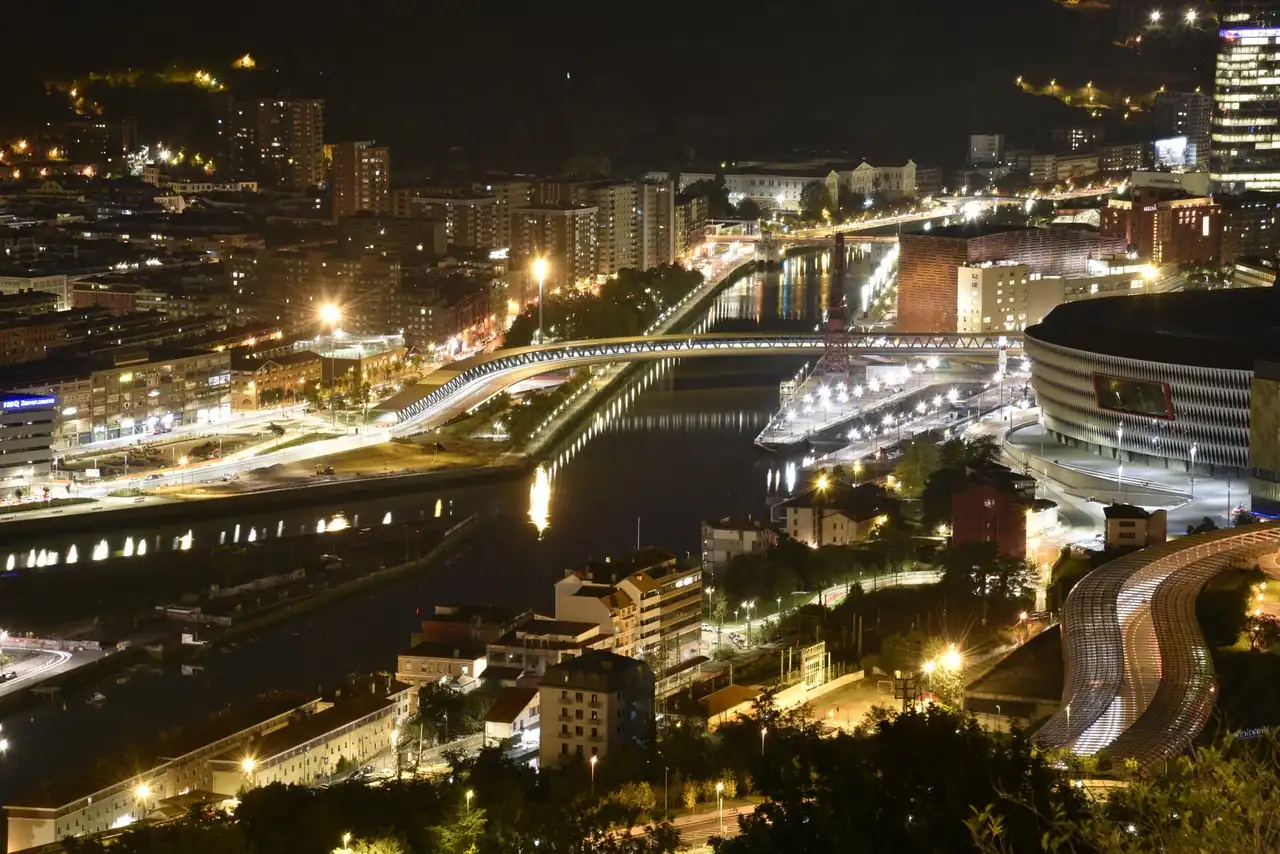
Las Arenas Bilbao Race 2025 once again brought one of the oldest events in the Basque calendar into the spotlight, with a start in Getxo, a passage along the right bank of the estuary, and a finish in Bilbao. The XXIX edition was held on Sunday, January 26, 2025, with more than 2,000 participants and an official course of 12,335 meters, a distance that places it in the territory of long, demanding popular races that are highly recognizable for their urban coastal profile.
Beyond the sporting result, the event retained its symbolic weight intact: it is a race with tradition, social pull, and a route that connects municipalities, neighborhoods, and a stretch of industrial and maritime landscape closely tied to Bizkaia’s identity. In a single morning, the pack passed through Getxo, Leioa, Erandio, and Bilbao, with the estuary as the common thread and the Euskalduna bridge as the main point of effort on the itinerary.
A historic event that is still alive in the Basque calendar
The race was born in 1930 and, despite several interruptions throughout its history, it retains a distinctive status: it is the oldest road race in Euskadi and the second oldest in Spain after the Jean Bouin in Catalonia. That fact explains part of its magnetism. It is not just a popular event with thousands of bib numbers; it is also a piece of sporting memory that has survived changes in era, habits, and competition formats.
The historical continuity is noticeable in the atmosphere. The start from Las Arenas and the advance toward Bilbao outline a kind of urban backbone that combines local spectators, experienced runners, first-timers, and athletes of different profiles. In a race like this, tradition is not a decorative extra: it works as another layer of appeal, just as with certain bridges, stations, or avenues that become landmarks because they have seen generations pass by.
In 2025, the organizers confirmed the scale of the event with participation exceeding 2,000 athletes. They also kept the reference of a distance slightly above the popular middle-distance range, 12.3 long kilometers, a measure that forces runners to manage their effort wisely. It is neither a pure 10K nor a half marathon, but an intermediate point that punishes going out too fast and rewards consistency.
Start in Getxo and finish in Bilbao, with the estuary as the backbone
The race started at 10:30 a.m. from the area around the Bizkaia Bridge in Las Arenas, next to the square by the suspension bridge. From there, the pack headed toward the right bank of the Nervión estuary and linked municipalities one after another until entering Bilbao through San Inazio. The finish was set on the Uribitarte promenade, near Plaza Pío Baroja, a highly visible urban ending, the kind that leaves the runner exposed to the landscape and to applause.
The 2025 route featured a small adjustment in Leioa due to the construction of a bidegorri parallel to the estuary. That change did not alter the essence of the race, but it did remind us of something common in long-running urban races: routes are not frozen pieces, but living maps that adapt to construction work, traffic, new infrastructure, and safety needs. The race keeps the same general backbone, even if the body of the course can vary by a few meters from one edition to the next.
That passage through several municipalities helps explain why the race is so valuable to recreational runners. It does not stay on a single avenue or a closed circuit. It has a clear spatial progression: historic start, riverside stretch, metropolitan entry, and finish near Bilbao city center. In terms of experience, it is almost a story in motion. It starts with an estuary feel, gains intensity at the bridge, and opens out onto the city’s broad asphalt.
A route that looks fast on paper, demanding in practice
On paper, the Las Arenas Bilbao Race may seem favorable for those seeking pace: asphalt, an urban route, and a relatively direct line of progression. However, experience shows that the 12-plus kilometers are not easy to tame. The crossing of the Euskalduna bridge represents the only significant incline, and many legs pay the price there for having started out faster than advisable.
The rest of the course combines more runnable sections with areas where the runner has to focus on technique and sustained effort. The entry into Bilbao, the passage through Zarandoa, Camino de Morgan, and Ballets Olaeta, and the approach to Olabeaga add visual variety and also mental fatigue. These are stretches where the body starts to feel heavier than expected and the mind works almost as much as the stride.
That is why the race attracts both recreational athletes and more competitive profiles. The former see it as an opportunity to test themselves in a race with history; the latter, as a useful early-season test. That coexistence is often one of the virtues of classic events: they allow effort to be read in many ways, from the finishing time to the simple satisfaction of crossing a finish line with history behind it.
International participation, chip timing, and logistics designed for thousands of bibs
The 2025 edition brought together runners from different countries and maintained the open spirit of a race that, even though it is popular, has reach beyond Bizkaia. Throughout its history it has attracted athletes from up to 12 nationalities, and the overall podiums have featured sportspeople from seven different countries. That does not make it an international elite event, but it does show its ability to cross borders without losing its local accent.
The logistics also helped sustain the event’s reputation. Times were controlled by chip timing, now essential in races of this size because it provides accuracy, order, and speed in publishing results. In addition, participants could automatically check their records and download photos from the event, a digital extension that is already part of the modern runner experience.
The organizers reinforced the start area with portable toilets, buses used as changing rooms and baggage check, and transport of bags and backpacks to the finish. These are less visible details than the podium, but crucial to keeping a mass event from turning into a maze. In races with thousands of participants, logistical quality is noticeable before stepping onto the start mat and after crossing the finish line, when runners look for water, warmth, and a place to recover their breathing.
A post-race refreshment stop that also reflects the event’s identity
After finishing, runners found refreshments that combined the classic with a very local touch: txoripan from the Sarrikola wood-fired oven, yogurts, chocolate buns, water, isotonic drink, and energy bars. That mix of recovery and flavor sums up the race’s character well. It is not just emergency nutrition; it is also a way to end the morning with a small reward that tastes of neighborhood, shared effort, and a goal achieved.
In races of this kind, the post-race refreshment area functions almost like a second finish. The clock is already behind you, but the runner is still processing sensations, seeking warmth, replenishing fluids, and shaking out the legs. The food offering is not a minor detail: it helps normalize the effort and prolong the event’s positive memory, especially in popular races where many participants value the experience as much as the time.
There was also a prize draw for those who reached the finish line. That gesture, common in popular races, adds a social layer that goes beyond competition. It rewards presence, not just speed, and fits the spirit of an event where recognition is not reserved for the front-runners. In a race with so much history, simply finishing already carries its own weight.
What this event means within the road-racing season
The Las Arenas Bilbao Race holds a special place in the calendar because it comes early, in January, when many runners are still carrying the inertia of the holidays, the winter break, or the beginning of new goals. For that reason, it becomes a useful benchmark. It allows runners to see how the body responds over an intermediate distance and how they handle a race with sustained-pace sections and an urban finish.
It also serves as a reference for those looking for races with historical substance rather than just a fast course. Tradition matters. Running a route that connects Getxo with Bilbao, crossing part of the industrial and maritime memory of the estuary, changes the way the race is perceived. The bib is not attached only to a shirt; it is also attached to a territorial narrative that has been repeated for decades.
The organization itself has managed to preserve that dual identity: a race to compete in and a race to be part of something bigger. That is why it is so attractive to clubs, independent runners, and athletes who want to measure their condition at the start of the year. Races with history rarely live by the clock alone; they are usually sustained by continuity, image, and a sense of belonging.
The 2025 edition in numbers and sensations
The twenty-ninth edition left several clear facts: more than 2,000 participants, a 10:30 start, an official distance of 12,335 meters, and a route between Getxo and Bilbao with passage through Leioa and Erandio. Added to that was the day’s actual temperature, around 12.5 degrees Celsius, above the usual average for the date. In a January race, that weather nuance can change the perception of effort quite a lot.
The temperature matters because a gentle start in mild conditions allows for a different kind of running than on a cold, harsh morning. The body activates sooner, the muscles appreciate the softer environment, and the pace feels less tense. In a long race by popular standards, every factor adds up: the air, the asphalt, the humidity, the density of the pack, and the impression the route leaves as it passes the estuary.
All of that helped consolidate a day that combined sporting heritage, broad participation, and organization capable of handling the volume of bibs. In 2025, the race remained one of those events that do not need excessive embellishment to justify their importance: history, the route, and runner loyalty are enough to explain why it is still alive after so many decades.
A race that looks to the present without losing its memory
The strength of the Las Arenas Bilbao Race lies in that unusual mix of age and relevance. It is neither a filed-away relic nor a race stuck in nostalgia. It still occupies a real place in the calendar, attracts thousands of people, and adapts to changes in the urban environment without losing its essence. In a sport where trends change quickly, that persistence has its own value.
The runner who takes the start is not just covering 12 long kilometers. They are crossing part of Bizkaia’s symbolic map, crossing a boundary between towns, and arriving in Bilbao with the feeling of having taken part in something that goes beyond individual effort. That is probably the race’s greatest secret: its ability to turn a winter morning into a shared, dense, and recognizable scene, where the asphalt also tells a story.
That is why the 2025 edition once again confirmed that races with memory do not survive by inertia. They do so because they continue to offer a complete experience: a readable route, solid logistics, a popular atmosphere, and an identity that does not fade over the years. In Las Arenas and Bilbao, that formula still works with a naturalness that is hard to imitate.



How to prevent thigh chafing: causes and real solutions

Women’s running windbreakers: seven jackets and how to choose

Do more workouts get rid of soreness? A guide for runners

Jaén Half Marathon 2026: Record 3,800 Runners Registered

Men’s short running tights: how to choose the right pair

World Triathlon confirms data breach involving medical data

Izan Edo targets podium at Miyazaki World Cup

María Pérez ranks ninth in World Athletics’ 2026 top ten

Dos Santos, Duplantis and Sawe: World Athlete of the Year finalists

San Silvestre Vallecana 2026: 42,000 places, prices and start times

 Races3 months ago
Valencia Half Marathon 2027: date and registration

 Races3 months ago
Valencia Marathon 2026: entry, ballot and course

 Reviews and Comparisons4 months ago
Asics Gel-Roadmiles 3 for men: review and current price

 Reviews and Comparisons4 months ago
Asics Gel Sonoma 8 Gore-Tex: complete analysis for trail and rain

 Sneakers3 months ago
Saucony Endorphin Pro 4: full review and verdict

 News5 months ago
Strava API 2026: what changes for clubs, challenges and runner apps?

 Reviews and Comparisons5 months ago
Nike Alphafly 3: opinions, sensations, and real key points

 Reviews and Comparisons4 months ago
Under Armour running shoes review 2025-2026: models and key features

 Sports Equipment4 months ago
Shoe sizes in cm: a clear guide to getting the right fit for your footwear

 Sneakers3 months ago
Skechers GO RUN Consistent 2.0 analysis: comfort and limits

 News5 months ago
Valencia Marathon 2026 route: key tips to train and run better

 Sneakers4 months ago
Adidas Adizero Boston 13 for men: review and verdict