Races
Las Galletas Half Marathon: route, schedules and key details
Arona once again stages a fast, coastal and very well-attended race, with 5, 10.8 and 21 kilometers.

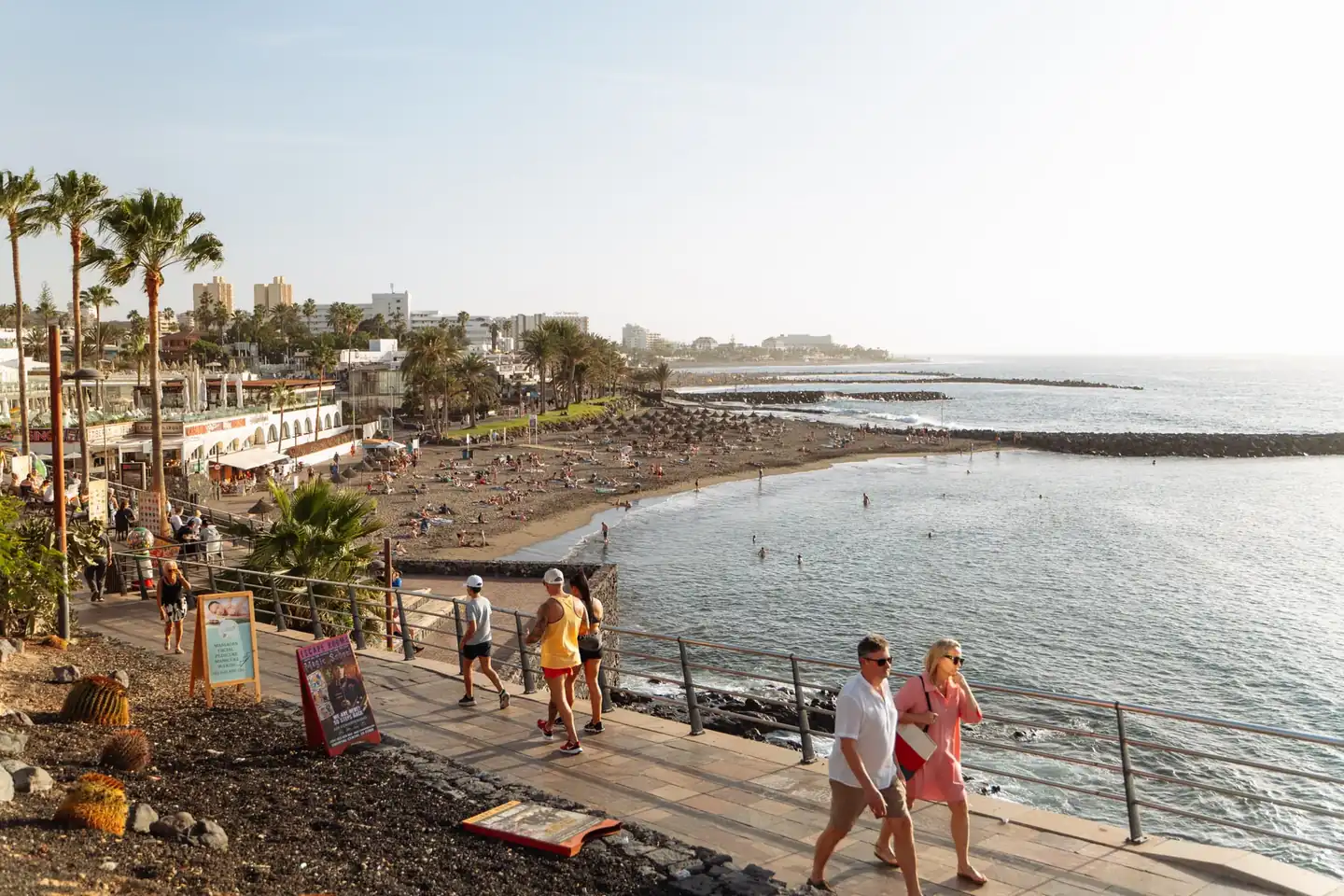
Las Galletas once again sets the athletic pace in the south of Tenerife with an event that blends a popular atmosphere, a fast course and a coastal setting that is instantly recognizable. The half marathon in this Arona locality has established itself as one of the most visible events on the Canarian calendar for a simple reason: it brings together in a single morning runners chasing a time, first-timers making their road debut and locals who turn the street into an open stand facing the sea.
The 2026 edition kept that profile of a major local event, with a joint start at 9:00 from Fernando Salazar González street, a finish scheduled for 11:30 and the awards ceremony afterward. The program also included 5 and 10.8 kilometer distances, which broadens the participation profile and explains why the race has gained weight beyond the main distance.
A race that makes Arona visible in a single morning
The value of this event is not only in the clock. It also lies in the way it occupies urban space and transforms it for a few hours. The organization concentrates bib pickup, start, finish and awards in a very recognizable area of Las Galletas, with Plaza Paulino Suances as one of the reference points and Fernando Salazar González street as the starting stage. That closeness between runner and public creates an atmosphere that is hard to replicate in more scattered circuits.
At its core, the appeal of the half marathon lies in that combination of athletic event and urban showcase. The runner finds a road race, with clear schedules and relatively compact logistics; the municipality, for its part, projects a sporting image that fits its tourist vocation and the weight that running already has in Tenerife. It is not an isolated race: it is a moving postcard.
The 2026 edition reaffirmed that character with a program that began before the starting gun. Bib collection on Friday at Decathlon La Laguna, from 16:00 to 20:00, and on Saturday in Las Galletas, from 10:00 to 20:00, helped spread out participant arrivals and ease Sunday’s logistical pressure. That organizational detail, seemingly minor, is often decisive in events with high participation and a mix of local runners and visitors.
Timetables, bibs and the pulse of the weekend
The day’s schedule was designed so that everything would happen without setbacks. Saturday had its own weight with bib pickup at Plaza Paulino Suances, the children’s race for ages 3 to 15 and a musical performance that extended the pre-race atmosphere. On Sunday, with the focus already on competition, the call to the start was set for 8:30 and the unified start came half an hour later.
That order matters because the half marathon is not experienced as a simple start and finish. Before that there are nerves, last-minute checks, small rituals and a repeated choreography that mixes races, families and volunteers. The coexistence of 5, 10.8 and 21 kilometer events adds layers to the event and allows each runner to find a distance suited to their sporting moment without leaving the same competitive setting.
The schedule also offered useful reference points for anyone following the race from outside. The expected arrival of the 5,000-meter winner was at 9:15, the 10.8 kilometer winner at 9:35 and the half marathon winner at 10:05, with the race closing at 11:30. That kind of time markers helps explain the real rhythm of the morning: a race that moves fast, where the first steps already shape the rest of the day.
A fast course with a coastal feel
Las Galletas offers a paved route that is very favorable for those looking for sustained pace. Competitors and organizers agree in describing it as a fast circuit, practically flat and with long stretches where stride can be stabilized. That does not make the race easy, but it does make it attractive for those chasing a specific time or wanting to test their fitness in an event without aggressive elevation changes.
The maritime character of the route is part of the story. Running alongside the Atlantic, passing streets near the fishing port and feeling the atmosphere of an urban center that wakes up to athletics early in the morning gives the race its own identity. The breeze, the straight stretches and the proximity of the sea create a sensation that the runner recognizes in their breathing and in the sound of footsteps on the asphalt.
The start and finish in the central area of Las Galletas reinforce that feeling of a contained circuit, without major transfers or fragmented spaces. In a race like this, the public does not watch a distant sequence of runners; they have them close, almost at shoulder height, which multiplies the visual intensity of every step, especially in the final meters.
Distances designed for different runner profiles
The great strength of this event is that it does not force a choice between prestige and accessibility. The half marathon coexists with a 10.8 kilometer race and a 5 kilometer race, opening participation to very different profiles. Some come to Arona to tackle 21 kilometers with competitive ambition; others prefer the intermediate distance as a test or a gateway; and many choose the 5K as their first experience in a major event.
In the 2026 edition, that diversity also translated into widely spread results. Francisco Cabrera Galindo won the long distance in 1:08:21, followed by Peter Riccardo Santagati and Youness Aithadi. In the women’s category, Marta Arnay won in 1:21:24 ahead of Ana Boullon Sabin and Amada De Jesús Sánchez Rivero. The closeness at the front was evident in several classifications, especially in the men’s top positions, where the battle was decided by minimal margins.
In the 10.8 kilometers, César Hernández Borges and Diana Pérez Guzmán took the wins, while in the 5 kilometers the victory went to Marouane Berradia Bouajaj and Natacha Lola Blanc. Beyond the names, the relevant point is another one: the race manages to bring together runners of very different levels without losing organizational coherence or competitive energy.
Results, competitive level and the sporting reading of the edition
The 2026 edition left an image of high participation and good technical level. The records published by the organization and later coverage spoke of more than 1,100 competitors, a volume that confirms the race’s growth and its ability to attract both experienced athletes and first-timers. It is no small detail: in many popular races, the real challenge is not only to run fast, but to maintain logistical quality with such a heterogeneous mass of participants.
The outcome of the 21K was especially tight in the men’s category. Francisco Cabrera Galindo took the win by one second over Hassan Laqquahi, which gives a precise idea of the day’s competitiveness. In the women’s race, Marta Arnay also dominated with authority, followed by Jone Fuente and Irene Lorenzo. That balance between competition and course control explains why the race has earned respect on the island calendar.
In the shorter distances, the picture was similar. Norberto López and Chiara Nash won the 10.8 kilometers in a recent previous edition, and Marouane Berradia Bouajaj together with Adaya Martín stood out in the 5 kilometers. The results are not only useful for the record books: they sketch the kind of race Las Galletas is, an event where you can really push, but where the atmosphere still keeps a close and festive tone.
An organization that turns the race into a neighborhood and island event
The engine of the race is sporting, but its success rests on a very specific social network. The Arona Town Hall, the Municipal Sports Board, the Local Police, Civil Protection, volunteers and municipal staff are part of a structure that makes the street event possible. Added to that in 2026 were students from the Higher Cycle in Teaching and Socio-Sports Animation at IES Las Galletas, a reinforcement that fits well with the educational and community spirit of the race.
Mayor Fátima Lemes highlighted the municipality’s ability to organize a major sporting event, while Sports Councillor Luis Sierra emphasized the extraordinary atmosphere and record participation. Beyond the institutional language, the reading is clear: Las Galletas works not only as a race, but as a meeting point between sport and the everyday life of the neighborhood.
That connection is noticeable in the details. The children’s race on Saturday, live music, bib pickup in a very accessible space and neighborhood involvement turn the event into something broader than a simple measured route. For many runners, that is precisely where its charm lies: the clock matters, but so does the context in which you run, the face cheering from the sidewalk and the feeling of belonging, for a few hours, to the same current.
What sets Las Galletas apart from other Canarian half marathons
Not all half marathons offer the same mix of speed, closeness and atmosphere. Some rely on large avenues; others on more technical routes or more elevation. Las Galletas moves in another territory: a coastal, flat circuit, with relatively controlled traffic and a strong local flavor. That identity allows it to compete on the calendar without needing to resemble big-city races.
The race also preserves a kind of athletic memory. The reference to Spanish championships held in this setting speaks of a trajectory that goes beyond the fashion of the moment. When a race has been able to sustain organization, level and reputation over the years, runners see it as a safe bet to measure themselves in a serious environment, but without the coldness of large impersonal circuits.
The homogeneity of the course helps, but it does not explain everything. The usual Tenerife spring climate matters too, as does the logistics of a concentrated race and the emotional weight of running by the sea in a town that fully embraces its event. There are races remembered for their toughness; Las Galletas is usually remembered for its balance, a word less striking than exciting, but much more useful for anyone looking for a complete experience.
An event already looking ahead to the next edition
The Las Galletas half marathon has stopped being an isolated date and has become a stable reference within the south Tenerife calendar. Its growth in participation, its ability to combine distances and its fit within the municipal fabric outline a mature race, with its own identity and room to keep attracting runners from both inside and outside the island.
The key is that its proposal is understandable at a glance: a road race, fast, with sea and atmosphere, designed both for competition and for living a very concentrated morning of athletics. That balance between performance and local character explains better than any slogan why Las Galletas retains so much strength.
In the Canarian running calendar, few events bring together sporting drive and neighborhood life so naturally. That is why each new edition does not only add times and rankings. It also adds memory, tradition and a very clear image of what a popular race can be when the whole town decides to run at the same pace.



How to prevent thigh chafing: causes and real solutions

Women’s running windbreakers: seven jackets and how to choose

Do more workouts get rid of soreness? A guide for runners

Jaén Half Marathon 2026: Record 3,800 Runners Registered

Men’s short running tights: how to choose the right pair

World Triathlon confirms data breach involving medical data

Izan Edo targets podium at Miyazaki World Cup

María Pérez ranks ninth in World Athletics’ 2026 top ten

Dos Santos, Duplantis and Sawe: World Athlete of the Year finalists

San Silvestre Vallecana 2026: 42,000 places, prices and start times

 Races3 months ago
Valencia Half Marathon 2027: date and registration

 Reviews and Comparisons4 months ago
Asics Gel-Roadmiles 3 for men: review and current price

 Races3 months ago
Valencia Marathon 2026: entry, ballot and course

 Reviews and Comparisons4 months ago
Asics Gel Sonoma 8 Gore-Tex: complete analysis for trail and rain

 Sneakers3 months ago
Saucony Endorphin Pro 4: full review and verdict

 News5 months ago
Strava API 2026: what changes for clubs, challenges and runner apps?

 Reviews and Comparisons5 months ago
Nike Alphafly 3: opinions, sensations, and real key points

 Reviews and Comparisons4 months ago
Under Armour running shoes review 2025-2026: models and key features

 Sports Equipment4 months ago
Shoe sizes in cm: a clear guide to getting the right fit for your footwear

 Sneakers3 months ago
Skechers GO RUN Consistent 2.0 analysis: comfort and limits

 News5 months ago
Valencia Marathon 2026 route: key tips to train and run better

 Sneakers4 months ago
Adidas Adizero Boston 13 for men: review and verdict