Races
Latina Half Marathon 2026: date, start, and route
The Aluche race faces its 20th edition with 21,097 meters, a limit of 2,400 participants, and a start on February 22.

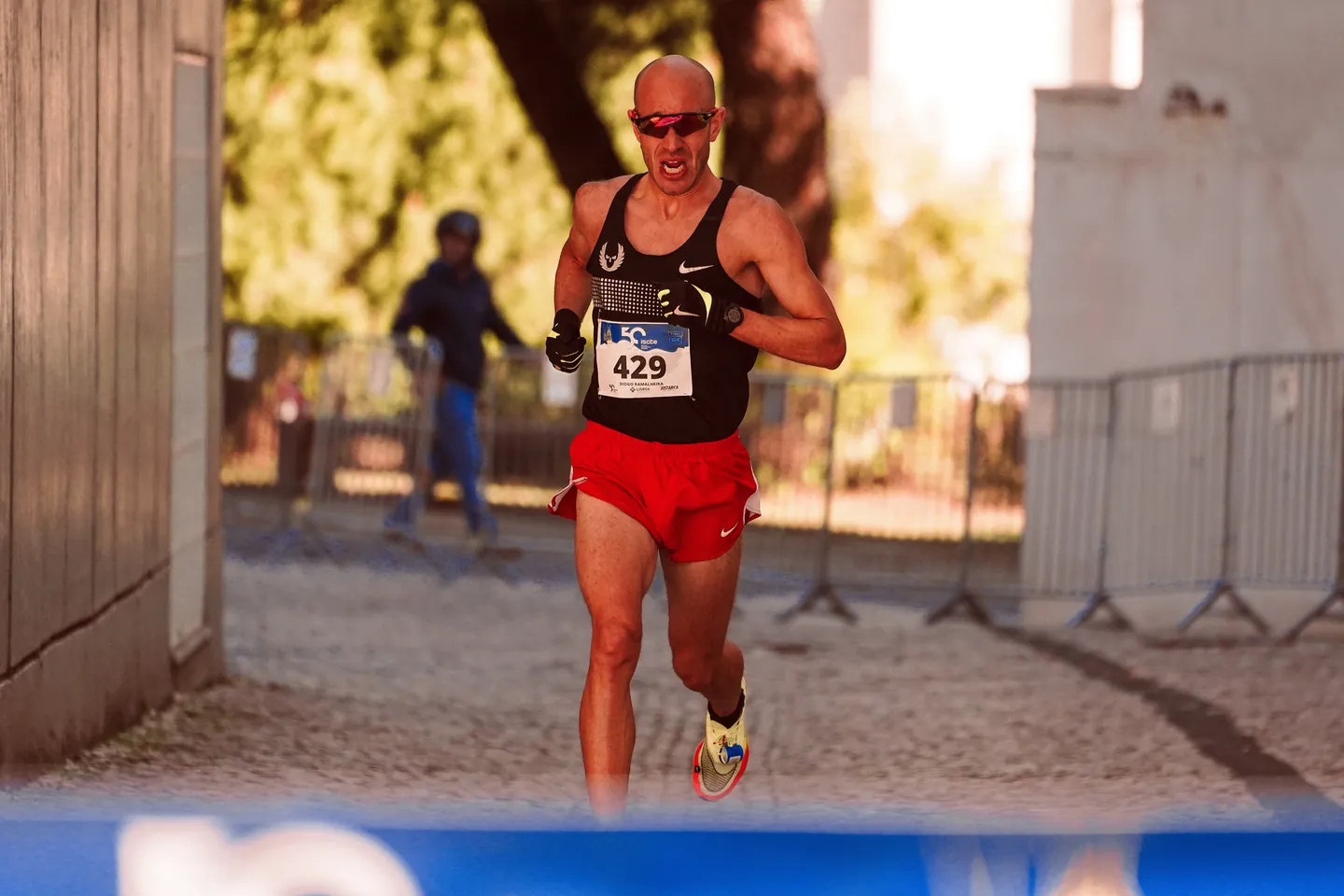
Imagen: RUN 4 FFWPU / Pexels
The 20th edition of the Latina Half Marathon will once again fill the streets of southwest Madrid with runners on February 22, 2026, with a start at 9:30 a.m. from Guareña Street, next to the Aluche sports center. The race maintains its profile as a classic urban event, with a 21,097-meter course and a finish line set on the athletics track of the Aluche Municipal Sports Center.
The organizers have set a limit of 2,400 participants, a figure that helps convey the event’s true scale: large enough to create the atmosphere of a city half marathon, but still manageable enough to move around with relative ease at the start, at aid stations, and when collecting bib numbers. Added to that is a detail that has established it as a benchmark event in Madrid’s calendar: its charitable character, with a financial contribution destined for the Mari Paz Jiménez Casado Foundation.
A neighborhood race that is already competing in the league of major urban events
The Latina Half Marathon has grown from the logic of the district runner to occupy a place of its own on the map of popular races in the capital. Its route crosses major streets and avenues in Madrid, giving it a very different feel from other faster or more neutral half marathons: here there is urban fabric, movement, wide corners, recognizable crossings, and the pulse of an area waking up to the echo of sneakers on the asphalt.
That combination of closeness and sporting significance explains much of its appeal. The race is not presented as a monumental showcase, but as a serious event, with established organization, runner services, and a course that demands attention. The fact that it reaches its twentieth edition says a great deal about its continuity and the loyalty it has built among distance runners, clubs, and runners looking for a half marathon in Madrid without the noise of mass events on another scale.
Its timing also matters. Held in February, the race falls in a stretch of the year when road runners usually have accumulated training, but still have room to fine-tune pace for spring. For many, that makes the event a useful measuring stick: it not only tests fitness, it also helps read sensations after weeks of winter training, when the legs still move between the caution of the cold and the ambition of performance.
Urban course, start in Guareña, and finish on the Aluche track
The 21.097-kilometer route runs through the main streets and avenues of the capital, starting on Guareña Street, very close to the Aluche sports center, and finishing on the athletics track at the sports complex. That finish on tartan adds a much-appreciated touch for runners, as it provides a clean, visible, and more comfortable entry than other improvised road finishes.
The race features a marked urban course with kilometer markers and volunteer staff distributed along the route to guide participants and control the progress of the competition. It is a less flashy detail than a massive start, but crucial in a half marathon where pace changes and where the runner needs clear reference points. In races like this, the course is not measured only in meters: it is also measured in confidence, and the signage helps keep the effort from becoming confusing.
The structure of the course itself favors a very recognizable kind of competition for popular distance running. There is room to seek consistency, and also to suffer in the stretches where wind, fatigue, or concentration begin to negotiate every kilometer. This is not a picture-perfect flat race or an excursion through hilly terrain; above all, it is an urban half marathon in the fullest sense, with all that implies in turns, visual references, and sustained pace.
Start times, bib pickup, and race logistics
The start is set for 9:30 a.m., a reasonable time for a winter race in Madrid, when the temperature may still be cool and the body appreciates that extra margin to warm up. The finish control closes at approximately 12:20 p.m. for the half marathon and 10:30 a.m. for the 5K, a logical difference that reflects the day’s dual rhythm: a long distance for endurance runners and a shorter one for those seeking a competitive or introductory experience.
Bib pickup takes place at the Plaza Aluche Shopping Center on Friday, February 20, from 5:00 p.m. to 8:00 p.m., and on Saturday, February 21, from 11:00 a.m. to 7:00 p.m. An additional time slot is also available on race Sunday, from 8:00 a.m. to 9:00 a.m., in the access area to the CDM Aluche athletics track. This distribution reflects a common pattern in well-established races: pickup is pushed toward the previous days to ease the race morning, but a final window is left for latecomers.
The organization also includes services that are now part of the standard a runner expects to find in a solid half marathon: aid stations, baggage check, changing rooms, showers, toilets, timing, and medical support. In popular races, these elements are not decoration; they are the framework that holds the experience together. Without them, the sporting story falls apart in practice. With them, the race can be demanding without ceasing to be comfortable and easy to understand for those who complete it.
Registration, price, and limited capacity
The registration fee ranges from 18 to 24 euros in the reference information consulted, although other event listings place it between 10 and 20 euros, reflecting differences depending on the time of purchase or the source published. In any case, the message is clear: this is a popular half marathon with a contained cost for its urban context, especially when compared with other events that have significantly increased their fees in recent years.
The cap of 2,400 bibs introduces a logic of real availability. This is not an open-ended registration, and that completely changes how runners behave when they want to be at the start. In races with a defined maximum number, planning matters more than improvisation, because demand usually concentrates in the days before and entries sell out easily when the race has prestige or an attractive course.
That balance between affordability and limited capacity explains the event’s overall tone. The Latina Half Marathon does not need to wrap itself in excess to attract attention: it is enough for it to offer a clear date, a recognizable urban route, and a solid race structure. In Madrid’s running ecosystem, that combination is worth more than fleeting shine.
Distances, trophies, and the role of the 5K within the event
The day is not limited to the 21-kilometer race. The event also includes a 5-kilometer race, a distance that broadens the participant profile and turns the event into a gateway to popular competition. This makes the morning atmosphere more diverse, with runners arriving for the half marathon pace and others preferring a short, intense, and more accessible distance.
The race awards trophies to the top three finishers in each of the categories called, for both women and men. That detail, in addition to shaping the competitive component, keeps sporting recognition alive in an event that still has strong popular roots. The standings, in that sense, do not only serve to order times; they also help preserve the memory of a race that has been sustaining the calendar for two decades.
The race shirt given to those who complete the course reinforces the idea of a tangible reward, a classic gesture in the world of popular races. It is not a minor detail, because this kind of gift is part of the emotional bond with the event: it remains as a physical sign of a morning in which the body faces a distance and comes away with more than just a time on the stopwatch.
Solidarity, organizing club, and the significance of the 20th edition
The organization is handled by the Corebo Sports Association, a name already associated with the race and its continuity within Madrid’s running scene. Having a stable club or entity behind a half marathon is often decisive: it implies knowledge of the terrain, coordination capacity, and a refined understanding of what popular runners need, from signage to support points.
The contribution to the Mari Paz Jiménez Casado Foundation adds a social component that fits well with the philosophy of many Spanish urban races. Solidarity does not replace sport, but it does add a layer of meaning that goes beyond the bib number and the official time. In an era when the calendar is full of very similar races, that kind of connection helps distinguish one event from another.
The twentieth edition also deserves its own interpretation. Reaching twenty years on the popular race circuit is not an administrative anecdote: it is proof that the race has survived changes in habits, logistical modifications, economic cycles, and the fluctuations of interest in running. In the end, continuity is the most understated form of prestige.
What kind of runner will find their place here
The Latina Half Marathon is especially appealing to those looking for a well-measured urban half marathon, with a city atmosphere and a format compact enough not to get lost in logistics. It is a suitable event for runners who appreciate asphalt, value a clear finish, and prefer an event in which the course experience carries as much weight as the stopwatch.
It also suits those who are building their winter endurance and want to test their feelings in February without leaving Madrid. The date makes it a useful reference for testing half-distance pace, and the urban route allows fitness to be compared without resorting to technical terrain or extreme gradients. That apparent simplicity, properly understood, is a virtue: it forces effort management with intelligence and leaves very little room to hide.
The result is a race with its own identity. It does not aim to be the most striking or the fastest, but it is one of those events in which the runner feels that the city opens up for them for a few hours. Between the start on Guareña, the passage through Madrid’s avenues, and the arrival on the tartan at Aluche, the half marathon retains something very valuable: the feeling of having traveled through a familiar territory with a competitor’s eyes.
A Madrid event that keeps growing without losing its human scale
In the running calendar of the Community of Madrid, few races combine continuity, accessibility, and an urban profile so clearly. The Latina Half Marathon has managed to sustain a recognizable identity without losing that human scale that many runners still seek in contrast to more impersonal events.
Its value is not only in the 21,097 meters or the date marked in red. It is also in the way it brings together neighborhood and city, competition and coexistence, endurance and participation. That explains why each edition matters more than it might seem at first glance: because, in an increasingly crowded calendar, the races that endure are those that know how to offer something concrete and verifiable, without exaggeration.
The 2026 edition arrives with all of those elements on the table: early start, limited capacity, urban course, solidarity support, and two distances for different runner profiles. With that approach, the Aluche race reaffirms its place as an event that is already part of Madrid’s sporting pulse and that continues to speak the most recognizable language of popular running: starting out, holding on, and crossing the finish line with the city still beating around you.



How to prevent thigh chafing: causes and real solutions

Women’s running windbreakers: seven jackets and how to choose

Do more workouts get rid of soreness? A guide for runners

Jaén Half Marathon 2026: Record 3,800 Runners Registered

Men’s short running tights: how to choose the right pair

World Triathlon confirms data breach involving medical data

Izan Edo targets podium at Miyazaki World Cup

María Pérez ranks ninth in World Athletics’ 2026 top ten

Dos Santos, Duplantis and Sawe: World Athlete of the Year finalists

San Silvestre Vallecana 2026: 42,000 places, prices and start times

 Races3 months ago
Valencia Half Marathon 2027: date and registration

 Reviews and Comparisons4 months ago
Asics Gel-Roadmiles 3 for men: review and current price

 Races3 months ago
Valencia Marathon 2026: entry, ballot and course

 Reviews and Comparisons4 months ago
Asics Gel Sonoma 8 Gore-Tex: complete analysis for trail and rain

 Sneakers3 months ago
Saucony Endorphin Pro 4: full review and verdict

 News5 months ago
Strava API 2026: what changes for clubs, challenges and runner apps?

 Reviews and Comparisons5 months ago
Nike Alphafly 3: opinions, sensations, and real key points

 Reviews and Comparisons4 months ago
Under Armour running shoes review 2025-2026: models and key features

 Sports Equipment4 months ago
Shoe sizes in cm: a clear guide to getting the right fit for your footwear

 Sneakers3 months ago
Skechers GO RUN Consistent 2.0 analysis: comfort and limits

 News5 months ago
Valencia Marathon 2026 route: key tips to train and run better

 Sneakers4 months ago
Adidas Adizero Boston 13 for men: review and verdict