Races
LloreTrail 2026: date, distances, and everything essential
The Lloret de Mar race sets the date, start, and routes for an edition that is drawing a lot of attention on the Costa Brava.

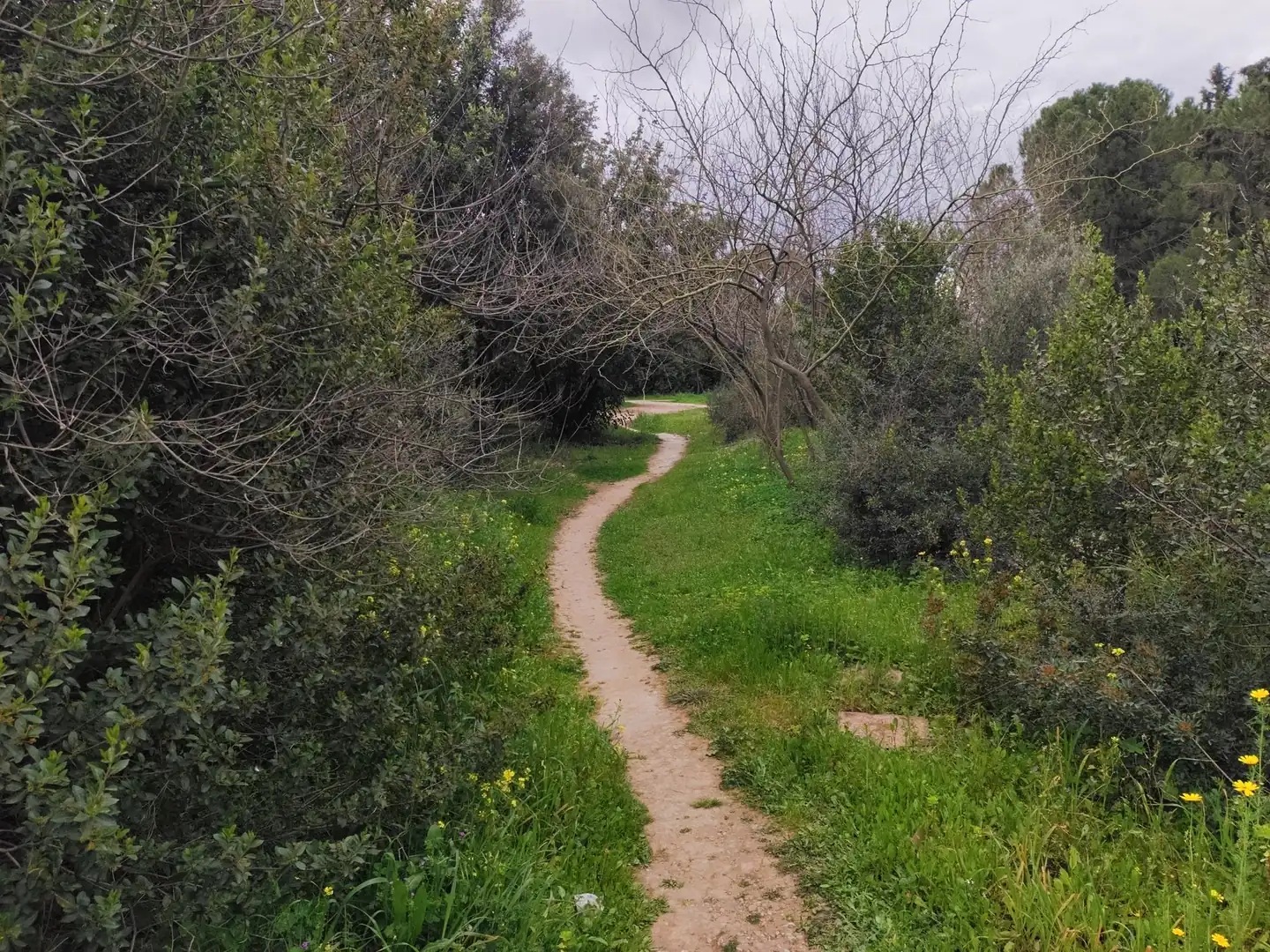
LloreTrail once again brings the mountain calendar’s attention back to the Costa Brava with an event set for May 10, 2026 and a start time of 09:30. The organization is handled by La Sansi, a name already linked to popular races and to an event model that combines mass participation, simple logistics, and a route designed for the amateur runner looking for something more than asphalt.
The race takes place in Lloret de Mar, Girona, an enclave where the sea and the terrain meet at very close range. That contrast defines much of its appeal: trails, stretches of forest, and ground that forces you to watch your footing, measure your effort, and keep something in reserve for the changes in pace. It is not a showcase race, but a trail day with its own identity and enough character to hold a steady place in the spring calendar.
A date marked by the coast and the relief of La Selva
The value of LloreTrail is not only in the date or the distances, but in the setting. Lloret de Mar offers a very recognizable combination in the northeast of the peninsula: proximity to the coast, forest cover, and a terrain profile that alternates runnable sections with more demanding ones. That mix supports much of the race’s charm, because the runner goes from an almost tourist-like feeling, with the Mediterranean very close by, to a mountain effort with elevation gain and uneven surfaces.
That context places it in a very attractive middle ground within popular trail running. It does not have the extreme toughness of the big ultras, but neither does it have the ease of a completely flat race. La Sansi has managed to shape an event that is accessible for many runners and, at the same time, technical enough for those looking for a race with more substance than a simple recreational outing. That dual reading explains why the race keeps its appeal edition after edition.
The setting, moreover, adds a visual layer that is hard to imitate. Running among pine trees, tracks, and stretches with open views changes the experience completely compared with an urban race. The air feels different, the impact of the ground is felt more in the legs, and progress becomes more tactical. In a trail like this, the runner is not only racing the clock; they are also reading the terrain, managing effort, and adapting their stride to every change in gradient.
Date, schedule, and organization of the 2026 edition
The 2026 edition is already set for Sunday, May 10, with a 09:30 h start. That schedule fits the nature of the race and the logic of a spring morning on the Catalan coast: still reasonable temperatures, enough daylight, and room for the race atmosphere to unfold without the heat strain of the harsher months. In trail races, that difference matters more than it seems; a start that is too late can turn an otherwise friendly course into a much rougher day.
The organization by La Sansi brings an important layer of meaning. It is a promoter with experience in popular events, used to moving runners, managing registrations, and fitting together the logistics of a race with different participation paces. In this case, the presence of institutions and local agents reinforces the idea of an event deeply integrated into the sporting life of Lloret de Mar, not as an isolated date, but as part of a calendar of active tourism and outdoor sport.
There is also a detail worth keeping in mind: the race already appears with reference messages about open registrations and previous news items on presentation and results. That editorial continuity points to a consolidated race, with enough traction to generate conversation before and after race day. In the trail ecosystem, where one-off events are common, that continuity is a sign of organizational health.
Two distances for different profiles
The 2026 edition offers 6 km and 16 km, two formats that outline very different participation profiles. The short distance suits those who want a first introduction to trail running or prefer a more contained effort, while the longer one demands more pace management, more reading of the terrain, and a greater dose of endurance. The duality itself sums up the race’s philosophy well: opening the door to popular runners without giving up the mountain component.
In the technical reference information, routes also appear with the names 7K and 15K, linked to recent seasons or to the presentation of equivalent distances in other calendar listings. That difference does not change the core message: LloreTrail revolves around two compact options, designed so the runner can choose between a quick experience and a more complete one. The practical reference for the participant, in any case, is clear: there is a short option and a medium-distance one, both within a real trail setting.
The existence of two courses helps keep the balance between competitiveness and accessibility. In the popular circuit, that kind of design usually works well because it avoids the feeling of a race closed off to specialists. A 6K can serve as a bridge for someone coming from road running, while a 16K already allows you to really savor trail running with more ambition. In both cases, the terrain sets the terms and the runner has to adjust expectations: in the mountains, mileage never tells the whole story.
What kind of race it is and what it demands from the runner
LloreTrail moves within the territory of trail running in a medium and short format, with stretches of nature, changes in gradient, and variable surfaces. The race is not defined by extreme elevation gain, but by the kind of effort it asks for: stability in foot placement, the ability to descend smoothly, and a certain tolerance for muscular fatigue. It is the kind of race where you run with your head as much as with your legs.
The course, according to the reference information, combines fast sections with technical areas and notable elevation gain relative to the distance. For the popular runner, that balance has very concrete consequences. It forces you to pace the opening effort, not to be carried away by the apparent ease of some stretches, and to understand that every climb is paid for later on the descents. In trail running, especially on courses like this, race economy matters just as much as physical condition.
The race also works as a showcase for a way of running closely tied to the territory. It is not a laboratory circuit, but a race that reflects the texture of the place: dust, stone, forest shade, and open references to the coastal landscape. That mix explains why so many popular runners seek out this kind of event. It is not just about posting a time, but about living a sporting experience with relief, literally.
La Sansi and the weight of an organization with experience
The name of La Sansi appears constantly linked to the race and that is no coincidence. The organization has experience in events with broad participation, and that shows in the way the race is presented, in the structure of the pre-race information, and in the continuity of news linked to registrations, presentations, and results. In an increasingly crowded calendar, that regularity has value because it conveys a sense of a living calendar and an event that does not improvise.
In popular trail running, the difference between a race that works and a race that leaves a lasting memory is often in the invisible details. Clear signage, coherent schedules, well-defined distances, understandable communication, and management that does not force the runner to decode the event on the fly. The available information on LloreTrail points precisely in that direction: a race with structure, with a route of clear identity, and with an organization accustomed to road and mountain events.
It also matters that the race is set in a town with strong tourist appeal. Lloret de Mar is not a neutral backdrop; it is a well-known destination, with services, access, and a sporting life that makes good use of the combination of sport and landscape. That helps the event have a wider reach than a purely local race. In many cases, the runner does not just come to compete, but to spend the morning in an environment that is already part of the Catalan coastal imagination.
An event with local context and calendar reach
The reference to institutions, presentations, and previous results shows that LloreTrail is not an isolated race, but one more piece within a local sports activity strategy. In popular sport, that institutional dimension often makes the difference between a race that repeats out of inertia and one that consolidates through public presence. When a municipality adopts a race as part of its calendar, the event gains stability and the runner finds a sign of trust.
The chronology of news associated with the 2026 edition also draws a familiar sequence for this kind of race: pre-race presentation, registration opening, and later publication of results. That chain matters because it confirms that the race does not live only from race day; it also generates follow-up before and after. For the reader looking for practical information, that continuity is useful because it gives context on the level of organization and the maturity of the event.
In addition, the race fits a clear trend in current running: mountain races near major tourist hubs and with not overly long formats. These are races that allow participation without elite-level preparation, but with real demands. LloreTrail belongs to that group of events that bridge the gap between the urban runner and the mountains, between curiosity and physical commitment. And that is precisely where much of its appeal lies.
What it brings to the popular runner in May
The month of May offers an interesting window for trail running on the Catalan coast. Temperatures are usually kinder than in the middle of summer, and the terrain still retains a certain toughness without the thermal punishment of July or August. In that setting, LloreTrail offers an opportunity to test sensations in a mountain race without yet entering the most demanding part of the season. It is a time of year that suits both those who want to race and those looking for a technical outing with atmosphere.
The race, because of its setup, is also useful for checking how the body responds to changes in terrain. On asphalt, pace rules; in trail running, elevation, foot placement, and mental management completely alter the equation. A 6- or 16-kilometer course may seem short on paper, but in the mountains the clock can be deceptive. A runner well positioned on flat ground can fall apart on a sustained climb or lose valuable time on a poorly handled descent. The race demands attention, not just legs.
That is why it tends to appeal to different profiles: trail debutants looking for a reasonable race, popular runners wanting a break from asphalt, and more experienced participants who prefer a fast test with elevation gain. In all cases, the value of the event is not only in the distance, but in the kind of effort. And in that respect, LloreTrail offers a fairly faithful sample of what it means to run in the mountains without going to extremes.
A solid reference within Catalan coastal trail running
The race has been building a recognizable identity around three pillars: coastal location, accessible format, and experienced organization. It does not need to present itself as a major ultra or an elite race to be attractive. It is enough for it to offer a route with character, a date well placed in the calendar, and the guarantee of an event that delivers on what it promises.
In a season where popular runners compare a lot, clarity matters. Knowing that the start will be at 09:30, that the date is May 10, 2026, and that the available distances are 6 km and 16 km provides a solid basis for deciding. Added to that is the context of Lloret de Mar, with its mix of coast, forest, and relief, which turns the experience into something more sensory than purely statistical.
The final reading is simple: LloreTrail has earned its own space as a medium-format mountain race, closely tied to its territory and to an organization that knows very well the ground it works on. In a calendar full of similar offers, that identity is no small detail; it is the reason the race keeps appearing every spring as a useful reference for those looking for trail running with landscape, rhythm, and sporting purpose.
A name that already carries weight in the spring calendar
The 2026 edition confirms that the race has achieved a continuity that is unusual for events of this format. LloreTrail does not depend on noise or novelty, but on a proposal that has settled over time and responds to a clear demand: nearby mountain races, well placed, and with a recognizable identity. That makes it a date worth keeping in mind for anyone planning the season with a mix of ambition and caution.
Its appeal lies in the sum of details that, together, shape a well-rounded event: a stable date, coherent schedules, understandable distances, and a setting that adds sporting and visual value. For the runner, that combination matters more than any slogan. In trail running, as in so many things in sport, credibility is built with routes, not adjectives. And here the route has its own name, its own landscape, and a story that is already making itself felt in the calendar.
LloreTrail thus arrives at a new edition with the kind of reliability runners ask for: clear information, a concrete proposal, and a setting that turns every kilometer into something more than a number. In Lloret de Mar, the mountains and the coast come together; the race, once again, puts that union into motion.



How to prevent thigh chafing: causes and real solutions

Women’s running windbreakers: seven jackets and how to choose

Do more workouts get rid of soreness? A guide for runners

Jaén Half Marathon 2026: Record 3,800 Runners Registered

Men’s short running tights: how to choose the right pair

World Triathlon confirms data breach involving medical data

Izan Edo targets podium at Miyazaki World Cup

María Pérez ranks ninth in World Athletics’ 2026 top ten

Dos Santos, Duplantis and Sawe: World Athlete of the Year finalists

San Silvestre Vallecana 2026: 42,000 places, prices and start times

 Races3 months ago
Valencia Half Marathon 2027: date and registration

 Races3 months ago
Valencia Marathon 2026: entry, ballot and course

 Reviews and Comparisons4 months ago
Asics Gel-Roadmiles 3 for men: review and current price

 Reviews and Comparisons4 months ago
Asics Gel Sonoma 8 Gore-Tex: complete analysis for trail and rain

 Sneakers3 months ago
Saucony Endorphin Pro 4: full review and verdict

 News5 months ago
Strava API 2026: what changes for clubs, challenges and runner apps?

 Reviews and Comparisons5 months ago
Nike Alphafly 3: opinions, sensations, and real key points

 Reviews and Comparisons4 months ago
Under Armour running shoes review 2025-2026: models and key features

 Sports Equipment4 months ago
Shoe sizes in cm: a clear guide to getting the right fit for your footwear

 Sneakers3 months ago
Skechers GO RUN Consistent 2.0 analysis: comfort and limits

 News5 months ago
Valencia Marathon 2026 route: key tips to train and run better

 Sneakers4 months ago
Adidas Adizero Boston 13 for men: review and verdict